Feb 16 (Mt 6:7-15)

Most of us have seen those advertisements or billboards which announce some bumper offer or sale.

 
For example…

Ø Winter Sale on branded clothing: Up to 50%  off!*

Ø Buy a new house, at just Rs 1000!*

Ø Buy one pizza, get one free!*

But, a point to be noted is that most of these advertisements of offers and goodies also have a “tiny asterisk – * ” sign next to it.
 

What does the * refer to?

>> It has a catch in it…. Conditions Apply!


The offer is valid, only on the basis of some conditions.

>> The sale is applicable, only on the agreement of some special terms.


Well, the Gospel of the Day is the prayer of the Our Father.

>> And one of the offer that is mentioned in the Our Father is that of Forgiveness.

However, this offer of Forgiveness has an “asterisk *” sign attached to it…

>> Yes… Conditions apply!


What is the offer?

>> The Forgiveness from God!


And what is the condition applied to receive this offer of forgiveness?

>> We, first need to forgive others!


The Gospel of the Day is part of the Sermons on the mount in the Gospel of St Matthew.

>> Jesus is presenting His teaching on various Christian themes.

In His teaching on prayer, Jesus teaches the beautiful prayer – The Our Father.

 
The Our Father has seven petitions:

1. Hallowed be thy name

2. Thy Kingdom come

3. Thy Will be done

4. Give us today our daily bread

5. Forgive us our sins

6. Lead us not into temptation

7. Deliver us from evil.


The fifth petition  – for forgiveness – is also accompanied with a clause – “…as we forgive”..

“…and forgive us our debts, as we forgive our debtors” (Mt 6:12)

…forgive us our sins, as we forgive those who sin against us!

…forgive us our trespasses, as we forgive those who trespass against us!

 
Well, does this mean God’s forgiveness is conditional?

 
It needs to be understood, that God , in His infinite mercy and goodness, has always the store of forgiveness, unconditionally opened for us!

 
But to receive this treasure of forgiveness, we need to first forgive others!

>> To receive this grace of pardon, we need to first pardon others!

 
It means that…

>>         If we harbour a wrong against other…

 >>       If we continue to nurture hatred against other…

>>        If we wilfully fail to extend absolution to the other…

>>        If we adamantly keep having repulsion against the other…

                … then we are telling God to not forgive me either!

                … then we are telling God to not shower His blessing on me!

                … then we are telling God to withhold His unconditional mercy on me!

                … then we are telling God to stop extending His unconditional compassion!


The prayer – “Our Father” is indeed one of the most easily learnt and widely used prayers.

 
Ø But this clause of the prayer, which is often overlooked, also makes this prayer dangerous!

Ø This clause of the prayer, which is often not thought of, also makes this prayer challenging!

·       Let the prayer ‘Our Father’ make us to make inroads into forgiving others!

·       Let the prayer ‘Our Father’ make us to march forward into extending pardon to others!

 
Let this beautiful prayer also become a really meaningful one!


God Bless! Live Jesus!
Feb 15 (Mt 25:31-46)

Children studying in school have to time and again undergo a particular experience: 

the experience of facing their parents with the report card of their examinations, to get it signed.

The report card has a particular column, which requires the parent or the guardian of the child, to assess the marks card and then put in the signature of approval.

It’s interesting to note the varied experience of children before getting the report signed….

Those children who have done well and are confident of having performed up to the expectation of the parent, stay fearless and secure.

>> They remain cheerful, joyous and unafraid!

Those children who are not sure, what would be the reaction of the parents, undergo a tremendous level of anxiety and nervousness

>> They remain apprehensive, tense and uneasy!

Those children who know that they have performed extremely badly and are guilty of having let down the expectations of their parents, experience higher levels of guilt and misery and some even casualness or indifference!

>> They remain distressed, listless and remorseful.

This experience for the children is similar to a “trial of judgement”

The Gospel of the Day presents the scene of the Last Judgment…

And probably, before the throne of Judgement, the people of the world would also be going similar feelings as that of the children waiting with the report card – feelings of cheerfulness or apprehensiveness or remorsefulness etc..

The passage presents the Son of Man seated in His majestic and awesome glory and all the nations awaiting His judgement. (Mt 25: 31-32)

 
The sheep, placed on the right side, are the chosen ones to enjoy the bliss of the Kingdom.

>> The goats, placed on the left side, are the condemned ones to suffer the fire of punishment.

One of the important aspects to be observed in this passage of the scene of the Last Judgement is the manner in which the Lord looks at human actions…
 
The Bible says, “Humans look on the outward appearance but the Lord looks at the heart” (1 Sam 16:7)

 
One of the common question that both the groups, the sheep as well the goats, posed was: “When did we know…”


The sheep were taken by surprise, at the occasions which the Lord found them doing good…

·       They remained unaware of those situations, though they did the good in God’s sight.

·       They remained unaware of those occasions, though they did the needful in God’s sight.

The goats are taken by surprise, at the occasions, which the Lord found them missing to do good…

·       They remained unaware of those situations, where they failed to do the good in God’s sight.

·       They remained unaware of those occasions, where they missed to do the needful in God’s sight.

> We may not realise the occasions of doing good…

>> We may not realise the occasions of having missed doing good…

We may externally engage in many good works, but it may fail to find approval in the Lord’s sight.

 
>> This calls for cultivation of an inner disposition to do good.

>> This calls for building of an inner character to be charitable.

Ø From the abundance of the heart, the mouth speaks…

Ø From the abundance of goodness within, good actions flow…

Ø From the abundance of love within, loving behaviours proceed…

Ø From the abundance of kindness within, kind conduct emerges…

Let this season of Lent be an occasion to grow in cultivating love deep within.

>> Let this season of Lent be a time of forming a character of goodness and kindness.
 

The Day of Judgement is certainly to be a glorious one…

If we fail to build up a character of goodness and charity, we may go through feelings of anxiety or fear or even dread!

But trusting in the mercy and compassion of the Lord, let us, as the little children of our Heavenly Father, be hopeful and confident!

Let’s prepare ourselves well, to be optimistic in getting the Report Card of our Life, signed with approval, by ou Heavenly Father!


God Bless! Live Jesus!

Fr Jijo – Missionary of Mercy

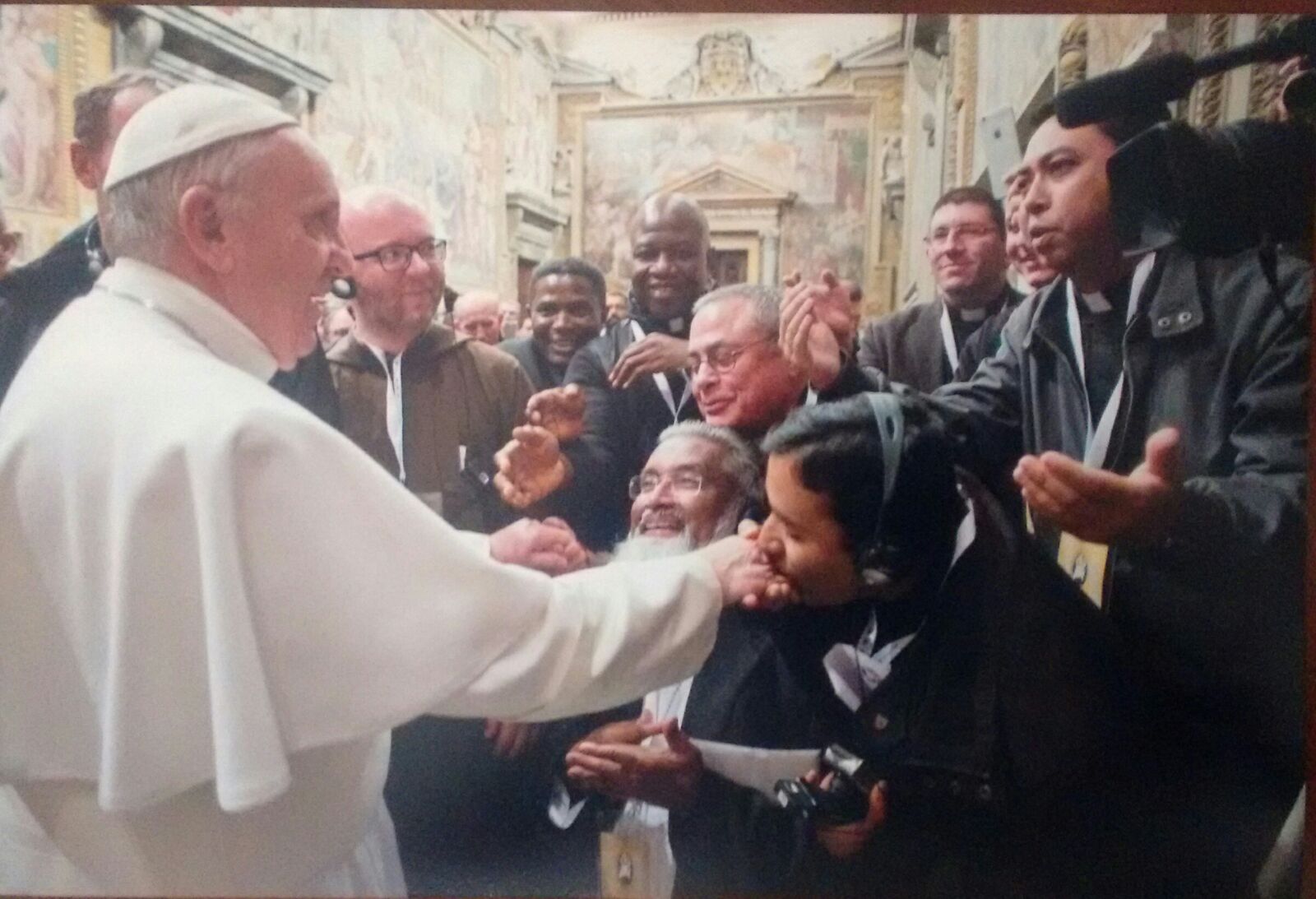
One of the signature moments of the Extraordinary Jubilee Year of Mercy is the sending forth of the Missionaries of Mercy. On 10th February 2016, the Holy Father Pope Francis, during the Ash Wednesday Mass in St Peters Basilica sent forth the Missionaries of Mercy. Fr Jijo Manjackal MSFS is among the 800 odd priests who have been sent forth and who met with Pope Francis the previous day on 9th Feb.

image

The Missionaries of Mercy have a special mandate from Pope Francis which includes the authority to forgive certain sins which are otherwise reserved to the Holy See, to preach about Mercy, to encourage people to live more devotedly, hear confessions, etc. Their mandate expires at the conclusion of the Jubilee Year.

Feb 14 (Lk 4:1-13)


Many hunters use their abilities with bow and arrows, guns and spears to kill monkeys.

>> But some native people have another simple yet effective style to trap them.


The hunter searches the jungles for a large-sized, wild gourd (= a fleshy, typically large fruit/vegetable with a hard skin).


After the gourd had dried for several weeks, the hunter would cut a two-inch hole in the side.

>> The insides of the gourd would then be taken out, leaving an empty hard-shelled trap…


After finding the right place in the jungle, where there were plenty of monkeys, the hunter would hang the trap from a tree.

>> In the centre of the gourd-trap, several handfuls of peanuts would be placed…


In a short time, the curious monkeys would scamper over to see what the man had left behind.

A short glance and a long sniff would reveal to the monkeys that one of their favourite items was conveniently close by – and easy to get!


One monkey would venture first.

>> He would look the gourd over well.


The gourd was a common sight and would not rouse many questions, and inside he would discover wonderful, plump peanuts.


What more could a monkey ask for?


Into the gourd, went the monkey’s hand, grasping a few peanuts, and then slowly, he would ease out his hand.


Easy pickings!

>> He got a handful and they were so good!


In would go again his little hand, and not wanting to miss out on this free offer!

>> But his hand , with many peanuts, was now too big, to get back out of the hole.


When he tried to pull back his hand, it would not come out through the gourd’s hole.

>> He would pull and pull but to no avail.

> He was caught!


It would never dawn on him to let go of the peanuts!


There he would be captured until the hunter would return and easily kill the monkey.

 >> His own selfishness had bound him to the trap.


Temptations in our life, is also, so often similar…

>> We get trapped in our own selfishness!

> We get ensnared in our own greediness!


The Gospel of the Day, on this first Sunday of Lent, is an account, from the Gospel of St Luke, of how Jesus resisted temptations and emerged victorious by the power of the Spirit, to proclaim the Gospel of God!


“Filled with the Holy Spirit, Jesus left the Jordan and was led by the Spirit, through the wilderness…” (Lk 4: 1)


·       In Jesus, we encounter a God who has a very human face – sharing in sufferings, partaking in miseries and participating in hardships.


·       In Christ, we have a God who understands us in our weak moments, consoles us in our painful situations and who empathizes with us in our trials and temptations.


Jesus knows what it is like to struggle with temptations and enticements…

>> Because He Himself was tempted!


Jesus knows what it is like to ward off the beasts of our vices and evil tendencies…

>> Because He Himself was among wild beasts!


Yet, in all His trials, He emerged victorious and triumphant!

Ø He did not succumb to the allurements of Satan…

Ø He did not fall for the traps of the Evil One…

Ø He did not yield to the inducements of the Devil…


The reason?

>> He had a tremendous infilling of the Holy Spirit!

>> He had a unshaken determination to be focused on doing God’s Will!

>> He had a indomitable resolve of being faithful and true to His mission and commitment!


And these reasons of Jesus are also the techniques for us to overcome the power of temptations….

> Can I grow continually in the infilling of the Holy Spirit?

> Can I learn to, despite any hardships, constantly seek and do only God’s Will?

> Can I cultivate the steadfastness to be singly focussed on the mission of His Kingdom?


We live in a world which is often, like a wilderness…

.. dry in spiritual fervour… heated up with material desires…arid in religious enthusiasm


We live in a world where there are often, many wild beasts…

…ferociously corrupt and unhealthy practices…menacingly abusive evil lifestyles


We need to resist the temptations arising from such situations and stand firm in our focus and commitment to the Lord and His Kingdom.


Let us not get caught up in the snares of temptation…instead be victorious and triumphant in the Grace and Power of Jesus, our Saviour, Model and Master!


>> Selfish desires can trap us…

… but being selfless in the Spirit will help us!


>> Greedy longings can confine us…

… but Godly leanings can strengthen us!


God Bless! Live Jesus!

Feb 13 (Lk 5:27-32)

Been to a general physician for a check-up?

>> Well, I guess, most of us have been.

One of the simple techniques that a physician employs, to assess whether the person is sick, is by checking the person’s tongue.
 

The colour of the tongue, its size and shape, the colour and thickness of its coating, locations of abnormalities and moistness/ dryness of the tongue…
… all these could give some indications of the overall health and any disharmonies.

St Francis de Sales, mentions about this aspect, in his book, ‘Introduction to the Devout Life’…

“Doctors get a good knowledge of the health or the illness of a man by examining his tongue.

Our words are signs of the qualities of our souls”

Yes, the state of the tongue reveals the state of the health of the person.

>> The condition of the tongue gives an indication of the well-being or illness in a person.

Similarly, the words, which the tongue speaks, reveal the state of our inner life.

>> Our speech, which the tongue utters, reveal the condition of our spiritual life.

The Gospel of the Day is an account of Jesus, the Great Physician of Galilee, in His rounds of healing sick patients, and who is encountered by some critical persons who reveal a dark side of human life by their “slanderous and harsh” tongues!

Levi, the tax-collector heeds the call of the Lord “to follow Him” ( Lk 5:27)

In his great happiness of being accepted and the joy of following his new-found love, Levi hosts a grand party.

>> This feast is a wonderful time of sharing for various other tax collectors as well.

But this time of joy and happiness, becomes an occasion for some people to “wag their tongues” in negative talks and remarks!

 
As the saying goes…where two or three are gathered with a vicious and malicious
mind, there is the assassination of the character of few people!

The Pharisees and their scribes, seeing Jesus sharing the joyful companionship of the tax collectors, began to murmur and grumble: 

“Why do you eat and drink with tax collectors and sinners?” (Lk 5: 30)

 
Jesus clarifies His mission of coming to the world to heal the sick and to cure the ill. (Lk 5:31)
 

He is the Great Physician of Galilee.

This Great Physician, clearly examines the “tongues” of the Pharisees and the Scribes and identifies their sickness…

Ø Their tongues spoke ill of people who were being saved.

Ø Their tongues criticized the people who were given a redeeming status in the society.

Ø Their tongues lashed at out the Lord who came to bring acceptance and love to the outcast.

 
·       The words that their tongues uttered revealed the low-state of their life.

·       The words that their tongues spoke revealed the negativity that was widespread in their life.

 
The Great Physician today wishes to examine our own tongues: our words and our speech.

>> Are we also persons whose tongues lash out in harsh criticism and rash judgements?

>> Are we also persons whose tongues hit out in negative comments and unkind criticism?

 
The Great Physician is here to heal us…
… Our tongues easily reveal our sicknesses to Him.

This time of the Lent is a great opportunity for us, to improve in this area of our life.

The Great Physician has His prescriptions ready….

Ø His Holy Word, which can sweeten our tongues with patience and charity.

Ø His Holy Eucharist, which can cleanse our tongues in sanctity and holiness.

Let us be healed and cleansed by the Divine Touch of the Great Physician!

God bless! Live Jesus!

Feb 12 (Mt 9:14-15)

Dengue and malaria are fatal sicknesses that have affected a large number of people, all over the world.  

>> These dreaded sicknesses, are mosquito-borne infections that can cause severe-flu like illness.

One of the causes of steep rise of mosquitoes is the accumulation of stagnant water.

>> Stagnant water is a favourite breeding-ground for mosquito larvae, which leads to the spread of dengue.

When there is stagnancy, there is a greater chance of sicknesses to spread!

 
This simple aspect can be very well applied to human minds and human actions as well…

>> A stagnant mind becomes the breeding ground for laziness, obstinacy and lethargy!

>> A stagnant action becomes the breeding ground for lukewarmness and listlessness!

There is no vitality in stagnancy…

>> There is no vivacity in sluggishness…

>>> There is no exuberance in dormancy…

The Gospel of the Day presents this attitude of lifelessness and inertness due to the stagnant practice of an important devotion, namely fasting!


The disciples of John the Baptist came to Jesus with an important query:”Why do we and the Pharisees fast, but your disciples do not?” (Lk 9:14)
 

The Mosaic Law commanded only one day of fasting – the day of Atonement.

The Book of Leviticus prescribes this fast: 

“On the tenth day of the seventh month…you are to enter into a solemn fast and refrain from all work, because on this day atonement will be made for you, to cleanse you. In the presence of God you will be made clean of all your sins.

It is a Sabbath of all Sabbaths. You must fast. It is a perpetual ordinance” (Lev 16:29-31)

 
But it is to be noted that the Pharisees and apparently, the disciples of John had also adopted another tradition: that of fasting two days a week.

>> This was considered to be a very pious and pride action among this group.
 

In Luke 18:12, we find the Pharisee who boasts of fasting twice a week, as he makes his prayer, in contempt of the tax collector.

 
It is to this fasting, that the disciples of John refer to, when they counter Jesus with the question: “Why don’t your disciples fast?”

But Jesus opens their eyes to see the stagnancy in their thought and practice.

·       The practice of fasting was for atonement of one’s sins.

·       The practise of fasting was a time of mourning in seeking for the restoration of Israel.

·       The practice of fasting was a time of waiting for the Messiah who would redeem their nation.

But somehow all these basic aspects of fasting were forgotten and apparently, lost.

·       Their practise of fasting had grown stagnant.

·       Their mindset in skipping meals had become sluggish.

·       They failed to realise the reason and meaning for their fasting.

The Lord declares Himself as the Bridegroom, who has come to restore the glory of Israel. (Mt 9:15)
 
> The time of mourning is over.

>> The period of fasting is no longer.

It’s time to rejoice with Him, who is the Bridegroom and Saviour – Jesus!

Yes, when one loses sight of the original purpose, the actions become mere lifeless customs.

>> When one fails to know the actual motive, the conduct becomes a mere obsolete ritual.

>> A custom, devoid of its purpose and real intention is dead and decayed.

>> A tradition, conducted without the true motivation is irrelevant and trivial.

>> A ritual, performed without knowledge of true meaning is an immaterial routine.  

The Season of Lent calls for us to make extra sacrifices, especially through the form of fasting.

>> What is my attitude to fasting and penance?

Has it become stagnant…
… devoid of its original purpose of sanctification and growing in closeness to God?
 
Has it become stagnant…
… becoming a mere yearly custom and tradition with no effect on one’s life?
 

Am I ready to undertake the powerful style of fasting as presented in Isaiah 58: 6-7:

A fasting…

… to lose the bonds of wickedness and to undo the thongs of the yoke

…  to let the oppressed go free and to share the bread with the hungry

… to bring homeless poor into the house and to cover the naked

Our fasting, penances and sacrifices are to be a joyful one…
… because we have Jesus, the bridegroom with us.

>> His presence with us, is a matter of joy; 
… yet we fast and do penance, to share joyfully in His suffering and pain.

>> His presence with us, is an occasion of rejoicing;
… yet we make sacrifices and discipline ourselves, to find deeper meaning in His Cross.
 

>> His presence with us, is a period of celebration; 
… yet we have self-control and abstain oneself, to be united closer to His redeeming action.

Let us not get stagnant.

>> Let us, instead, open our eyes to the real purpose meaning of our fasting and our acts of penance.
 

God Bless! Live Jesus!

Feb 11 (Lk 9:22-25)

One of the greatest success technique of marketing a new product is the advertising tactics.

Companies make use of all sorts of popular gimmicks and innovative attractions.
 

These advertisements seek to…

… maximize users

… make sure all like the product

… give sensational information to attract more people to use

Advertisements become allurements to allow for greater attractions and appeals!

The Gospel of the Day presents Jesus’ exhortation to people who wish to follow Him.

The only advertisement that Jesus presents is that of the Cross!

“If any man would come after me, let him deny himself, and take up his cross daily and follow me” (Lk 9:23)

One of the key aspects, when we analyze the ministry of Jesus is that Cross would be an integral aspect of His life and ministry.

The Lord never shied away from the Cross.
>> And the Lord never shied away from teaching about the Cross.

He doesn’t use attractive advertisements to allure more followers…
>> He doesn’t preach an easy life to gather in more disciples…

But He instead preaches and proclaims the Cross!

The Cross is a symbol…
… of total self-giving
… of total commitment
 

We are in the season of Lent.

It’s a time of getting back to the basics of our life…

… to re-dedicate our love and consecration to the Lord

… to review our life more closely in relation to our faith

The Lord sets before us choices continually in life.. (Deut 30:15)

… the choice of life and death

… the choice of good and evil

… the choice of blessings and curses

But all these promises of the Lord are only if we are seeking and eager to follow His commandments and to walk according to His paths.

Advertisements of modern-day companies promise great things for happiness.

>> However, these happiness seldom last long!

The Lord also promises much happiness and joy…
..but those which last longer, even for eternity

But these will be delivered only if we make the determination and resolution to follow Him closer and to live as per His commands!

 
The Cross was the choice of the Lord…
… a result of deep obedience and total commitment.

The Cross needs to be our choice too…and this requires…

… deep obedience to the Will of the Lord.

… total commitment to our call and consecration as a Christian.

> Shall we be ready to embrace this call and exhortation of the Lord?

>> Shall we be ready to get attracted to a life of the Cross – total discipline and deep dedication.

God Bless! Live Jesus!

Feb 10 (Mt 6:1-6, 16-18, Ash Wednesday)

image

The peacock is considered to be one of the most beautiful birds.

The peacock’s tail contains spectacular beauty because of the large feathers – bright, gleaming colours and intricate patterns.

However, the peacock also has an ugly side to it…

When the peacock opens its showy tail, it exhibits the ugliness of its body beneath.

Behind the showy and attractive display, lies a repulsive sight!

 
This is a simple imagery of unattractiveness that is displayed when human beings also seek to flaunt their pride and vain glory.

·      Any display of pride always results in exposing one’s unattractive face of life.

·      Any show of conceit always ends up in revealing one’s cheap side of life.

Humility and honesty are two prime virtues that need to embellish the life of every Christian.

 
Today we begin the Season of Lent.

The Gospel of the Day is a teaching by Jesus on the prime importance of doing away with pride and instead, beautifying one’s life with sincere humility and truthful honesty.

Jesus, through the Sermon on the Mount continues to target the key areas of one’s Christian living.

Today He speaks on the three core practices that were essential pious practices of His time: almsgiving, prayer and fasting.

 
Jesus condemns these devout exercises becoming instruments to show-case one’s pride and exhibit pomp and self-glory.

·      With respect to almsgiving, Jesus says…
… “sound no trumpet”

·      With respect to prayer, Jesus says…
… “shut the door and pray to your Father”

·      With respect to fasting, Jesus says…
…”anoint your head and wash your face”


One of the fundamental aspects in the Spirituality of Jesus is His emphasis on the intention of the heart.

>> Sin is…
…  when the heart rejects the working of the Spirit.

>>  Holiness is…
… when the heart accepts the grace of the Spirit.

 
·      When the heart consents to evil, sin occurs
·      When the heart consents to grace, goodness is affirmed.

 
>> An act of almsgiving happens, when the heart willingly gives – in generosity and with wholeheartedness

>>  An act of prayer happens, when the heart seeks communion with the Lord – in openness and with faithfulness

>>  An act of fasting happens, when the heart self-sacrifices and renounces – in sincerity and with willingness

 
When the intention of the heart is genuine and sincere, then one remains least bothered of external attractions and publicity…

… there is no desire to seek for attention and appreciation for one’s devout actions

… there is no inclination to want acknowledgement and recognition for one’s pious deeds

And this is the ideal to which Jesus invites us:

>> A religion that spreads not simply on the basis of external shows..
…but on the basis of genuine spirituality
 
>> A faith that grows not merely on the strength of pompous deeds…
… but on the foundation of true dependence and trust in the Lord

Is my practice of religion resembling a peacock’s display of feathers – wanting to flaunt one’s pride and vain glory – but in the process…

…  exposing one’s unattractive face of life?

… revealing one’s cheap side of life?

Let us give heed to the wisdom from the book “Imitation of Christ” and seek to grow in humility and  dependence on the Lord:

“Do not think yourself better than others lest, perhaps, you be accounted worse before God who knows what is in man.

Do not take pride in your good deeds, for God’s judgments differ from those of men and what pleases them often displeases Him”
 

May this Season of Lent help us to open our hearts in humility, to the Compassion of the Lord and in turn, to become a Missionary of Mercy to all!

God Bless! Live Jesus!

Feb 9 (Mk 7:1-13)

The microscope is an instrument used to see objects that are too small for the naked eye.

The basic microscope is an optical instrument that uses a lens or a combination of lenses to produce magnified images of small objects – especially of objects that are too small to be seen by the unaided eye.

·      Microscopes are used in industrial processes, in investigation of living cells, in comparative studies of chemistry and geology, and in diagnostic medicine.

·      Biologists and doctors use microscopes on cell samples, on small organisms, and on chemical structures, to classify and analyze them and their functions.

When we consider relationships, it won’t be wrong to say that there are many who use microscopes in their dealings and interactions.

·      Microscopes to focus on the mistakes and negative aspects of others

·      Microscopes to magnify and enlarge the faults and failures of others

Perhaps, some of us are also guilty of having such a “microscopic” view of the defects and imperfections of others.

 
The Gospel of the Day presents Jesus “focussing” His view on this very critical and crucial topic: of judging others and of pinpointing mistakes of others without considering one’s own negative dimensions.

As human beings, we are constantly in the mode of “judging”

>> Judging in the sense of “choosing” or “making a selection” or “taking a decision”

But the Lord clearly warns us to be wary and careful in this act of “judging”

Our judging…

… should not be rash

… should not a final opinion on a person or situation

… should not be a means to putting down other persons

… should not be an unfair ruling on someone’s external behaviours

Maybe a simple list could help us check our areas of “judging”

Do I…
>> Enlarge the negatives of others—their faults, mistakes and petty ways?

>> Come to hasty and negative conclusions of situations or persons?

>> Get involved unnecessarily in situations where I should not?

>> Gossip critical stories and uncharitable tales regarding others?

>> Have a strong prejudice to find others guilty?

>> Be overly harsh and even ruthless, even when speaking the truth?

>> Add “spicy” remarks  and “sensational” jingles when telling a real-story or event?

>> Set aside an unkind comment by simply saying, “I was just kidding!”

>> Speak something critical and then try to cover it up?

>> Be unkind and hurtful and then quickly change the subject, to impress the hurtful feeling?

>> Have pleasure in condemning others?

>> Report the truth in order to hurt and not to help?

>> Put down others with an intention to let ourselves be seen better?

The Lord strongly warns to keep away from all these and many more acts of such “judgement”.

 
It is also good to consider judging from another perspective:

When somebody does an act, which we consider that it can be “judged”, there are two areas which we may not really know…

1. How hard the person has tried “not to do” that particular action – be it a sin, or a mistake or a failure or a blunder etc…

2. How strong were the external forces or the circumstances that “made the person to do” that particular action…

Many of us may have perhaps,  a tendency to use a “microscope” in finding the faults and failures of others.

>> We tend to focus ..

>> We tend to magnify…

>> We tend to relish looking closely!
 

The Lord is serious on making us walk the “path of perfection”
·      Making efforts to become “less judgmental” is an essential part of this process.

May we focus the lens of our microscopes from looking at the “faults” of others and instead shift to concentrate more on the “positives”, the “brighter” and the “affirmative” areas of people and situations.

God Bless! Live Jesus!