✝️ REFLECTION CAPSULE – March 05, 2023: Sunday

“Throwing ourselves into the Hands of God, and receive what He gives us, and thus to experience the Transfiguration!”

(Based on Gen 12:1-4a, 2 Tim 1:8b-10 and Mt 17:1-9 – 2nd Sunday of Lent)

A five year old boy was playing in the front yard of his house, by throwing a ball up in the air.

An elderly priest, who was passing that way, asked the boy what he was doing.

The little boy, with innocence answered:
“I am playing a game of ‘catching the ball’ with God!

I throw the ball up in the air…
… and He throws it back to me!”

The senior priest was pretty amused at the simple answer.

And as he moved ahead, he thought in his mind…
“Although, the boy in his innocence just said his experience of a law of nature…
… in that simple statement, he also expressed a religious reality:
Divine experience is this: Throwing of ourselves into the Hands of God…
… and receiving what He gives to us”

That’s very true isn’t it?

Divine experience is ” throwing of ourselves into the Hands of God…
… and receiving what He gives to us”

When we throw ourselves into the Hands of God, and receive what He gives us…
… that is the experience of Transfiguration!

The Gospel of the Day presents before us the Lord undergoing the Transfiguration.

The Disciples shared in this joy.
You and me are invited today!

The Scene of the Transfiguration is one of the most captivating and thrilling scenes of the Gospels.

We shall look into this account of the Transfiguration through the eyes of St Matthew’s Gospel.

It’s interesting to see that this scene takes place on a high mountain.

Mountains play a key role in the Gospel of St Matthew.

Mountains of course, dot the landscape of the Biblical regions.

They are a great part of the physical reality of the Biblical world.
They are a symbolic of “being closer to God”.

St Matthew’s Gospel has a particular love for this “lofty symbol of God’s presence”

Jesus underwent a temptation by Satan on the Mount…
… the Mount of Temptations (Mt 4:8)

Jesus delivers His Sermon and Teachings on a Mount…
… the Mount of the Sermon (Mt 5:1)

Jesus performs many deeds of healings on a Mount…
… the Mount by the Sea of Galilee (Mt 15:29)

Jesus is transfigured on a Mount…
… the Mount of Transfiguration (Mt 17:1)

Jesus gives His final teaching and discourse on a Mount…
… the Mount of Olives (Mt 24:3)

Jesus gives up His life on a Mount…
… the Mount of Calvary (Mt 27:33)

Jesus delivers His Final Mission mandate on a Mount …
… the Mount of Galilee (Mt 28:16)

So in this Lofty and High Place of the Presence of God – a Mountain – Jesus undergoes His Transfiguration…
… and is joined by the presence of two other “Mountain” Figures – Moses and Elijah!

Moses is the Man of the Mount of Sinai and Mount Nebo – representing the Law of God!
Elijah is the Man of the Mount of Carmel – representing the Prophets of God!

Jesus is the God and Man of all the Mountains – the Fulfillment of all the Laws and the Prophets!

What is the purpose of the “many mountain settings” of the Transfiguration Scene?

To look further…
… to imagine deeper
… to hear beyond.

To see the way God sees us.
To imagine the way God perceives us.
To hear the way God wants of us.

We all need Transfiguration Moments in our lives…
… a Transfiguration Experience in our lives!

Vision that needs to be transfigured…
… into God’s representation!

Imagination that needs to be transfigured…
… into God’s resemblance!

Hearing that needs to be transfigured…
… into God’s resonance!

Let us take courage…
… and accompany the Lord!

Beyond the peripheral problems of life
… away from the hardships and difficulties of our physical, mental, spiritual, emotional worries…
…to climb the Mountain of Spiritual Closeness and Presence of the Lord, and share in the joy of the Transfiguration!

Life has much more to offer.

Life has much more to be expected.
Life has much more to hope for….

Let us “throw” our lives into the Hands of God…
… and receive what He gives to us

And thus…
Be transfigured!
Be transformed!
Be transcending!

God Bless! Live Jesus!


📖 Discovering the beauty of the Catholic Church through the Catechism
THE THREE DEGREES OF THE SACRAMENT OF HOLY ORDERS

“The divinely instituted ecclesiastical ministry is exercised in different degrees by those who even from ancient times have been called bishops, priests, and deacons.”
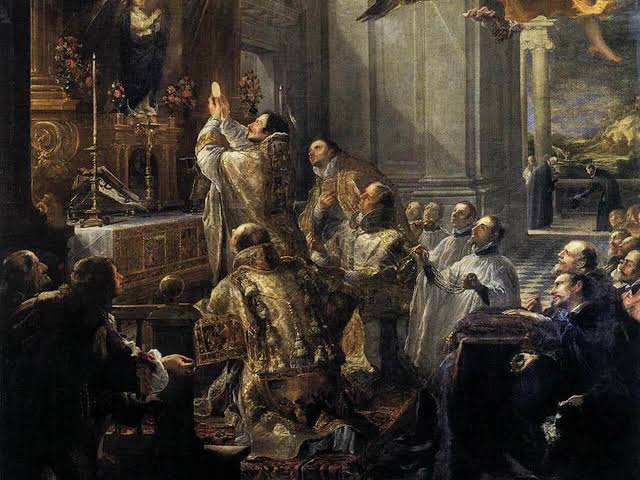
Catholic doctrine, expressed in the liturgy, the Magisterium, and the constant practice of the Church, recognizes that there are two degrees of ministerial participation in the priesthood of Christ: the episcopacy and the presbyterate.
The diaconate is intended to help and serve them.
For this reason the term sacerdos in current usage denotes bishops and priests but not deacons.

Yet Catholic doctrine teaches that the degrees of priestly participation (episcopate and presbyterate) and the degree of service (diaconate) are all three conferred by a sacramental act called “ordination,” that is, by the sacrament of Holy Orders. (CCC # 1554)
EUREKA 07: Discovering Catholic Treasury – through a Lenten lens!

“INTRODUCTION TO THE DEVOUT LIFE”

A. What is it?

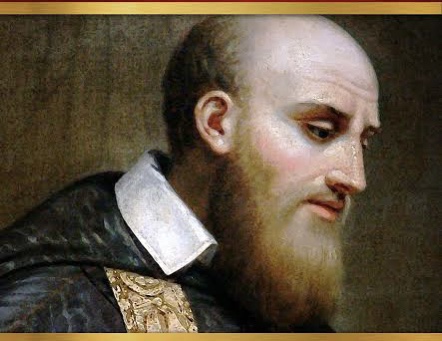
“Introduction to the Devout Life” is a Spiritual Classic written by St Francis de Sales, published in 1609.
“The Introduction” is a compilation of letters and notes used in the Spiritual Direction of his cousin, Madame Marie de Charmoisy, the wife of an ambassador of the Duke of Savoy.
The writings of the book are addressed to the title, “Philothea” (= Lover of God)
Pope Pius XI at the declaration of St Francis de Sales as the Patron Saint of Catholic Writers and Journalists in 1923, wrote about the “Introduction to the Devout Life”:
… “Would that this book – the most perfect of its kind in the judgment of his contemporaries, as it was at one time in the hands of all – were now read by all, so that true piety might everywhere flourish again, and the Church of God might rejoice in seeing sanctity common among her sons.”

The “Introduction to the Devout Life” is a practical guide and exhortation to all people, to life a life of holiness.
It is also an excellent reference in Spiritual Direction.
The “Introduction to the Devout Life” consists of Five Parts:

B. What does it speak of?

  1. Part I: Attaining a Firm Resolution to the Devout Life

It speaks of the nature of True Devotion and how all are called to it
The necessity of a Spiritual Guide for progress in the Devout Life is emphasized
“Purifying the soul” is the first step, and towards this, 10 mediations are provided

  1. Part II: Prayer and the Sacraments

The necessity of Prayer and how it starts with “placing oneself in the Presence of God” is explained.
It also touches up the topics of Holy Communion, Invocation and Meditation with the Saints, Spiritual Bouquets, Retreats, Aridity in Prayer and the Word of God.

  1. Part III: The Practice of Virtue

It explains how to practice individual virtues like Patience, Meekness, Humility, Obedience, Chastity, and Poverty.
It outlines 3 themes: (i) Discerning which virtues to work on (ii) Practising individual virtues in everyday life (iii) Remaining devout in dealings with society.

  1. Part IV: Some Ordinary Temptations and how to overcome them

This is the “troubleshooting guide” or “snares of the enemy,” which explains what Philothea – the reader – can do when he/she encounters certain stumbling blocks.

  1. Part V: Renewing and Confirming the Soul in Devotion

The last part speaks of an “annual review,” which St. Francis de Sales recommends undergoing every year around the time of the Feast of the Lord’s Baptism.
Philothea – the reader – is encouraged to examine oneself closely, to give thanks for all signs of progress – however tiny – and frankly acknowledge where one has slowed down the progress through willfulness or sloth.

C. Pointers for Reflections

  1. A call for all people towards Holiness

St Francis de Sales says: “My purpose is to instruct those who live in town, within families, or at court, and are obliged to live an ordinary life as to outward appearances…
… It is an error, or rather a heresy, to wish to banish the devout life from the regiment of soldiers, the mechanic’s shop, the court of princes, or the home of married people… Wherever we may be, we can and should aspire to the perfect life.”
This passage from St. Francis de Sales was a major inspiration to the Fathers of the Second Vatican Council and stands behind one of the central exhortations of Vatican II – “The Universal Call to Holiness.”

  1. The daily examples/articles/experiences of life are used remind/teach about the Presence of God

This was the “Jesus style” – using familiar experiences of the people to teach a religious truth, through a parable or metaphor.
The “Introduction to the Devout Life” has incidents taken from the Bible and the biographies of Saints. It also makes use of stories and natural science information (especially from the writings of Greek philosopher, Aristotle and the Roman author, Pliny the Elder)

D. What virtues/points can we pick up from the “Introduction to the Devout Life” for this Season of Lent?

  1. Aspiring towards holiness
  2. Growing in little virtues

E. Tips to practice these virtues

  1. Thank God for the state of life that we are in, and realize that God is calling us to sanctify and make holy, each work that we do, specific to our vocation

Let every duty and responsibility that we do – little or big – be seen and done, as steps towards holiness and sanctity; hence, “do everything in love – Bloom where you are planted!”

  1. Identify our “root vice” (= the negative tendency in us, which causes/leads to other sins)

Consciously practise the opposite “root virtue”
Daily make the ‘Examination of Conscience’ to check the progress
If successful, in humility, thank God.
If not successful, never be discouraged – instead, seek to practise the same “root virtue”, the following day.

May this Lent and the familiarity with this Spiritual Classic by St Francis de Sales, “Introduction to the Devout Life” help us to grow in our acclamation: “Eureka – I have found the Lord”

CLICK the following link, to READ the full text of the INTRODUCTION TO THE DEVOUT LIFE:
http://www.philothea.de/devout-english.html

God Bless! Live Jesus!

✝️ REFLECTION CAPSULE – March 04, 2023: Saturday

“Making a journey of considering people not as a “burden” but as a brother, not as a “stress” but as a sister!”

(Based on Deut 26:16-19 and Mt 5:43-48 – Saturday of the 1st Week in Lent)

The following story is known to us, perhaps in different forms…

A gentleman who was walking down the streets of a city was greatly interested too look at the street children – many of whom were carrying smaller children upon their backs – and managing at the same time to play their games.

“It is too bad,” said the gentleman to one little fellow, “that you have to carry such a heavy burden!”

“He’s no burden, Sir!” came the quick reply; “he’s my brother.”

The child who was carrying his younger sibling, did not count the pain or the difficulty in carrying; instead embraced the situation joyfully.

“He’s no burden, Sir… he’s my brother” – is a phrase that ought to strike a chord in our hearts.

As Christians, we need to make this journey…
… of considering people not as a “burden” but as a brother!
… of considering people not as a “stress” but as a sister!

The Gospel of the Day is an powerful exhortation by Jesus to make this transition from considering people as a “burden” and “stress”…
… and instead look at them as “brothers and sisters”, extending the Christian virtue of unconditional love to all.

Jesus, in the Sermon on the Mount, continues to pull down barriers of “comfort and coziness” by challenging His disciples to rise above the normal standards of the world.

Today He speaks on the aspect of “Love”.

Love is the fundamental and innate vocation of every human person.

Dictionaries define love as being ‘a profoundly tender, passionate affection for another person’ or a ‘feeling of warm personal attachment or deep affection’.

Generally speaking, love is considered only to be a human ’emotion or feeling’.

It is something that is usually understood as being “felt” or “sensed” or “experienced”.

Jesus surely did consider “love” as an emotion and a feeling.

Therefore…

He loved the company of people….
He cherished affection of those who followed Him…
He treasured relationships and fostered friendships with all…

But beyond these “external” dimensions of Love…
… Our Blessed Lord taught and showed a higher aspect of love.

Love, not just being a “feeling” but ” love as a “decision”.

Love, not just being a “sensation” but love as a “commitment”

Therefore Jesus says, “For if you love only those who love you, what recompense will you have?” (Mt 5: 46)

Love, when understood only as a “feeling” or an “emotion” can get reduced to being just an “object” or a “thing”

Just as one exchanges goods with each other, love is also exchanged with one another.
Just as one shares one’s belongings and possessions with one another, love is also shared with one another
Just as one gives and takes things from each other, love is also given and taken from each other

But the Lord presents a higher understanding of love and demands a much supreme expression of love from His followers: “Be perfect as your heavenly Father is perfect” (Mt 5: 48)

Love to be a “virtue” has to surpass the ordinary realms of being “an emotion” and “feeling” and transcend to being a “radical decision” and a “faithful commitment”.

When someone hurts us, we don’t “feel” like loving…

But Jesus says, “Love that person”, because love is a “daring decision”

When someone continues to be lukewarm, we don’t have any “emotions” of love…

But Jesus says, “Love that person”, because love is an “absolute allegiance”

When someone continues to cause pain, we don’t “experience” any love…

But Jesus says, “Love that person” because love is a “challenging commitment”

Now this teaching certainly irks our “normal” understanding.

How can I possibly love someone who has hurt and killed me, mentally?
How can I be expected to show love to someone who still hurts me, even intentionally?
How can I be told to love people who have no regard for me at all and treat me as an object?

It seems to be an impossibility.
It seems to be absurd.

But let us look to the Crucified Lord…
… and we have the perfect example of this Love being lived in actuality!

Jesus on the Cross shows that love is to be a “daring decision”, an “absolute allegiance” and a “challenging commitment!”

Love to be a “virtue” has to surpass the ordinary realms of being “an emotion” and “feeling”…
… and transcend to being a “radical decision” and a “faithful commitment”.

One may not be able to “show” love…
… but can we still, at least pray and wish for the good of the person?

One may not be able to “talk” freely to the one who has hurt…
… but can we still, at least refrain from wanting bad to happen to that person?

One may not be able to “resist” from having bad feelings when encountering one’s enemy… … but can we still, at least offer the person to the Mercy of God?

This teaching certainly seems to be a big “burden” and a significant “stress”

But this is where, we need to make a journey…
… of considering people not as a “burden” but as a brother!
… of considering people not as a “stress” but as a sister!

The Lord has walked through this journey.
He is still with us, to accompany us.

This journey may be hard
This journey may be hurting
This journey may be painful

But the Lord says, “My grace is sufficient for you!” (2 Cor 12: 9)

Let us trust Him!

Let us be courageous in Him!

God Bless! Live Jesus!


📖 Discovering the beauty of the Catholic Church through the Catechism
THE SACRAMENT OF HOLY ORDERS IN THE ECONOMY OF SALVATION – “In the Name of the whole Church”

“In the name of the whole Church” does not mean that priests are the delegates of the community. The prayer and offering of the Church are inseparable from the prayer and offering of Christ, her head; it is always the case that Christ worships in and through his Church.
The whole Church, the Body of Christ, prays and offers herself “through him, with him, in him,” in the unity of the Holy Spirit, to God the Father.
The whole Body, ‘caput et membra,’ prays and offers itself, and therefore those who in the Body are especially his ministers are called ministers not only of Christ, but also of the Church.

It is because the ministerial priesthood represents Christ that it can represent the Church. (CCC # 1553)

EUREKA 06: Discovering Catholic Treasury – through a Lenten lens!

“GAUDIUM ET SPES”

A. What is it?
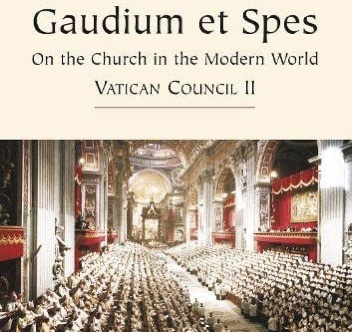
“Gaudium et Spes” is one of the four Major Constitutions of the Second Vatican Council.

It was promulgated by Pope Paul VI on Dec 7, 1965 – the day the Council ended.
The title “Gaudium et Spes” is a Latin phrase which means “The Joys and Hopes”
It is the longest of all the documents of Vatican II

B. What does it speak of?

The chief focus of “Gaudium et Spes” is on how the Church is to seek to provide meaningful answers to the questions people have about life.

The following are the major highlights of this important document of Vatican II

Introduction: The Situation of Men in the Modern World

Traditions and values are being lost. Moral conflicts are escalating as a result of a false way of living, and people’s moral conscience is playing less role. Oppression and neglect for the poor is escalating.
The world is capable of acts that uplift life and acts that destroy life. There is an addiction to material things. Yet, there are many who desire to know what the purpose of life is.
“Gaudium et Spes”, addressing all people of the world, confidently proclaims that Jesus Christ, true God and true Man, is the answer to all the perplexing questions that plague humankind today

Part I: The Church and Man’s Calling:

To be a human and Christian today is to read the signs of the times, seek common values and proclaim Jesus Christ.

I. The Dignity of the Human Person: The dignity of being human, stems from being created in God’s image. There is a law of love written in our hearts – an inner voice that calls us to love God and humanity. In following Jesus, we learn to love in such a way that our truest self is revealed.

II. The Community of Mankind: God creates humans to be together. Human community reflects Trinitarian community. We must learn to love and respect those who think differently than us. Each of us is responsible to fulfill the call to live justly, and to walk in love always.

III. Man’s Activity throughout the World: A person is truly valued by “who they are”, not by “what they do”. Whatever is done to promote justice and dignity is infinitely more valuable than what is technologically created. The hope of the world rests in love.

IV. The Role of the Church in the Modern World: The Church is the sign of the presence of God. The Church exists because of God’s love for us. The Church’s greatest responsibility and challenge is to promote and attain unity. We need to enter into honest discussion with mutual love and respect. Christ was, is, and always will be the Center of the Church. A concise Ecclesiology of the Church as “leaven” in the world is manifested.

Part II: Some Problems of Special Urgency
I. Fostering the Nobility of Marriage and the Family: Society is harmed by polygamy, divorce, free-love, excessive self-love, and improper use of birth control. Sacramental married life is a covenantal love of man and woman, created by God. Love in marriage is Divinely Ordained and is expressed through holy sex and lived out, in raising a family. All life comes from God and is therefore, Sacred.

II. The Proper Development of Culture: Growth in natural human and social science, as well as communications and technology, provide a means to change culture positively and negatively. The Church must remain faithful to its Traditions and be responsive to its universal mission.

III. Economic and Social Life: There is more than enough available to the world to provide for the needs of humanity. A just world seeks to provide opportunity for all to grow intellectually and morally. The concept of work also implies, how we can serve one another.

IV The Life of the Political Community: Authority must function as a moral force and not as a tyranny. The truest duty, politically, is to oppose injustice, oppression, and intolerance. The work of the Church is to preach the Faith and teach social doctrines. The Church has the right and responsibility to pass moral judgments on society when the salvation of souls is at stake.

V The Fostering of Peace and the Promotion of a Community of Nations: Peace is not the absence of war. Peace is directly relevant to people’s ability to love. Peace requires sincere respect for others and an effort to see that the basic human needs of others is met. Peace flows from Christ. Peace is not possible where these exist: injustice, economic inequality, thirst for power, or disregard for human life.

C. Pointers for Reflections

  1. “Gaudium et Spes” appeals to all people to not be afraid of seeking to find the “true meaning of life”

We are often lost in the uncertainties, worries and cares of the world. The Document calls to “go deeper” and thus live a meaningful and purposeful life
This meaning is to find its fullness in a “Life in Christ” – Who is “the Key, the Censer and the End of all of human history” (GS, 10).

  1. The Church is called to be a sign of unity

Today an honest and critical analysis of the Church can make us to confess that there a lot of factors of disunity: language, rite, social-status, caste, region etc
We are challenged to resolve these differences – despite the mighty challenge before us – so that we can truly witness ourselves as “The One Body of Christ!”

D. What virtues/points can we pick up from “Gaudium et Spes” for this Season of Lent?

  1. Discovering Jesus as the “Greatest Meaning of our Life” and thus like the disciples have the “Eureka-shout” – “We have found the Messiah!” (Jn 2: 41)
  2. Be a person who fosters unity and facilitates reconciliation

E. Tips to practice these virtues

  1. Make an honest examination of life and draw a list of the priorities of our life; and thus check if God tops the list.

If not, what do we need to do to have “First things First” – God as the Most Important Person and Goal of my life

  1. Everyday make an “Examination of Conscience” and have the courage to forgive and be reconciled with those to whom we are not in good terms.

May this Lent and the familiarity with the Second Vatican Council Pastoral Constitution on the Church in the Modern World “Gaudium et Spes” help us to grow in our acclamation: “Eureka – I have found the Lord”

God Bless! Live Jesus!

CLICK the following link, to READ the full text of GAUDIUM ET SPES:
https://www.vatican.va/archive/hist_councils/ii_vatican_council/documents/vat-ii_const_19651207_gaudium-et-spes_en.html

✝️ REFLECTION CAPSULE – March 03, 2023: Friday

“Making genuine, practical and realistic efforts in the fight to sanctify and purify our anger!”

(Based on Ezek 18:21-28 and Mt 5:20-28 – Friday of the 1st Week in Lent)

Sinbad the Sailor is a fictional character.

His tales are mostly voyage stories – fantastic adventure stories through the seas of Africa and South Asia.

One of the tales narrates of how Sinbad and his sailors landed on an island.

On arriving, they saw coconuts, high up on the trees; which could very well quench their thirst and satisfy their hunger.

But these coconuts were far beyond their reach.

However, they noticed a large number of monkeys on the branches of the trees.

Soon enough, Sinbad and his men, began to throw stones and sticks up at the apes.

This enraged the monkeys and they began to seize the coconuts…
… and hurl them down at the men on the ground.

This was exactly what Sinbad and his men wanted!

They got the monkeys so angry…
… that they gave in to satisfy the needs of those who made them angry!

This is what anger does…
… we play ourselves, into the hands of those who cause us to lose our temper!

We end up “reacting”…
… than “responding!”

The Gospel of the day is a teaching by Jesus on this very important concern of Christian Life: Anger.

Killing is considered to be a serious evil in every society and every way of life

Killing in its basic form is usually considered only in the sense of the physical body.

But the Lord today presents a higher perspective in the understanding of killing…
“You have heard that it was said to the men of old, ‘You shall not kill’; and whoever kills shall be liable to judgment’. But I say to you that everyone who is angry with his brother shall be liable to the judgment….” (Mt 5: 21)

The Lord expands the understanding of killing beyond the physical body…

A person engages in killing… if, by anger…
… the social standing of the other person is upset
… the emotional state of the other person is wounded
… the spiritual balance of the other person is disturbed

We could understand anger from various perspectives…

  1. Anger as Quick temper
    Prov 15:18 says, “An ill-tempered man stirs up strife…”

It is said that speak when one is angry, one makes the best speech that would be regretted much!

Quick temper sometimes…
…. forms part of our temperament
… comes even unknowingly
… is instigated by other’s actions

Yet, in all this, one ought to…
… rise quickly from remaining in the state of anger.
… become conscious of the occasions which can excite anger
… see that the temper is not fed or nurtured or intensified

  1. Anger which leads to stubbornness
    Eph 4:26: “…. do not let the sun to set on your anger”

Sometimes, the anger within is allowed to grow so much…
…that we get habituated to getting angry for even tiny and trivial matters
…that we lose our peace of mind, and sometimes even become indifferent
…that we choose not to budge from our position or viewpoint and remain adamant

Yet, we need to make efforts…
… to try to overcome our ego and self mentality and seek to make amends with the person
… to lower oneself in humility (even if we are right) and ease the situation of annoyance

Anger needs to be sanctified…
… channelled in the proper way!

One may feel a ‘just’ anger at….
… the immense corruption in the world and even in religious circles
… the forces of evil that seem to root away even faint traces of hope
… the indifferent and unchanging attitudes and temperaments of people which is sickening.

Yet… even these ought to get channelled properly
… even these ought to be routed in the right manner

Yes… even our just anger needs to be sanctified and purified in the burning furnace of God’s Love.

Anger is indeed a major tendency that is a cause of distress for many of us.

Anger is indeed a prime inclination that is a root of sin for many of us.

There are moments, when anger captures us and we throw ourselves into people…
… throw words which are not appropriate
… throw emotions that would cause shame and guilt later
… throw actions and deeds that would cause pain and injury

Let us make genuine, practical and realistic efforts in the fight to sanctify and purify our anger.

Undoubtedly…
… it is painstaking
… it requires deeper attempts
… it requires committed determination!

But the Lord assures His Grace to help us and His Love to encourage us!

Let us make efforts to be people, who not simply “react”…
… instead, in patience and gentleness, seek to “respond!”

God Bless! Live Jesus!


📖 Discovering the beauty of the Catholic Church through the Catechism
THE SACRAMENT OF HOLY ORDERS IN THE ECONOMY OF SALVATION – In the name of the whole Church”

The ministerial priesthood has the task not only of representing Christ – Head of the Church – before the assembly of the faithful…

… but also of acting in the name of the whole Church when presenting to God the prayer of the Church, and above all when offering the Eucharistic sacrifice. (CCC # 1552)

EUREKA 05: Discovering Catholic Treasury – through a Lenten lens!

“SACROSANCTUM CONCILIUM”

A. What is it?

“Sacrosanctum Concilium” is one of the four Major Constitutions of the Second Vatican Council.
It was promulgated by Pope Paul VI on 4 December 1963.
The title “Sacrosanctum Concilium” is derived from the opening lines of the Document and means “This Sacred Council”
Liturgy was the first topic that was discussed at the Second Vatican Council

B. What does it speak of?

The purpose of “Sacrosanctum Concilium” is to achieve greater Lay Participation in the Church’s liturgy.
This Constitution on the Liturgy is divided into 7 chapters:

  1. General Principles for the Restoration and Promotion of the Sacred Liturgy

Jesus Christ is the Source of the Sacred Liturgy, which is the public worship of the Church. The sacred liturgy allows us to experience the heavenly liturgy on earth
The faithful must come to the liturgy with the proper dispositions, by fully, actively, and consciously engaging in the liturgical celebration – participating both internally and externally. Both Clergy and Laity must be instructed in the nature and practice of the liturgy since It is a communal event.

  1. The Most Sacred Mystery of the Eucharist

The Holy Eucharist perpetuates the sacrifice of the Cross.
At every Mass, the Lay Faithful join the Priest in offering the Divine Victim, and in doing so, they must offer themselves also that they might enter into a more perfect communion with God and each other.
The “Treasures of the Bible” must be lavishly poured out at every Mass. The Liturgy of the Word and the Liturgy of the Eucharist form a single, united act of worship.

  1. The Other Sacraments and the Sacramentals

The purpose of the Sacraments is threefold: Give worship to God, Build up the Body of Christ, and Sanctify humanity.

  1. The Divine Office

The Divine Office, or Liturgy of the Hours, is the public prayer of the whole Church.
It offers Praise to God, intercedes for the entire world, and sanctifies each day and must be prayed with attention and devotion so as to nourish piety and personal prayer.

  1. The Liturgical Year

The Church unfolds the entire Mystery of Christ throughout the liturgical year in order to allow the faithful to receive the Riches of Christ.
The Church honours the Blessed Virgin Mary and the Saints by celebrating their feast days and acknowledging their merits, examples, intercession, and love.

  1. Sacred Music

Sacred music is a “treasure of inestimable value” that gives Glory to God and helps to sanctify the faithful. It also enhances prayer and contributes to the solemnity of the sacred liturgy.
Gregorian chant retains “pride of place” in the liturgy, but other kinds of sacred music are allowed and encouraged.

  1. Sacred Art and Sacred Furnishings

Works of Sacred Art must be protected and cultivated so that they may be “worthy, becoming, and beautiful signs and symbols of things supernatural.”

C. Pointers for Reflections

  1. The Document calls for a “full and active participation” by all in the Sacred Liturgy

In our local language/parlance, we sometimes say, “I am going to SEE Mass”. This statement/attitude is to undergo a revolutionary change, as we are all PARTICIPANTS at the Holy Mass.
The “passivity” during liturgy has to be transformed to an “active participation”, so as to derive the full fruits of the Sacred Mysteries.

  1. “Sacrosanctum Concilium” speaks of retaining sound tradition whilst being open to legitimate progress

The Document provides a balance between two strong extreme trends seen today in the Church
(a) Make Liturgy “relevant” by making it appealing or sometimes, sadly, even entertaining
(b) Make Liturgy insular and almost museum-like, with a rigid fixation on mysterious details.
The history of the Liturgy, down through the centuries, shows organic development and the Document affirms and exhorts to understand the True Nature of Sacred Liturgy: It is the saving action of Jesus Christ in his Church.

D. What virtues/points can we pick up from “Sacrosanctum Concilium” for this Season of Lent?

  1. Give the Holy Eucharist the greatest and the highest place in our life of Faith
  2. Prepare well to participate in the Holy Mass

E. Tips to practice these virtues

  1. Make sure to attend Mass on all Sundays and Days of Obligation, and to spend time with Jesus in the Blessed Sacrament, as often as possible (personally as well as a family/community)

Fall in love with Jesus in the Holy Eucharist, so as to derive strength and power from this “Source, Strength and Summit” of our Life!

  1. Read the Scriptures (1st Reading/Psalm/2nd Reading/Gospel) before going for the Holy Mass

Look into how these Readings affect – personally and practically
Offer all the situations of one’s life, at the Holy Mass.
Receive Jesus – in the Word and Eucharist – with much devotion and love
Learn to Live (practise) the fruits of the Eucharist, in day-to-day life

May this Lent and the familiarity with the Second Vatican Council Constitution on the Sacred Liturgy “Sacrosanctum Concilium” help us to grow in our acclamation: “Eureka – I have found the Lord”

God Bless! Live Jesus!

CLICK the following link, to READ the full text of SACROSANCTUM CONCILIUM:
https://www.vatican.va/archive/hist_councils/ii_vatican_council/documents/vat-ii_const_19631204_sacrosanctum-concilium_en.html

✝️ REFLECTION CAPSULE – March 02, 2023: Thursday

“Trusting and always keeping in mind that God ‘sees us as if we are the only child in the whole world!’”

(Based on Esth C:12, 14-16, 23-25 and Mt 7:7-12 – Thursday of the 1st Week in Lent)

A story is told of a group of tourists who were visiting a large sheep farm.

The guide of the tourists was explaining how the little lambs are taken care by the mother sheep.

To demonstrate this, he took one little lamb from the farm…
… and placed it in a large enclosure with thousands of sheep.

The noise of the bleating sheep was deafening.

The little lamb, who seemed lost in the midst of that crowd…
… after a moment of silence, began crying loudly.

As it bleated, the mother lamb, who was at the end of the enclosure, heard the cry…
… and rushed towards her little lamb.

As the tourists were wonder-struck at this sight, the guide – who was a Christian – made a statement:
“This is how it is with God also!
We should never imagine that we are beyond the reach of God!

He sees us as if we are the only child in the whole world!”

The Gospel of the day presents this assurance given by Jesus, of how every cry of prayer is heard and answered by the Lord, in His Holy Will…
… and His teaching on having a proper attitude and disposition in prayer.

The Lord makes a comparison in His teaching on prayer:

The “good” attitude that is displayed by human beings, even though they are imperfect and limited…
… and the “Good” approach that is always exhibited by our God, Who is Perfect and Generous!

Jesus tells: “Is there anyone among you who, if your child asks for bread, will give a stone? Or if the child asks for a fish, will give a snake?” (Mt 7:9-10)

The Lord contrasts something that is good, with something that is quite hard to imagine or even dangerous…

Asking for bread… can a stone be given?
Asking for fish… can a snake be given?

Using this practical approach, the Lord drives home a very important point:

A human father – with all limitations, weaknesses and struggles – will always strive to give the best for his child
A human father – with all the shortcomings, hardships and labours – will always ensure to provide the finest for his child
… Then how much more is it not understood, that God, Who is all-good and caring, will DO THE BEST ALWAYS for all of us, His Beloved Children!

Therefore, we are asked to cultivate this very vital virtue: Trusting in the Lord!

When we trust in God…
… our prayers become meaningful!
… our struggles become salvific!
… our lives become joyful!

The beautiful prayer of Queen Esther is a wonderful inspiration for all of us, to totally trust in the Lord…
… especially in times of struggles, difficulties and problems of life:
“O my Lord, you only are our king; help me, who am alone and have no helper but You…
Save us by Your hand, and help me, who am alone and have no helper but You, O Lord” (Esth C:3, 14)

In life, we will have moments when we feel lost out…
… and we keep crying to God in prayer.

But let us always know, that our Loving God, hearing our cry…
… will always rush towards us!

Let us grow in our trust and always keep in mind:
“We should never imagine that we are beyond the reach of God!

He sees us as if we are the only child in the whole world!”

God Bless! Live Jesus!


📖 Discovering the beauty of the Catholic Church through the Catechism
THE SACRAMENT OF HOLY ORDERS IN THE ECONOMY OF SALVATION – In the person of Christ the Head

This priesthood is ministerial.
“That office . . . which the Lord committed to the pastors of his people, is in the strict sense of the term a service.”
It is entirely related to Christ and to men. >> It depends entirely on Christ and on his unique priesthood; it has been instituted for the good of men and the communion of the Church.
The sacrament of Holy Orders communicates a “sacred power” which is none other than that of Christ.
The exercise of this authority must therefore be measured against the model of Christ, who by love made himself the least and the servant of all.

“The Lord said clearly that concern for his flock was proof of love for him. (CCC # 1551)

EUREKA 04: Discovering Catholic Treasury – through a Lenten lens! DEUS CARITAS EST

“DEUS CARITAS EST”

A. What is it?

“Deus Caritas Est” is an Encyclical by Pope Benedict XVI released on Jan 25, 2006 (Feast Day of St Paul).
The title “Deus Caritas Est” means “God is Love”. It is sub-titled “De Christiano Amore” (Of Christian Love)
The title is derived from the First Letter of St John: “God is love, and he who abides in love abides in God, and God abides in him” (I Jn 4:16).

B. What does it speak of?

The Encyclical can be seen as a progression with two major portions:

I. The first part presents a theological and philosophical reflection on the different dimensions of “love” – expressed in the Greek words for love: Eros, Philia, Agape. It explains some essential facts concerning God’s Love and the intrinsic connection of this Love with human love.

II. The second part speaks of the charitable activities of the Church as an expression of Love which draws its power from contemplative union with God. It also refers to the Church’s threefold responsibility: (1) Proclaiming the Word of GOD (Kerygma-Martyria) (2) Celebrating the Sacraments (Leitourgia) (3) Exercising the Ministry of Charity (Diakonia).

C. Pointers for Reflections

  1. The deep meaning of “Love” is called to be reflected up

The term “Love”, one of the most used and abused words in today’s world.
Sometimes the term “Eros” is completely rejected as being negative, in favour of “Agape”
The Encyclical, however, says that “Eros” – Ascending Love – and “Agape” – Descending Love – can never be separated. The more the two find the correct equilibrium in their different dimensions, the more the true nature of love is realized.
Even if “Eros” is at first mainly desire, in drawing near to the other person it becomes less and less concerned with itself, increasingly seeks the happiness of the other, bestows itself and wants to “be there for” the other. It is then that the element of “Agape” enters into this love.

In Jesus Christ, the “Eros-Agape” reaches its most radical form and this is today to be experienced in the Holy Eucharist

If one wishes to give love, they must also be able to receive love. Yet to become such a source, one must constantly drink anew from the original source – Which is Jesus Christ – from whose pierced heart flows the love of God..

  1. The Church must display the Love of God through charitable works

The Church is called to proclaim the Word of God, celebrate the Sacraments, and practice the Ministry of Charity – all of which are equally important.
For the Church, charity is not a kind of welfare activity… but is a part of her nature, an indispensable expression of her very being.”

D. What virtues/points can we pick up from “Deus Caritas Est” for this Season of Lent?

  1. Deepen the conviction of one of the most fundamental truth of our life: God is Love and This Love is lavished upon us, at ALL times and in ALL situations of our life
  2. All our actions – big or small, duties or volunteering – all should be done “with love and for love”

E. Tips to practice these virtues

  1. Contemplating more on the powerful aspect that “God is Love and He Loves me just as I am”, so as to do away with a “fearful/punishing” image of God that we have often created in our lives.
  2. In all the works that we do, consciously offer it to the Lord and say a simple prayer like: “Lord, I do this action for you, with Love. Let all glory be to you!”

May this Lent and the familiarity with the Encyclical “Deus Caritas Est” help us to grow in our acclamation: “Eureka – I have found the Lord”

God Bless! Live Jesus!

Click the following link to read the full text of DEUS CARITAS EST:
https://www.vatican.va/content/benedict-xvi/en/encyclicals/documents/hf_ben-xvi_enc_20051225_deus-caritas-est.html

✝️ REFLECTION CAPSULE – March 01, 2023: Wednesday

“Recognising the many wonders and miracles the Lord has worked in our lives!”

(Based on Jonah 3:1-10 and Lk 11:29-32 – Wednesday of the 1st Week in Lent)

Remember the school-going days…
… when there was the (usually considered as) “terrorizing” subject called as Mathematics?

One of the questions that would frequent in a Mathematics question paper, would be questions of the type: “Prove that…”

Sme examples of these theorems or statements “to be proven” would be…

“Prove that” the sum of two even integers is even.
“Prove that” the square root of two, is an irrational number.

Such examples of proof require a precision in the logic and methodology, so as to arrive at the proper conclusion of the facts.

The Gospel of the Day presents a similar question of “prove that” nature.

The Examiners posing the question: The people in the crowd
The student facing the question: Jesus
The statement to be proved: Prove that You, Jesus, are the Messiah, the Son of God.
The nature of proof required: Through signs and miracles.

This student, Jesus has faced such similar tests many times before.

Many times in His life, He has been worked up by many to prove His status…
Many times in His life, He has been demanded things to prove His authority…

He is an experienced student!

On the Mount of the Temptations… (Lk 4: 1-13)
Satan demanded Jesus to “prove that” He was the Son of God…
… by working a miracle
… by bowing to Him
… by jumping down

While at ministry…
… the Pharisees and teachers of the Law asked Jesus to “prove that” He had the authority to forgive sins. (Lk 5:21)
… the disciples of John asked Jesus to “prove that” He was indeed the One who was to come or whether they should look for another (Lk 7:19)
… some in the crowd asked Jesus “to prove that” He worked wonders and even drove out demons by His own power, by asking for a sign from heaven (Lk 11:16)

The Student, Jesus, has already faced many such “to prove that” situations!

Today’s Gospel once again puts the Student, Jesus to the test “to prove that” He is the Messiah by a demand for signs!

Am I also a person who is guilty of making Jesus a student, by putting Him “to the test” by asking Him “to prove” many things in life…?

In times of sicknesses and pains…
… maybe I demand signs from the Lord to “prove that” He is indeed a Healing God.

In times of financial difficulties…
… maybe I demand signs from the Lord to “prove that” He is indeed a Provider God.

In times of mental tensions and worries…
… maybe I demand signs from the Lord to “prove that” He is indeed a Caring God.

In times of spiritual aridity and emptiness…
… maybe I demand signs from the Lord to “prove that” He is indeed a Living God.

Of course, from a human perspective. – owing to our limitations and weakness – we do sometimes ask some signs or miracles or some wonders.

But these demands for sign and miracles should not become THE criteria for proving God’s Existence or even His Presence…
These demands for some external manifestations and wonders should not become THE yardstick for proving the might and power of God…

We should not be holding God at ransom, by demanding signs

We rather need to look back into our lives, and see the various moments and the times when…
… He has caressed us with His affection
… He has nurtured us with His love
… He has filled us with His presence

The Lord gives to the people in the crowd, the signs and examples of the people of Nineveh and the Queen of Sheba.

The people of Nineveh and the Queen of Sheba…
… were gentiles
… were not the chosen people
… were not people who had a first-hand experience of God.

Yet, when they heard the preaching of Jonah and saw the glory of Solomon…
… they believed!

They did not demand miracles…
They did not demand signs…
… yet, they believed!

The Lord through today’s Gospel makes us to realize the worth and the value of the many wonders and the signs He has already worked in our lives.

We sometimes might tend to take God’s blessings “for granted”

We sometimes might tend to not consider God’s graces as “something big”

We sometimes might tend to not able to even see something “special” in God’s favours .

Today is a chance for us to have a retrospective into our lives…
… and recognising the many, maybe tiny and small, wonders and miracles the Lord has worked in our lives.

None can say, “I have no miracles in my life!”

From our birth, to our upbringing, our education, our formation, our works, our surroundings, our people etc…
… at every step, we have many miracles and signs of God!

The hand of the Lord is very much at large in our lives.

We don’t need to become a people which poses God with “prove that” type questions!

Let us see…
Let us realize..
… and let us thank!

God Bless! Live Jesus!


📖 Discovering the beauty of the Catholic Church through the Catechism
THE SACRAMENT OF HOLY ORDERS IN THE ECONOMY OF SALVATION – In the person of Christ the Head

This presence of Christ in the minister is not to be understood as if the latter were preserved from all human weaknesses, the spirit of domination, error, even sin.
The power of the Holy Spirit does not guarantee all acts of ministers in the same way.
While this guarantee extends to the sacraments, so that even the minister’s sin cannot impede the fruit of grace…
… in many other acts the minister leaves human traces that are not always signs of fidelity to the Gospel

… and consequently can harm the apostolic fruitfulness of the Church. (CCC # 1550)

REFLECTION CAPSULE – February 28, 2023: Tuesday

“With greater trust and confidence, throwing ourselves, into the loving arms of our Heavenly Father!

(Based on Isa 55:10-11 and Mt 6:7-15 – Tuesday of the 1st Week in Lent)

In the centre of London stands an iconic building – St Paul’s Cathedral.

This majestic structure is built in the shape of a cross…
… with a large dome crowning the intersection of its arms.

At 111.3 metres high, it is one of the largest cathedral domes in the world.

Climbing up 259 steps inside the dome, one reaches the “Whispering Gallery”.

The speciality of this gallery is:
When one stands on one side of the circular gallery, and whispers…
… these soft tones of sound can be heard, on the other side – even 30 metres away.

The sound bounces back many times on the smooth walls of the dome…
… and the whisper can be heard even at a far distance.

What is said, even in the lowest of tones, can be heard, on the opposite side of the dome.

In the spiritual realm, the entire space is like this “whispering gallery”…
… even the lowest of tones, are heard by our Loving God.

No matter how low we whisper, He hears!
No matter how silent be our prayer, He hears!

Are we able to have such a trust and confidence in our prayer life?

The Gospel of the Day is a beautiful initiation by Jesus to help us to know, grow and deepen our understanding of God as being a Loving and Caring Father…
… as the One Who listens to our every prayer – including the ones whispered in the lowest of tones!

Today’s Gospel passage begins with Jesus issuing a warning on the danger of making prayer a mere “lip-service”
“In praying, do not heap up empty phrases as the Gentiles do….” (Mt 6:7)

What was Jesus meaning by the clause “heaping up empty phrases as the Gentiles…”?

One of the notable Gentile groups at the time of Jesus, were the Romans, under whose occupation the Jews were living.

It’s noteworthy to see some of the aspects of the ancient pagan Roman prayer:

All sacrifices and offerings required an accompanying prayer to be effective.

It was declared that “a sacrifice without prayer was thought to be useless and not a proper consultation of the gods.”

Prayer – the spoken word was considered the single most potent religious action.

And knowledge of the correct verbal formulas were the key to efficacy.

An accurate naming was vital for tapping into the desired powers of the deity invoked.

Hence public religious ritual had to be enacted by specialists and professionals faultlessly…
… even a small a mistake would require that the action, or even the entire festival, be repeated all over!

(A historian named Livy reports of an occasion when the presiding magistrate at the Latin festival forgot to include the “Roman people” among the list of beneficiaries in his prayer…
… the festival had to be started all over!)

The Greek word used for “empty phrases” is “battalagesete”.

It means to stammer, babble, talk gibberish, or to repeat the same things over and over mindlessly!

With this in background, Jesus emphatically declares that prayer is not about “heaping empty phrases”.

In this context, it also good to provide the Catholic understanding and logic of some of the prayers, which are perhaps considered as repetitive (eg: The Rosary, Novenas, Litanies.. etc)

Are all these standard prayers mere “heaping up of empty phrases…?”

No!

The Bible teaches us many examples of repetitive prayers…

The angels continually – day and night – sing “Holy, holy, holy, is the Lord God Almighty, who was and is and is to come!” (Rev 4:8)
Psalm 136 repeats the words “for his steadfast love endures forever” nearly 26 times in 26 verses!
Jesus in the Garden of Gethsemane prayed in the “same words” three times (Mk 14: 32-39)
Jesus, in fact, also commends the fact of continually praying, through the example of the widow and the unjust judge (Lk 18: 1-14)

Thus, it is seen that the Bible has many examples of repetitive prayer.

Therefore, the repetitive Catholic Prayers like the Rosary, the Divine Mercy Chaplet, Novenas, Litanies etc… are scripturally well-supported

When prayed with honesty and devotion, they become means to allow the heart…
… to praise God and understand His mighty works
… to grow in His love and come to a deeper awareness of His Providence
… and pray with Mother Mary and the Saints and intercede to them for our intentions

Prayer is not rattling off a few external words and feel satisfied in having done that…
… It is opening up, in dependence, the interiority of our hearts, to the One Who knows all!

Prayer is not going through a series of stipulated and organised system of words…
… It is allowing the heart to “mean what is said”, and to cause the lips express what the heart feels!

It is to this effect that Jesus says “Your Father knows what you need, before you ask Him” (Mt 6:8)…
… and teaches us the beautiful prayer – “The Our Father!”

Jesus presents the beautiful understanding of God being a Loving and Caring Father…
… The Father, in heaven, Whose Name we acknowledge to be most Holy and Worthy
… The Father, Whose Kingdom becomes the target to Which we ought to aspire
… The Father, Whose Will is to become the compass and blueprint of our life
… The Father, Whose providence nourishes us with daily bread for our sustenance and well-being
… The Father, Who extends His Immense Mercy to us, which we receive only if we forgive in turn
… The Father, Who strengthens us in our moments of trials and temptations
… The Father, Who rescues us from all evil by tenderly holding us in the palm of His Hand

Yes, Jesus wants us to understand and experience God as a Loving and Tender Father.

Let us realize that in the spiritual realm, the entire space is like a “whispering gallery”…
… and even the lowest of tones, are heard by our Loving God.

No matter how low we whisper, He hears!
No matter how silent be our prayer, He hears!

Let this be our trust and confidence in our prayer life…
… and thus throw ourselves, into the loving arms of our Heavenly Father!

God Bless! Live Jesus


Discovering the beauty of the Catholic Church through the Catechism
THE SACRAMENT OF HOLY ORDERS IN THE ECONOMY OF SALVATION – In the person of Christ the Head

Through the ordained ministry, especially that of bishops and priests, the presence of Christ as head of the Church is made visible in the midst of the community of believers.

In the beautiful expression of St. Ignatius of Antioch, the bishop is typos tou Patros: he is like the living image of God the Father. (CCC # 1549)