⏩ CATHOLIC CARTRIDGE – A series to learn, revive, love and be faithful…to our Catholic Faith!

❇️ WHAT IS IT?

DEVOTION AND PRAYERS FOR THE DEPARTED is a sacred Catholic practice involving prayers and supplications for the souls of the deceased.

It encourages believers to recognize the importance of praying for those who have passed away, seeking God’s mercy and grace for them.

🌀 HISTORY

💡 Scriptural Foundation: Grounded in the Scriptural understanding of the importance of prayers for the dead, found in passages like 2 Maccabees 12:46: “Therefore, [Judas Maccabeus] made atonement for the dead, that they might be delivered from their sin.”

This underscores the Christian responsibility to pray for the souls of the departed.

When a person dies, his/her existence ceases only in our sight.

They still continue to live in God’s sight.
The dead are not dead for God.
This is what Jesus says in Luke 20:38, “…he is not God of the dead, but of the living, for to him, all are alive”
Therefore, it is logical and reasonable that we pray for the faithful departed.

💡 Early Christian Witness: Early Christians, following the example of the Apostles, _engaged in prayers for the departed,& recognizing the Church as a living body that extends beyond physical death.

💡 Development of Liturgies: The establishment of liturgical practices, including requiem Masses and annual commemorations of the faithful departed, reflects the Church’s commitment to praying for the souls in purgatory.

💡 Teachings of the Church Fathers: Church Fathers such as St. Augustine affirmed the practice of offering prayers for the dead, emphasizing the transformative power of intercessory prayers.

💡 Second Vatican Council: The Council reiterated the importance of prayers for the dead, emphasizing the Church’s understanding of purgatory and the purification process after death.

📜 LEARN FROM THE TEACHINGS

St. John Chrysostom: “Let us help and commemorate them. If Job’s sons were purified by their father’s sacrifice, why would we doubt that our offerings for the dead bring them some consolation?”

St. Ambrose: “We have loved them during life; let us not abandon them in death, until we have conducted them by our prayers into the house of the Lord.”

St. Catherine of Genoa: “I believe no happiness can be found worthy to be compared with that of a soul in Purgatory except that of the saints in Paradise.”

St. Padre Pio: “It is a duty of every man to render to the departed, as far as possible, the same service as he would wish to be done to himself.”

St. Faustina Kowalska: “Today bring to Me the Souls who are in the prison of Purgatory, and immerse them in the abyss of My mercy. Let the torrents of My Blood cool down their scorching flames.”

🙏🏻 SPIRITUAL SIGNIFICANCE

🔷 Purgatorial Process: The practice underscores the belief in purgatory, a state of purification for souls destined for heaven, emphasizing the Church’s responsibility to aid them through prayers.

Praying for the departed reflects Christian charity and a commitment to the well-being of the entire Body of Christ.

🔷 God’s Mercy: Devotion and prayers for the departed acknowledge God’s infinite mercy, trusting in His compassion to grant solace and ultimate union with Him to the souls in purgatory.

This practice highlights the transformative nature of divine mercy and the hopeful journey towards eternal communion with God.

🔷 Intercession for the Departed: Believers become intercessors for the souls in purgatory, petitioning God on behalf of those who cannot pray for themselves.

This reflects the communal nature of prayer and the interconnectedness of the Church, both on earth and beyond (the Communion of Saints)

🔷 Continued Communion: The practice reinforces the concept of the Communion of Saints, illustrating that our relationship with fellow believers transcends death, and our prayers can still impact their spiritual journey.

It fosters a sense of solidarity, compassion, and hope within the Christian community.

🔷 Final Rest in God: Through prayers for the departed, believers express a longing for the souls to find eternal rest in God, acknowledging the ultimate destination of every faithful soul.

This practice aligns with the Christian understanding of death not as an end but as a transition to eternal life in God’s presence.

🔷 Reminder to live in hope and faith: Death is frightening for the faithless, but for the faithful, it is the doorway to the Fountain of Faith!

Death is a reality. Sometimes, in such situations, silence is the only answer that we can provide. But this silence ought to be a silence of hope, a silence of trust and a silence of faith.
When we have an unshakable hope and strong faith in God, the anguish of death subsides

🌐 PRACTICAL TIPS

💠 Offering Mass for the Departed: Participate in or request Masses dedicated to the souls in purgatory, recognizing the efficacy of the Eucharist in aiding the departed on their journey.

We are also reminded about offering the “Gregorian Mass” – an ancient tradition of offering thirty consecutive Masses said in thirty days for the soul of a deceased person, to release the from the pains of Purgatory

💠 Personal Prayers: Incorporate prayers for the departed into personal devotions, asking God’s mercy and grace for specific individuals or souls in general.

💠 Annual Remembrances: Observe annual commemorations like All Souls’ Day where the Church collectively prays for the faithful departed or Death Anniversaries, fostering a sense of community in remembering loved ones.

💠 Acts of Charity: Engage in acts of charity and kindness in memory of the departed, recognizing that such acts can be offered for the benefit of their souls.

💠 Educate Others: Share the scriptural and theological foundations of praying for the departed with fellow Catholics and offer explanations to those who may not be familiar with the practice.

May Devotion and Prayers for the Departed be a compassionate and hopeful journey, affirming the Christian commitment to the well-being of souls beyond this earthly life.

❇️ Keep the faith!
✅ Live in love!
✳️ Deepen your hope!

God Bless! Live Jesus!

  • Fr Jijo Jose Manjackal MSFS
    Bengaluru, India
    reflectioncapsules@gmail.com
⏩ CATHOLIC CARTRIDGE – A series to learn, revive, love and be faithful…to our Catholic Faith!

❇️ WHAT IS IT?

DEVOTION TO THE SACRED HEART OF JESUS is a cherished Catholic practice that centres on adoring and expressing love for the Compassionate Heart of Jesus Christ.

It invites the faithful to contemplate and embrace the Sacred Heart, pierced and aflame with Divine Love.

🌀 HISTORY

💡 Scriptural Foundation: This devotion finds its roots in scriptural themes of God’s love and compassion, symbolized by the heart as a center of love.

It is especially witnessed as described in Jn 19:34: “But one of the soldiers pierced his side with a spear, and at once there came out blood and water.”
This event symbolizes the sacrificial love of Jesus, with the blood and water representing the sacraments of the Eucharist and Baptism…
… emphasizing the spiritual nourishment and cleansing provided by Christ’s sacrifice.

💡 Revelations to Saint Margaret Mary: In the 17th century, Jesus revealed His Sacred Heart to St Margaret Mary Alacoque, conveying His burning love for humanity.

These revelations call for personal devotion, reparation, and receiving Holy Communion on the first Fridays.

💡 Fathers of the Church: Early Church Fathers, such as St Augustine and St John Chrysostom, contributed to the understanding of Christ’s Sacred Heart as a symbol of Divine Love and Mercy.

💡 St Francis de Sales: Known as the ‘Doctor of Love,’ St Francis de Sales, fostered devotion by his spiritual writings, which emphasized love, humility, and union with Christ’s Sacred Heart.

St Francis de Sales is the founder of the Visitation Order, the congregation to which St Margaret Mary Alacoque belonged.

💡 St Claude de la Colombière: A Jesuit priest, confessor to Saint Margaret Mary, and saintly advocate for the devotion to the Sacred Heart…
… Saint Claude de la Colombière played a crucial role in spreading awareness of these revelations.

💡 Popes and Formal Recognition: Popes, including Pope St Pius IX, Pope St Leo XIII and Pope St John Paul II played significant roles in recognizing and promoting this devotion.

Pope St Leo XIII consecrated the entire world to the Sacred Heart in 1899.

💡 Liturgical Celebration: The Solemnity of the Sacred Heart is celebrated on the Friday following the second Sunday after Pentecost, providing a liturgical expression of this devotion.

🙏🏻SPIRITUAL SIGNIFICANCE

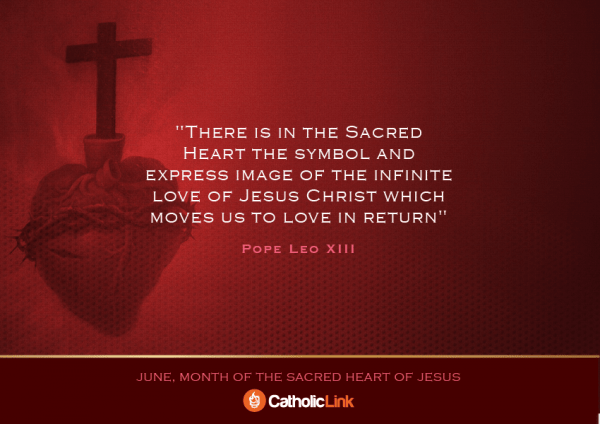
🔷 Symbol of Love: The Sacred Heart symbolizes Jesus’ immense and unconditional love for humanity

🔷 Call to Reparation: Jesus’ revelations emphasized a call to make amends (reparation) for the indifference and offenses against His Sacred Heart.

🔷 First Fridays Devotion: This practice involves receiving Holy Communion on the first Fridays of nine consecutive months, a sign of love and reparation.

🔷 Consecration: Consecrating oneself, family, and the world to the Sacred Heart is a significant aspect of this devotion.

🔷 Sacramental Life: Followers of Christ are encouraged to participate in the sacraments, especially Holy Communion,_ as a means of growing in love and holiness.

🔷 Source of Strength: In times of trials, challenges, and uncertainties, devotion to the Sacred Heart becomes a source of spiritual strength and refuge.

🔷 Transformative Love: Embracing the Sacred Heart’s love inspires a transformative journey of becoming vessels of love, compassion, and mercy in the world.

🌐 PRACTICAL TIPS

💠 Daily Offering: Begin each day with a simple prayer, offering it to the Sacred Heart and seeking His guidance and protection.

💠 First Fridays Devotion: Commit to the First Fridays Devotion, fostering a consistent practice of receiving Holy Communion and contemplating the Sacred Heart’s love.

💠 Consecration Prayer: Personally or as a family, make the Act of Consecration to the Sacred Heart, dedicating your lives to Christ’s transformative love.

💠 Image of Sacred Heart: Encouraging the practice of having an image or representation of the Sacred Heart in homes…
… fosters an environment of love, mercy, and devotion.

Families can gather for prayers and reflections, acknowledging Christ’s presence and love in their midst.

May Devotion to the Sacred Heart be a journey of profound love and transformation, drawing us closer to the Compassionate Heart of Jesus.

❇️ Keep the faith!
✅ Live in love!
✳️ Deepen your hope!

God Bless! Live Jesus!

  • Fr Jijo Jose Manjackal MSFS
    Bengaluru, India
    reflectioncapsules@gmail.com

⏩ CATHOLIC CARTRIDGE – A series to learn, revive, love and be faithful… to our Catholic Faith!

❇️ WHAT IS IT?
EUCHARISTIC ADORATION is a revered Catholic practice involving the worship and contemplation of the Blessed Sacrament.

The faithful spend time in the presence of the exposed Eucharist, adoring Jesus, Who is truly present in the Consecrated Host.

Archbishop Fulton Sheen beautifully reminds us: “The greatest love story of the entire world is found in the Tiny White Host!”

🌀 HISTORY
With roots tracing back to the Early Church, Eucharistic Adoration gained prominence in the medieval period.

💡Examples from the Lives of Saints: Saints such as Saint Clare of Assisi and Saint John Vianney were known for their profound devotion to Eucharistic Adoration.

Saint Juliana of Liège and Saint Thomas Aquinas too played pivotal roles in fostering devotion to the Blessed Sacrament.

💡In modern times, especially during the 19th and 20th centuries, saints like Saint Peter Julian Eymard and Saint Thérèse of Lisieux advocated for a deeper understanding and devotion to the Eucharist.

They emphasized the need for personal encounters with Christ in the Eucharist, leading to the establishment of the Feast of Corpus Christi.

💡Formalized by the Council of Trent (16th century), it became a significant element of Catholic piety.

💡Teachings of Popes: Saint Pope John Paul II emphasized the centrality of the Eucharist in the life of the Church. His encyclical “Ecclesia de Eucharistia” underscores the importance of Eucharistic Adoration as a way to deepen one’s faith.

💡Scriptural Basis and Reference: The institution of the Eucharist during the Last Supper (Matthew 26:26-28, Mark 14:22-24, Luke 22:19-20) serves as the foundational scriptural basis for Eucharistic Adoration.

The Gospel of John, particularly chapter 6, highlights the significance of Christ’s Real Presence.

✴️ RELEVANCE IN MODERN STRUGGLES

In the midst of contemporary challenges, Eucharistic Adoration holds profound relevance:

🔶 Digital Distractions: In an era marked by constant digital distractions, Eucharistic Adoration offers a sanctuary of silence, providing respite from the noise and chaos of modern life.

🔶 Escape from Addictions: As many struggle with various addictions and vices, Eucharistic Adoration becomes a source of spiritual healing and liberation.

The Real Presence of Christ becomes a powerful antidote to the allure of fleeting pleasures.

🔶 Peace Amid Anxiety: In a world filled with anxiety and stress, spending time in Eucharistic Adoration allows individuals to experience inner healing and tranquility.

It serves as a reminder that Christ is present in the midst of life’s challenges.

🔶 Encounter with Unconditional Love: In a culture where love is often conditional, Eucharistic Adoration provides an encounter with Christ’s unconditional love.

This experience becomes a transformative force, fostering a deep sense of self-worth and belonging.

🙏🏻SPIRITUAL SIGNIFICANCE

🔷 Real Presence of Jesus: It acknowledges the Real and Substantial Presence of Jesus Christ in the Consecrated Host.

Reflecting on the words of Jesus, “This is my body… This is my blood,” deepens one’s faith in the Eucharist.

🔷 Communion and Contemplation: Beyond the reception of Holy Communion during Mass, Eucharistic Adoration offers an extended period for personal communion and contemplation.

It’s an intimate encounter with the Lord, fostering a deeper relationship.

🔷 Adoration and Thanksgiving: It allows for a dedicated time of adoration and thanksgiving, expressing gratitude for the immense gift of Christ’s Body and Blood.

🔷 Silent Encounter: Embracing the sacredness of silence in Eucharistic Adoration provides a serene space for listening to God’s Voice and responding to His Merciful Love.

🔷 Healing and Transformation: Jesus, truly living in the Holy Eucharist heals and transforms us.

🌐 PRACTICAL TIPS

💠 Schedule Regular Time: Dedicate a specific time in your schedule for Eucharistic Adoration (if possible, daily or weekly, or atleast monthly), creating a consistent routine.

💠 Embrace Silence: In this world obsessed with noise, allow moments of profound silence during Adoration, providing space for personal reflection, prayer, and listening to God.

💠 Bring Intentions: Bring your intentions and concerns before the Lord, seeking His guidance and grace during the time spent in Eucharistic Adoration.

💠 Learn Eucharistic Prayers: Familiarize yourself with Eucharistic prayers, litanies, and devotions to enhance your experience and participation.

May Eucharistic Adoration become a sacred encounter, deepening our “love-bond” with the Living Christ in the Blessed Sacrament.

❇️ Keep the faith!
✅ Live in love!
✳️ Deepen your hope!

God Bless! Live Jesus!

  • Fr Jijo Jose Manjackal MSFS
    Bengaluru, India
    reflectioncapsules@gmail.com

⏩ CATHOLIC CARTRIDGE – A series to learn, revive, love and be faithful… to our Catholic Faith!

❇️ WHAT IS IT?
The Chaplet of the Divine Mercy is a powerful Catholic prayer invoking God’s Mercy.

Using Rosary beads, it includes the repetition of specific prayers such as the Our Father, Hail Mary, and the Divine Mercy Chaplet prayer.

The Chaplet focuses on God’s boundless Mercy, emphasizing trust, repentance, and seeking Divine forgiveness through the merits of Christ’s Passion.

We are reminded that “the ocean of God’s Mercy is greater than all our sins, our failures and our weaknesses!”

🌀 HISTORY

Originating from revelations to St Faustina Kowalska in the early 20th century, the Chaplet gained widespread devotion, especially after her canonization by Saint Pope John Paul II in the Jubilee Year 2000.

Pope John Paul II was greatly instrumental in promoting the Divine Mercy devotion, declaring the Sunday after Easter as Divine Mercy Sunday.

The Chaplet serves as a tangible expression of trust in God’s mercy…
… reflecting Biblical references to God’s compassionate nature.

🙏🏻SPIRITUAL SIGNIFICANCE

The Chaplet of the Divine Mercy holds deep spiritual significance, serving as a profound channel for God’s Mercy.

🔷 Trust in God’s Mercy: The Chaplet invites believers to trust completely in God’s infinite Mercy…
… echoing Jesus’ message to St. Faustina that “even the most hardened sinner can find refuge in His compassionate Heart!”

🔷 Repentance and Forgiveness: Through the Chaplet prayers, we are called to express sincere repentance, seeking God’s forgiveness and mercy.

It serves as a pathway for the contrite heart to experience the transformative power of Divine Mercy.

🔷 Meditation on the Passion: The Chaplet guides us in a meditative reflection on the Passion of Christ…
… deepening our understanding of the immense sacrifice and love revealed on the Cross.

🔷 Intercessory Prayer: Interwoven with the Our Father and Hail Mary, the Chaplet becomes a powerful intercessory prayer…
… invoking God’s mercy not only for oneself but for the entire world, fostering a sense of solidarity with humanity.

🔷 Receiving Graces: Jesus promised specific graces to those who faithfully recite the Chaplet, especially at the hour of death.

🌐 PRACTICAL TIPS
💠 Reflection on the Passion: As you recite the Chaplet, reflect on the profound mysteries of Christ’s Passion, Death, and Resurrection.

💠 Daily Devotion: Make the Chaplet a daily practice (if possible, at 3 o clock – the Hour of Mercy) offering intentions for your needs, the Church, and the entire world.

💠 Participation in the Novena of the Divine Mercy: Initiate/Join the communal recitation of the Novena of the Divine Mercy (starting on Good Friday) and culminating on the Divine Mercy Sunday, receiving the promised graces.

💠 Scriptural Meditation: Ponder on Biblical passages that highlight God’s Mercy, fostering a deeper understanding of the Chaplet’s significance.

May the Chaplet of the Divine Mercy be a source of profound trust, mercy, and transformative healing in our lives.

❇️ Keep the faith!
✅ Live in love!
✳️ Deepen your hope!

God Bless! Live Jesus!

  • Fr Jijo Jose Manjackal MSFS
    Bengaluru, India
    reflectioncapsules@gmail.com

— Pope St John Paul II, Shrine of Divine Mercy in Cracow, Poland on June 7, 1997

⏩ CATHOLIC CARTRIDGE – A series to learn, revive, love, and be faithful… to our Catholic Faith!

❇️ WHAT IS IT?
The Liturgy of the Hours, or Divine Office, is a sacred rhythm of daily prayer in the Catholic Church.

It comprises of Psalms, Hymns, and Readings..
… fostering a sense of unity, knowing that you are joining a vast chorus of believers, lifting their hearts to God.

The Liturgy of the Hours consists of several “hours,” prayed at different times

Lauds (Morning Prayer): Praising God at the start of the day.
Sext (Midday Prayer): Offering gratitude and seeking guidance in the middle of the day.
Vespers (Evening Prayer): Thanking God for the day and seeking His mercy.
Compline (Night Prayer): Surrendering the night to God’s protection.
Matins (Office of Readings): A reflective prayer, often including scripture readings, suitable for any time.

The Liturgy of the Hours is not confined to clergy or religious…
… it’s a gift for all the faithful
… offering a structured, yet accessible way to sanctify daily life

🌀 HISTORY
Roots in Tradition: The Liturgy of the Hours – influenced by the Jewish practice of praying at specific times – has been part of the Church’s prayer life since early Christian times.

Monastic Influence: Monastic communities – especially the Benedictines, the Cistercians, the Carthusians, the Dominicans and the Franciscans – played a vital role in shaping and promoting this prayer tradition.

Accessible to All: The Second Vatican Council’s reforms made the Liturgy of the Hours, more accessible, inviting the laity to partake in this spiritual treasure.

🙏🏻 SPIRITUAL SIGNIFICANCE
Daily Connection: The Liturgy of the Hours establishes a daily connection with God, fostering spiritual unity among believers.

Biblical Engagement: Rooted in Scripture, it offers a systematic journey through the Bible, enriching one’s understanding of divine revelation.

Communal or Individual: It can be prayed individually or in groups, fostering communal prayer experiences. Parishes, religious communities, and individuals contribute to the universal chorus of prayer.

Flexible Frequency: While the clergy are to commit to the full cycle, laypeople can adapt and choose specific hours that align with their daily routine. Even reciting one or a few “hours” can enrich spiritual life.

🌐 PRACTICAL TIPS
Consistent Routine: Incorporate the Liturgy of the Hours into daily life, creating a rhythm that aligns with the Church’s universal prayer.

Reflective Pause: Take moments between psalms and readings for silent reflection, allowing the divine words to resonate.

Universal Participation: Acknowledge that by praying the Liturgy of the Hours, you actively join the Church in its ceaseless worship.

May the Liturgy of the Hours become a sacred melody, enhancing our spiritual journey through the day.

❇️ Keep the faith!
✅ Live in love!
✳️ Deepen your hope!

God Bless! Live Jesus!

  • Fr Jijo Jose Manjackal MSFS
    Bengaluru, India
    📧 _reflectioncapsules@gmail.com
St John Paull II Address at St Patrick’s Cathedral, October 3, 1979

⏩ CATHOLIC CARTRIDGE – A series to learn, revive, love and be faithful… to our Catholic Faith!

03 THE HOLY ROSARY

❇️ WHAT IS IT?
The Holy Rosary is a cherished Catholic devotion that involves the repetition of prayers, predominantly the Hail Mary…
… while meditating on significant events in the lives of Jesus Christ and the Blessed Virgin Mary.

This powerful prayer tool consists of beads organized into decades, each representing specific mysteries.

The Rosary is a Christian museum…
… which brings alive the past of the salvation history to the present, and becomes a inspiration for the future!
… which showcases the heritage and history of our faith and awakens many emotions and feelings!

The word Rosary means a “Crown of Roses!”

Our Lady has revealed to several people that each time one says a Hail Mary…
… one is giving her a beautiful rose and that completion of each Rosary, makes her a beautiful crown of roses.

🌀 HISTORY
Origin: The use of beads for prayer traces back to the early Christian Desert Fathers, with the modern Rosary evolving around the 12th century

St. Dominic: Tradition attributes the Rosary’s spread to St. Dominic, who received it from the Virgin Mary in a vision.

Papal Endorsement: Various Popes, especially Pope Leo XIII and Pope John Paul II, have endorsed and encouraged the Rosary as a potent spiritual weapon.

Marian Apparitions: Apparitions of Mary, especially at Lourdes and at Fatima, have emphasized the Rosary’s significance in promoting peace and conversion.

Fruitful Tradition: The Rosary has endured as a cherished Catholic practice, offering solace, protection, and a pathway to deeper contemplation.

🙏🏻SPIRITUAL SIGNIFICANCE
The Holy Rosary serves as a profound meditation on the mysteries of the faith.

Reflective Devotion: This powerful prayer is a meditation on the Joyful, Sorrowful, Glorious and Luminous Mysteries of the Life of Christ:

They invite us to prayerfully contemplate His Life, Passion, Death, and Resurrection, and Mary’s role in the mystery of salvation

Intercessory Power: The Rosary is a beautiful invocation of Mary’s intercession. Every Rosary is a “beautiful meditation on the life of Jesus, holding the hands of Mamma Mary!”

Contemplative Prayer: The repetitive prayers create a contemplative rhythm, fostering spiritual growth.

🌐 PRACTICAL TIPS
💠 Daily Dedication: Incorporate the Rosary into daily prayers, fostering a consistent connection with the Lord.

💠 Family Unity: Pray the Rosary together as a family, reinforcing spiritual bonds and devotion – accompanied by the powerful intercession of Mary, just as at the Wedding at Cana

💠 Intentions and Petitions: Attach specific intentions to each decade, seeking Mary’s intercession for personal and global concerns.

💠 Silent Meditation: Allow moments of silent reflection between Hail Marys to deepen contemplation.

May the Holy Rosary be a steadfast companion, leading us closer to the Heart of Jesus through the loving intercession of Mary…
… remembering that “no one can live continually in sin and continue to say the Rosary: either they will give up sin or they will give up the Rosary!”

❇️ Keep the faith!
✅ Live in love!
✳️ Deepen your hope!

God Bless! Live Jesus!

  • Fr Jijo Jose Manjackal MSFS
    Bengaluru, India
    📧 reflectioncapsules@gmail.com

⏩ CATHOLIC CARTRIDGE – A series to learn, revive, love and be faithful… to our Catholic Faith!

02 THE ANGELUS

❇️ WHAT IS IT?
The Angelus is a traditional Catholic prayer recited three times daily – dawn, noon, and dusk.

It commemorates the Annunciation, involving the Angelus Domini (This is the opening versicle in Latin – “The Angel of the Lord”), three Hail Marys, and a concluding prayer…
… reflecting on key moments in the life of Jesus and Mary.

🌀 HISTORY

  1. It is considered that in the 11th Century, the Franciscan monks had the custom of saying Three Hail Marys, along with the bell that was rung, at their Evening Prayer.

The Three Hail Marys was to honour “the immaculate Virgin Mother and to preserve a perfect purity of mind, heart and body, in the midst of the dangers that are encountered in the world”

This practise was also encouraged among the lay people, especially by St Bonaventure.

  1. Another tradition also says that in the time when England was occupied by the Normans…

In order to control the people, the Normans rang a curfew bell at the end of each day. This was to remind the people to put off all fires, get out of the streets and go back and retire to their homes.

While this was not aimed for prayer, nevertheless this bell got associated with the evening prayer time, which included saying the Hail Mary.

This practice of the bell to be rung at the close of the day, continued, even after the end of the invasion.
The Bishop had encouraged the people: “We exhort you every day, when you hear three short interrupted peals of the bell, at the beginning of the curfew (or, in places where you do not hear it, at vesper time or nightfall) you say with all possible devotion, kneeling wherever you may be, the Angelic Salutation three times at each peal, so as to say it nine times in all”

  1. In 1318 in Italy, there began the practice of saying the Hail Mary, on rising in the morning.

This habit probably came from the monks, who included the Hail Mary in the prayers they said before their workday began.

  1. In 1456, Pope Calisstus III directed the ringing of church bells every day at noon and that Catholics pray three Hail Marys.

The Pope exhorted the faithful to use the noonday prayers to pray for peace in the context of the 15th-century invasion of Europe by the Turks.
The bell rung at noontime became known as the “Peace” bell

  1. The Angelus became a prayer as we know today, towards the end of the 16th century…
    …with three Hail Marys, and short verses in between (called versicles), ending with a prayer.

It was first published in modern form in a catechism around 1560 in Venice.

🙏🏻SPIRITUAL SIGNIFICANCE
The Angelus reminds us of the Angel Gabriel’s annunciation to Mary, Mary’s Fiat, the Incarnation and Our Lord’s passion and resurrection.

It is repeated as a holy invitation, calling us to prayer and meditation.

The Angelus is said kneeling
(symbolic of our humility “to welcome and accept the Will of God to take flesh in us”)

Pope Benedict XIV directed that the Angelus should be recited while standing on Saturday evening and all day on Sunday (to honour and commemorate the Triumphant Resurrection of the Lord)
He also exhorted that, during the Easter Season, the Regina Coeli (Queen of Heaven) be said instead of the Angelus.

There is also the practise of focussing…
… the Angelus in the morning: On the Resurrection
… the Angelus at noon time: On the Passion
… the Angelus at evening: On the Incarnation.

The Three-times recitation of the Angelus calls Christians…
… to interrupt the daily, earthly routines
… to turn to thoughts of God, of the Blessed Mother, and of eternity
… and to respond to the call of the Lord to “pray unceasingly and at all times” (Lk 18: 1, 1 Thess 5:17)

The Angelus is a meditation on the Bible – to recall the Salvation History

We meditate on the words of Mother Mary who called herself the “handmaid of the Lord”
We tell God that we are willing to do His Will, just as Mother Mary did
We invite the Lord “to take flesh” in all our actions and thoughts

🌐 PRACTICAL TIPS
💠 Seek to daily recite three times the Angelus – morning, noon and night (especially, if possible, as a family or a community)

💠 Thank the Triune God – Father, Son and Holy Spirit – for the Salvation History and especially recall the Passion, Death and Resurrection of the Lord and the

💠 Make an examination of the conscience – reviewing the activities done up to that moment…
(a) Thanking Him for His Graces
(b) Asking pardon for faults
(c) Resolving to do better

💠 Seek the intercession of our Blessed Mother to always say “Yes” to God’s Will

Let us grow in our devotion and love for the Lord, by the faithful and prayerful recitation of the Angelus!

❇️ Keep the faith!
✅ Live in love!
✳️ Deepen your hope!

God Bless! Live Jesus!

  • Fr Jijo Jose Manjackal MSFS
    Bengaluru, India
    📧 reflectioncapsules@gmail.com