EUREKA: Discovering Catholic Treasury – through a Lenten lens! : “Dignitatis Humanae”

A. What is it?

>> “Dignitatis Humanae” is the Declaration of the Second Vatican Council on the Declaration on Religious Freedom.

>> “Dignitatis Humanae” – the Latin title – means “the Dignity of the Human Person”

>> This declaration was promulgated by Pope Paul VI on December 7, 1965.

B. What does it speak of?

>> “Dignitatis Humanae” speaks of the Church’s support for the protection of religious liberty.

>> The main aspects of “Dignitatis Humanae” are:

(i) The fundamental right to religious liberty: All persons have a right to religious liberty, a right with its foundation in the essential dignity of each human being.

>> All persons must be free to seek the truth without coercion, but are also morally obligated to embrace the Truth of the Catholic faith once they recognize it.

(ii) The responsibility of the state: The government is to protect the rights and equality of all citizens as part of its essential role in promoting the public good

(iii) Religious freedom and Christianity: Christians are called to an even more conscientious respect for religious freedom. Man’s response to God in faith must be free – no person is to be forced to embrace Christianity.

>> God’s own call to serve him binds persons in conscience but is not compulsion.

C. Pointers for Reflections

1. “Dignitatis Humanae” affirms that “the one true religion subsists in the Catholic and Apostolic Church

>> This statement is also bound to the fact that “all men are bound to seek the truth, especially in what concerns God and his Church, and to embrace the truth they come to know, and to hold fast to it.”

2. Human dignity has only one source and only one guarantee – We are made in the Image and Likeness of God.

>> The Declaration states that it was Christianity that led to the developing and uniquely stressing the idea of the individual person with an eternal destiny.

D. What virtues/points can we pick up from “Dignitatis Humanae” for this Season of Lent?

1. Deepening our love for the Church and drawing more people to the True Faith

2. Growing in our understanding of our own self – that we are in the glorious Image and Likeness of God – and so, each one of us are very good

E. Tips to practice these virtues

1. Live the teachings of the Church in day-to-day life, and especially practise the basics of Catholic Living – Regular Holy Mass, Confessions, Bible Reading, Examination of Conscience, Recitation of the Holy Rosary, and Praying together in the Family

2. Identify one’s strengths and blessings that God has given, and spend every day at least 10 minutes, to thank the Lord!

May this Lent and the familiarity with the Encyclical “Dignitatis Humanae” help us to grow in our acclamation: “Eureka – I have found the Lord”

(The Full Text of “Dignitatis Humanae” can be found at:

http://www.vatican.va/archive/hist_councils/ii_vatican_council/documents/vat-ii_decl_19651207_dignitatis-humanae_en.html)

God Bless! Live Jesus!

Mar 23 (Lk 15:1-3, 11-32)

Six-year old Johny planned to secretly give a surprise to his father, on his birthday.

He decided that he would secretly bake a cake for his father and that would turn out to be a beautiful gift.

>> He was aware that that his father had told him not to put on the oven without his permission

>> He was also not really sure how a cake is to be baked

Yet, he decided to give it a try…

So on the previous night, after he made sure, his father had slept, Johny quietly crept into the kitchen.

>> He had a manual with him which would guide him to bake the cake.

He found a big bowl and spoon, pulled a chair to the counter, opened the cupboard and pulled out the heavy flour can, spilling it on the floor.

He scooped some of the flour into the bowl with his hands, mixed in most of a cup of milk and added some sugar, leaving a floury trail on the floor.

>> Meanwhile, his kitten, had joined him, and was busy enjoying the bits and pieces fallen on the ground.

Johny, was all covered with flour and he was also getting a bit frustrated as the mixing was taking much longer than expected.

But he wanted to do something for his Dad!

He didn’t know what to do next, whether to put it all into the oven or on the stove, (and he didn’t know how the oven worked)!

Suddenly he saw his kitten licking from the bowl of the cake dough.

>> He tried to push her away.

But in the frantic act, he knocked the egg-tray on to the floor.

In desperation, he tried to clean the floor..

… but unfortunately he slipped!

Just then, he raised his eyes and saw his gigantic Daddy standing before him.

He just remained on the floor….

…. All messed up and dirty…

Large tears swelled up in his little eyes!

The father kept watching him.

>> Johny was sure that he was going to receive a big spanking and a scolding was on the way.

But to his surprise, making his way through the mess, Daddy reached out to him.

>> He picked up his crying son hugged him…. And loved him!

In the process, Daddy also dirtied his clothes!

But here was a beautiful picture of a Father who displayed a tremendous love and acceptance…

.. even if it meant to dirty himself!

True love knows no bounds!

The Gospel of the Day – the Parable of the Prodigal Son – is the beautiful exposition of the Unconditionally True Love of the Heavenly Father to each of His beloved children!

The Parable of the Prodigal Son is surely one of the most popular, the most loved and the most touching parables of Jesus.

This parable has three main characters and we could view any of them as playing the main role in the story:

1. The Prodigal Son

>> He went away from the love of his father

Inheritance was given to children only after the death of the father

>> In asking the inheritance, therefore, alluded to the fact that the Prodigal son considered his father to be dead!

But having spent his life in useless living, he realised the emptiness and vacuum that filled his heart.

And so he decided to turn back.. and go to his father

2. The Elder Son

>> He remained the faithful “servant” of the house

But when he saw, that his brother – who had wasted away the inheritance, was received with so much warmth, his temper rose!

He couldn’t digest the fact that his brother who lived a “wasted life” was honoured….

… whereas he was never given the chance to “enjoy with his friends”

The context of the parable is Jesus speaking to the “Pharisees and scribes” who were “complaining that Jesus always accepted sinners” (Lk 15: 1-2)

>> In this context, the character of the Elder Son portrayed the attitude of the Pharisees and Scribes.

But beyond these two characters towers high the Image of the Father – the Father who loved and accepted his lost son!

>> He suffered a deep pain when his younger son went away

>> He underwent immense pain waiting for the son to come back

>> He went through moments of dilemma when his elder son was opposing the welcome of the younger one

Yet through all this, the Character of the Father towers high!

>> He is the Father of Mercies – Who accepts all, just as they are

>> He is the Father of Love – Who loves everyone, unconditionally

>> He is the Father of Compassion – Who receives all to His loving embrace

In our life, often as children – like the Prodigal Son – we go away.

We try to do something good…

… but our life turns into a mess!

>> Our student life gets messed up with lack of commitment and failures

>> Our marriage hits the rocks with misunderstandings and lack of acceptance

>> Our family life gets into a crisis with lack of unity and peace of mind

We feel our life is all in a mess…

>> We find ourselves lost, frustrated and upset!

But in all such situations, we need to look up…

… and see how the Loving Father is waiting to embrace us…. And love us!

Yes, the Merciful Father is waiting for each one of us…

… Whatever be the mess, that my life may be in!

Let us run into His embrace of Love… with a sincere repentance and contrition of heart…

>> And pledge to live for Him, and with Him…

…forever!

God Bless! Live Jesus!

——————————–

Quotable-quote-a-day-with-St Francis de Sales (SFS) – ““Stretch out your hand to Him like a little child to his father…

… so that He may lead you on!”

——————————–

EUREKA: Discovering Catholic Treasury – through a Lenten lens! : “Laudato Si”

A. What is it?

>> “Laudato Si” is an Encyclical by Pope Francis, released on June 18, 2015.

>> “Laudato Si” which means “Praise be to You” is the 2nd Encyclical of Pope Francis

>> The title is inspired from St Francis of Assisi’s 13th-century “Canticle of the Sun” (also called the Canticle of the Creatures), a poem and prayer.

B. What does it speak of?

>> “Laudato Si” is addressed to “every person living on this planet” with the hope of entering “into dialogue with all people about the Earth – our common home.”

>> 6 Chapters make up “Laudato Si”

(i) “What is happening to our Common Home”: Looks at the various symptoms of environmental degradation. The encyclical postulates that a truly ecological approach is also inherently social – an approach that simultaneously hears the cry of the earth and the cry of the poor.

(ii) “The Gospel of Creation”: Considers the world the way that God intended it. The chapter surveys the rich scriptural traditions to show that there is no Biblical justification for “a tyrannical anthropocentrism unconcerned for other creatures.” A person who is truly concerned about the trafficking of endangered species is automatically concerned with the trafficking of humans.

(iii) “The Human Roots of the Ecological Crisis”: Examines the twin notions of “technocratic paradigm” and a “modern anthropocentrism”.

>> These views see nature as devoid of any spiritual or transcendental value.

>> This has led to the misplaced ideas that the earth’s resources are infinite and that economic growth and technology alone can solve global hunger and poverty.

(iv) “Integral Ecology”: It charts a path to recapture awareness of the interconnectedness of creation. It is essential to appreciate the impact of environmental degradation on “cultural ecology”. The experience of indigenous peoples is specifically referred to in this regard.

(v) “Lines of Approach and Action”: This Chapter sets out various international collective actions needed.

(vi) “Ecological Education and Spirituality”: It shifts attention to the individual believer, families and communities, and invites them to make a difference in small but tangible ways.

>> Consumer choices, the cultivation of ecological virtues such as reducing wastefulness, and environmental education for the young are explained as practical steps leading to a deeper, spiritual “ecological conversion” through which the follower of Christ recognizes the true worth of all created entities.

C. Pointers for Reflections

1. “What kind of world do we want to leave to those who come after us, to children who are now growing up?”

>> This question is at the heart of “Laudato Si’

>> We have forgotten that “we ourselves are dust of the earth; our very bodies are made up of her elements, we breathe her air and we receive life and refreshment from her waters.”

>> The Encyclical encourages all to have an “ecological conversion”

2. Living our vocation to be protectors of God’s handiwork is essential to a life of virtue.

>> This “corrected lifestyle” it is not an optional or a secondary aspect of our Christian experience

D. What virtues/points can we pick up from “Laudato Si” for this Season of Lent?

1. Cultivate greater sensitivity to nature

2. Deepen and thank God as the Creator

E. Tips to practice these virtues

1. Make a list, and practise, a few but very practical steps to protect the nature

2. Raise a prayer of Thanks to the Lord, for all the things we see around

>> Let nature, become a time of meditation with the Lord

May this Lent and the familiarity with the Encyclical “Laudato Si” help us to grow in our acclamation: “Eureka – I have found the Lord”

(The Full Text of “Laudato Si” can be found at:

Click to access papa-francesco_20150524_enciclica-laudato-si_en.pdf

God Bless! Live Jesus!

Mar 22 (Mt 21:33-43)

An incident is said about a former American astronaut who took over as the President of a major airline.

He determined to make the airline’s service the best in the industry.

>> He sought ‘commitment to work’, by all the employees in all the departments.

One day, as the new president walked through a particular department, he saw an employee resting…

… with his feet on a desk, while the telephone on the desk rang continuously. .

“What are you doing? Aren’t you going to answer that phone?” the boss demanded.

“This isn’t my department, Am here, just to relax!” answered the employee, with a total indifference!

>> (He had not recognized his new boss, and so chose to answer with apathy!)

“I work in the maintenance department”, he went on to say.

“Not anymore!” snapped the president, “You no longer will work in my company!”

The President, with his liking for “committed work” and “achieving excellence”…

… made sure there was no room for “people with lack of commitment and zeal!”

As Christians, we are all co-workers of the Project Kingdom!

>> Do we work with commitment?

… or are we often found to be people of indifference, “lacking commitment and zeal?”

The Gospel of the Day is a strong message to examine one’s level of commitment to the Kingdom of God…

… exhorting to do away with any “personal agenda” or “selfish motives”

>> And seeks to impress the personality of Jesus…

… Who desires to be the ‘Centre of our Life’!

In the Gospel today, Jesus puts forward the parable of the tenants.

The tenants were entrusted with the vineyard by the Master, and were expected to provide the produce in due time.

>> They were entrusted fully with the taking care of the vineyard.

The Master places a lot of trust in the servants.

He gives the freedom… a responsible freedom…

…which could be meaningfully used and nurtured

…or which could be woefully misused and manipulated.

However, the tenants, who were trusted immensely…

… probably lost their focus on the real trust and diminished in their commitment and responsibility to their Master as well as their duty.

• Their personal interests gained greater prominence over their entrusted duties.

• Their selfish agenda gained the upper hand over the faithfulness to the Master.

This led to them to a total denial of all the emissaries and servants of the Master, who were sent to collect the produce.

>> This denial was extended even to the Master’s own Son!

This denial of the Son led to the letting loose of the anger and fury of the Just Master!

• A squandering away of the responsible freedom, led to the downfall of the tenants!

• A failure to give heed to the emissaries and servants caused them to face the Master’s rage!

• A denial and rejection of the Master’s own Son, with a cruel intent, caused their destruction!

Are we also, as Christians, as tenants of the Heavenly Master failing in our responsibilities and duties?

The Lord presents Himself as the cornerstone…

… “the stone which the builders rejected has become the cornerstone..” (Mt 21:42)

In ancient practices of building, the cornerstone was the principal stone.

>> It was placed at the corner of the edifice or the building.

The cornerstone was usually one of the largest, the most solid, and the most carefully constructed of any in the whole building structure.

>> A cornerstone gives direction to the rest of the foundation.

>> It also is the support on which the rest of the building relies for strength and stability.

Jesus is the cornerstone…of Salvation… of the Church… of His People!

>> At the same time, Jesus can also be “a stumbling block”

As it is written in Romans 9:33, “Behold, I lay in Zion a stumbling stone and rock of offense,

And whoever believes on Him will not be put to shame”

• To those who believe, Jesus is the cornerstone of their faith and their life.

• To those who do not believe, Jesus is the stumbling block in their faith!

Who is Jesus in our life?

>> The cornerstone? or a stumbling block?

The cornerstone to build a wonderful life in God and grow in holiness…

>> Or a stumbling block which causes us to be proud in our own merits and not depend on Him?

The cornerstone to stand firm and strong in faith to withstand every storm of life…

>> Or a stumbling block which makes us uncertain, hesitant and cause a collapse in life?

As Christians, we are indeed co-workers of the Project Kingdom!

The Master has entrusted the vineyard to us

… our homes, our places of work, our neighbourhood, our families and communities…

…. the people we meet daily, the problems we encounter constantly, the situations we are challenged with…

>> These are “our vineyard!”

Do we work with commitment?

>> Or are we often found to be people of indifference, “lacking commitment and zeal?”

Let us never have to hear from Our Master, “Not anymore! You no longer will work in my company!”

>> Instead…

… let us do away with any “personal agenda” or “selfish motives” as the workers of the Vineyard…

>> And seek to be impressed by the personality of Jesus…

… making Him the Centre of our Lives!

God Bless! Live Jesus!

——————————–

Quotable-quote-a-day-with-St Francis de Sales (SFS) – “ He asks for your own heart!

>> Give it such as it is..

… Are we not aware that everything that is remitted into His Divine Hands is converted to good?”

——————————–

EUREKA: Discovering Catholic Treasury – through a Lenten lens! : “Story of a Soul”

A. What is it?

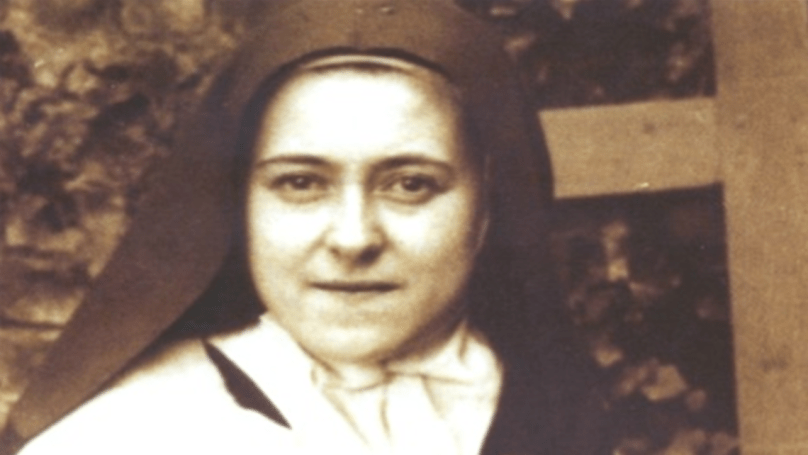
>> “Story of a Soul” is the autobiography of St Thérèse of Lisieux- also called as The Little Flower.

>> It was first published on September 30, 1898 – one year after her death at the age of 24.

>> This book outlines the spirituality that was lived and exhorted by the St Therese – “The Little Way”

B. What does it speak of?

>> The ‘Story of a Soul’ is St. Therese’s autobiography.

>> The book is divided into 11 chapters:

… Beginning with her first memory, it traces her life, ending with her blissful death in the convent.

>> “Story of a Soul” tells of how the Way to Holiness was not great and noble deeds but the fulfillment of the smallest duties with great love and complete reliance upon God.

>> Desiring the lowest place in all things and fulfilling all the duties of the state in life, the Little Flower describes of how she offered many penances for the conversion of sinners, especially during her final illness and the dark night of the soul she suffered at that time.

C. Pointers for Reflections

1. Focuses on the “Little Way” of Holiness

>> It is a challenge to break the notion that “spirituality and holiness” consists primarily in heavy austerity and hard penances alone

>> It shows of the most important element needed towards holiness – perfect trust and holy love

2. Presents the method of “offering to God” all what we do in life

>> Every action of ours can become an “offering to God” and thus “an act of saving” others

D. What virtues/points can we pick up from the “Story of the Soul”” for this Season of Lent?

1. Doing everything with love

2. The virtue of Trusting in God

E. Tips to practice these virtues

1. Consciously make a prayer (or at least, become aware) – “I am doing this work/activity, for the Love of God and only for His Glory!”

2. Love God and give Him the First Priority and Place in life

May this Lent and the familiarity with the Classical Book of Spirituality “Story of a Soul” help us to grow in our acclamation: “Eureka – I have found the Lord”

(The Full Text of “Story of a Soul” can be found at:

http://www.catholicbible101.com/St.%20Therese%20Story%20of%20a%20soul.pdf)

God Bless! Live Jesus!

Mar 21 (Lk 16:19-31)

We live in a world of contrasts.

Contrasts are encountered at every sphere of our life.

>> Socially, we find contrasts among the various classes…

… the rich and the poor, the haves and the have-nots, the caste distinctions, the racial and language divides…

>> Emotionally, we find contrasts in our experiences…

… joyful situations sandwiched between tragic moments, moods varying between situations and people, temperaments changing from person to person…

The Gospel of day presents some of these contrasts in a vivid manner…and could be termed as a “parable of contrasts” – the Parable of the Rich Man and Lazarus.

This parable is set out as a play… a two-act play.

The plays takes place on two stages…

… the stage of this world

… and the stage of the other-world.

The contrasts are plenty:

In the First Act….

>> A rich man – a poor man

>> The man is rich but unnamed – the man is poor but is named, Lazarus (meaning ‘God Helps’)

>> The rich man clothed in purple – Lazarus clothed fully with sores

>> The rich man caressed with fine linen – Lazarus licked by the dogs

>> The rich man feasted sumptuously – Lazarus desired to be fed by what fell from the table.

>> The rich man died and was buried – Lazarus died but was carried by the angels.

In the Second Act…

>> Lazarus is in Abraham’s bosom – the rich man is in Hades.

>> Lazarus receives good things – the rich man was in torment.

>> Lazarus was comforted – the rich man was in anguish

This “parable of contrasts” is also …

… a “parable of comfort and consolation”

… a “parable of challenge and confrontation”

>> It’s a “parable of comfort and consolation” because….

… Lazarus, who had undergone great misery and suffering was blessed with the presence of joy of the Lord.

It’s gives comfort and consolation to us, who need to be strengthened in our moments of trials and hardships, knowing that the Lord will surely look with mercy on His needy ones.

>> “Blessed are the poor in spirit, for theirs is the kingdom of heaven” (Mt 5: 3)

>> It’s a “parable of challenge and confrontation” because…

… the rich man, who had a luxurious life, was condemned to torments, and had to endure the flames of suffering.

It’s a great challenge and a confrontation before us, who need to realise that indifference and an attitude of closing one’s eyes to the pain and misery of the other can be disastrous and punishable

>> “He who shuts his ears to the cries of the poor will be ignored in his own time of need.” (Prov. 21:13)

The world of contrasts needs a Gospel of Comfort and Consolation, and towards this, we are challenged and confronted…

>> Challenged to get rid of our attitudes of indifference and lethargy to help the needy ones.

>> Confronted to overcome our tendencies to remain satisfied in our comforts and close our eyes conveniently to the necessities of the other.

Let us make our life a Good News of Comfort and Consolation.

God bless! Live Jesus!

——————————–

Quotable-quote-a-day-with-St Francis de Sales (SFS) – “ The virtues that grow in the midst of prosperities are usually weak and without much backbone.

>> But those which take birth amid afflications are hardy are vigorous…

… just as it is said that the best vines grow amid stones!”

——————————–

EUREKA: Discovering Catholic Treasury – through a Lenten lens! : “Lumen Fidei”

A. What is it?

>> “Lumen Fidei” is the First Encyclical of Pope Francis. It was the completion of the work of his predecessor Pope Benedict XVI.

>> It was issued on June 29, 2013 in conjunction with the Year of Faith

>> “Lumen Fidei” means “The Light of Faith”

>> The document, completed the Papal Trilogy on the three theological virtues, following Pope Benedict XVI’s encyclicals Deus Caritas Est (on Charity) and Spe Salvi (on Hope).

B. What does it speak of?

>> “Lumen Fidei” celebrates Christian faith as the guiding light of a “successful and fruitful life”, inspiring social action as well as devotion to God…

… and illuminating “every aspect of human existence”, including philosophy and the natural sciences.

>> “Lumen Fidei” is divided into four chapters, each drawn from a passage in Scripture:

(i) We have believed in love. (1 Jn 4:16)

>> Reviews Salvation History—the story of God’s people—to see Faith throughout history.

>> Explores the rootedness of faith in the absolute fidelity of God, Who is completely trustworthy.

>> God enters human history and invites each person to participate in His plan of love.

(ii) Unless you believe, you will not understand. (Is 7:9)

>> Seeks to understand the relationship between Faith and several other aspects – Reason, Love, Truth, and Theology.

>> As Faith comes through hearing and sight, it is an intensely personal experience which opens out into a unique trustworthy knowledge…

… stimulating a constant dialogue between Faith and Reason.

(iii) I delivered to you what I also received. (1 Cor 15:3)

>>Ultimately, Faith and Truth are received in community.

>> We accept this Faith in a community and in the communion of the Church. Specially, the Sacraments allow us to experience this Faith.

>> This Community stays unified through the Apostolic Tradition and Apostolic Succession which safeguards Truth and allows our Faith to be handed on.

>> The Church extends the relational reality of Faith not only through Her Doctrines, but through Her very Sacramental Life

(iv) God prepares a city for them. (Heb 11:16)

>> Shows how faith should be the foundation of our society. Faith is needed for the foundation of our society, marriage and family.

>> Faith in God provides the common Faith so that our societies can endure.

>> Faith does not answer every question, but provides a lamp to help us navigate through the darkness and the Presence of God, who is with us, personally in our suffering.

C. Pointers for Reflections

1. “Lumen Fidei” fortifies our Faith by responding to various contemporary doubts and attitudes that undermine believing

>> Faith is not an outdated relic of the Dark Ages. Christian Faith, rather, provides the foundation for fidelity in interpersonal relationships, without which society would be debilitated by fear.

2. Contradicts the Philosophy of Secularism (= being without God and glorifying only human abilities)

>> The power of secularism which tends to portray God as distant or dead is negated, as Faith makes God tangible and Christ-like Love possible.

3. Faith is not only personal, but essentially has a Communitarian dimension

>> Faith in the One God, directed toward the One Lord, is shared in the One Church, and so must be professed in its full unity and integrity.

D. What virtues/points can we pick up from the “Lumen Fidei” for this Season of Lent?

1. Understanding and deepening our Fundamentals of Faith

2. Reviving our Sacramental Life (especially Holy Eucharist and Confession)

E. Tips to practice these virtues

1. Pick up the 12 basic articles of the Apostles Creed (I Believe) and make a study on each of those Basics of our Faith

>> Prepare a list of possible doubts and contradictions

>> Try to find reasonable solutions, which could be used as a tool to defend and proclaim our Faith

2. Try to go for Holy Mass, with due preparation, as often as possible (without restriction to only Sunday Mass)

>> Make it a point to go for Confession, at least, once every month

May this Lent and the familiarity with the Encyclical “Lumen Fidei” help us to grow in our acclamation: “Eureka – I have found the Lord”

(The Full Text of “Lumen Fidei” can be found at:

http://w2.vatican.va/content/francesco/en/encyclicals/documents/papa-francesco_20130629_enciclica-lumen-fidei.html)

Mar 20 (Mt 20:17-28)

A rich businessman had grown greatly in his endevours.

>> He became greatly possessed with acquiring more wealth and seeking for greater power.

His sole intention in life was to find ways and means to gain more wealth (by hook or crook; by honest or corrupt ways!) and capture more positions of power.

Though a Christian…

… he cared hardly for his family

… he bothered least about his faith

One day, while sitting in his posh office, pondering on ways to augment his wealth and prestige in the society…

… his eyes went towards the Crucifix that was placed on his table.

Looking from the place where he was sitting, he could see…

… The Crucifix and a Chair that was placed opposite him.

And suddenly a thought came across his mind:

“What is more important for you in life?

>> Cross or Chair?”

This thought stuck him badly.

>> Being greatly disturbed… he sought to ward off that idea from his mind.

But it kept disturbing him…. “Cross or Chair… Cross or Chair!”

Well, it’s not known whether that incident changed his life.

But this question is placed before each of us:

“What is more important for you in life?

>> Cross or Chair?”

The Gospel of the Day is the incident of the mother of the sons of Zebedee aspiring to obtain a place of honour for her children..

… through which, Jesus poses this question of supreme importance to us as well:

“What is more important for you in life?

>> Cross or Chair?”

This incident is sandwiched between two important instructions by Jesus..

1. His master plan of establishing the Kingdom: His Passion, Death and Resurrection

2. His master technique to allow access to the Kingdom: The way of Humility

1. His master plan of establishing the Kingdom: His Passion, Death and Resurrection

Jesus predicts about His sufferings to His disciples (Mt 20: 17-19)

>> It was clearly His way of telling His chosen ones, that His Kingdom is not to be one that accords prime importance to power and position…

… instead it was about obedience and self-giving.

2. His master technique to allow access to the Kingdom: The way of Humility

Jesus further teaches His disciples that the key to enter the Kingdom is the way of humility (Mt 20: 26-28)

>> It was clearly a reminder as well as a warning, that His Kingdom is not reserved for the powerful or the mighty…

… instead it is to be given to those of meek heart and lowly self.

It’s in between these two powerful “Kingdom” teachings, that we have the incident of the mother of the sons of Zebedee seeking for a place of honour for her children (Mt 20: 20-24)

The incident showed that they had quite badly misunderstood Jesus…

>> They mistook His master plan of establishing the Kingdom as being “through force and power and might!”

>> They mistook His master technique to allow access to the Kingdom as being “the way of Supremacy!”

But Jesus shatters this misconception by posing a master question: “Can you drink the cup that I am going to drink?” (Mt 20: 22)

>> “Drinking the Cup” for Jesus meant the Master Plan of His Passion, Death and Resurrection

>> “Drinking the Cup” for Jesus meant the Master Technique of the way of Humility

This incident is a reminder and warning for each of us as well:

1. Are we willing to be in accord with the Lord’s master plan of establishing the Kingdom: His Passion, Death and Resurrection?

2. Are we ready to practise the Lord’s master technique to allow access to the Kingdom: The way of Humility ?

Jesus clearly poses this question of supreme importance:

“What is more important for you in life?

>> Cross or Chair?”

Very often we settle down to sit on the “Chair”…

… the ‘chair’ of comfort and relaxation

… the ‘chair’ of lethargy and indifference

… the ‘chair’ of materialism and individualism

But the Lord challenges us to carry the “Cross”…

… the ‘Cross’ of responsibility and commitment

… the ‘Cross’ of witnessing to the Lord and trusting in Him

… the ‘Cross’ of serving the deprived and being sensitive to the need of the other

The way of the Christian is none but the Way of the Cross.

>> The path of the Christian can be none but the Path of Humility.

Let us give heed to the words of St Louise de Marillac (the patronness of the parentless and of Social Workers):

“If humility, simplicity and charity which produce support, are well established in you…

… your community will be made up of as many saints as there are persons!”

Yes, let us dare to follow the Path of Humility…

… and seek to positively answer to the question that Jesus poses to each of us:

“What is more important for you in life?

>> Cross or Chair?”

God Bless! Live Jesus!

——————————–

Quotable-quote-a-day-with-St Francis de Sales (SFS) – “In the midst of all the occupations of the day, see to it that you do not become too absorbed in material things.

>> Keep a tight grasp of Christ’s Hand!”

——————————–

EUREKA: Discovering Catholic Treasury – through a Lenten lens! : “Imitation of Christ”

A. What is it?

>> The “Imitation of Christ” is a Christian Devotional Book by Thomas a Kempis (He was a German-Dutch Canon Regular Priest)

>> It was composed around 1418-1427, in Latin

>> The “Imitation of Christ” is perhaps one of the most widely read Christian book, after the Holy Bible.

B. What does it speak of?

>> The “Imitation of Christ” presents the idea that the study of Christ’s life and the emulation of His Example is the highest pursuit that human beings can achieve.

>> Christ is the ultimate example of Christian’s spiritual lifestyle.

>> Love is exalted as taking the highest place and faith is fundamental to the spiritual life. >> The “Imitation of Christ” seeks to repair and develop our spiritual life and meditate on God as the source of everything.

>> The “Imitation of Christ” comprises of 114 Chapters, divided into Four Books:

(i) “Helpful Counsels of the Spiritual Life”

>> The “Imitation of Christ” derives its title from the First Chapter of Book I, “The Imitation of Christ and contempt for the vanities of the world”

>> Book One deals emphasizes an interior life by renouncing all that is vain and illusory, resisting temptations and distractions of life, giving up the pride of learning and to be humble, and patiently enduring the world’s contempt and contradiction.

(ii) “Directives for the Interior Life”

>> It contains instructions concerning “inward peace, purity of heart, a good conscience and for moderating our longings and desires.

>> It calls the reader to grow in the virtues of Patience, Submission to the Will of GOD, Love of Jesus, Enduring the loss of comfort, and Taking up the Cross.

(iii) “On Interior Consolation”

>> This longest book (consisting of 59 chapters) is in the form of a dialogue between Jesus and the disciple – a call to come into closer union with Him

>> A beautiful call by Jesus is: I am the Way, the Truth, and the Life.

Without the Way, there is no going; without the Truth, there is no knowing; without Life, there is no living.

I am the Way you are to follow; I am the Truth you are to believe; I am the Life you are to hope for.”

(iv) “On the Blessed Sacrament”

>> The Fourth book emphasizes on the fact that Jesus says “there is no Offering more worthy, no satisfaction greater, for the washing away of sins and to offer oneself purely and completely to God at the time the Body of Christ is offered in the Mass and in Communion!”

>> In order to receive the Sacrament, the Lord invites to “make clean the mansions of your heart. Shut out the whole world and all its sinful din…

… and sit as a solitary sparrow on a housetop and, in the bitterness of your soul, meditate on your transgressions.”

C. Pointers for Reflections

1. The “Imitation of Christ” is a guide in changing our lives and learning to grow closer to Christ in Spirit and in Deeds.

>> We are constantly required to ask ourselves: “How am I really following Christ in my life?”

2. The “Imitation of Christ” strongly speaks on the necessity to have “humility of the heart”

>> In a world that glorifies sensationalization and pride, and in a culture of worldly ambition and crazy power-mongering, this Book is a mighty challenge!

3. The “Imitation of Christ” calls forth to have moments of silence, reflection and deep prayer

>> In a world where we “cherish and feel out-of-place without noise”, the Book comes as an eye-opener to make suitable changes in our lifestyle to nurture moments of silence – and thus to come in closer Imitation of Christ!

D. What virtues/points can we pick up from the “Imitation of Christ” for this Season of Lent?

1. Growing in the Humility

2. Becoming more and more Christ-like in our attitudes and conduct towards others

3. Cultivating the Spirit of Prayerful Silence, even in our “busy and noise” schedule

E. Tips to practice these virtues

1. Practise every day, an action of humility

2. Ask this practical question to ourselves: “WWJD – What Would Jesus Do?”

3. Consciously set apart, at least sometime in the day, for a time of silence – and seek to grow in union with the Lord and His Will

>> We usually like to always have “words” in prayers and feel “awkward and incomplete” when there are no words or “talking”

>> Let us seek to spend time with the Lord, “in silence” and in the stillness of our hearts and minds, grow in the Experience of God’s Love!

May this Lent and the familiarity with the Spiritual Classic – “Imitation of Christ” – help us to grow in our acclamation: “Eureka – I have found the Lord”

(The Full Text of “Imitation of Christ” can be found at:

http://www.documentacatholicaomnia.eu/03d/1380-1471,_Kempis._Thomas,_The_Imitation_Of_Christ,_EN.pdf)

God Bless! Live Jesus!

Mar 19 (Solemnity of St Joseph)

Brenda was a young yet fearful woman who, once, joined her friends in rock climbing.

Although scared, she put on the gear, took a hold on the rope and started up the face of that steep rock cliff.

As she climbed higher, the safety rope snapped against Brenda’s eye and knocked out her contact lens!

Down went the contact lens

… and down went also her clarity in vision

… and her hopes!!

Of course, she looked and looked and looked, hoping it had landed somewhere close… but it just wasn’t there.

>> She was desperate and began to get upset, so she prayed to the Lord to help her to find it.

When she managed get to the top, she sat down, despondent, with the rest of the party, waiting for the rest of them to make it up the face of the cliff.

She looked out across range after range of mountains, thinking of that Bible verse that says, “The eyes of the Lord run to and fro throughout the whole earth.”

She thought, “Lord, You can see all these mountains. You know exactly where my contact lens is. Please help me.”

>> Finally, they walked down the trail to the bottom.

At the bottom there was a new party of climbers just starting up the face of the cliff.

One of them shouted out, “Hey, you guys! Anybody lost a contact lens?”

Well, that was startling enough, but how was it that the climber saw it?

An ant was moving slowly across the face of the rock, carrying it!

A miracle?

>> An unbelievable story?

Well.. anyway, later, when Brenda told her father, who was a cartoonist, this incredible story, he drew a picture of an ant lugging and carrying that contact lens with the words:

“Lord, I don’t know why You want me to carry this thing!

I can’t eat it, and it’s awfully heavy…

But if this is what You want me to do, I’ll carry it for You.”

Wow! Those are amazing words isn’t it?

One may not always realise the reason for many things in life…

… may not see any good in it

… may even feel it too heavy

>> But, if one trusts in the mighty and loving Providence of the Lord, the same burden or load will be a reason for a miracle!

Are you and I, carrying a heavy burden today?

Feeling the worthlessness of it?

>> Trust in God… He has a beautiful plan and purpose!

Hard to trust that?

Then look closer into the life of the wonderful Saint of the Day – St Joseph!

>> A person who was called for the most strangest and unique assignments in the world…

>> A person who would have often wondered what really is going on in his life…

And yet, a person, who firmly clung on to what was given to him…embracing the Will of God!

St Joseph is certainly, one of the most remarkable personalities in the entire Bible.

>> A person who never spoke in the Bible… but one who spoke volumes of deep trust, confidence and obedience through his life.

>> A person who is not noted for any flashy or spectacular incidents…but one whose personality shines bright for the promptness and immediacy in carrying out what God wanted of him.

St Joseph was tremendously blessed!

>> The one who had the absolute privilege of being closest to two of the Most Holiest Persons in this world – Jesus and Mother Mary!

>> The one who had the pristine honour of rendering the first adoration and worship of Baby Jesus at His birth in this world!

But with blessing also comes duty and responsibility!

And St Joseph is a brilliant example and model to doing one’s duties and responsibilities…

>> He sacrificed a possible life of worldly glory… in accepting to be the caretaking father of Jesus.

>> He cast away his doubts and possibilities of shame… in accepting Mary as his wife, despite the tremendous societal and religious pressure on him.

>> He bore every difficulty and endured many miseries… in helping Jesus, the Son of God to be born and to ensure safety for the Divine Child and Mother.

>> He went beyond all shades of comfort and walked the path of thorny hardships… in ensuring the Holy Family was protected from harmful powers.

>> Here is a Saint…

… who challenges us to be totally and firmly faithful in carrying out the mission of God – be it small, unnoticed, unglamorous or insignificant.

… who shatters our mind in wanting to have pleasures and comforts, by letting go of one’s personal gains and even logical reasoning, in order to preserve and promote the Plans of God.

Life tosses us, time and again…

… with hardships, doubts, misunderstandings, uncertainty, fear… and even remain unrecognised!

>> But through all these experiences, St Joseph invites us… to trust in the Lord, with a deep sense of serenity and confidence!

Yes, we may not always understand why things are thrust on us…

But let us be inspired by St Joseph, to unmistakably hold on, in doing God’s Will in our lives!

>> God’s Will may not be comprehended…but it certainly will hold us close to the Heart of the Lord!

>> God’s Will may not always appear to be clear… but it certainly will be a major factor in carrying out the plan of God for us, in our lives!

Yes, let this be our encouraging prayer:

“Lord, I don’t know why You want me to carry this thing!

I can’t eat it, and it’s awfully heavy…

But if this is what You want me to do, I’ll carry it for You.”

May we join St Francis de Sales, who made this beautiful prayer, to St Joseph:

“Glorious St Joseph, spouse of Mary, grant us thy paternal protection, we beseech thee by the heart of Jesus Christ.

>> O thou, whose power extends to all our necessities and can render possible for us the most impossible things, open thy fatherly eyes to the needs of thy children.

In the trouble and distress which afflicts us, we confidently have recourse to thee.

>> Deign to take under your charitable charge this important and difficult matter, cause of our worries.

Make its happy outcome be for God’s glory and for the good of His devoted servants. Amen!”

Happy Feast of the Just Saint, St Joseph!

>> Let us rejoice with his Beloved Son Jesus and his Beautiful wife and our Mother, Mary!

God Bless! Live Jesus!

——————————–

Quotable-quote-a-day-with-St Francis de Sales (SFS) – “What more remains for us to say now, except that we cannot doubt at all that this glorious saint (St Joseph) has great influence in heaven…

… Oh how happy shall we be, if we can merit a share in his holy intercession!

>> He will obtain for us, if we have confidence in him, a holy growth in all kinds of virtues, but especially in those that we have found that he possessed in a higher degree than any others…

… which are most holy purity of body and mind, the most lovable virtue of humility, constancy, courage and perseverance!

——————————–