✝️ REFLECTION CAPSULE – March 08, 2023: Wednesday

“Daring to follow the path of humility and making the right priorities in life!”

(Based on Jer 18:18-20 and Mt 20:17-28 – Wednesday of the 2nd Week in Lent)

A rich businessman had grown greatly in his endeavours.

He became greatly possessed with acquiring more wealth and seeking for greater power.

His sole intention in life was to find ways and means to gain more wealth (by hook or crook; by honest or corrupt ways!) and capture more positions of power.

Though a Christian…
… he cared hardly for his family
… he bothered least about his faith

One day, while sitting in his posh office, pondering on ways to augment his wealth and prestige in the society…
… his eyes went towards the Crucifix that was placed on his table.

Looking from the place where he was sitting, he could see…
… The Crucifix and a Chair that was placed opposite him.

And suddenly a thought came across his mind:
“What is more important for you in life?

Cross or Chair?”

This thought stuck him badly.

Being greatly disturbed, he sought to ward off that idea from his mind.

But it kept disturbing him…. “Cross or Chair… Cross or Chair!”

Well, it’s not known whether that incident changed his life.

But this question is placed before each of us: “What is more important for you in life?

Cross or Chair?”

The Gospel of the Day is the incident of the mother of the sons of Zebedee aspiring to obtain a place of honour for her children…
… through which, Jesus poses this question of supreme importance to us as well:
“What is more important for you in life?

Cross or Chair?”

This incident is sandwiched between two important instructions by Jesus…

  1. His master plan of establishing the Kingdom: His Passion, Death and Resurrection
  2. His master technique to allow access to the Kingdom: The way of Humility
  3. His master plan of establishing the Kingdom: His Passion, Death and Resurrection

Jesus predicts about His sufferings to His disciples (Mt 20: 17-19)

It was clearly His way of telling His chosen ones, that His Kingdom is not to be one that accords prime importance to power and position…
… instead it was about obedience and self-giving.

  1. His master technique to allow access to the Kingdom: The way of Humility

Jesus further teaches His disciples that the key to enter the Kingdom is the way of humility (Mt 20: 26-28)

It was clearly a reminder as well as a warning, that His Kingdom is not reserved for the powerful or the mighty…
… instead it is to be given to those of meek heart and lowly self.

It’s in between these two powerful “Kingdom” teachings, that we have the incident of the mother of the sons of Zebedee seeking for a place of honour for her children (Mt 20: 20-24)

The incident showed that they had quite badly misunderstood Jesus…

They mistook His master plan of establishing the Kingdom as being “through force and power and might!”
They mistook His master technique to allow access to the Kingdom as being “the way of Supremacy!”

But Jesus shatters this misconception by posing a master question: “Can you drink the cup that I am going to drink?” (Mt 20: 22)

“Drinking the Cup” for Jesus meant…
… the Master Plan of His Passion, Death and Resurrection
… the Master Technique of the way of Humility

This incident is a reminder and warning for each of us as well:

Are we willing to be in accord with the Lord’s master plan of establishing the Kingdom: His Passion, Death and Resurrection?
Are we ready to practise the Lord’s master technique to allow access to the Kingdom: The way of Humility?

Jesus clearly poses this question of supreme importance:
“What is more important for you in life?

Cross or Chair?”

Very often we settle down to sit on the “Chair”…
… the ‘chair’ of comfort and relaxation
… the ‘chair’ of lethargy and indifference
… the ‘chair’ of materialism and individualism

But the Lord challenges us to carry the “Cross”…
… the ‘Cross’ of responsibility and commitment
… the ‘Cross’ of witnessing to the Lord and trusting in Him
… the ‘Cross’ of serving the deprived and being sensitive to the need of the other

The way of the Christian is none but the Way of the Cross.

The path of the Christian can be none but the Path of Humility.

Yes, let us dare to follow the path of humility…
… and seek to positively answer to the question that Jesus poses to each of us:
“What is more important for you in life?

Cross or Chair?”

God Bless! Live Jesus!


📖 Discovering the beauty of the Catholic Church through the Catechism
EPISCOPAL ORDINATION – FULLNESS OF THE SACRAMENT OF HOLY ORDERS

The Second Vatican Council “teaches . . . that the fullness of the sacrament of Holy Orders is conferred by episcopal consecration…

… that fullness namely which, both in the liturgical tradition of the Church and the language of the Fathers of the Church, is called the high priesthood, the acme (summa) of the sacred ministry. (CCC # 1557)
✝️💜 REFLECTION CAPSULE FOR THE DAY – March 07, 2023: Tuesday

“Daring to pick up the ‘towels’ of service and kindness and living a life ‘clothed in humility!’”

(Based on Is 1:10,16-20 and Mt 23:1-12 – Tuesday of the 2nd Week in Lent)

Maundy Thursday is associated with a customary practice that is followed in many of the Churches all around the world…
>> It consists of choosing of twelve persons from the Church – based on various parameters or criteria.

These twelve are given the “privilege” to have the feet washed by the Main Celebrant (usually the parish priest) during the Holy Mass.

This is a symbolic remembrance of the “washing of the feet” that Jesus had undertaken on the evening of the Last Supper.


Preaching on this custom, on a Holy Thursday, a priest once spoke the following in his sermon:
>> “There are twelve of us, who have been chosen from among us, whose feet will be washed this evening.

Perhaps, there were many others also who had a desire that their feet also be washed.
>> Probably, some of you, children, are dreaming of growing up faster in life, so that one day, you too may be chosen to have your feet washed.

But here is a point to be considered…
Most of us probably are thinking only about ‘having our feet washed’.
>> But I really do wonder, how many of us – be it those who have got a chance or those who have missed – think also of ‘being the one who washes the feet of others?’

We all probably are desiring and wishing only for the chair, to be seated, and have our feet washed.
>> But how many of us also wish and desire for the ‘towel’?”


It was his direct way of telling that there were very few who will to be the last, the least and the lowest in the Church, the Body of Christ.


Am I a person who is willing to lower myself in humility?

Jesus says in today’s Gospel, “Whoever exalts himself will be humbled; but whoever humbles himself will be exalted” (Mt 23: 12)


The 23rd Chapter of the Gospel of St Matthew begins with Jesus turning the attention of His disciples and of the crowds, towards the Scribes and the Pharisees.


Focussing on the religious leaders and on their practices, Jesus launches a volley of critically true statements, a string of their hypocritical misconduct and a barrage of their wicked misdeeds!
>> The chapter ends with the “Painful Lament” by Jesus over Jerusalem – the city of the Lord!


One of the highlights in this highly volatile and strongly-worded Chapter is the number of times Jesus mentions the two groups of people – “Scribes and Pharisees”

There is, in total, 7 occurrences of the phrase, “Scribes and Pharisees” – a biblical number for totality!

This Chapter is a therefore, a full-blown critique and condemnation of the ways of the Scribes and Pharisees.


Why is Jesus so outright in His condemnation, so merciless in His usage of words and so blatant in His attacks on the Scribes and Pharisees?

[Meanwhile, when we go through these critical attacks of our Blessed Lord on this group, one must always remember the words of Jesus Himself: “I have come not to call the righteous, but sinners to repentance” (Lk 5:32)

There was deep pain in the heart of the Lord, in seeing the way religion was being manhandled, misused and misinterpreted by the religious leaders of His time

As the Son of His Beloved Father, it was hurting for the Son to see a section of people, trampling upon God’s precious and venerable truths, and twisting them for their own self-interests and self-agenda

A strong form of condemnation was reserved only to those who were hardened in heart – as a means for them to repent and turn back their ways to the Lord. The method of ‘sharp condemnation’ was reserved only to the proud and the arrogant; never to the poor sinners!]


The reason for Jesus making a scathing attack on the religious authorities of His times, could be summarized into one crucial point:
>> Glorification of one’s own self at the expense of the Glory of God and the Mercy deserving for His people!


Therefore, Jesus goes on to point out the many occasions and circumstances when the self-interest of the Pharisees and Scribes took extreme priority over God Himself!

It is this self-centred and self-glorifying act that makes Jesus to tell, “For they preach, but they do not practise!” (Mt 23:3b)


How easily can this be our own state of affairs, in our life…!

We may be people…
… who “appear” to be very fine and kind – but perhaps, we are persons who find it too hard to let go of our pride, in reaching out to the needy, in humble service!
… who speak a lot on helping others and being generous – but perhaps, we go through grilling moments in lowering ourselves and adopting a lowly status to extend a helping hand!
… who desire happiness in communities and peace at homes – but perhaps, we discover ourselves to be persons who are unwilling to let go of my ego and allow a listening ear to the views and opinions of others!


The call, today, therefore is…
… “to work for a cause – not applause!”
… “to live life to express – and not simply to impress!”


Following the great example of Jesus, may we dare to pick up the “towels” of service and kindness and live a life “clothed in humility!”


God Bless! Live Jesus!

——————————-
📖 Discovering the beauty of the Catholic Church through the Catechism
EPISCOPAL ORDINATION – FULLNESS OF THE SACRAMENT OF HOLY ORDERS
>> To fulfill their exalted mission, “the apostles were endowed by Christ with a special outpouring of the Holy Spirit coming upon them…
… and by the imposition of hands they passed on to their auxiliaries the gift of the Spirit, which is transmitted. (CCC # 1556)
———————————

EUREKA 09: Discovering Catholic Treasury – through a Lenten lens!

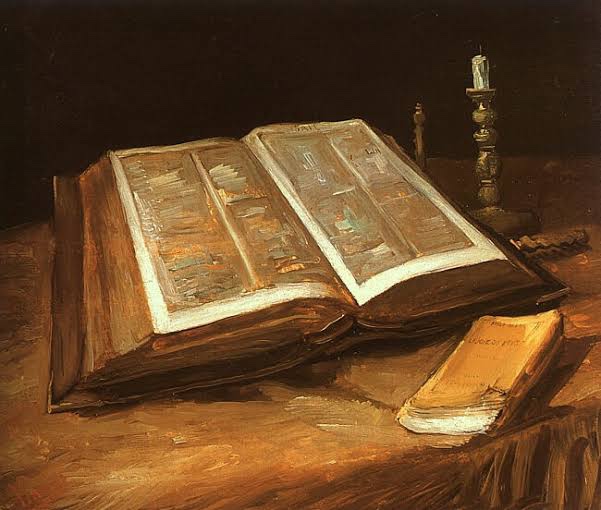
“DEI VERBUM”

A. What is it?

“Dei Verbum” is the Vatican II Dogmatic Constitution on Divine Revelation, promulgated by Pope Paul VI on 18 November 1965
The phrase “Dei Verbum” is Latin for “Word of God”
It is one of the smallest Vatican II Documents (26 paragraphs or roughly 3,000 words in Latin)

B. What does it speak of?

“Dei Verbum” addresses the Catholic Church’s beliefs in regards to Sacred Scripture.
“Dei Verbum” is laid out into 6 Chapters:

  1. Chapter 1: Divine Revelation Itself

Speaking on the Nature of Revelation, this chapter demonstrates God’s desire to communicate with human beings, revealing the mystery of the Divine Will.
It offers a summary of the Salvation History
It also emphasizes the Truth of this Revelation and the fact that it is accomplished in such a way that human beings can comprehend it.

  1. Chapter 2: Transmission of Divine Revelation

The Truth of Revelation, is rooted in Christ’s very person and in his own proclamation of the Gospel; having commissioned the Apostles to carry it forward…, the truth of the

The Gospel also lies in the Apostolic Tradition.

Both Scripture and Tradition must be accepted and honoured with equal devotion and reverence”.
Tradition and Scripture make up a single Sacred deposit of the Word of God

  1. Chapter 3: Sacred Scripture: Its Divine Inspiration and Interpretation

It affirms the importance of both- the Old Testament and New Testament
It adopts the threefold-process of the Formation of the Gospels with the three levels: (i) the time of the Historical Jesus (ii) The oral preaching of the earliest apostles (iii) The time of the Evangelists

  1. Chapter 4: The Old Testament

The plan of salvation was spoken through the authors of the Old Testament.
Its purpose was to prepare for the coming of the Christ and to show to all, how God interacts and deals with mankind in justice and mercy.
God wisely arranged for the New Testament to be hidden in the Old, and the Old to be made manifest in the New. While Christ made the new covenant with His blood, the Old Testament sheds light on and explains this mystery.

  1. Chapter 5: The New Testament

The New Testament stands as a Perpetual and Divine Witness to the Reality of Salvation.
The Gospel Authors wrote about things handed on by word of mouth or in writing, sometimes a synthesis, sometimes as a proclamation, but always the honest truth about Jesus.

  1. Chapter 6: Sacred Scripture in the Life of the Church

The Church has always venerated the scripture together with the Tradition as the supreme Rule of Faith.

The Church encourages the study of the Church Fathers as well as those exegetes who so well illuminate the teaching within the scriptures.
Individuals should read with enthusiasm, following the mind of the Church.
All clergy must read the scriptures with diligence. The same is encouraged for the laity and Religious. All faithful should not forget that prayer should always be the companion to reading God’s Word.

C. Pointers for Reflections

  1. “Dei Verbum” is considered as one of the important achievements of the Vatican Council II since its implications is for the treatment of Sacred Scripture itself.

It accords rightful significance to the Bible as the special locus of Divine Communication or Divine Revelation.

  1. It presents three key principles of Catholic biblical interpretation:
    (i) Pay attention to the content and unity of all the Sacred Scriptures.
    (ii) Read and interpret the Bible within the living tradition of the Church.
    (iii) Keep in mind the coherence of all the truths of revelation
  2. The understanding from “Dei Verbum” is enshrined in the Catechism of the catholic Church (CCC), affirming reading Scripture for its four classical sense – the literal sense, and then the spiritual sense divided into three: the allegorical, topological, and anagogical senses.

The allegorical sense (Typology) concerns how the Old and New Testaments relate, the topological sense is the moral sense, and the anagogical sense concerns the soul’s progress to heaven.

D. What virtues/points can we pick up from the “Dei Verbum” for this Season of Lent?

  1. Making it a Daily Habit to Read the Bible
  2. Studying the Bible and going deeper into understanding the meaning of Scripture in our daily life

E. Tips to practice these virtues

  1. Set apart a time, daily, to read God’s Word.

Just as our meals become a daily “must”, so should the Bible be part of our daily “sustenance for strength”
“Ignorance of Scriptures is ignorance of Christ” says St Jerome
Christ is the primary and ultimate revelation of God. So the more we read and reflect on Scripture, the more we can know Him and love Him

  1. Learn, practise and revive the Catholic Tradition of the “Lectio Divina”(= a Latin term, means “divine reading”)
    (i) The first stage is LECTIO (reading): Read any passage of the Word of God, slowly and reflectively so that it sinks into us
    (ii) The second stage is MEDITATIO (reflection): Think about the text we have chosen and ruminate upon it so that we take from it what God wants to give us
    (iii) The third stage is ORATIO (response): Leave thinking aside and simply let the heart to speak to God.
    (iv) The final stage is CONTEMPLATIO (rest): Let go of our own ideas, plans and meditations and also holy words and thoughts. Simply rest in the Word of God and listen, to God, who speaks within us with a still small voice.

As we listen, we are gradually transformed from within and this will have a profound effect on the way we actually live.

May this Lent and the familiarity with “Dei Verbum” – the Vatican II Dogmatic Constitution on Divine Revelation – help us to grow in our acclamation: “Eureka – I have found the Lord”

(The Full Text of “Dei Verbum” can be found at:
http://www.vatican.va/archive/hist_councils/ii_vatican_council/documents/vat-ii_const_19651118_dei-verbum_en.html)

God Bless! Live Jesus!

✝️ REFLECTION CAPSULE – March 06, 2023: Monday

“Giving ourselves entirely to the Lord!”

(Based on Dan 9:4b-10 and Lk 6:36-38 – Monday of the 2nd Week in Lent)

Barter is a system of exchange by which goods or services are directly exchanged for other goods or services…
… without using a medium of exchange, such as money.

This type of exchange was relied upon by early civilizations.

Goods were exchanged for food, tea, weapons, and spices.

The barter system requires the giving of a good (product), to receive an equivalent good.
It is a system which involves the dimension of providing and obtaining, offering and receiving.

The Gospel of the Day calls for a similar barter system…
… on a Divine realm though…

Giving to God and obtaining His graces and favours.
Offering to God and receiving His blessings and mercy.

The Lord, giving His teachings on a practical Christian life, exhorts:
“… give and it will be given to you; good measure, pressed down, shaken together, running over, will be put into your lap.

For the measure you give, is the measure you get back” (Lk 6:38)

Jesus brings a very concrete example from the market scene, to drive home his point of generously giving.

The context of Jesus is the market in Israel, the middle-east part of the world.

As in many places today, this area witnessed markets that had buyers and sellers engaged in bargaining…
… and negotiating over prices, quality and the amount of things and goods.

There would be many open-air markets, where the farmers would bring their grain—wheat, corn, barley—and spread it on a mat on the ground.

Potential customers would examine the grain, make an offer, and the bargaining would start….

When a price was finally set, the customer would offer his container—usually a large bowl or pot or an open vessel—and the seller would use a scoop (measuring spoon) to fill the container.

There would be some interesting steps in this process of measuring the grain for a customer and which Jesus quotes in His approach to giving:

  1. First, the seller would fill the container to the top.
  2. Secondly, he would press the grain down and fill some more.
  3. Thirdly, he would shake the container so the grain would settle and then fill in some more.
  4. Finally, he would fill the container until it overflowed!

The contents of this overflowing container would then be transferred to a pouch or a bag so that the buyer could bring home the contents from the market.

Well, this process could sound a bit strange and weird to us in the modern world.

We live in times, when contents are sold by the weight, and not the volume!
We live in times, when manipulations are done to give as less as possible!

But this is where, Jesus, bringing in the example of the market, invites generosity in giving…

Our giving ought to be measured not by weight, but by volume…
… and that refers to a far-greater amount of giving!
Our giving ought to, not be curtailed down by clever manipulations…
… rather is to be done very generously and lavishly!

St Paul in 2 Cor 9:6 says, “Whoever sows sparingly, will also reap sparingly; whoever reaps bountifully will also reap bountifully”

Our giving ought not to be a calculated effort…
… rather should be an overflow from the heart!

When we engage is such a lavish and generous giving, God too will shower His abundance; in fact, in a much better fashion!
“For the measure you give, will be the measure you get back” (Lk 6:38)

Of course, that is not to say that we are limiting God’s power of giving…

God’s surely showers His gifts lavishly!
God surely pours His blessings overwhelmingly!

But the Lord invites us to be involved in a Divine Barter System…

Give to God, who deserves all, so that we may be prepared to receive His blessings.
Give to God, who is worthy of all, so that we may be blessed to receive His graces.

In the Divine barter system, the advantage is that…
… we get much more than what we give!
… we obtain far greater than what we offer!

God’s giving is not to be seen just from material or physical aspects…

In fact, that would just be a very limited and low level of understanding.

God’s gifts are to be understood more from a spiritual perspective:
… Gift of His mercy – to live a life in union with Him.
… Gift of His grace – to be faithful and more committed.
… Gift of His love – to be better human beings and be more charitable.
… Gift of His salvation – to enjoy eternal bliss and happiness with Him .

All these gifts will be surely lavished and given… “good measure, pressed down, shaken together, running over, will be poured out into our laps!”

The greatest exchange – the Divine barter system – is seen and experienced in the Holy Eucharist…
… at every Holy Mass.

Let us give ourselves entirely to the Lord – especially at Holy Mass – and through the Mass, at all times of the day, to all persons in our life.

Then, in the words of Fulton Sheen, we will be graced to hear the words of the Divine Lord telling us…

You give me your humanity, and I will give you my Divinity!
You give me your time, and I will give you My eternity!
You give me your broken heart, and I will give you Love!
You give me your nothingness, and I will give you My all!

God Bless! Live Jesus!


📖 Discovering the beauty of the Catholic Church through the Catechism
EPISCOPAL ORDINATION – FULLNESS OF THE SACRAMENT OF HOLY ORDERS

“Amongst those various offices which have been exercised in the Church from the earliest times the chief place, according to the witness of tradition
… is held by the function of those who, through their appointment to the dignity and responsibility of bishop

… and in virtue consequently of the unbroken succession going back to the beginning, are regarded as transmitters of the apostolic line. (CCC # 1555)

EUREKA 08: Discovering Catholic Treasury – through a Lenten lens!

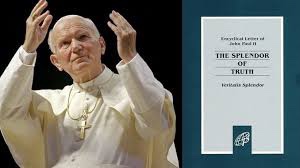
“VERITATIS SPLENDOR”

A. What is it?

“Veritatis Splendor” is an Encyclical by Pope St John Paul II, promulgated on August 6, 1993

“Veritatis Splendor” is a Latin phrase which means “The Splendour of Truth”

B. What does it speak of?

“Veritatis Splendor” responds to questions of Moral Theology that had been raised during the post-conciliar period of the Church (events after the Vatican II Council of 1962-65).

These questions revolve around human’s ability to discern good, the existence of evil, the role of human freedom and human conscience, mortal sin, and the Authority of the Magisterium of the Catholic Church in guiding people.
“Veritatis Splendor” while acknowledging that everyone makes a fundamental choice for or against Christ, also reiterates that certain acts (i.e., mortal sins) represent a fundamental choice against Christ – and potentially forever, unless one repented.

“Veritatis Splendor” consists of three chapters:
(I) Teacher, What Good Must I Do

Christ and the answer to the question about morality

(II) Do Not Be Conformed to this World

The Church and the discernment of certain tendencies in present-day moral theology

(III) Lest the Cross of Christ be emptied of its Power

Moral good for the life of the Church and of the world

C. Pointers for Reflections

  1. “Veritatis Splendor” speaks against the danger of moral relativism

Moral Relativism is the tendency to view reality as being “all relative” – “there are no absolute values”, “any judgment you make is your judgment from your point of view and there is no objective point of view”.
Pope Benedict XVI called this “moral relativism” as a poison
“Veritatis Splendor” begins by asserting that there are indeed absolute truths accessible to all persons.

  1. “Veritatis Splendor” reminds us of the reality of intrinsically evil acts

This means that certain acts are always wrong, and that there are never circumstances in which they may be permitted if done knowingly and intentionally
It is never permissible to intend directly something which contradicts a moral order.

D. What virtues/points can we pick up from the “Veritatis Splendor” for this Season of Lent?

  1. Become aware of the danger of “moral relativism” and how it is very much spread in the thought-philosophies of the world around us
  2. Realize the gravity of mortal sin and how we must be defiant in staying away from it

E. Tips to practice these virtues

  1. Study and reflect more on the Catholic Teachings, so that we don’t get strayed away by the “attractive modern” philosophies, which tend to neutralize truth
  2. Make “Examination of Conscience” a part of one’s daily timetable

May this Lent and the familiarity with this Encyclical “Veritatis Splendor” help us to grow in our acclamation: “Eureka – I have found the Lord”

(The Full Text of the “Veritatis Splendor” can be found at: http://w2.vatican.va/content/john-paul-ii/en/encyclicals/documents/hf_jp-ii_enc_06081993_veritatis-splendor.html)

God Bless! Live Jesus!

✝️ REFLECTION CAPSULE – March 05, 2023: Sunday

“Throwing ourselves into the Hands of God, and receive what He gives us, and thus to experience the Transfiguration!”

(Based on Gen 12:1-4a, 2 Tim 1:8b-10 and Mt 17:1-9 – 2nd Sunday of Lent)

A five year old boy was playing in the front yard of his house, by throwing a ball up in the air.

An elderly priest, who was passing that way, asked the boy what he was doing.

The little boy, with innocence answered:
“I am playing a game of ‘catching the ball’ with God!

I throw the ball up in the air…
… and He throws it back to me!”

The senior priest was pretty amused at the simple answer.

And as he moved ahead, he thought in his mind…
“Although, the boy in his innocence just said his experience of a law of nature…
… in that simple statement, he also expressed a religious reality:
Divine experience is this: Throwing of ourselves into the Hands of God…
… and receiving what He gives to us”

That’s very true isn’t it?

Divine experience is ” throwing of ourselves into the Hands of God…
… and receiving what He gives to us”

When we throw ourselves into the Hands of God, and receive what He gives us…
… that is the experience of Transfiguration!

The Gospel of the Day presents before us the Lord undergoing the Transfiguration.

The Disciples shared in this joy.
You and me are invited today!

The Scene of the Transfiguration is one of the most captivating and thrilling scenes of the Gospels.

We shall look into this account of the Transfiguration through the eyes of St Matthew’s Gospel.

It’s interesting to see that this scene takes place on a high mountain.

Mountains play a key role in the Gospel of St Matthew.

Mountains of course, dot the landscape of the Biblical regions.

They are a great part of the physical reality of the Biblical world.
They are a symbolic of “being closer to God”.

St Matthew’s Gospel has a particular love for this “lofty symbol of God’s presence”

Jesus underwent a temptation by Satan on the Mount…
… the Mount of Temptations (Mt 4:8)

Jesus delivers His Sermon and Teachings on a Mount…
… the Mount of the Sermon (Mt 5:1)

Jesus performs many deeds of healings on a Mount…
… the Mount by the Sea of Galilee (Mt 15:29)

Jesus is transfigured on a Mount…
… the Mount of Transfiguration (Mt 17:1)

Jesus gives His final teaching and discourse on a Mount…
… the Mount of Olives (Mt 24:3)

Jesus gives up His life on a Mount…
… the Mount of Calvary (Mt 27:33)

Jesus delivers His Final Mission mandate on a Mount …
… the Mount of Galilee (Mt 28:16)

So in this Lofty and High Place of the Presence of God – a Mountain – Jesus undergoes His Transfiguration…
… and is joined by the presence of two other “Mountain” Figures – Moses and Elijah!

Moses is the Man of the Mount of Sinai and Mount Nebo – representing the Law of God!
Elijah is the Man of the Mount of Carmel – representing the Prophets of God!

Jesus is the God and Man of all the Mountains – the Fulfillment of all the Laws and the Prophets!

What is the purpose of the “many mountain settings” of the Transfiguration Scene?

To look further…
… to imagine deeper
… to hear beyond.

To see the way God sees us.
To imagine the way God perceives us.
To hear the way God wants of us.

We all need Transfiguration Moments in our lives…
… a Transfiguration Experience in our lives!

Vision that needs to be transfigured…
… into God’s representation!

Imagination that needs to be transfigured…
… into God’s resemblance!

Hearing that needs to be transfigured…
… into God’s resonance!

Let us take courage…
… and accompany the Lord!

Beyond the peripheral problems of life
… away from the hardships and difficulties of our physical, mental, spiritual, emotional worries…
…to climb the Mountain of Spiritual Closeness and Presence of the Lord, and share in the joy of the Transfiguration!

Life has much more to offer.

Life has much more to be expected.
Life has much more to hope for….

Let us “throw” our lives into the Hands of God…
… and receive what He gives to us

And thus…
Be transfigured!
Be transformed!
Be transcending!

God Bless! Live Jesus!


📖 Discovering the beauty of the Catholic Church through the Catechism
THE THREE DEGREES OF THE SACRAMENT OF HOLY ORDERS

“The divinely instituted ecclesiastical ministry is exercised in different degrees by those who even from ancient times have been called bishops, priests, and deacons.”
Catholic doctrine, expressed in the liturgy, the Magisterium, and the constant practice of the Church, recognizes that there are two degrees of ministerial participation in the priesthood of Christ: the episcopacy and the presbyterate.
The diaconate is intended to help and serve them.
For this reason the term sacerdos in current usage denotes bishops and priests but not deacons.

Yet Catholic doctrine teaches that the degrees of priestly participation (episcopate and presbyterate) and the degree of service (diaconate) are all three conferred by a sacramental act called “ordination,” that is, by the sacrament of Holy Orders. (CCC # 1554)

EUREKA 07: Discovering Catholic Treasury – through a Lenten lens!

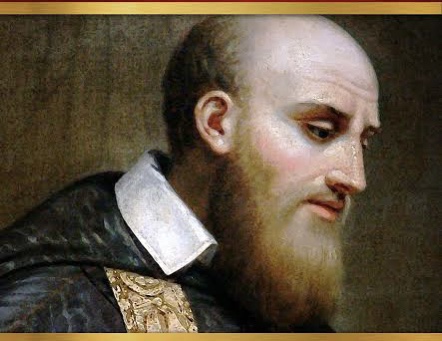
“INTRODUCTION TO THE DEVOUT LIFE”

A. What is it?

“Introduction to the Devout Life” is a Spiritual Classic written by St Francis de Sales, published in 1609.
“The Introduction” is a compilation of letters and notes used in the Spiritual Direction of his cousin, Madame Marie de Charmoisy, the wife of an ambassador of the Duke of Savoy.
The writings of the book are addressed to the title, “Philothea” (= Lover of God)
Pope Pius XI at the declaration of St Francis de Sales as the Patron Saint of Catholic Writers and Journalists in 1923, wrote about the “Introduction to the Devout Life”:
… “Would that this book – the most perfect of its kind in the judgment of his contemporaries, as it was at one time in the hands of all – were now read by all, so that true piety might everywhere flourish again, and the Church of God might rejoice in seeing sanctity common among her sons.”

The “Introduction to the Devout Life” is a practical guide and exhortation to all people, to life a life of holiness.
It is also an excellent reference in Spiritual Direction.
The “Introduction to the Devout Life” consists of Five Parts:

B. What does it speak of?

  1. Part I: Attaining a Firm Resolution to the Devout Life

It speaks of the nature of True Devotion and how all are called to it
The necessity of a Spiritual Guide for progress in the Devout Life is emphasized
“Purifying the soul” is the first step, and towards this, 10 mediations are provided

  1. Part II: Prayer and the Sacraments

The necessity of Prayer and how it starts with “placing oneself in the Presence of God” is explained.
It also touches up the topics of Holy Communion, Invocation and Meditation with the Saints, Spiritual Bouquets, Retreats, Aridity in Prayer and the Word of God.

  1. Part III: The Practice of Virtue

It explains how to practice individual virtues like Patience, Meekness, Humility, Obedience, Chastity, and Poverty.
It outlines 3 themes: (i) Discerning which virtues to work on (ii) Practising individual virtues in everyday life (iii) Remaining devout in dealings with society.

  1. Part IV: Some Ordinary Temptations and how to overcome them

This is the “troubleshooting guide” or “snares of the enemy,” which explains what Philothea – the reader – can do when he/she encounters certain stumbling blocks.

  1. Part V: Renewing and Confirming the Soul in Devotion

The last part speaks of an “annual review,” which St. Francis de Sales recommends undergoing every year around the time of the Feast of the Lord’s Baptism.
Philothea – the reader – is encouraged to examine oneself closely, to give thanks for all signs of progress – however tiny – and frankly acknowledge where one has slowed down the progress through willfulness or sloth.

C. Pointers for Reflections

  1. A call for all people towards Holiness

St Francis de Sales says: “My purpose is to instruct those who live in town, within families, or at court, and are obliged to live an ordinary life as to outward appearances…
… It is an error, or rather a heresy, to wish to banish the devout life from the regiment of soldiers, the mechanic’s shop, the court of princes, or the home of married people… Wherever we may be, we can and should aspire to the perfect life.”
This passage from St. Francis de Sales was a major inspiration to the Fathers of the Second Vatican Council and stands behind one of the central exhortations of Vatican II – “The Universal Call to Holiness.”

  1. The daily examples/articles/experiences of life are used remind/teach about the Presence of God

This was the “Jesus style” – using familiar experiences of the people to teach a religious truth, through a parable or metaphor.
The “Introduction to the Devout Life” has incidents taken from the Bible and the biographies of Saints. It also makes use of stories and natural science information (especially from the writings of Greek philosopher, Aristotle and the Roman author, Pliny the Elder)

D. What virtues/points can we pick up from the “Introduction to the Devout Life” for this Season of Lent?

  1. Aspiring towards holiness
  2. Growing in little virtues

E. Tips to practice these virtues

  1. Thank God for the state of life that we are in, and realize that God is calling us to sanctify and make holy, each work that we do, specific to our vocation

Let every duty and responsibility that we do – little or big – be seen and done, as steps towards holiness and sanctity; hence, “do everything in love – Bloom where you are planted!”

  1. Identify our “root vice” (= the negative tendency in us, which causes/leads to other sins)

Consciously practise the opposite “root virtue”
Daily make the ‘Examination of Conscience’ to check the progress
If successful, in humility, thank God.
If not successful, never be discouraged – instead, seek to practise the same “root virtue”, the following day.

May this Lent and the familiarity with this Spiritual Classic by St Francis de Sales, “Introduction to the Devout Life” help us to grow in our acclamation: “Eureka – I have found the Lord”

CLICK the following link, to READ the full text of the INTRODUCTION TO THE DEVOUT LIFE:
http://www.philothea.de/devout-english.html

God Bless! Live Jesus!

✝️ REFLECTION CAPSULE – March 04, 2023: Saturday

“Making a journey of considering people not as a “burden” but as a brother, not as a “stress” but as a sister!”

(Based on Deut 26:16-19 and Mt 5:43-48 – Saturday of the 1st Week in Lent)

The following story is known to us, perhaps in different forms…

A gentleman who was walking down the streets of a city was greatly interested too look at the street children – many of whom were carrying smaller children upon their backs – and managing at the same time to play their games.

“It is too bad,” said the gentleman to one little fellow, “that you have to carry such a heavy burden!”

“He’s no burden, Sir!” came the quick reply; “he’s my brother.”

The child who was carrying his younger sibling, did not count the pain or the difficulty in carrying; instead embraced the situation joyfully.

“He’s no burden, Sir… he’s my brother” – is a phrase that ought to strike a chord in our hearts.

As Christians, we need to make this journey…
… of considering people not as a “burden” but as a brother!
… of considering people not as a “stress” but as a sister!

The Gospel of the Day is an powerful exhortation by Jesus to make this transition from considering people as a “burden” and “stress”…
… and instead look at them as “brothers and sisters”, extending the Christian virtue of unconditional love to all.

Jesus, in the Sermon on the Mount, continues to pull down barriers of “comfort and coziness” by challenging His disciples to rise above the normal standards of the world.

Today He speaks on the aspect of “Love”.

Love is the fundamental and innate vocation of every human person.

Dictionaries define love as being ‘a profoundly tender, passionate affection for another person’ or a ‘feeling of warm personal attachment or deep affection’.

Generally speaking, love is considered only to be a human ’emotion or feeling’.

It is something that is usually understood as being “felt” or “sensed” or “experienced”.

Jesus surely did consider “love” as an emotion and a feeling.

Therefore…

He loved the company of people….
He cherished affection of those who followed Him…
He treasured relationships and fostered friendships with all…

But beyond these “external” dimensions of Love…
… Our Blessed Lord taught and showed a higher aspect of love.

Love, not just being a “feeling” but ” love as a “decision”.

Love, not just being a “sensation” but love as a “commitment”

Therefore Jesus says, “For if you love only those who love you, what recompense will you have?” (Mt 5: 46)

Love, when understood only as a “feeling” or an “emotion” can get reduced to being just an “object” or a “thing”

Just as one exchanges goods with each other, love is also exchanged with one another.
Just as one shares one’s belongings and possessions with one another, love is also shared with one another
Just as one gives and takes things from each other, love is also given and taken from each other

But the Lord presents a higher understanding of love and demands a much supreme expression of love from His followers: “Be perfect as your heavenly Father is perfect” (Mt 5: 48)

Love to be a “virtue” has to surpass the ordinary realms of being “an emotion” and “feeling” and transcend to being a “radical decision” and a “faithful commitment”.

When someone hurts us, we don’t “feel” like loving…

But Jesus says, “Love that person”, because love is a “daring decision”

When someone continues to be lukewarm, we don’t have any “emotions” of love…

But Jesus says, “Love that person”, because love is an “absolute allegiance”

When someone continues to cause pain, we don’t “experience” any love…

But Jesus says, “Love that person” because love is a “challenging commitment”

Now this teaching certainly irks our “normal” understanding.

How can I possibly love someone who has hurt and killed me, mentally?
How can I be expected to show love to someone who still hurts me, even intentionally?
How can I be told to love people who have no regard for me at all and treat me as an object?

It seems to be an impossibility.
It seems to be absurd.

But let us look to the Crucified Lord…
… and we have the perfect example of this Love being lived in actuality!

Jesus on the Cross shows that love is to be a “daring decision”, an “absolute allegiance” and a “challenging commitment!”

Love to be a “virtue” has to surpass the ordinary realms of being “an emotion” and “feeling”…
… and transcend to being a “radical decision” and a “faithful commitment”.

One may not be able to “show” love…
… but can we still, at least pray and wish for the good of the person?

One may not be able to “talk” freely to the one who has hurt…
… but can we still, at least refrain from wanting bad to happen to that person?

One may not be able to “resist” from having bad feelings when encountering one’s enemy… … but can we still, at least offer the person to the Mercy of God?

This teaching certainly seems to be a big “burden” and a significant “stress”

But this is where, we need to make a journey…
… of considering people not as a “burden” but as a brother!
… of considering people not as a “stress” but as a sister!

The Lord has walked through this journey.
He is still with us, to accompany us.

This journey may be hard
This journey may be hurting
This journey may be painful

But the Lord says, “My grace is sufficient for you!” (2 Cor 12: 9)

Let us trust Him!

Let us be courageous in Him!

God Bless! Live Jesus!


📖 Discovering the beauty of the Catholic Church through the Catechism
THE SACRAMENT OF HOLY ORDERS IN THE ECONOMY OF SALVATION – “In the Name of the whole Church”

“In the name of the whole Church” does not mean that priests are the delegates of the community. The prayer and offering of the Church are inseparable from the prayer and offering of Christ, her head; it is always the case that Christ worships in and through his Church.
The whole Church, the Body of Christ, prays and offers herself “through him, with him, in him,” in the unity of the Holy Spirit, to God the Father.
The whole Body, ‘caput et membra,’ prays and offers itself, and therefore those who in the Body are especially his ministers are called ministers not only of Christ, but also of the Church.

It is because the ministerial priesthood represents Christ that it can represent the Church. (CCC # 1553)

EUREKA 06: Discovering Catholic Treasury – through a Lenten lens!

“GAUDIUM ET SPES”

A. What is it?
“Gaudium et Spes” is one of the four Major Constitutions of the Second Vatican Council.

It was promulgated by Pope Paul VI on Dec 7, 1965 – the day the Council ended.
The title “Gaudium et Spes” is a Latin phrase which means “The Joys and Hopes”
It is the longest of all the documents of Vatican II

B. What does it speak of?

The chief focus of “Gaudium et Spes” is on how the Church is to seek to provide meaningful answers to the questions people have about life.

The following are the major highlights of this important document of Vatican II

Introduction: The Situation of Men in the Modern World

Traditions and values are being lost. Moral conflicts are escalating as a result of a false way of living, and people’s moral conscience is playing less role. Oppression and neglect for the poor is escalating.
The world is capable of acts that uplift life and acts that destroy life. There is an addiction to material things. Yet, there are many who desire to know what the purpose of life is.
“Gaudium et Spes”, addressing all people of the world, confidently proclaims that Jesus Christ, true God and true Man, is the answer to all the perplexing questions that plague humankind today

Part I: The Church and Man’s Calling:

To be a human and Christian today is to read the signs of the times, seek common values and proclaim Jesus Christ.

I. The Dignity of the Human Person: The dignity of being human, stems from being created in God’s image. There is a law of love written in our hearts – an inner voice that calls us to love God and humanity. In following Jesus, we learn to love in such a way that our truest self is revealed.

II. The Community of Mankind: God creates humans to be together. Human community reflects Trinitarian community. We must learn to love and respect those who think differently than us. Each of us is responsible to fulfill the call to live justly, and to walk in love always.

III. Man’s Activity throughout the World: A person is truly valued by “who they are”, not by “what they do”. Whatever is done to promote justice and dignity is infinitely more valuable than what is technologically created. The hope of the world rests in love.

IV. The Role of the Church in the Modern World: The Church is the sign of the presence of God. The Church exists because of God’s love for us. The Church’s greatest responsibility and challenge is to promote and attain unity. We need to enter into honest discussion with mutual love and respect. Christ was, is, and always will be the Center of the Church. A concise Ecclesiology of the Church as “leaven” in the world is manifested.

Part II: Some Problems of Special Urgency
I. Fostering the Nobility of Marriage and the Family: Society is harmed by polygamy, divorce, free-love, excessive self-love, and improper use of birth control. Sacramental married life is a covenantal love of man and woman, created by God. Love in marriage is Divinely Ordained and is expressed through holy sex and lived out, in raising a family. All life comes from God and is therefore, Sacred.

II. The Proper Development of Culture: Growth in natural human and social science, as well as communications and technology, provide a means to change culture positively and negatively. The Church must remain faithful to its Traditions and be responsive to its universal mission.

III. Economic and Social Life: There is more than enough available to the world to provide for the needs of humanity. A just world seeks to provide opportunity for all to grow intellectually and morally. The concept of work also implies, how we can serve one another.

IV The Life of the Political Community: Authority must function as a moral force and not as a tyranny. The truest duty, politically, is to oppose injustice, oppression, and intolerance. The work of the Church is to preach the Faith and teach social doctrines. The Church has the right and responsibility to pass moral judgments on society when the salvation of souls is at stake.

V The Fostering of Peace and the Promotion of a Community of Nations: Peace is not the absence of war. Peace is directly relevant to people’s ability to love. Peace requires sincere respect for others and an effort to see that the basic human needs of others is met. Peace flows from Christ. Peace is not possible where these exist: injustice, economic inequality, thirst for power, or disregard for human life.

C. Pointers for Reflections

  1. “Gaudium et Spes” appeals to all people to not be afraid of seeking to find the “true meaning of life”

We are often lost in the uncertainties, worries and cares of the world. The Document calls to “go deeper” and thus live a meaningful and purposeful life
This meaning is to find its fullness in a “Life in Christ” – Who is “the Key, the Censer and the End of all of human history” (GS, 10).

  1. The Church is called to be a sign of unity

Today an honest and critical analysis of the Church can make us to confess that there a lot of factors of disunity: language, rite, social-status, caste, region etc
We are challenged to resolve these differences – despite the mighty challenge before us – so that we can truly witness ourselves as “The One Body of Christ!”

D. What virtues/points can we pick up from “Gaudium et Spes” for this Season of Lent?

  1. Discovering Jesus as the “Greatest Meaning of our Life” and thus like the disciples have the “Eureka-shout” – “We have found the Messiah!” (Jn 2: 41)
  2. Be a person who fosters unity and facilitates reconciliation

E. Tips to practice these virtues

  1. Make an honest examination of life and draw a list of the priorities of our life; and thus check if God tops the list.

If not, what do we need to do to have “First things First” – God as the Most Important Person and Goal of my life

  1. Everyday make an “Examination of Conscience” and have the courage to forgive and be reconciled with those to whom we are not in good terms.

May this Lent and the familiarity with the Second Vatican Council Pastoral Constitution on the Church in the Modern World “Gaudium et Spes” help us to grow in our acclamation: “Eureka – I have found the Lord”

God Bless! Live Jesus!

CLICK the following link, to READ the full text of GAUDIUM ET SPES:
https://www.vatican.va/archive/hist_councils/ii_vatican_council/documents/vat-ii_const_19651207_gaudium-et-spes_en.html

✝️ REFLECTION CAPSULE – March 03, 2023: Friday

“Making genuine, practical and realistic efforts in the fight to sanctify and purify our anger!”

(Based on Ezek 18:21-28 and Mt 5:20-28 – Friday of the 1st Week in Lent)

Sinbad the Sailor is a fictional character.

His tales are mostly voyage stories – fantastic adventure stories through the seas of Africa and South Asia.

One of the tales narrates of how Sinbad and his sailors landed on an island.

On arriving, they saw coconuts, high up on the trees; which could very well quench their thirst and satisfy their hunger.

But these coconuts were far beyond their reach.

However, they noticed a large number of monkeys on the branches of the trees.

Soon enough, Sinbad and his men, began to throw stones and sticks up at the apes.

This enraged the monkeys and they began to seize the coconuts…
… and hurl them down at the men on the ground.

This was exactly what Sinbad and his men wanted!

They got the monkeys so angry…
… that they gave in to satisfy the needs of those who made them angry!

This is what anger does…
… we play ourselves, into the hands of those who cause us to lose our temper!

We end up “reacting”…
… than “responding!”

The Gospel of the day is a teaching by Jesus on this very important concern of Christian Life: Anger.

Killing is considered to be a serious evil in every society and every way of life

Killing in its basic form is usually considered only in the sense of the physical body.

But the Lord today presents a higher perspective in the understanding of killing…
“You have heard that it was said to the men of old, ‘You shall not kill’; and whoever kills shall be liable to judgment’. But I say to you that everyone who is angry with his brother shall be liable to the judgment….” (Mt 5: 21)

The Lord expands the understanding of killing beyond the physical body…

A person engages in killing… if, by anger…
… the social standing of the other person is upset
… the emotional state of the other person is wounded
… the spiritual balance of the other person is disturbed

We could understand anger from various perspectives…

  1. Anger as Quick temper
    Prov 15:18 says, “An ill-tempered man stirs up strife…”

It is said that speak when one is angry, one makes the best speech that would be regretted much!

Quick temper sometimes…
…. forms part of our temperament
… comes even unknowingly
… is instigated by other’s actions

Yet, in all this, one ought to…
… rise quickly from remaining in the state of anger.
… become conscious of the occasions which can excite anger
… see that the temper is not fed or nurtured or intensified

  1. Anger which leads to stubbornness
    Eph 4:26: “…. do not let the sun to set on your anger”

Sometimes, the anger within is allowed to grow so much…
…that we get habituated to getting angry for even tiny and trivial matters
…that we lose our peace of mind, and sometimes even become indifferent
…that we choose not to budge from our position or viewpoint and remain adamant

Yet, we need to make efforts…
… to try to overcome our ego and self mentality and seek to make amends with the person
… to lower oneself in humility (even if we are right) and ease the situation of annoyance

Anger needs to be sanctified…
… channelled in the proper way!

One may feel a ‘just’ anger at….
… the immense corruption in the world and even in religious circles
… the forces of evil that seem to root away even faint traces of hope
… the indifferent and unchanging attitudes and temperaments of people which is sickening.

Yet… even these ought to get channelled properly
… even these ought to be routed in the right manner

Yes… even our just anger needs to be sanctified and purified in the burning furnace of God’s Love.

Anger is indeed a major tendency that is a cause of distress for many of us.

Anger is indeed a prime inclination that is a root of sin for many of us.

There are moments, when anger captures us and we throw ourselves into people…
… throw words which are not appropriate
… throw emotions that would cause shame and guilt later
… throw actions and deeds that would cause pain and injury

Let us make genuine, practical and realistic efforts in the fight to sanctify and purify our anger.

Undoubtedly…
… it is painstaking
… it requires deeper attempts
… it requires committed determination!

But the Lord assures His Grace to help us and His Love to encourage us!

Let us make efforts to be people, who not simply “react”…
… instead, in patience and gentleness, seek to “respond!”

God Bless! Live Jesus!


📖 Discovering the beauty of the Catholic Church through the Catechism
THE SACRAMENT OF HOLY ORDERS IN THE ECONOMY OF SALVATION – In the name of the whole Church”

The ministerial priesthood has the task not only of representing Christ – Head of the Church – before the assembly of the faithful…

… but also of acting in the name of the whole Church when presenting to God the prayer of the Church, and above all when offering the Eucharistic sacrifice. (CCC # 1552)