✝️ REFLECTION CAPSULE – March 16, 2023: Thursday

“Allowing ourselves not to be ‘influenced and altered’ by the ways of the world!”

(Based on Jer 7:23-28 and Lk 11:14-23 – Thursday of the 3rd Week in Lent)

A group of two brothers were roaming in the forest, when they found a couple of tiny birds of the family of linnets.

When the boys got the birds home, they put the linnets in a cage, opposite the canary bird, which was tied in another cage.
(Canary birds are known to be “Singing Birds”)

They explained to their mother that they hoped the linnets – being so young – would learn to imitate the singing canary…
… Instead of cheeping as normally birds do, they expected them to sing (like the canary)

The next day the boys entered the room, and exclaimed:
“Mother, come here, look what has happened!

Our canary is cheeping like a linnet!”

The mother came in… and found it so!

Instead of the linnets learning to sing, the canary bird forgot its ability to sing!

Thus, the canary had to be separated from the wild birds of the wood and kept under cover for a time before regaining the singing ability.

Such is the case with Christians who allow themselves to “influenced and altered” by the ways of the world!

We may end up losing the “Song of our Faith!”

Yes, Christian life requires that we be constantly “on the watch and guard”, because it is…
… a constant struggle between the forces of evil and the power of goodness…
… a relentless warfare between the coercion of sin and the strength of holiness…

The Gospel of the Day presents this struggle between…
… Jesus and the Pharisees
… the Holy One and the evil forces
… the Kingdom of Heaven and the kingdom of Satan

The Lord came to the world to usher in the Kingdom of God.

Bringing to forefront the Kingdom of Power and Holiness, the Lord casts out a demon from a person who is dumb. (Lk 11:14)

This mighty action of healing and deliverance had a tremendous effect…
… the dumb man spoke
… and the people marvelled.

But, this wondrous act of power and authority also triggered a volley of struggles…
… a struggle of words between the Pharisees and Jesus
… a teaching on the struggle between the Kingdom of God and the forces of evil

The Lord lashes out in authority and conviction, on being accused of siding with evil powers to cast out demons: “Every kingdom divided against itself is laid waste and a divided household falls” (Lk 11: 17)

Jesus makes it clear that one cannot be siding with negative forces in order to perform deeds of goodness and salvation!
Jesus makes it clear that one cannot be on the side of evil and sin and yet be authentic and genuine in doing works of true deliverance and righteousness!

This brings us to an important dimension that needs our honest and critical consideration:
Am I a person truly on the side of God when I engage in works and ministries of the Lord…
… but still continuing to be on the side of the Evil One by living a life of sin?

Am I a person imbued with the Spirit of the Holy Lord in professing to be a Christian…
… or am I living a dual-life by failing to give up immoral tendencies and obliging the evil spirit?

Am I a person who may be performing a lot of good works in the name of God…
… but failing to have an intimate relationship and union with the God of all power and glory?

Venerable Fr Peter Marie Mermier, the founder of the Congregation of the Missionaries of St Francis de Sales puts it beautifully:
“The ministry of a priest without prayer, is a barren ministry, without any effect, even harmful; it is a ministry of death!

Instead of enlightening, it blinds; instead of healing, it kills!
But the ministry of the one who prays, is a ministry of life!”

Christian life is not to be just defined by external works of piety and works…
… but is to be a reflection of the inner intimacy and relation with the Lord.

Christian Life is not to be merely characterized by many deeds of charity and devotion…
… but is to be a manifestation of one’s true faith and closeness to the Divine Master.

A true inner disposition and authority is a must to be effective and credible in our life.
A proper grounding is an absolute requirement to be engaged in the works of the Lord.

I may find myself often in the “cage” of faith and unbelief…

But am I clear in taking the side of the Lord and Him alone?

I may find myself often in the “cage” of actions of goodness and temptations of the evil…

But am I convinced of taking the side of the Kingdom of God alone?

Christian Life is a constant struggle
… between the evil and good
… between the Devil and Jesus
… between the Kingdom of God and the powers of wickedness

Which side are we on?

Let us be careful not to allow ourselves to be “influenced and altered” by the ways of the world…
… so that we may not end up losing the “song of our Faith!”

God Bless! Live Jesus!


📖 Discovering the beauty of the Catholic Church through the Catechism
THE SACRAMENT OF HOLY ORDERS IN THE ECONOMY OF SALVATION – “In the Name of the whole Church”

Through the sacrament of Holy Orders priests share in the universal dimensions of the mission that Christ entrusted to the apostles.

The spiritual gift they have received in ordination prepares them, not for a limited and restricted mission, “but for the fullest, in fact the universal mission of salvation ‘to the end of the earth,”‘ “prepared in spirit to preach the Gospel everywhere.” (CCC # 1565)
✝️ REFLECTION CAPSULES – March 15, 2023: Wednesday

“Making efforts to grow into convinced and certain and confident Christians!”

(Based on Deut 4:1, 5-9 and Mt 5:17-19 – Wednesday of the 3rd Week in Lent)

A university student was seen with a large “K” printed on his T- shirt.

When someone asked him what the “K” stood for, he said, “Confused.”
“But,” the questioner replied, “you don’t spell “confused” with a “K!”

The student answered, “Well, you don’t know how confused I am!”

The confused state of mind led be the boy to display a perplexed and puzzled look!

How often is this true in our own lives as Christians…

We fail to have certain convictions in our faith…
… and the resultant life that is displayed outside, is one of confusion or uncertainty.
We fail to be sure of what our life of faith is…
… and as a result, we fail to bring people to experience God’s love and instead, sometimes even lead others astray.

The Gospel of the Day is a peek into the conviction that Jesus had in His life of preaching and mission…
… and a challenge for us to become persons who become fervent and convinced in teaching the commandments of the Kingdom of God.

The Gospel is a continuation of the Sermon on the Mount.

Jesus says, “Do not think that I have come to abolish the law or the prophets. I have come not to abolish but to fulfil” (Mt 5: 17)

One of the distinguishing features in the preaching and teaching ministry of Jesus was His deep conviction and certainty.

Jesus did not speak as if He was blabbering on some unknown topic.
Jesus did not mutter words as if He was whiling away time to talk on a strange issue.

Instead, Jesus was thoroughly convinced of what He spoke and taught.

It was this deep-seated conviction that made Him say that He had “come not to abolish the law or the prophets”.

The message of Jesus contained newness and freshness.

However, it was not a preaching that was entirely new

It was a teaching that was born in deep certainty and delivered with utmost conviction.

He was the fullness of the teachings of all the Law.
He was the fulfilment of the prophecies of all the Prophets.

This gave it a fresh crispiness.
This gave it a refreshing perspective.

Do we also possess a similar conviction and certainty in our Life of Faith, just as Jesus displayed?

The Lord demands such a requirement.

Hence, He would say, that “whoever breaks one of the least of these commandments and teaches others to do so, will be called least in the Kingdom of Heaven” (Mt 5: 19)

Our Christian lives are sometimes marked by unwarranted uncertainties and confusing convictions.

We know a little bit about our faith…
… but not deep enough.
We know a little bit concerning our teachings…
… but not in its depth.
We know a little bit about the virtues we are to live…
… but not fully convinced of it.

As a result of this ‘unsure’ attitude and ‘confused’ mentality, we are unable to
… (1) live a true and honest Christian lives
… (2) witness and teach others our genuine faith

Let us not remain confused Christians; rather experience the love and mercy of the Lord…
… and make efforts to growing into convinced and certain and confident Christians!

God Bless! Live Jesus!


Discovering the beauty of the Catholic Church through the Catechism
THE SACRAMENT OF HOLY ORDERS IN THE ECONOMY OF SALVATION – THE ORDINATION OF PRIESTS_ – CO-WORKERS OF THE BISHOPS

“Whilst not having the supreme degree of the pontifical office, and notwithstanding the fact that they depend on the bishops in the exercise of their own proper power…
.. the priests are for all that associated with them by reason of their sacerdotal dignity; and in virtue of the sacrament of Holy Orders, after the image of Christ, the supreme and eternal priest

… they are consecrated in order to preach the Gospel and shepherd the faithful as well as to celebrate divine worship as true priests of the New Testament.” (CCC #1564)

✝️💜 REFLECTION CAPSULES – March 14, 2023: Tuesday

“Doing away with mathematical countings in pardoning others, knowing that we ourselves have received this favour from the Lord!”

(Based on Dan 3:25, 34-43 and Mt 18:21-35 – Tuesday of the 3rd Week in Lent)

An incident is said of a worker named Richard Weaver (He would later on become a popular preacher of the Word) who was working in a mine.

During the course of the work, unintentionally, he hit a fellow-miner.

The fellow-miner, however lost his cool and retorted: “I feel like giving you a hard smack on your face!”

“Very well”, said Weaver, “If that will do any good, you may do it.”

The man struck him.

Weaver turned to him the other cheek.
The man struck again.

This was repeated five times; and when Weaver presented his cheek for the sixth time, the man turned away, cursing.

Weaver cried after him: “The Lord forgive you, for I do; and the Lord save you!”

The following morning, as work started, this man was the first person that Richard Weaver met.

As Weaver approached him, he burst into tears.

“Oh Richard” he cried as he knelt before him, “do you really forgive me?”

Richard Weaver helped him get up…

As he rose…
… a changed and transformed man!

That’s the Power of Forgiveness!

The Gospel of the Day presents this Mighty and Power Message of Forgiveness…
… an exhibition of the Lord going beyond mathematical boundaries in dealing with the beautiful virtue of forgiveness.

The passage begins with Peter, raising a query to his Master, ” Lord, how often shall my brother sin against me, and I forgive him? As many as seven times?” (Mt 18: 21)

It was probably a genuine doubt of Peter, which arose from his own personal experiences.

He must have had some difficulties in forgiving, out of his wavering temperament, perhaps!

But he now puts forward to Jesus a doubt as to what should be the limit of one’s forgiveness.

Peter sought to know the exact boundaries that one must limit oneself, while forgiving.

He wanted clear-cut rules to define the maximum threshold and frontiers of generosity in pardoning.

But the Lord replies firmly, “I say to you, not seven times, but seventy seven times” (Mt 18:22)

The Lord does away with the mathematical rules in forgiveness!
The Lord does not confine to the mathematical stipulations in forgiveness!

“Seventy seven times” would refer a number, unlimited and uncountable!

The frontiers for how many times to forgive are done away with…
The boundaries for how many times to forgive do not hold good…

As the Lord spoke these words to Peter, the apostle would himself have recalled…
“Once beside the sea of Galilee, when I encountered the Holy Master, I realized that I was drowning in the waters of sin… and I had asked pardon from the Lord.
Depart from me, Lord, for I am a sinful man (Lk 5:8)”

These words of the Lord would have again echoed in the ears of Peter, later on, after the resurrection of Jesus….

Once again, beside a Sea… this time, the Sea of Tiberius, Peter would experience the forgiving power of the Lord in accepting back, though he had betrayed Him three times (Jn 21: 15-18)

Many times he had sinned against the Lord…
Many times he had caused pain and ache to the Lord…
Many times he had abandoned and betrayed the Lord…

But every time, the Lord forgave, wholeheartedly!

The Lord was truly the Master, “who practised what He preached”
The Lord was truly the Master, “who forgave unconditionally and without any limits”

The Lord, today seeks to impress on us too, this same attitude of forgiveness.

The teaching on forgiveness, is most certainly easily said than done!

To forgive….especially to forgive repeatedly, is certainly no easy task…

But it would require a deeper experience of the Unconditional Love of the Lord and our own determination…
… along with His grace, to reach out in forgiveness and pardon to our constantly erring brothers and sisters!

Are we ready to cast away mathematical limitations in forgiving, and extend the mercy of the Lord to others?

God Bless! Live Jesus!


Discovering the beauty of the Catholic Church through the Catechism
THE SACRAMENT OF HOLY ORDERS IN THE ECONOMY OF SALVATION – THE ORDINATION OF PRIESTS – CO-WORKERS OF THE BISHOPS

“Because it is joined with the episcopal order the office of priests shares in the authority by which Christ himself builds up and sanctifies and rules his Body.
Hence the priesthood of priests, while presupposing the sacraments of initiation, is nevertheless conferred by its own particular sacrament.

Through that sacrament priests by the anointing of the Holy Spirit are signed with a special character and so are configured to Christ the priest in such a way that they are able to act in the person of Christ the head.” (CCC #1563)

EUREKA 12: Discovering Catholic Treasury – through a Lenten lens!

“STORY OF A SOUL”

A. What is it?
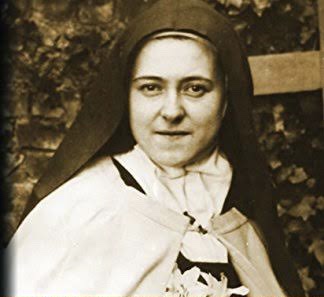
“Story of a Soul” is the autobiography of St Thérèse of Lisieux- also called as The Little Flower.

It was first published on September 30, 1898 – one year after her death at the age of 24.
This book outlines the spirituality that was lived and exhorted by the St Therese – “The Little Way”

B. What does it speak of?
The ‘Story of a Soul’ is St. Therese’s autobiography.

The book is divided into 11 chapters:
… Beginning with her first memory, it traces her life, ending with her blissful death in the convent.

“Story of a Soul” tells of how the Way to Holiness was not great and noble deeds but the fulfillment of the smallest duties with great love and complete reliance upon God.

Desiring the lowest place in all things and fulfilling all the duties of the state in life…
… the Little Flower describes of how she offered many penances for the conversion of sinners, especially during her final illness and the dark night of the soul she suffered at that time.

C. Pointers for Reflections

  1. Focuses on the “Little Way” of Holiness

It is a challenge to break the notion that “spirituality and holiness” consists primarily in heavy austerity and hard penances alone
It shows of the most important element needed towards holiness – perfect trust and holy love

  1. Presents the method of “offering to God” all what we do in life

Every action of ours can become an “offering to God” and thus “an act of saving” others

D. What virtues/points can we pick up from the “Story of the Soul” for this Season of Lent?

  1. Doing everything with love
  2. The virtue of Trusting in God

E. Tips to practice these virtues

  1. Consciously make a prayer (or at least, become aware) – “I am doing this work/activity, for the Love of God and only for His Glory!”
  2. Love God and give Him the First Priority and Place in life.

May this Lent and the familiarity with the Classical Book of Spirituality “Story of a Soul” help us to grow in our acclamation: “Eureka – I have found the Lord”

CLICK TO READ the full text of “Story of a Soul”:
http://www.catholicbible101.com/St.%20Therese%20Story%20of%20a%20soul.pdf

God Bless! Live Jesus!

✝️ REFLECTION CAPSULES – March 13, 2023: Monday

“Learning from the gentle and humble ways of the Lord, and becoming persons, who are open to the workings of the Holy Spirit!”

(Based on 2 Kgs 5:1-15ab and Lk 4:24-30 – Monday of the 3rd Week in Lent)

An incident is told of a popular boxer who was infamous for bragging about himself.

Once, before the take-off on an airline flight, the stewardess reminded the boxer to fasten his seatbelt.
“Superman don’t need seatbelt,” he told her with pride.

The stewardess was unwilling to compromise…

So she retorted, “Superman don’t need airplane, either.”

The man was discomfited in his pride.

In shame, he fastened his seatbelt without saying an extra word.

Pride can block a person from being open to the views, trends and wavelengths of other people and situations.

This is much truer, when it comes to spiritual matters

A proud mind…
… rejects the plans and workings of God in one’s life…

And makes one to say, “I can manage my life by myself!”

A haughty spirit…
… opposes any movements that causes one to get out of one’s comfort zones…

And makes one to say, “I know what’s best for me! None need to teach me!”

An arrogant heart…
… rejects any good inspirations or constructive feedbacks…

And makes one to say, “I don’t need anyone’s advices. Only I can advise myself!”

The Gospel of the Day presents the rejection of Jesus, in the Synagogue at Nazareth, by the people…
… who displayed a proud mentality, a haughty spirit and an arrogant heart.

Jesus, is in His hometown.

He entered the synagogue and began to teach.

Though initially, there was a wave of excitement…
… the words of Jesus caused a major setback to the people.

This caused people to reject Jesus…
… they even try to kill Him ( Lk 4: 29-30)

St Luke uses a very strong word to describe the feelings of the people…
“When the people in the synagogue heard, they were all FILLED WITH FURY”

Or another translation: “… they were all FILLED WITH WRATH”

When one’s pride is hurt…
…. one tends to become angry and hurt

When one is made to get out of one’s comfort zones…
… one tends to become restless and agitated.

This is what happened to the people in the Synagogue.

Their pride was hurt…
… because Jesus spoke to them on the need to be humble, and accept the “all-embracing” love of the Lord!

They were made to get out of the comfortable zones…
… because Jesus spoke to them on the need to change their closed ways of thought-pattern, and to accept the “all-merciful” invitation to the Kingdom of God!

This “instigation” can happen in our life too…

When we are challenged to move out of our “traditional” style of thinking…
….and accept instead, the merciful and compassionate ways of God

When we are forced to change our crippling attitudes of rejecting people on the basis of caste, creed, colour, language etc…
… and accept instead, the “all-welcoming” style of the Kingdom of God

It is human tendency, to “get used to” comfortable situations…
… even if they are fruitless or unproductive and useless

In the 2nd Book of the Kings, Naaman had to overcome his “fixated mentality” and listen to the Word of the Lord that came through Prophet Elisha (2 Kings 5:1-15)

He would understand the importance of humbling himself before the Power of the Lord and experience the Lord’s Healing!

The Lord today, invites and challenges us in our proud mentality, a haughty spirit and an arrogant heart.

This is the constant invitation by Jesus:
“Learn from Me… for I am gentle and humble in heart”

Let us learn from the gentle and humble ways of the Lord, and become persons, who are open to the workings of the Holy Spirit.

God Bless! Live Jesus!


Discovering the beauty of the Catholic Church through the Catechism
THE SACRAMENT OF HOLY ORDERS IN THE ECONOMY OF SALVATION – THE ORDINATION OF PRIESTS – CO-WORKERS OF THE BISHOPS

“Christ, whom the Father hallowed and sent into the world, has, through his apostles, made their successors, the bishops namely, sharers in his consecration and mission; and these, in their turn, duly entrusted in varying degrees various members of the Church with the office of their ministry.”

“The function of the bishops’ ministry was handed over in a subordinate degree to priests so that they might be appointed in the order of the priesthood and be co-workers of the episcopal order for the proper fulfilment of the apostolic mission that had been entrusted to it by Christ. (CCC #1562)

✝️ REFLECTION CAPSULE – March 12, 2023: Sunday

“Quenching our thirst with the unconditional love of the Lord!”

(Based on Exod 17:3-7, Rom 5:1-2, 5-8 and Jn 4:5-42 – 3rd Sunday in Lent)

One of the very simplest moral stories that all of us have heard is that of the thirsty crow.

One warm day, a thirsty crow flew all over, looking for water.

For a long time, he could not find any.
He felt weak, and lost all hope.

Suddenly, he saw a water jug below the tree. He flew straight down, and was delighted to see some water inside it!

Sadly, he found that the neck of the jug was too narrow and it was impossible for him to access the water.

He tried to push the jug to tilt, for the water to flow out but the jug was too heavy

The crow thought hard for a while.
Then looking around it, he saw some pebbles and an idea struck him.

He started picking up the pebbles one by one, dropping each into the jug.
As more and more pebbles filled the jug, the water level kept rising.
Soon it was high enough for the crow to drink.

His plan had worked!

His thirst had been quenched!

The moral of this story is to “Think and work hard, you may find solution to any problem”.

But when we consider this story from another perspective, we notice that it also shows the deep craving inside every creature, to satisfy one’s thirst.

One is restless till this thirst is fulfilled…
One is impatient till this craving is satisfied…

This agitated thirst is also innate in every human being…
… a thirst for the Divine, for the Transcendental.

And this thirst, compels humans…
… to search… to seek…
… for the source of satisfaction
… for the fountain of fulfilment

But how wonderful it would be to be knowing and to be convinced that this “thirst” can find its fulfillment only in God.

And how wonderful it would be, if all human beings could be properly guided and correctly directed on this path of finding true contentment.

The Gospel of the Day presents the beautiful incident of a “thirsty” Jesus who quenches a “thirsty” woman

The “thirsty” woman – Samaritan woman – expresses her desire for water…
… “Sir, give me this water, so that I may not be thirsty or have to keep coming here to draw water” (Jn 4: 15)

The “thirsty” Jesus promises fulfilment and contentment to all those who come to Him and believe in Him – the source of Divine Waters of Life….
… “Whoever drinks the water I shall give, will never thirst; the water I shall give, will become in him, a spring of water welling up to eternal life (Jn 4:14)

The Samaritan Woman in her encounter with the Lord is led, from a lower level to the higher level…

  1. Talks on material concerns
    (>> “How can you, a Jew, ask a Samaritan woman for a drink?”)
    (>> “Sir, you don’t even have a bucket…where then can you get this living water?”)
    (>> “Sir, give me this water that I may not be thirsty or have to keep coming to draw water”)
  2. Talks on spiritual matters
    (>> “Our ancestors worshipped on this mountain, but you people say that the place to worship is Jerusalem”)
  3. Talks that would lead to a complete life transformation.
    (>> “Go call your husband and come back”)
    (>> “I am He, the One Who is speaking to you”)

This is the story of our experience with religion and spirituality.

Many times, many of us perform religious practices…
… only for material concerns
Some of us, practise faith and spirituality…
… to merely engage in spiritual talks and reflections

But the higher level is the one…
… which leads to life transformation.

The Samaritan woman was led by Jesus, in having this life transformation…
… and she would go on to lead an entire town to believe in Jesus (Jn 4: 39-42)

This entire incident is built around that simple premise: A desire
… a desire that is expressed in the form of “thirst”

The desire of the Samaritan woman – to receive water, so that one may not be thirsty again – is the innate desire and longing within each human being…

In the Old Testament, the people of Israel had murmured and complained against God, in the wilderness for the struggle in food and water…
… “Why did you bring us up out of Egypt, to kill us and our children, and our cattle with thirst?” (Ex 17:3)

They longed to have their thirst quenched and their desires fulfilled…

Each of us, deep within, are thirsty and hungry….wanting to drink water that will quench the longing, forever.

It is this search that makes people to go out and seek the various sources of satisfaction.

Some feel to have found this fulfilment…
… through worldly pleasures and bad habits like smoking, drinking, obsession with sex, drugs etc, which only lead to momentary external satisfaction and short-lived bursts of thrill.

Some claim to have found this fulfilment…
… in the various philosophies, new-age patterns of life and naturalistic means of spirituality etc, which may have traces of truth, but fail to provide authentic and fullness of life.

But Jesus, today, boldly and unambiguously declares that its only in HIM that true and complete fulfilment of life can be found:
… “Whoever drinks the water I shall give, will never thirst; the water I shall give, will become in him, a spring of water welling up to eternal life (Jn 4:14)

Jesus also tells…
… “He who comes to me shall not hunger and he who believes in me shall never thirst” (Jn 6: 35)

Are we convinced of this fact, that its only in Jesus, that I can achieve true and complete happiness…?
Like the Samaritan Woman (Jn 4: 16-18)…
… we may have strayed away from this path of truth, to seek our own means and ways to find happiness and satisfaction.

But the Lord, today, calls us back to Him…
… to His Heart… … to His Church… to His Eucharist
… to experience Him fully.

To those who have strayed…
… the call of the Gospel, is to come back to the paths of truth

To those who are holding on to Him…
… the call of the Gospel, is to deepen the conviction, that in Him alone, can the hunger of my soul and the thirst of my heart be fulfilled.

To those who have strayed…
… the Lord invites to build the virtues of humility, docility and openness to the Spirit.

To those who are holding on to Him…
… the Lord invites to build the virtues of patience, firm trust and a passionate longing.

The Lord has displayed His unconditional and unparalleled love for each one of us, by offering His Life on the Cross for all of us, sinners…

“God shows his love for us in that while we were yet sinners Christ died for us!” (Rom 5:8)

May Jesus, the Source of Life-giving Waters…
… the One Who alone can quench our thirst
… the One Who loves us unconditionally
… always be the source and summit of our Christian living!

God Bless! Live Jesus!


📖 Discovering the beauty of the Catholic Church through the Catechism
EPISCOPAL ORDINATION – _FULLNESS OF THE SACRAMENT OF HOLY ORDERS

The Eucharist celebrated by the Bishop has a quite special significance…
… as an expression of the Church gathered around the altar

… with the one who represents Christ, the Good Shepherd and Head of his Church, presiding. (CCC # 1561)

EUREKA 11: Discovering Catholic Treasury – through a Lenten lens!

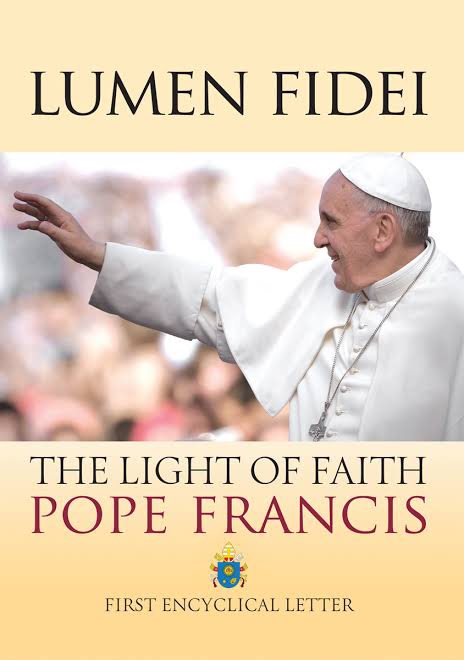
“LUMEN FIDEI”

A. What is it?
“Lumen Fidei” is the First Encyclical of Pope Francis. It was the completion of the work of his predecessor Pope Benedict XVI.

It was issued on June 29, 2013 in conjunction with the Year of Faith
“Lumen Fidei” means “The Light of Faith”
The document, completed the Papal Trilogy on the three theological virtues, following Pope Benedict XVI’s encyclicals Deus Caritas Est (on Charity) and Spe Salvi (on Hope).

B. What does it speak of?
“Lumen Fidei” celebrates Christian faith as the guiding light of a “successful and fruitful life”, inspiring social action as well as devotion to God…
… and illuminating “every aspect of human existence”, including philosophy and the natural sciences.

“Lumen Fidei” is divided into four chapters, each drawn from a passage in Scripture:
(i) We have believed in love. (1 Jn 4:16)
Reviews Salvation History—the story of God’s people—to see Faith throughout history.

Explores the rootedness of faith in the absolute fidelity of God, Who is completely trustworthy.
God enters human history and invites each person to participate in His plan of love.

(ii) Unless you believe, you will not understand. (Is 7:9)
Seeks to understand the relationship between Faith and several other aspects – Reason, Love, Truth, and Theology.

As Faith comes through hearing and sight, it is an intensely personal experience which opens out into a unique trustworthy knowledge…
… stimulating a constant dialogue between Faith and Reason.

(iii) I delivered to you what I also received. (1 Cor 15:3)
Ultimately, Faith and Truth are received in community.

We accept this Faith in a community and in the communion of the Church. Specially, the Sacraments allow us to experience this Faith.
This Community stays unified through the Apostolic Tradition and Apostolic Succession which safeguards Truth and allows our Faith to be handed on.
The Church extends the relational reality of Faith not only through Her Doctrines, but through Her very Sacramental Life

(iv) God prepares a city for them. (Heb 11:16)
Shows how faith should be the foundation of our society. Faith is needed for the foundation of our society, marriage and family.

Faith in God provides the common Faith so that our societies can endure.
Faith does not answer every question, but provides a lamp to help us navigate through the darkness and the Presence of God, who is with us, personally in our suffering.

C. Pointers for Reflections

  1. “Lumen Fidei” fortifies our Faith by responding to various contemporary doubts and attitudes that undermine believing

Faith is not an outdated relic of the Dark Ages. Christian Faith, rather, provides the foundation for fidelity in interpersonal relationships, without which society would be debilitated by fear.

  1. Contradicts the Philosophy of Secularism (= being without God and glorifying only human abilities)
    The power of secularism which tends to portray God as distant or dead is negated, as Faith makes God tangible and Christ-like Love possible.
  2. Faith is not only personal, but essentially has a Communitarian dimension
    Faith in the One God, directed toward the One Lord, is shared in the One Church, and so must be professed in its full unity and integrity.

D. What virtues/points can we pick up from the “Imitation of Christ” for this Season of Lent?

  1. Understanding and deepening our Fundamentals of Faith
  2. Reviving our Sacramental Life (especially Holy Eucharist and Confession)

E. Tips to practice these virtues

  1. Pick up the 12 basic articles of the Apostles Creed (I Believe) and make a study on each of those Basics of our Faith

Prepare a list of possible doubts and contradictions
Try to find reasonable solutions, which could be used as a tool to defend and proclaim our Faith

  1. Go for Holy Mass, with due preparation, as often as possible (without restriction to only Sunday Mass)

Make it a point to go for Confession, at least, once every month

May this Lent and the familiarity with the Encyclical “Lumen Fidei” help us to grow in our acclamation: “Eureka – I have found the Lord”

(The Full Text of “Lumen Fidei” can be found at:
http://w2.vatican.va/content/francesco/en/encyclicals/documents/papa-francesco_20130629_enciclica-lumen-fidei.html)

God Bless! Live Jesus!

✝️ REFLECTION CAPSULE – March 11, 2023: Saturday

“Running into the embrace of the Merciful Father, with a sincere repentance and contrition of heart, and pledging to live for Him, and with Him!”

(Based on Mic 7:14-15, 18-20 and Lk 15:1-3, 11-32 – Saturday of the 2nd Week in Lent)

Charles Dickens – an English writer and a social critic – is known to be one of the greatest novelists of all times.

He has created some of the world’s best-known fictional characters and his works enjoyed unprecedented popularity during his lifetime

By the 20th century, critics and scholars had recognised him as a literary genius.
His novels and short stories are still widely read today.

Someone asked Charles Dickens once, what was the best short story in the English language.

Without any hesitation, came his reply: “The Prodigal Son!”

The Gospel of the Day is the beautiful rendition of this classic: “The Prodigal Son!”

This Parable of the Prodigal Son(s) – is the beautiful exposition of the Unconditionally True Love of the Heavenly Father to each of His beloved children!

The Parable of the Prodigal Son(s) is surely one of the most popular, the most loved and the most touching parables of Jesus.

This parable has three main characters and we could view any of them as playing the main role in the story:

  1. The Prodigal Son – Younger son
    He went away from the love of his father

Inheritance was given to children only after the death of the father

In asking the inheritance, therefore, alluded to the fact that the prodigal son considered his father to be dead!

But having spent his life in useless living, he realised the emptiness and vacuum that filled his heart.

And so he decided to turn back…
… and go to his father

  1. The Prodigal Son – Elder Son

He remained the faithful “servant” of the house

But when he saw, that his brother – who had wasted away the inheritance, was received with so much warmth, his temper rose!

He couldn’t digest the fact that his brother who lived a “wasted life” was honoured….
… whereas he was never given the chance to “enjoy with his friends”

The context of the parable is Jesus speaking to the “Pharisees and scribes” who were “complaining that Jesus always accepted sinners” (Lk 15: 1-2)

In this context, the character of the Elder Son portrayed the attitude of the Pharisees and Scribes.

  1. The Loving Father

Beyond these two characters of the two prodigal sons – the younger and the elder – towers high the Image of the Father – the Father who loved and accepted his lost sons!

He suffered a deep pain when his younger son went away

He underwent immense pain waiting for the son to come back
He went through moments of dilemma when his elder son was opposing the welcome of the younger one.

Yet through all this, the character of the Father towers high!

He is the Father of Mercies – Who accepts all, just as they are
He is the Father of Love – Who loves everyone, unconditionally
He is the Father of Compassion – Who receives all to His loving embrace

In our life, often as children – like the Prodigal Son(s) – we go away.

We try to do something good…
… but our life turns into a mess!

Our student life gets messed up with lack of commitment and failures
Our marriage hits the rocks with misunderstandings and lack of acceptance
Our family life gets into a crisis with lack of unity and peace of mind

We feel our life is all in a mess…

We find ourselves lost, frustrated and upset!

But in all such situations, we need to look up…
… and see how the Loving Father is waiting to embrace us… And love us!

As Prophet Micah very beautifully reminds us:
“Who is a God like thee, pardoning iniquity and passing over transgression for the remnant of his inheritance?

He does not retain his anger for ever because he delights in steadfast love.
He will again have compassion upon us, he will tread our iniquities under foot.
… Thou wilt cast all our sins into the depths of the sea!” (Mic 5:18-19)

Yes, the Merciful Father is waiting for each one of us…
… Whatever be the mess, that my life may be in!

Let us run into His embrace of Love…
… with a sincere repentance and contrition of heart

And pledge to live for Him, and with Him!
For you, forever!

God Bless! Live Jesus!


📖 Discovering the beauty of the Catholic Church through the Catechism
EPISCOPAL ORDINATION – FULLNESS OF THE SACRAMENT OF HOLY ORDERS

As Christ’s vicar, each bishop has the pastoral care of the particular Church entrusted to him…
… but at the same time he bears collegially with all his brothers in the episcopacy the solicitude for all the Churches:
“Though each bishop is the lawful pastor only of the portion of the flock entrusted to his care…

… as a legitimate successor of the apostles he is, by divine institution and precept, responsible with the other bishops for the apostolic mission of the Church. (CCC # 1560)

✝️ REFLECTION CAPSULE – March 09, 2023: Friday

“Doing away with any ’personal agenda or selfish motives’ and instead, making the Lord as the Centre of our lives!”

(Based on Gen 37:3-4, 12-13a, 17b-28a and Mt 21:33-43, 45-46 – Friday of the 2nd Week in Lent)

An incident is said about a former American astronaut who took over as the President of a major airline.

He was determined to make the airline’s service the best in the industry.
He sought ‘commitment to work’, by all the employees in all the departments.

One day, as the new president walked through a particular department, he saw an employee resting…
… with his feet on a desk, while the telephone on the desk rang continuously. .

“What are you doing? Aren’t you going to answer that phone?” the boss demanded.

“This isn’t my department, Am here, just to relax!” answered the employee, with a total indifference!
(He had not recognized his new boss, and so chose to answer with apathy!)

“I work in the maintenance department”, he went on to say.

“Not anymore!” snapped the president, “You no longer will work in my company!”

The President, with his liking for “committed work” and “achieving excellence”…
… made sure there was no room for “people with lack of commitment and zeal!”

As Christians, we are all co-workers of the Project Kingdom!

Do we work with commitment?
… or are we often found to be people of indifference, “lacking commitment and zeal?”

The Gospel of the Day is a strong message to examine one’s level of commitment to the Kingdom of God…
… exhorting to do away with any “personal agenda” or “selfish motives”

The Gospel presents to us the very volatile and conscience-wrenching parable of the Wicked Tenants.

The tenants were entrusted the vineyard by the Master…
… with much hope and expectation.

They were expected to provide the produce in the season.

However, the tenants quite miserably let down the hopes of the Master!

Filled with much pride and arrogance…
… they inflicted harm on all the servants who came on behalf of the Master

They even made an attack on the “own of the Master” – the Master’s Son!

A sense of total rigidity, pride and casualness caused these tenants to abhor the Master!

What about us?

How is our attitude to our Lord – the Master of our lives?

We may feel that we don’t abhor or despise the Will of the Lord in our life – to this extent, as these tenants.

But let us realise…

Every time, we reject the voice of the Lord, and seek to do as our wills lure us…
Every time, remain in stubbornness to pursue our wrong habits and evil tendencies…
Every time, we cause pain to the other by our words of rash judgement and condemnation…
… we are failing to obey the Master and denying His role as a Master in our life!

As Christians, we are indeed co-workers of the Project Kingdom!

The Master has entrusted the vineyard to us
… our homes, our places of work, our neighbourhood, our families and communities…
…. the people we meet daily, the problems we encounter constantly, the situations we are challenged with…

These are “our vineyard!”

Do we work with commitment?

Or are we often found to be people of indifference, “lacking commitment and zeal?”

Let us never have to hear from Our Master, “Not anymore! You no longer will work in my company!”

Instead…
… let us do away with any “personal agenda” or “selfish motives” as the workers of the Vineyard…

And seek to be impressed by the personality of Jesus…
… making Him the Centre of our Lives!

God Bless! Live Jesus!


📖 Discovering the beauty of the Catholic Church through the Catechism
EPISCOPAL ORDINATION – FULLNESS OF THE SACRAMENT OF HOLY ORDERS

One is constituted a member of the episcopal body in virtue of the sacramental consecration and by the hierarchical communion with the head and members of the college.”
The character and collegial nature of the episcopal order are evidenced among other ways by the Church’s ancient practice which calls for several bishops to participate in the consecration of a new bishop.
In our day, the lawful ordination of a bishop requires a special intervention of the Bishop of Rome…

… because he is the supreme visible bond of the communion of the particular Churches in the one Church and the guarantor of their freedom. (CCC # 1559)

✝️ REFLECTION CAPSULE – March 09, 2023: Thursday

“Making our life a Good News of Comfort and Consolation!”

(Based on Jer 17:5-10 and Lk 16:19-31 – Thursday of the 2nd Week in Lent)

We live in a world of contrasts.

Contrasts are encountered at every sphere of our life.

Socially, we find contrasts among the various classes…
… the rich and the poor, the haves and the have-nots, the caste distinctions, the racial and language divides…

Emotionally, we find contrasts in our experiences…
… joyful situations sandwiched between tragic moments, moods varying between situations and people, temperaments changing from person to person…

The Gospel of day presents some of these contrasts in a vivid manner…
… and could be termed as a “parable of contrasts” – the Parable of the Rich Man and Lazarus.

This parable is set out as a play… a two-act play.

The plays takes place on two stages…
… the stage of this world
… and the stage of the other-world.

The contrasts are plenty:

In the First Act….

A rich man – a poor man
The man is rich but unnamed – the man is poor but is named, Lazarus (meaning ‘God Helps’)
The rich man clothed in purple – Lazarus clothed fully with sores
The rich man caressed with fine linen – Lazarus licked by the dogs
The rich man feasted sumptuously – Lazarus desired to be fed by what fell from the table.
The rich man died and was buried – Lazarus died but was carried by the angels.

In the Second Act…

Lazarus is in Abraham’s bosom – the rich man is in Hades.
Lazarus receives good things – the rich man was in torment.
Lazarus was comforted – the rich man was in anguish

This “parable of contrasts” is also …
… a “parable of comfort and consolation”
… a “parable of challenge and confrontation”

It’s a “parable of comfort and consolation” because….
… Lazarus, who had undergone great misery and suffering was blessed with the presence of joy of the Lord.

It gives comfort and consolation to us, who need to be strengthened in our moments of trials and hardships, knowing that the Lord will surely look with mercy on His needy ones.

It’s a “parable of challenge and confrontation” because…
… the rich man, who had a luxurious life, was condemned to torments, and had to endure the flames of suffering.

It’s a great challenge and a confrontation before us, who need to realise that indifference and an attitude of closing one’s eyes to the misery of the other can be disastrous and punishable

“He who shuts his ears to the cries of the poor will be ignored in his own time of need.” (Prov. 21:13)

The world of contrasts needs a Gospel of Comfort and Consolation, and towards this, we are challenged and confronted…

Challenged to get rid of our attitudes of indifference and lethargy to help the needy ones.
Confronted to overcome our tendencies to remain satisfied in our comforts and close our eyes conveniently to the necessities of the other.

Let us make our life a Good News of Comfort and Consolation.

God Bless! Live Jesus!


📖 Discovering the beauty of the Catholic Church through the Catechism
EPISCOPAL ORDINATION – FULLNESS OF THE SACRAMENT OF HOLY ORDERS

Episcopal consecration confers, together with the office of sanctifying, also the offices of teaching and ruling.

In fact, by the imposition of hands and through the words of the consecration, the grace of the Holy Spirit is given…
… and a sacred character is impressed in such wise that bishops, in an eminent and visible manner, take the place of Christ himself, teacher, shepherd, and priest, and act as his representative (in Eius persona agant).”

“By virtue, therefore, of the Holy Spirit who has been given to them, bishops have been constituted true and authentic teachers of the faith and have been made pontiffs and pastors.” (CCC # 1558)