EUREKA 21: Discovering Catholic Treasury – through a Lenten lens!

“DOMINUM ET VIVIFICANTEM”

A. What is it?
“Dominum et vivificantem” is the fifth encyclical written by Pope John Paul II.

“Dominum et vivificantem” is a phrase in Latin which means, “The Lord and Giver of Life!”
The encyclical was promulgated on 18 May 1986.

“Dominum et vivificantem” is a theological examination of the role of the Holy Spirit as it pertains to the modern world and the Church and the use of spiritual prayer to renew one’s spiritual life.

This encyclical completed the Pope’s Trinitarian trilogy of encyclicals, which includes “Redemptor Hominis” and “Dives in Misericordia.”

B. What does it speak of?
“Dominum et vivificantem” consists of three parts:
PART I – The Spirit of the Father and of the Son, given to the Church
PART II – The Spirit Who convinces the world concerning sin
PART III – The Spirit Who gives life

In 1986, Pope John Paul II was already anticipating the new millennium, with its new challenges…
… as well as the new graces the Holy Spirit would bestow upon the Church as she celebrated the Great Jubilee beginning the third millennium of Christianity.

Wishing to prepare the Church for these things by giving the people of God an increased awareness and knowledge of the Holy Spirit, he issued the encyclical on May 18, the Solemnity of Pentecost

Four scenes from the “Upper Room” form the framework of the encyclical’s theological vision.

  1. There is the farewell discourse of Jesus at his final meal with his disciples (John 14:17).

In this scene “the highest point of the revelation of the Trinity is reached”
Jesus begins to disclose the personal role that the Spirit will play in communicating the Gospel to the world:

  1. The second Upper Room scene takes place on the evening of the first Easter Sunday

Jesus breathes on his disciples and says to them, “Receive the Holy Spirit.”
Here is fulfilled the principal prediction of the farewell discourse: the Risen Christ … ‘brings’ to the Apostles the Holy Spirit”

  1. The third Upper Room scene, on the day of Pentecost, witnessed the further giving of the Holy Spirit to the world

“This event constitutes the definitive manifestation of what had already been accomplished in the same Upper Room on Easter Sunday”
Thus the era of the Church begins, and the Holy Spirit is precisely the soul of this new body.

  1. The fourth evocation of the Upper Room concerns the Church’s fidelity to its mission, which requires it always to be attentive to the circumstances of its beginning.

“While it is an historical fact that the Church came forth from the Upper Room on the day of Pentecost, in a certain sense one can say that she has never left it.
Spiritually the event of Pentecost does not belong only to the past; the Church is always in the Upper Room that she bears in her heart”

C. Pointers for Reflections

  1. This encyclical describes many “signs and symptoms of death” in the contemporary world

Against a materialism which accepts death as the end of human existence, the Church proclaims the Holy Spirit, “the life which is stronger than death.”

  1. Conversion of the human heart “is brought about by the influence” of the Holy Spirit working through the conscience.

Conversion requires convincing of sin; it includes the interior judgment of the conscience, and becomes at the same time a new beginning of the bestowal of grace and love
Thus in this “convincing concerning sin” we discover a double gift: the gift of the truth of conscience and the gift of the certainty of redemption.

D. What virtues/points can we pick up from “Dominum et vivificantem” for this Season of Lent?

  1. Work against the ‘culture of death’ that is becoming a dangerous trend in the modern world
  2. Recognise the danger of living in sin

E. Tips to practice these virtues

  1. Be a promoter of life at all levels
  2. Daily make an examination of conscience

May this Lent and the familiarity with “Dominum et vivificantem” help us to grow in our acclamation: “Eureka – I have found the Lord”

CLICK TO READ the Full Text of “Dominum et vivificantem” at https://www.vatican.va/content/john-paul-ii/en/encyclicals/documents/hf_jp-ii_enc_18051986_dominum-et-vivificantem.html

God Bless! Live Jesus!

✝️ REFLECTION CAPSULE – March 28, 2023: Tuesday

“Opening our hearts – in repentance and contrition – and allowing Him to reveal “the light” of His love and grace in our hearts!”

(Based on Num 21:4-9 and Jn 8:21-30 – Tuesday of the 5th Week in Lent)

St. Augustine speaks of a conversation, he had, with an unbeliever.

The other man showed him his idol gods and said, “Here is my god; Where is thine?”

He again pointed to the skies and said, “Lo, Here is my god; Where is thine?”
He further showed some of the land creatures and said, “Behold, here is my god; Where is thine?”

“But” St Augustine says, “I showed him not my God;
Not because I had not one to show him, but because he had not eyes to see Him”

Unless one open’s one’s eyes to the Divine realities…
… one cannot see the Divine!

If one chooses to remain closed to the light of Divinity…
… then one continues to remain in the darkness of life!

The Gospel of the Day is the account of Jesus presenting Himself as the Light of the World and his continued debate with the Pharisees, who chose to remain in the darkness of error and ignorance.

Jesus is at the Feast of the Tabernacles (Jn 7: 10)

It is a kind of a harvest festival.

It’s a festival of going up to Jerusalem and join in the festivities with many of the other farmers and vineyard-keepers…
… being grateful and expressing one’s thankfulness to God Yahweh, who has blessed with a good harvest.

In the evening of the Feast day, everyone gets together in the Court of the Women at the Temple to dance and praise God for his goodness.

There is an elaborate ceremony involving the pouring out of water from great pitchers and then the lamps are lit.

Four huge oil lamps are positioned around the courtyard and the priests’ assistants pour great quantities of oil into the bases of them.
Massive wicks are created from the worn-out clothing of the priests and stuffed into the necks.
Darkness falls quickly with very little twilight between the strong sunlight and the rising of the moon, which follows very rapidly at this time of year.

Suddenly the lamps are lit and the whole courtyard is bathed in their light.

A cheer goes up from the revellers and from around the city, as the light can be seen from every part of Jerusalem.

Using the contrast between…
… the glowing exuberance of the brightly lit courtyard
… and the growing darkness in the atmosphere

Jesus makes a loud and bold proclamation:
“I am the light of the world. Whoever follows me will never walk in darkness, but will have the light of life.” (Jn 8: 12)

But the Pharisees objected and spoke in retort:
“You testify on your own behalf, so your testimony cannot be verified” (Jn 8: 13)

There was a contrast-play, on here….

The Temple was lit brightly
… Jesus declared Himself as the Light of the World
The evening had set and the surroundings were growing darker
… The Pharisees, by rejecting the person of Jesus, chose to remain in darkness!

Jesus was constantly giving witness to the fact that He was the “light of the world”

He brought the light…
… of healing – to those sick and in distress
… of salvation – to those in sin and guilt
… of power and grace – by His words and teachings

But the Pharisees and many of the “creamy class” of the Jewish society, chose to dwell in “darkness”

They remained in the darkness…
… of ignorance – by not being open to the teachings and works of Jesus
… of death – by continuing a life of sin and error and refusing the offer of grace from Jesus

Jesus wishes to be the “light of our life!”

One of the most tragic statements in the Bible reads thus:
“He came to His own, and His own rejected Him” (Jn 1: 11)

What about us?

Do we open our hearts to allow His light to shine through us?
… or do we get stagnant in darkness, and choose to reject His teaching in our life…?

Do we seek the Lord in honesty seeking, to cause His light to shine in our minds?
… or do we remain indifferent in darkness, and get stuck to our pride mentality and lifestyle…?

The people of Israel failed to see the mighty hand of the Lord leading and protecting them on their way to the Promised Land.

They got stuck with peripheral and materialistic concerns
… “And the people spoke against God and against Moses, “Why have you brought us up out of Egypt to die in the wilderness? For there is no food and no water, and we loathe this worthless food.” (Num 21:5)

As a result, they greatly offended the Lord and brought punishment upon themselves.

Yet, the Lord, in His Great Goodness, provided a solution – the bronze serpent – a pre-figurement of the Cross of Christ, which would bring redemption to the whole world!
… “And the Lord said to Moses, “Make a fiery serpent, and set it on a pole; and everyone who is bitten, when he sees it, shall live.” So Moses made a bronze serpent, and set it on a pole; and if a serpent bit any man, he would look at the bronze serpent and live!” (Num 21:8-9)

The Lord comes to us, today…
… proclaiming Himself as the “light of the world”

Let us not remain closed; rather, open our hearts, in repentance and contrition…
… and allow Him to reveal “the light” of His love and grace in our hearts?

God Bless! Live Jesus!


📖 Discovering the beauty of the Catholic Church through the Catechism
THE SACRAMENT OF HOLY ORDERS IN THE ECONOMY OF SALVATION – WHO CAN CONFER THIS SACRAMENT?

Christ himself chose the apostles and gave them a share in his mission and authority.
Raised to the Father’s right hand, he has not forsaken his flock but he keeps it under his constant protection through the apostles, and guides it still through these same pastors who continue his work today.

Thus, it is Christ whose gift it is that some be apostles, others pastors. He continues to act through the bishops. (CCC # 1570)

EUREKA 20: Discovering Catholic Treasury – through a Lenten lens!

“REDEMPTORIS MISSIO”

A. What is it?
‘Redemptoris Missio’ is an encyclical by Pope John Paul II published on 7 December 1990.

‘Redemptoris Missio’ is a Latin phrase for ‘The Mission of the Redeemer’
This encyclical is subtitled ‘On the permanent validity of the Church’s missionary mandate.’
The release coincided with the twenty-fifth anniversary of Vatican II’s Decree on the Church’s Missionary Activity, ‘Ad gentes.’

B. What does it speak of?
‘Redemptoris Missio’ is devoted to the subject of “the urgency of missionary activity”

The Pope wished “to invite the Church to renew her missionary commitment”
The encyclical is an important elaboration on the theme of New Evangelization cited often by Pope John Paul II.

The encyclical differentiated three spheres of evangelization:

Missio ad gentes: Directed to people who do not yet believe in Christ
Reevangelization: Aimed at rekindling Christian faith
Pastoral care: The deeper insertion of the gospel in the hearts and minds of faithful Christians

Besides the Introduction and the Conclusion, ‘Redemptoris Missio’ outlines 8 topics:
I. Jesus Christ, the Only Savior

II. The Kingdom of God

III. The Holy Spirit, the Principal Agent of Mission

“The Holy Spirit is indeed the principal agent of the whole of the Church’s mission”
“Today the Church must face other challenges and push forward to new frontiers”

IV. The Vast Horizons of the Mission Ad Gentes

“Internal and external difficulties must not make us pessimistic or inactive. What counts, here as in every area of Christian life, is…from the certainty that it is not we who are the principal agents of the Church’s mission, but Jesus Christ and his Spirit.”
The Church addresses people with full respect for their freedom. Her mission does not restrict freedom but rather promotes it. The Church proposes; she imposes nothing. She respects individuals and cultures, and she honors the sanctuary of conscience. To those who for various reasons oppose missionary activity, the Church repeats: Open the doors to Christ!”

V. The Paths of Mission

“Conversion is a gift of God, a work of the Blessed Trinity.”

VI. Leaders and Workers in the Missionary Apostolate

“The Church is missionary by her very nature, for Christ’s mandate is not something contingent or external, but reaches the very heart of the Church.”

VII. Cooperation in Missionary Activity

The Pope appeals: “I ask young people themselves to listen to Christ’s words… they will know the genuine joy of proclaiming the ‘Good News’ to brothers and sisters whom they will lead on the way of salvation.”

VIII. Missionary Spirituality

“An essential characteristic of missionary spirituality is intimate communion with Christ.”
“The Church’s missionary spirituality is a journey toward holiness.”

C. Pointers for Reflections

  1. “Redemptoris Missio” invites to understand that the Kingdom of God is primarily the Person of Jesus Christ

“The Kingdom of God is not a concept, a doctrine, or a program subject to free interpretation, but it is before all else a person with the face and name of Jesus of Nazareth, the image of the invisible God.”

  1. The Encyclical calls us to cooperate with the missionary tasks entrusted to us

“The witness of a Christian life is the first and irreplaceable form of mission”

D. What virtues/points can we pick up from “Redemptoris Missio” for this Season of Lent?

  1. Making Jesus as the centre of our lives
  2. Using every opportunity to become a witness of the Kingdom of God

E. Tips to practice these virtues

  1. Prioritize Jesus above all things and people
  2. Try to speak about Christ and His Love – if possible, everyday – to at least one new person

May this Lent and the familiarity with “Redemptoris Missio” help us to grow in our acclamation: “Eureka – I have found the Lord”

CLICK TO READ the Full Text of “Redemptoris Missio” at:
https://www.vatican.va/content/john-paul-ii/en/encyclicals/documents/hf_jp-ii_enc_07121990_redemptoris-missio.html

God Bless! Live Jesus!

✝ REFLECTION CAPSULES – March 27, 2023: Monday

“Picking up the broken pieces of our life, filling the spaces in our emptiness and starting, all over again!”

(Based on Dan 13:1-9, 15-17, 19-30, 33-62 or 13:41c-62 and Jn 8:1-11 – Monday of the 5th Week in Lent)

“Let me start again…
Pick the pieces of my brokenness
Fill the spaces in my emptiness…
Let me start again!”

This a beautiful hymn that echoes the sentiments and feelings of a person…
… who has suffered much and is yet ready to start life all over again.

Life sometimes can crush us really hard…
Life sometimes can wreck us really miserably…

The Gospel of the Day is a beautiful testimony of a person who…
… found herself at the lowest ebbs of her life
… when everything seemed all over
… in total tatters and brokenness

Yet…
… was able to pick up the broken pieces of her life
… fill the spaces in her emptiness
… and start it all over again

All by the grace and power of the Lord, who intervened, and instilled a new hope and zeal in her.

The incident in focus is the ‘infamous’ occurrence of the woman who was “caught” in adultery.

There are many things to be pondered and reflected on, through this incident…

  1. Think of the “mean” and “disgraceful” attitude of the people who “caught” this woman “in the act” (Jn 8:3)
    … Were they fitted with “special probing and lusty” eyes, that devilishly gazed into “intimate exchanges”, that too on an early morning?
  2. Think of the “self-appointed” role of these “moralists” who sought to restore the innocence of the land, without realising that, perhaps, their own eyes were filled with lust, their hearts drenched in obscenity and their lives soaked in vulgarity.
    … How was it that their “clean” consciences and “true” intentions caught hold of only the woman, “caught in the act”, whereas, the man involved, was left, scot-free?
  3. Think of the “deadly” trap that they were laying before the Lord, in seeking to find his opinion on the accused woman
    … How neatly they had trapped the Lord in a “most vicious” dilemma:

If the Lord permitted death, it would be going against the Law of the land – of the Romans – since only the Romans were permitted to take the life of a person

If the Lord did not allow to stone, He would be going against the Law of the Lord, which had ordered the stoning of the convicted adulterer to death.

If the Lord permitted killing, He would be going against His own teaching of mercy, and His fundamental mission of “coming to seek and save the lost”

If the Lord forgave her, He would be going against the principle of Justice, and that would be infringing the rights and duties of a Just God.

It was a near-perfect scene, for the religious leaders to dreadfully trap the Lord.

The woman had been caught “in the act” of adultery…

Jesus was now to be trapped “in the act” of breaking the Law…

The woman had been shamefully paraded and stripped of all her dignity…

Jesus was now to be gloriously humiliated and disrobed of His glory and majesty…

But all these were “mere” human thinking and wile wishes…

The wisdom of God is much greater than all human craftiness and cunningness

In their wickedness, they failed to see, that they were testing the law with the Law-Giver Himself!

And so, the Benevolent Law-giver, bent down, and wrote with His finger… (Jn 8:6)
… just as He had, centuries back, written the Law on the tablet and given to Moses: “… tablets that were made by God, having inscriptions on them that were engraved by God Himself” (Ex 32:16)

He wrote, not a new law, but He wrote to make the law perfectly understood..

“Let the one who is without sin, be the first to throw a stone at her” (Jn 8:7)

This statement shattered all those accusers who heard it!

Those who came to cast the stone had themselves stoned brutally, by the guilt of their sin!

Justice had triumphed!
Mercy had excelled!
Love had won!

All had left, save the one accused and the One who was Love and Compassion!

The one accused, stood in fear and trembling before the One who recreates and renews!

And so she was given another chance…
…. to pick up the broken pieces of her life
… and to start anew!

In the book of Daniel, the innocent lady, Susanna would undergo a similar experience…
… of being condemned and doomed to death!

But the Wisdom of the Lord would shine through the young boy Daniel…
… and innocent life was saved!

Susanna trusted in the mighty Providence of God…
… and her hopes would not be disappointed; she would not be left in desolation.

Yes, life may very often reduce us also to the same state as this one who was accused.

We may find ourselves crushed….broken…accused… abandoned…shamed!

But the Lord, still gives us a chance….

Shall we not…
…. pick up the broken pieces of our life…
… fill the spaces in our emptiness…
… and start it, all over again?

God Bless! Live Jesus!


Discovering the beauty of the Catholic Church through the Catechism
THE SACRAMENT OF HOLY ORDERS IN THE ECONOMY OF SALVATION – THE CELEBRATION OF THIS SACRAMENT

In the Latin Church, the initial rites – presentation and election of the ordinand, instruction by the bishop, examination of the candidate, litany of the saints – attest that the choice of the candidate is made in keeping with the practice of the Church…
… and prepare for the solemn act of consecration, after which several rites symbolically express and complete the mystery accomplished.
For bishop and priest, an anointing with holy chrism, a sign of the special anointing of the Holy Spirit who makes their ministry fruitful; giving the book of the Gospels, the ring, the miter, and the crosier to the bishop as the sign of his apostolic mission to proclaim the Word of God, of his fidelity to the Church, the bride of Christ, and his office as shepherd of the Lord’s flock

… presentation to the priest of the paten and chalice, “the offering of the holy people” which he is called to present to God; giving the book of the Gospels to the deacon who has just received the mission to proclaim the Gospel of Christ. (CCC #1574)

EUREKA 19: Discovering Catholic Treasury – through a Lenten lens!

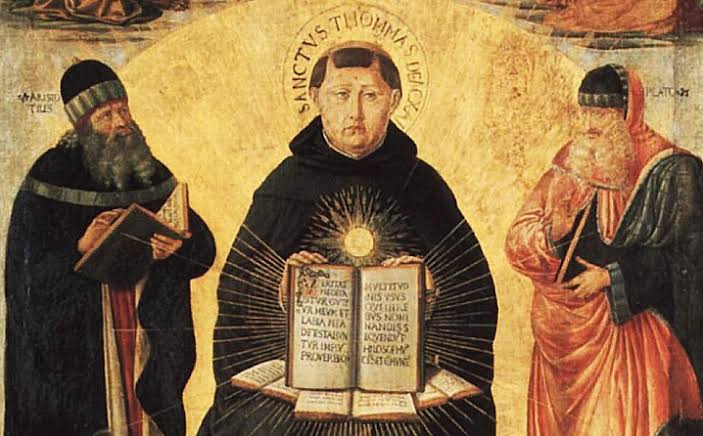
“SUMMA THEOLOGICA”

A. What is it?
“Summa Theologica” is one of the very important Christian Classical Books written by St Thomas Aquinas in 1265-1274.

It is a compendium of all of the main theological teachings of the Catholic Church. It presents the reasoning for almost all points of Christian theology.
“Summa Theoligica” means “Summary of Theology”. It is regarded as one of the most precise, detailed collections of Christian theology

B. What does it speak of?
“Summa Theoligica” is divided into three parts, and each of these three parts contains numerous subdivisions.
(i) Part 1 deals primarily with God and comprises discussions of 119 questions concerning the existence and nature of God, the Creation, angels, the work of the six days of Creation, the essence and nature of man, and divine government.

(ii) Part 2 deals with man and includes discussions of 303 questions concerning the purpose of man, habits, types of law, vices and virtues, prudence and justice, fortitude and temperance, graces, and the religious versus the secular life.

(iii) Part 3 deals with Christ and comprises discussions of 90 questions concerning the Incarnation, the Sacraments, and the Resurrection.

C. Pointers for Reflections

  1. “Summa Theoligica” provides with lucid explanations about the various practical questions that we have about our faith

This includes the popular 5 arguments about the Existence of God, the role of Faith and Reason, the nature and limits of Human Knowledge and various philosophical and practical queries of Faith

  1. “Summa Theoligica” presents a rational and philosophical explanation to the various aspects of faith

The modern man is today beset with “questions of rationality” – everything in life, is questioned, and nothing seems to be accepted, until a “Reasonable Answer” is provided
“Summa Theoligica” seeks to provide deep insights for us to have a strong basis and foundation of the Teachings of Christ

D. What virtues/points can we pick up from “Summa Theologica” for this Season of Lent?

  1. Building a strong foundation for our Faith
  2. Following the Principle: “To Love God more – by knowing Him More – and thus to Serve Him better”

E. Tips to practice these virtues

  1. Have an openness to seek for answers to the genuine doubts, of our faith, from competent sources
  2. Grow in the Love of God by growing in the Knowledge of His Church

May this Lent and the familiarity with “Summa Theologica” help us to grow in our acclamation: “Eureka – I have found the Lord”

CLICK TO READ the Full Text of “Summa Theoligica” at:
http://www.catholictheology.info/summa-theologica/summa-part1.php

God Bless! Live Jesus!

✝ REFLECTION CAPSULES – March 26, 2023: Sunday

“Exclaiming with hope and trust: ‘Thank you Lord for the pain! I know there is a purpose! I know I am loved!’”

(Based on Ezek 37:12-14, Rom 8:8-11 and Jn 11:1-45 – 5th Sunday in Lent)

An incident is narrated of a 6-year old boy, who was diagnosed with leukaemia (cancer of the blood/bone-marrow).

One day, the child had to undergo a very painful procedure called “spinal tap”.
(‘Spinal Tap’ is a procedure in which a needle is inserted into the spinal cord in order to take out fluid for the purpose of diagnosis or treatment).

The mother, knowing that her child would have to undergo a lot of pain, approached him and told:
“Remember, if it hurts, it’s because you are loved, and there is purpose for the pain!”

The child remembered this sentence and took it to heart.

As the procedure was conducted, the child yelled and sobbed and cried…
… with the horrendous pain.

When the process was finally getting through, the child, with tears in his reddish eyes, looked up to the doctor and exclaimed:
“Thank you Doctor for the pain!
I know there is a purpose!
I know I am loved!”

(The incident goes on to say, that the child survived the painful illness and went on to live a normal life!)

Well, life often takes us through “painful procedures,” right?

In all such situations, our Christian faith reminds us:
“Remember, if it hurts, it’s because you are loved, and there is purpose for the pain!”

The Gospel of the Day – the raising of Lazarus – is a powerful teaching on this dimension of how we need to put our trust in the Lord…
… and realise, that there is a purpose that God has in store for us, even in the most painful situations of our life.

The narration of the raising of Lazarus is the longest single narrative/story in the entire Gospels (Jn 11: 1-45).
Long as it is, this incident also teaches us a number of essential lessons for life…

  1. The Providence of God, that answers, even when we do not “feel” His presence around us (Jn 11:4-6)

“So when Jesus heard, that Lazarus was ill, He remained for two days in the place where He was” (Jn 11:6)

Thus teaching us…
… we need to depend on the Lord at all times, even in our dark moments of life
… the Lord will never abandon us and in fact, can never leave us

  1. The slow understanding of the Disciples, who were with the Lord for a while, and yet had not understood His Ways and Words (Jn 11:8-16)

“Master, if he is asleep, he will be saved” (Jn 11:12)

Thus teaching us…
… doubts and dilemmas are very much part of one’s life as a disciple
… the patience of the Lord in dealing with those who are called and chosen

  1. The power of trust and hope in the Lord, even in hard and trying situations of life (Jn 11:21-27)

Martha said to Jesus, ‘Yes Lord, I have come to believe, that You are the Messiah, the Son of God…” (Jn 11:27)

Thus teaching us…
… as gold is tested in furnace, so our faith will be tested in the crucible of pains and sufferings
… we need to resign ourselves to the Power of the Lord, even though we may not understand many things

  1. The empathy of the Lord in sharing with the pain of humanity (Jn 11:35)

“And Jesus wept” (Jn 11:35)

Thus teaching us…
… in our suffering moments, the Lord is very much close to us, and suffers with us
… our tears are precious to the Lord and He stores them in a bottle (Ps 56:9)

  1. The power of God’s Word (Jn 11:43-44)

“Jesus cried out in a loud voice, ‘Lazarus, come out!'” (Jn 11:43)

Thus teaching us…
… the Word Which created the entire universe, is given to us in the Holy Bible, for us to read, cherish and find strength!
… the promises given by His Word will come to fruition in due season and no powers on this earth can diffuse or dilute it!

In the midst of all these and various other “food for transformation” that this incident offers…
… we focus our attention on one message: “God’s delays are not His denials”

Yes, God’s delays are, certainly, not His denials!

One of the striking aspects we encounter in this Gospel passage is the delay that Jesus “purposely” entails in coming to Lazarus.

The Gospel says that “… when Jesus heard that Lazarus was ill, he remained for two days in the place where he was.” (Jn 11:6)

This statement is on one side surprising; while on the other, shocking!

It was clearly known that Jesus was closely associated with Lazarus.

“A friend in need, is a friend indeed” is a phrase that we are aware.

Then why did Jesus delay in going to Lazarus?

As the Lord Himself answers: “This illness is not to end in death, but is for the glory of God, that the Son of God may be glorified through it.” (Jn 11:4)

This verse then is the key to many of our problems and anxieties about “prayers not being answered!”

How many are the times, when we go through the struggles of life, and we expect the Lord to work a wondrous deed…
… but when nothing as such happens, we become feeble in our faith!

How many are the occasions, when we face a problem in our material or spiritual life, and we hope that something terrific is going to happen…
… but when the situation remains the same, we begin to waver in our belief!

This is where the words of the Lord, “this illness is not to end in death, but is for the glory of God”…
… ought to come to our aid!

We need to examine our life…
… Am I only having “belief in the Lord”, but not having “trust in Him?”
… Am I only “professing the Lord with my lips”, but failing to “recognize His power from my heart?”

“Belief in the Lord” would only consist of declaring oneself to be a Christian, and having a name that one is a follower of Christ…
… But “trust in the Lord” would translate to also follow the commandments of being a Christian, and seek to live as Christ lived, by seeking and doing God’s Will in life.

“Professing the Lord with my lips” would only include saying vocal prayers, being regular to the practices of devotion and piety and finding satisfaction in doing the external duties of the religion…
… But “recognizing His Power from the heart” would mean to also remain calm in the face of problems, being patient even in great darkness and being joyful in the midst of turbulent life situations.

As Christians, the only way is the “Way of the Cross”
… a way filled with pains and sufferings

But, we must also realise, that it is this “way of the Cross” alone…
… that would lead to the “joy of the Resurrection!”

All our “unwanted” situations of life – pains, struggles, difficulties and crisis – have a meaning and purpose in the eternal plan of God…
“… all things work for good, for those who love God…” (Rom 8:28)
“… I know well that plans for you, says the Lord, plans for your welfare, not for woe…” (Jer 29:11)

The Word of God assures us through Prophet Ezekiel and St Paul that God will raise us up from every grave and from every “dead situation” – the “grave and the death of sicknesses, hopelessness and fear!”

“And you shall know that I am the Lord, when I open your graves, and raise you from your graves, O my people…
… And I will put my Spirit within you, and you shall live…!” (Ezek 37:13-14)
“If the Spirit of him who raised Jesus from the dead dwells in you, he who raised Christ Jesus from the dead will give life to your mortal bodies also through his Spirit who dwells in you!” (Rom 8:11)

Yes, in all our struggles and hardships of life, let us seek…
… to move higher in our faith and belief towards a real “trust in the Lord”
… to advance from just “professing the Lord with my lips” to “recognizing His power from our hearts!”

And thus, in every situation of life let us with hope and trust exclaim:
“Thank you Lord for the pain!
I know there is a purpose!
I know I am loved!”

God Bless! Live Jesus!


Discovering the beauty of the Catholic Church through the Catechism
THE SACRAMENT OF HOLY ORDERS IN THE ECONOMY OF SALVATION – THE CELEBRATION OF THIS SACRAMENT

As in all the sacraments, additional rites surround the celebration.

Varying greatly among the different liturgical traditions, these rites have in common the expression of the multiple aspects of sacramental grace. (CCC #1574)

✝️ REFLECTION CAPSULE – March 25, 2023: Saturday

“Allowing our Blessed Lord and Mamma Mary with St Joseph, to enter into the ‘train of our life’ and to have a journey of ‘joy and mirth!'”

(Based on the Solemnity of the Annunciation of the Lord)

This simple and beautiful little story is told about a long, tedious train journey, made by some elderly residents of a nursing home who were on their way to a vacation spot.

At one station, a young mother with a small child entered the train.

The child smiled at all the grim faces around him and began moving from one lap to another…
… talking, shouting with joy and chatting with everyone.

Instantly, the grim and silent atmosphere in the train was changed to one of joy and happiness.

Today is the celebration of the day when our Blessed Lord and Mamma Mary entered into the “train of human life” to begin a journey of “joy and mirth!”

On this Solemnity of the Annunciation of the Lord, we remember with joy and gratitude how Mary said: “Yes to the Divine Plan”….
… to pave the way for Her Divine Son Jesus to transform a hopeless, joyless and sinful world into a place of joy and happiness!

This Announcement of the Good News of the beginning of salvation history, with the encounter of the Blessed Virgin Mary with Angel Gabriel…
… is the Feast of the Annunciation of the Lord.

Mother Mary, at the Annunciation, teaches us many things…

  1. Mother Mary teaches the supreme goodness of obedience
    Heaven had chosen a simple girl, Mary to be the Mother of Jesus, the Saviour.

When Angel Gabriel was sent to seek Her consent, Mary, after the initial moments of fear, bowed Herself in obedience: “Behold, I am the Handmaid of the Lord. May it be done to Me, according to Your Word” (Lk 1: 38)

This obedience to God’s Will would turn out to be Her fortress and strength – in moments of uncertainty, loneliness, dread and agony.

  1. “Faithfulness, thy true Daughter is Mary!”
    One of the most outstanding qualities to be admired and imitated from our Blessed Mother is “to be faithful”

In Mother Mary, we have a person, who remained faithful at all times…
… even when there were dark clouds of unwarranted humiliation looming over her
… even when unforeseen difficulties encountered Her during the birth of Jesus
… even when she encountered many situations which She did not understand
… even when life surrounded her with agonising moments and heartbreaking instances

The “Fiat” at the Annunciation would be lived all through Her life

This act of being “faithful forever” resulted from the constant choices that She made to always listen and obey God’s Will.

  1. Mary was ready to be moulded and shaped by God
    When Mary was entrusted with the greatness of the task, She gave Herself readily to the power of God

She didn’t hold back anything
She was complete in Her surrender

It is when we offer ourselves wholly and be ready to be moulded and shaped by the Lord, that He can perform wonders through us.

Mary held on to Jesus as the Greatest Treasure of Her life

The greatness and the eminence of Mother Mary came as a result of Her single-minded focus and love: Everything for Jesus and in Jesus.

When in the womb…
… Her sole attention was on Jesus
While in the manger…
… Her whole care was for Jesus
While in His ministry…
… Her thoughts were centred on Him
While on the Cross…
… Her entire self rested on Him

It is when Jesus becomes the Treasure of our life, that our lives get enshrined in Grace and Holiness

  1. Mary is the New Ark of the Covenant, bearing Jesus.
    The Scriptures easily point to the fact that Mother Mary is the New Ark of the Covenant

The ark in the OT travelled to the land of Judah and remained for 3 months (2 Sam: 6:1-11)

The Ark in the NT, Mary travels to Judah, to meet Her cousin Elizabeth and remained for 3 months (Lk 1:39, 56)

David danced and leapt, and shouted before the ark in the OT (2 Sam 6:14)

In the NT, John, the babe, leapt and Elizabeth exclaimed with a loud cry before Mary (Lk 1: 41, 43)

Inside the ark of the Old Covenant was the manna – the miraculous bread from heaven, the staff of Aaron, the Priest and the tablets of the covenant (Heb 9:4)

The NT Ark, Mother Mary had within Her Jesus, the Bread of Life, Jesus, the Eternal Priest and Jesus, the Law-giving Word!

As the New Ark of the Covenant, Mother Mary deserves our highest veneration and honour, which will lead us to a greater closeness and intimacy with the One, She derives all Her praise – Jesus, Her Son and our Brother!
(The last book of the Bible testifies to this greatness of the “Ark of the Covenant…
… now present in the temple of God, in heaven – “Then God’s temple in heaven was opened, and the ark of his covenant was seen within his temple..” [Rev 11:19])

Let us embrace Mary, the beautiful instrument chosen by God…
… and be led to love the Lord more!

The Feast of the Annunciation is an invitation for us:

To grow deeper into embracing the Will of God in our lives.
To give consent to the inspirations of the Lord that come constantly to us.
To be open to march forward in faith and hope, in our life of faith in the Lord.

The Lord is wishing to find a place in a willing heart, even today…

Just as Mary, our Loving Mother, who said Yes to the Will of the Lord, let us also say Yes to God’s Will…
… and allow our Blessed Lord and Mamma Mary with St Joseph, to enter into the “train of our life” and to have a journey of “joy and mirth!”

Happy Feast of the Annunciation.

God Bless! Live Jesus!


📖 Discovering the beauty of the Catholic Church through the Catechism
THE SACRAMENT OF HOLY ORDERS IN THE ECONOMY OF SALVATION – THE CELEBRATION OF THIS SACRAMENT

The essential rite of the sacrament of Holy Orders for all three degrees consists in the bishop’s imposition of hands on the head of the ordinand…

… and in the bishop’s specific consecratory prayer asking God for the outpouring of the Holy Spirit and his gifts proper to the ministry to which the candidate is being ordained. (CCC # 1573)

EUREKA 18: Discovering Catholic Treasury – through a Lenten lens!

“LUMEN GENTIUM”

A. What is it?
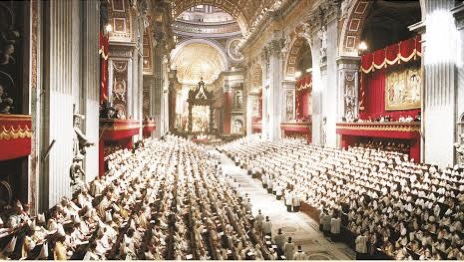
“Lumen Gentium” is a Second Vatican Council Dogmatic Constitution on the Church

“Lumen Gentium” is the Latin phrase for “Light of the Nations”
It was promulgated by Pope Paul VI on 21 November 1964

B. What does it speak of?
“Lumen Gentium” has a two-fold purpose:
(a) To explain the Church’s nature as “a sign and instrument of communion with God and of unity among all men”
(b) To clarify the Church’s universal mission as the sacrament of human salvation.

“Lumen Gentium” consists of 7 chapters
(i) Chapter 1: “The Mystery of the Church”
It provides a summary of the very nature of the Church – as both the visible and invisible reality – through which all persons are called to participate in the Trinitarian, Divine life of God through, with, and in Christ Jesus.

(ii) Chapter 2: “On the People of God”
It teaches that God wills to save people not just as individuals but as a people.

Because Christ’s love and mission are universal, so the Church’s missionary love extends to all people
In union with Him, the members of this people share in His anointing and thus in His mission. Baptism confers the dignity of being prophet, priest, and king in Christ.

(iii) Chapter 3: “On the Hierarchical Structure of the Church and in Particular on the Episcopate”
Christ entrusted the apostles with the mission of leading, assigning Peter as the head. Their successors, the bishops, are entrusted with the same mission until the end of the world.

The Bishop’s highest priorities are to lead the people towards order, harmony, and unity.

(iv) Chapter 4: “The Laity”

Christ continues His threefold messianic mission through the laity as well as the hierarchy.
The laity profoundly evangelize by how they live their everyday lives.

(v) Chapter 5: “The Call to Holiness”

The key to holiness rests in Love – Love of God.
This call to holiness is from Christ himself.
It is the Holy Spirit who moves us closer to God’s holiness.
All the faithful of Christ of whatever rank or status, are called to the fullness of the Christian life and to the perfection of charity

(vi) Chapter 6: “The Religious”

The religious state clearly manifests that the Kingdom of God and its needs, in a very special way, are raised above all earthly considerations.
It is considered a “deepening of the baptismal character”.

(vii) The Eschatological Nature of the Pilgrim Church and Its Union with the Church in Heaven

We are in a special way connected to all those who have attained Christ’s promise.
Our union in the Mystical Body of Christ is never more real than when we participate in the Sacred Liturgy/the Mass.
Celebrating the Eucharist closely unites us to the Church in heaven. We are together in communion with those in heaven and we worship God together, through Christ, in the Spirit.

(viii) “Our Lady”

The Church honors Mary because she is the beloved Mother of Jesus.
As the Mother of God and as the Mother of the Redeemer, She maintains a place of honor in both the earthly Church and in the Heavenly.
We honor and have piety toward Mary for no other reason than to better know Christ and to open the whole world up to receiving the graces of Christ.
It encouraged people to cultivate a loving devotion to Mary and strongly urged theologians and pastors to abstain from gross exaggerations and or neglectful omission in considering the dignity of Mary.

C. Pointers for Reflections

  1. “Lumen Gentium” emphasizes on “the Call to Holiness and a Fully Human Life”

Christ instituted the Seven Sacraments and established the Apostles and their Successors to represent Him as Head of the Church. Through them Christ continues to teach, to sanctify, and to rule over the Church.
The Church, possesses the fullness of the means of sanctification.

  1. It speaks of “a Church of the Poor and for the Poor”

In loving the poor, the Church practices the Lord’s admonition to love those who are unable to make kind of return (Lk 6:32-34)
To be poor like Christ means to rely entirely on God.

D. What virtues/points can we pick up from “Lumen Gentium” for this Season of Lent?

  1. Focusing on the Primary Duty of our Christian vocation: To be Holy
  2. Love the Church – Be proud to belong to the Church

E. Tips to practice these virtues

  1. Everyday making an examination and ask: How much did I try to grow in holiness today?
  2. Pray for the Church everyday – especially in these days of crisis and scandal…
    … trusting that God will always protect the Church and keep Her safe.

May this Lent and the familiarity with the Encyclical “Lumen Gentium” help us to grow in our acclamation: “Eureka – I have found the Lord”

( Full Text of “Lumen Gentium” can be found at:

http://www.vatican.va/archive/hist_councils/ii_vatican_council/documents/vat-ii_const_19641121

God Bless! Live Jesus!

✝️ REFLECTION CAPSULE – March 23, 2023: Thursday

“Being true and faithful, rather than trying to be popular!”

(Based on Exod 32:7-14 and Jn 5:31-47 – Thursday of the 4th Week in Lent)

Written on the stone pavements of a street in a remote village are the following words:
“One of the evils of this modern day, is the scarcity of men and women in places of leadership who are willing to speak their convictions…
… at the risk of popularity!”

Christian life is a constant challenge between two aspects: Being Popular or being Right!

There is a constant challenge to stand against prospects of gaining false fame and phony popularity…
… by compromising on one’s Christian ideologies and values.

Can we be Christians…
… who value one’s integrity for Christ’s sake, than to compromise one’s principles and turn popular?
… who give priority to being honest for the Lord’s honour, than to dilute one’s ethics and gain cheap fame?

The Gospel of the Day presents Jesus who stood firm and rock-solid, in his mission commitment, even in the face of opposition, indifference and apathy from the Jews.

The context of today’s Gospel Passage – Jn 5:31-47 – is the aftermath of the Healing of the Crippled Man by the pool of Bethesda, on the Sabbath Day (Jn 5:1-18)

This incident had sparked a rage of opposition against Jesus…

He was persecuted because the act of healing was done on the Sabbath (Jn 5: 16)
His defense caused the Jews to kill Him, because Jesus equated Himself with God (Jn 5:18)

There was a strong wave of antagonism and hostility, against Jesus…
… that was pressurizing Him to compromise His teachings
….that was coercing Him to dilute His principles

But Jesus stood firm and rock-solid, in his mission commitment, even in the face of opposition, indifference and apathy from the Jews.

He therefore presents before the Jews, witnesses which would testify to Him, to His Divinity.

He uses the language of a courtroom – “witnesses” – to prove His credibility as the Divine Person

Our Christian Life is a constant challenge…
… to let go of our values and principles
… to compromise on our efforts and mission works

We find in the Book of Exodus, how the people of Israel abandoned the ways of the Lord…
… and “made for themselves a molten calf… worshiped it and sacrificed to it, and said, ‘These are your gods, O Israel, who brought you up out of the land of Egypt!’” (Cf. Exod 32:8)

So often, we also create “molten calves” of money, power, position, sinfulness…
… and worship and give our priority to them!

We are quick in forgetting the many blessings and mercies of God…
… and turn away from the commandments of God!

We need to imitate our Blessed Lord…
… Who was unwilling to let go of His Commitment and Dedication to the Mission

Let us seek the Grace to remain ever uncompromising in our Christian Life.
… to stand for God and His Kingdom
… to live to share His Love and Mercy

Yes…
…. “one of the evils of this modern day, is the scarcity of men and women in places of leadership who are willing to speak their convictions…
… at the risk of popularity!”

Let us dare to show this “spirit of leadership” like Jesus our Master…
… by seeking to be true and faithful, rather than just be popular!

God Bless! Live Jesus!


📖 Discovering the beauty of the Catholic Church through the Catechism
THE SACRAMENT OF HOLY ORDERS IN THE ECONOMY OF SALVATION – THE ORDINATION OF DEACONS – “IN ORDER TO SERVE”

Since the Second Vatican Council the Latin Church has restored the diaconate “as a proper and permanent rank of the hierarchy,”…
… while the Churches of the East had always maintained it.
This permanent diaconate, which can be conferred on married men, constitutes an important enrichment for the Church’s mission.
Indeed it is appropriate and useful that men who carry out a truly diaconal ministry in the Church, whether in its liturgical and pastoral life or whether in its social and charitable works, should “be strengthened by the imposition of hands which has come down from the apostles.

They would be more closely bound to the altar and their ministry would be made more fruitful through the sacramental grace of the diaconate. (CCC # 1571)

EUREKA 17: Discovering Catholic Treasury – through a Lenten lens!

“SPIRITUAL COMBAT”

A. What is it?
“Spiritual Combat” is a 17th century Catholic Spiritual Classic on Ascetic Theology

Fr Lorenzo Scupoli is considered to be its author.
St. Frances de Sales called the “Spiritual Combat” as the “Golden Book”. This “the favorite, the dear book” of the great master of spiritual life was carried by him for 18 years. The Saint read some pages of it every day, entrusted to its supernatural and human wisdom, the guidance of his soul, and recommended it to all under his direction.

B. What does it speak of?
“Spiritual Combat” is a practical manual of living. It is a personal “do-it-yourself” book that allows the reader to put the truths of Christian spiritual warfare into practice on a daily basis.

The purpose of the book is to lead the soul to the summit of spiritual perfection, by means of a constant, courageous struggle against our evil nature, which tends to keep us away from that goal.

The “Spiritual Combat” consists of 66 short chapters based on the maxim that in the spiritual life one must either “fight or die”.

It shows the Christian how to combat his passions and vices, especially impurity and sloth, in order to arrive at victory.

C. Pointers for Reflections

  1. “Spiritual Combat” analyses various human situations and advises how to cope with them, preserving a pure conscience and improving virtue.
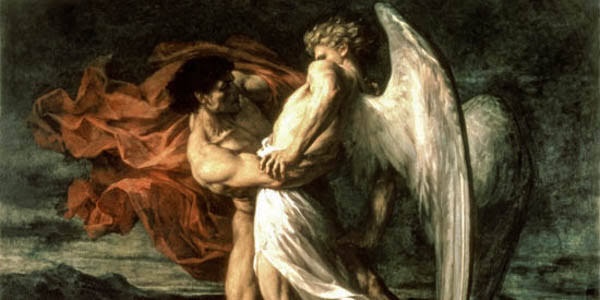
    The whole human history has been the story of the combat with the powers of evil. In the midst of the battlefield, human beings have to struggle to do what is right, and it is at great cost to himself, and aided by God’s grace, that he succeeds in achieving his own inner integrity.

The fundamental scripture at the heart of the “Spiritual Combat” is “None shall be crowned who has not fought well” (2 Tim 2:5)

  1. Battle One Passion, at a time!
    Don’t randomly practice virtues.

Instead, wage war against your worst passions and practice the opposite virtue.

  1. There are 7 Spiritual weapons that are prescribed
    (i) Distrust of Self (ii) Trust in God
    (iii) Spiritual Exercises (Practise of 1 virtue at a time)
    (iv) Prayer (v) Holy Eucharist (vi) Spiritual Communion
    (vii) Examination of Conscience

D. What virtues/points can we pick up from “Spiritual Combat” for this Season of Lent?

  1. Recognizing that we are Soldiers for Christ in this world
  2. Never being discouraged, even in the midst of immense hardships

E. Tips to practice these virtues

  1. Being optimistic and trusting in God, even when things don’t seem to be going “our way”
  2. Filling our hearts with the “Spirit of Joy” by invoking a short prayer, especially in moments of tension and anxiety: Jesus, I trust in You!

May this Lent and the familiarity with the Catholic Classic “Spiritual Combat” help us to grow in our acclamation: “Eureka – I have found the Lord”

CLICK TO READ the Full Text of “Spiritual Combat” at:
http://www.catholictradition.org/Classics/combat.htm

God Bless! Live Jesus!