EUREKA: Discovering Catholic Treasury – through a Lenten lens! : “Story of a Soul”

A. What is it?

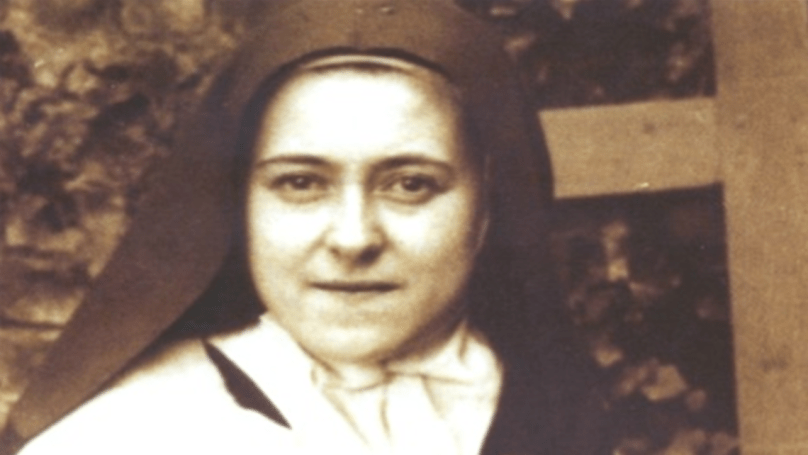
>> “Story of a Soul” is the autobiography of St Thérèse of Lisieux- also called as The Little Flower.

>> It was first published on September 30, 1898 – one year after her death at the age of 24.

>> This book outlines the spirituality that was lived and exhorted by the St Therese – “The Little Way”

B. What does it speak of?

>> The ‘Story of a Soul’ is St. Therese’s autobiography.

>> The book is divided into 11 chapters:

… Beginning with her first memory, it traces her life, ending with her blissful death in the convent.

>> “Story of a Soul” tells of how the Way to Holiness was not great and noble deeds but the fulfillment of the smallest duties with great love and complete reliance upon God.

>> Desiring the lowest place in all things and fulfilling all the duties of the state in life, the Little Flower describes of how she offered many penances for the conversion of sinners, especially during her final illness and the dark night of the soul she suffered at that time.

C. Pointers for Reflections

1. Focuses on the “Little Way” of Holiness

>> It is a challenge to break the notion that “spirituality and holiness” consists primarily in heavy austerity and hard penances alone

>> It shows of the most important element needed towards holiness – perfect trust and holy love

2. Presents the method of “offering to God” all what we do in life

>> Every action of ours can become an “offering to God” and thus “an act of saving” others

D. What virtues/points can we pick up from the “Story of the Soul”” for this Season of Lent?

1. Doing everything with love

2. The virtue of Trusting in God

E. Tips to practice these virtues

1. Consciously make a prayer (or at least, become aware) – “I am doing this work/activity, for the Love of God and only for His Glory!”

2. Love God and give Him the First Priority and Place in life

May this Lent and the familiarity with the Classical Book of Spirituality “Story of a Soul” help us to grow in our acclamation: “Eureka – I have found the Lord”

(The Full Text of “Story of a Soul” can be found at:

http://www.catholicbible101.com/St.%20Therese%20Story%20of%20a%20soul.pdf)

God Bless! Live Jesus!

Mar 21 (Lk 16:19-31)

We live in a world of contrasts.

Contrasts are encountered at every sphere of our life.

>> Socially, we find contrasts among the various classes…

… the rich and the poor, the haves and the have-nots, the caste distinctions, the racial and language divides…

>> Emotionally, we find contrasts in our experiences…

… joyful situations sandwiched between tragic moments, moods varying between situations and people, temperaments changing from person to person…

The Gospel of day presents some of these contrasts in a vivid manner…and could be termed as a “parable of contrasts” – the Parable of the Rich Man and Lazarus.

This parable is set out as a play… a two-act play.

The plays takes place on two stages…

… the stage of this world

… and the stage of the other-world.

The contrasts are plenty:

In the First Act….

>> A rich man – a poor man

>> The man is rich but unnamed – the man is poor but is named, Lazarus (meaning ‘God Helps’)

>> The rich man clothed in purple – Lazarus clothed fully with sores

>> The rich man caressed with fine linen – Lazarus licked by the dogs

>> The rich man feasted sumptuously – Lazarus desired to be fed by what fell from the table.

>> The rich man died and was buried – Lazarus died but was carried by the angels.

In the Second Act…

>> Lazarus is in Abraham’s bosom – the rich man is in Hades.

>> Lazarus receives good things – the rich man was in torment.

>> Lazarus was comforted – the rich man was in anguish

This “parable of contrasts” is also …

… a “parable of comfort and consolation”

… a “parable of challenge and confrontation”

>> It’s a “parable of comfort and consolation” because….

… Lazarus, who had undergone great misery and suffering was blessed with the presence of joy of the Lord.

It’s gives comfort and consolation to us, who need to be strengthened in our moments of trials and hardships, knowing that the Lord will surely look with mercy on His needy ones.

>> “Blessed are the poor in spirit, for theirs is the kingdom of heaven” (Mt 5: 3)

>> It’s a “parable of challenge and confrontation” because…

… the rich man, who had a luxurious life, was condemned to torments, and had to endure the flames of suffering.

It’s a great challenge and a confrontation before us, who need to realise that indifference and an attitude of closing one’s eyes to the pain and misery of the other can be disastrous and punishable

>> “He who shuts his ears to the cries of the poor will be ignored in his own time of need.” (Prov. 21:13)

The world of contrasts needs a Gospel of Comfort and Consolation, and towards this, we are challenged and confronted…

>> Challenged to get rid of our attitudes of indifference and lethargy to help the needy ones.

>> Confronted to overcome our tendencies to remain satisfied in our comforts and close our eyes conveniently to the necessities of the other.

Let us make our life a Good News of Comfort and Consolation.

God bless! Live Jesus!

——————————–

Quotable-quote-a-day-with-St Francis de Sales (SFS) – “ The virtues that grow in the midst of prosperities are usually weak and without much backbone.

>> But those which take birth amid afflications are hardy are vigorous…

… just as it is said that the best vines grow amid stones!”

——————————–

EUREKA: Discovering Catholic Treasury – through a Lenten lens! : “Lumen Fidei”

A. What is it?

>> “Lumen Fidei” is the First Encyclical of Pope Francis. It was the completion of the work of his predecessor Pope Benedict XVI.

>> It was issued on June 29, 2013 in conjunction with the Year of Faith

>> “Lumen Fidei” means “The Light of Faith”

>> The document, completed the Papal Trilogy on the three theological virtues, following Pope Benedict XVI’s encyclicals Deus Caritas Est (on Charity) and Spe Salvi (on Hope).

B. What does it speak of?

>> “Lumen Fidei” celebrates Christian faith as the guiding light of a “successful and fruitful life”, inspiring social action as well as devotion to God…

… and illuminating “every aspect of human existence”, including philosophy and the natural sciences.

>> “Lumen Fidei” is divided into four chapters, each drawn from a passage in Scripture:

(i) We have believed in love. (1 Jn 4:16)

>> Reviews Salvation History—the story of God’s people—to see Faith throughout history.

>> Explores the rootedness of faith in the absolute fidelity of God, Who is completely trustworthy.

>> God enters human history and invites each person to participate in His plan of love.

(ii) Unless you believe, you will not understand. (Is 7:9)

>> Seeks to understand the relationship between Faith and several other aspects – Reason, Love, Truth, and Theology.

>> As Faith comes through hearing and sight, it is an intensely personal experience which opens out into a unique trustworthy knowledge…

… stimulating a constant dialogue between Faith and Reason.

(iii) I delivered to you what I also received. (1 Cor 15:3)

>>Ultimately, Faith and Truth are received in community.

>> We accept this Faith in a community and in the communion of the Church. Specially, the Sacraments allow us to experience this Faith.

>> This Community stays unified through the Apostolic Tradition and Apostolic Succession which safeguards Truth and allows our Faith to be handed on.

>> The Church extends the relational reality of Faith not only through Her Doctrines, but through Her very Sacramental Life

(iv) God prepares a city for them. (Heb 11:16)

>> Shows how faith should be the foundation of our society. Faith is needed for the foundation of our society, marriage and family.

>> Faith in God provides the common Faith so that our societies can endure.

>> Faith does not answer every question, but provides a lamp to help us navigate through the darkness and the Presence of God, who is with us, personally in our suffering.

C. Pointers for Reflections

1. “Lumen Fidei” fortifies our Faith by responding to various contemporary doubts and attitudes that undermine believing

>> Faith is not an outdated relic of the Dark Ages. Christian Faith, rather, provides the foundation for fidelity in interpersonal relationships, without which society would be debilitated by fear.

2. Contradicts the Philosophy of Secularism (= being without God and glorifying only human abilities)

>> The power of secularism which tends to portray God as distant or dead is negated, as Faith makes God tangible and Christ-like Love possible.

3. Faith is not only personal, but essentially has a Communitarian dimension

>> Faith in the One God, directed toward the One Lord, is shared in the One Church, and so must be professed in its full unity and integrity.

D. What virtues/points can we pick up from the “Lumen Fidei” for this Season of Lent?

1. Understanding and deepening our Fundamentals of Faith

2. Reviving our Sacramental Life (especially Holy Eucharist and Confession)

E. Tips to practice these virtues

1. Pick up the 12 basic articles of the Apostles Creed (I Believe) and make a study on each of those Basics of our Faith

>> Prepare a list of possible doubts and contradictions

>> Try to find reasonable solutions, which could be used as a tool to defend and proclaim our Faith

2. Try to go for Holy Mass, with due preparation, as often as possible (without restriction to only Sunday Mass)

>> Make it a point to go for Confession, at least, once every month

May this Lent and the familiarity with the Encyclical “Lumen Fidei” help us to grow in our acclamation: “Eureka – I have found the Lord”

(The Full Text of “Lumen Fidei” can be found at:

http://w2.vatican.va/content/francesco/en/encyclicals/documents/papa-francesco_20130629_enciclica-lumen-fidei.html)

EUREKA: Discovering Catholic Treasury – through a Lenten lens! : “Imitation of Christ”

A. What is it?

>> The “Imitation of Christ” is a Christian Devotional Book by Thomas a Kempis (He was a German-Dutch Canon Regular Priest)

>> It was composed around 1418-1427, in Latin

>> The “Imitation of Christ” is perhaps one of the most widely read Christian book, after the Holy Bible.

B. What does it speak of?

>> The “Imitation of Christ” presents the idea that the study of Christ’s life and the emulation of His Example is the highest pursuit that human beings can achieve.

>> Christ is the ultimate example of Christian’s spiritual lifestyle.

>> Love is exalted as taking the highest place and faith is fundamental to the spiritual life. >> The “Imitation of Christ” seeks to repair and develop our spiritual life and meditate on God as the source of everything.

>> The “Imitation of Christ” comprises of 114 Chapters, divided into Four Books:

(i) “Helpful Counsels of the Spiritual Life”

>> The “Imitation of Christ” derives its title from the First Chapter of Book I, “The Imitation of Christ and contempt for the vanities of the world”

>> Book One deals emphasizes an interior life by renouncing all that is vain and illusory, resisting temptations and distractions of life, giving up the pride of learning and to be humble, and patiently enduring the world’s contempt and contradiction.

(ii) “Directives for the Interior Life”

>> It contains instructions concerning “inward peace, purity of heart, a good conscience and for moderating our longings and desires.

>> It calls the reader to grow in the virtues of Patience, Submission to the Will of GOD, Love of Jesus, Enduring the loss of comfort, and Taking up the Cross.

(iii) “On Interior Consolation”

>> This longest book (consisting of 59 chapters) is in the form of a dialogue between Jesus and the disciple – a call to come into closer union with Him

>> A beautiful call by Jesus is: I am the Way, the Truth, and the Life.

Without the Way, there is no going; without the Truth, there is no knowing; without Life, there is no living.

I am the Way you are to follow; I am the Truth you are to believe; I am the Life you are to hope for.”

(iv) “On the Blessed Sacrament”

>> The Fourth book emphasizes on the fact that Jesus says “there is no Offering more worthy, no satisfaction greater, for the washing away of sins and to offer oneself purely and completely to God at the time the Body of Christ is offered in the Mass and in Communion!”

>> In order to receive the Sacrament, the Lord invites to “make clean the mansions of your heart. Shut out the whole world and all its sinful din…

… and sit as a solitary sparrow on a housetop and, in the bitterness of your soul, meditate on your transgressions.”

C. Pointers for Reflections

1. The “Imitation of Christ” is a guide in changing our lives and learning to grow closer to Christ in Spirit and in Deeds.

>> We are constantly required to ask ourselves: “How am I really following Christ in my life?”

2. The “Imitation of Christ” strongly speaks on the necessity to have “humility of the heart”

>> In a world that glorifies sensationalization and pride, and in a culture of worldly ambition and crazy power-mongering, this Book is a mighty challenge!

3. The “Imitation of Christ” calls forth to have moments of silence, reflection and deep prayer

>> In a world where we “cherish and feel out-of-place without noise”, the Book comes as an eye-opener to make suitable changes in our lifestyle to nurture moments of silence – and thus to come in closer Imitation of Christ!

D. What virtues/points can we pick up from the “Imitation of Christ” for this Season of Lent?

1. Growing in the Humility

2. Becoming more and more Christ-like in our attitudes and conduct towards others

3. Cultivating the Spirit of Prayerful Silence, even in our “busy and noise” schedule

E. Tips to practice these virtues

1. Practise every day, an action of humility

2. Ask this practical question to ourselves: “WWJD – What Would Jesus Do?”

3. Consciously set apart, at least sometime in the day, for a time of silence – and seek to grow in union with the Lord and His Will

>> We usually like to always have “words” in prayers and feel “awkward and incomplete” when there are no words or “talking”

>> Let us seek to spend time with the Lord, “in silence” and in the stillness of our hearts and minds, grow in the Experience of God’s Love!

May this Lent and the familiarity with the Spiritual Classic – “Imitation of Christ” – help us to grow in our acclamation: “Eureka – I have found the Lord”

(The Full Text of “Imitation of Christ” can be found at:

http://www.documentacatholicaomnia.eu/03d/1380-1471,_Kempis._Thomas,_The_Imitation_Of_Christ,_EN.pdf)

God Bless! Live Jesus!

Mar 19 (Solemnity of St Joseph)

Brenda was a young yet fearful woman who, once, joined her friends in rock climbing.

Although scared, she put on the gear, took a hold on the rope and started up the face of that steep rock cliff.

As she climbed higher, the safety rope snapped against Brenda’s eye and knocked out her contact lens!

Down went the contact lens

… and down went also her clarity in vision

… and her hopes!!

Of course, she looked and looked and looked, hoping it had landed somewhere close… but it just wasn’t there.

>> She was desperate and began to get upset, so she prayed to the Lord to help her to find it.

When she managed get to the top, she sat down, despondent, with the rest of the party, waiting for the rest of them to make it up the face of the cliff.

She looked out across range after range of mountains, thinking of that Bible verse that says, “The eyes of the Lord run to and fro throughout the whole earth.”

She thought, “Lord, You can see all these mountains. You know exactly where my contact lens is. Please help me.”

>> Finally, they walked down the trail to the bottom.

At the bottom there was a new party of climbers just starting up the face of the cliff.

One of them shouted out, “Hey, you guys! Anybody lost a contact lens?”

Well, that was startling enough, but how was it that the climber saw it?

An ant was moving slowly across the face of the rock, carrying it!

A miracle?

>> An unbelievable story?

Well.. anyway, later, when Brenda told her father, who was a cartoonist, this incredible story, he drew a picture of an ant lugging and carrying that contact lens with the words:

“Lord, I don’t know why You want me to carry this thing!

I can’t eat it, and it’s awfully heavy…

But if this is what You want me to do, I’ll carry it for You.”

Wow! Those are amazing words isn’t it?

One may not always realise the reason for many things in life…

… may not see any good in it

… may even feel it too heavy

>> But, if one trusts in the mighty and loving Providence of the Lord, the same burden or load will be a reason for a miracle!

Are you and I, carrying a heavy burden today?

Feeling the worthlessness of it?

>> Trust in God… He has a beautiful plan and purpose!

Hard to trust that?

Then look closer into the life of the wonderful Saint of the Day – St Joseph!

>> A person who was called for the most strangest and unique assignments in the world…

>> A person who would have often wondered what really is going on in his life…

And yet, a person, who firmly clung on to what was given to him…embracing the Will of God!

St Joseph is certainly, one of the most remarkable personalities in the entire Bible.

>> A person who never spoke in the Bible… but one who spoke volumes of deep trust, confidence and obedience through his life.

>> A person who is not noted for any flashy or spectacular incidents…but one whose personality shines bright for the promptness and immediacy in carrying out what God wanted of him.

St Joseph was tremendously blessed!

>> The one who had the absolute privilege of being closest to two of the Most Holiest Persons in this world – Jesus and Mother Mary!

>> The one who had the pristine honour of rendering the first adoration and worship of Baby Jesus at His birth in this world!

But with blessing also comes duty and responsibility!

And St Joseph is a brilliant example and model to doing one’s duties and responsibilities…

>> He sacrificed a possible life of worldly glory… in accepting to be the caretaking father of Jesus.

>> He cast away his doubts and possibilities of shame… in accepting Mary as his wife, despite the tremendous societal and religious pressure on him.

>> He bore every difficulty and endured many miseries… in helping Jesus, the Son of God to be born and to ensure safety for the Divine Child and Mother.

>> He went beyond all shades of comfort and walked the path of thorny hardships… in ensuring the Holy Family was protected from harmful powers.

>> Here is a Saint…

… who challenges us to be totally and firmly faithful in carrying out the mission of God – be it small, unnoticed, unglamorous or insignificant.

… who shatters our mind in wanting to have pleasures and comforts, by letting go of one’s personal gains and even logical reasoning, in order to preserve and promote the Plans of God.

Life tosses us, time and again…

… with hardships, doubts, misunderstandings, uncertainty, fear… and even remain unrecognised!

>> But through all these experiences, St Joseph invites us… to trust in the Lord, with a deep sense of serenity and confidence!

Yes, we may not always understand why things are thrust on us…

But let us be inspired by St Joseph, to unmistakably hold on, in doing God’s Will in our lives!

>> God’s Will may not be comprehended…but it certainly will hold us close to the Heart of the Lord!

>> God’s Will may not always appear to be clear… but it certainly will be a major factor in carrying out the plan of God for us, in our lives!

Yes, let this be our encouraging prayer:

“Lord, I don’t know why You want me to carry this thing!

I can’t eat it, and it’s awfully heavy…

But if this is what You want me to do, I’ll carry it for You.”

May we join St Francis de Sales, who made this beautiful prayer, to St Joseph:

“Glorious St Joseph, spouse of Mary, grant us thy paternal protection, we beseech thee by the heart of Jesus Christ.

>> O thou, whose power extends to all our necessities and can render possible for us the most impossible things, open thy fatherly eyes to the needs of thy children.

In the trouble and distress which afflicts us, we confidently have recourse to thee.

>> Deign to take under your charitable charge this important and difficult matter, cause of our worries.

Make its happy outcome be for God’s glory and for the good of His devoted servants. Amen!”

Happy Feast of the Just Saint, St Joseph!

>> Let us rejoice with his Beloved Son Jesus and his Beautiful wife and our Mother, Mary!

God Bless! Live Jesus!

——————————–

Quotable-quote-a-day-with-St Francis de Sales (SFS) – “What more remains for us to say now, except that we cannot doubt at all that this glorious saint (St Joseph) has great influence in heaven…

… Oh how happy shall we be, if we can merit a share in his holy intercession!

>> He will obtain for us, if we have confidence in him, a holy growth in all kinds of virtues, but especially in those that we have found that he possessed in a higher degree than any others…

… which are most holy purity of body and mind, the most lovable virtue of humility, constancy, courage and perseverance!

——————————–
EUREKA: Discovering Catholic Treasury – through a Lenten lens!: Dei Verbum”

A. What is it?

>> “Dei Verbum” is the Vatican II Dogmatic Constitution on Divine Revelation, promulgated by Pope Paul VI on 18 November 1965

>> The phrase “Dei Verbum” is Latin for “Word of God”

>> It is one of the smallest Vatican II Documents (26 paragraphs or roughly 3,000

words in Latin)

B. What does it speak of?

>> “Dei Verbum” addresses the Catholic Church’s beliefs in regards to Sacred Scripture.

>> “Dei Verbum” is laid out into 6 Chapters:

1. Chapter 1: Divine Revelation Itself

>> Speaking on the Nature of Revelation, this chapter demonstrates God’s desire to communicate with human beings, revealing the mystery of the Divine Will.

>> It offers a summary of the Salvation History

>> It also emphasizes the Truth of this Revelation and the fact that it is accomplished in such a way that human beings can comprehend it.

2. Chapter 2: Transmission of Divine Revelation

>> The Truth of Revelation, is rooted in Christ’s very person and in his own proclamation of the Gospel; having commissioned the Apostles to carry it forward…, the truth of the

Gospel also lies in the Apostolic Tradition.

>> Both Scripture and Tradition must be accepted and honored with equal devotion and

reverence”.

>> Tradition and Scripture make up a single Sacred deposit of the Word of God

3. Chapter 3: Sacred Scripture: Its Divine Inspiration and Interpretation

>> It affirms the importance of both- the Old Testament and New Testament

>> It adopts the threefold-process of the Formation of the Gospels with the three levels: (i) the time of the Historical Jesus (ii) The oral preaching of the earliest apostles (iii) The time of the Evangelists

4. Chapter 4: The Old Testament

>> The plan of salvation was spoken through the authors of the Old Testament.

>> Its purpose was to prepare for the coming of the Christ and to show to all, how God interacts and deals with mankind in justice and mercy.

>> God wisely arranged for the New Testament to be hidden in the Old, and the Old to be made manifest in the New. While Christ made the new covenant with His blood, the Old Testament sheds light on and explains this mystery.

5. Chapter 5: The New Testament

>> The New Testament stands as a Perpetual and Divine Witness to the Reality of Salvation.

>> The Gospel Authors wrote about things handed on by word of mouth or in writing, sometimes a synthesis, sometimes as a proclamation, but always the honest truth about Jesus.

6. Chapter 6: Sacred Scripture in the Life of the Church

>> The Church has always venerated the scripture together with the Tradition as the supreme Rule of Faith.

>> The Church encourages the study of the Church Fathers as well as those exegetes who so well illuminate the teaching within the scriptures.

>> Individuals should read with enthusiasm, following the mind of the Church.

>> All clergy must read the scriptures with diligence. The same is encouraged for the laity and Religious. All faithful should not forget that prayer should always be the companion to reading God’s Word.

C. Pointers for Reflections

1. “Dei Verbum” is considered as one of the important achievements of the Vatican Council II since its implications is for the treatment of Sacred Scripture itself.

>> It accords rightful significance to the Bible as the special locus of Divine Communication or Divine Revelation.

2. It presents three key principles of Catholic biblical interpretation:

(i) Pay attention to the content and unity of all the Sacred Scriptures.

(ii) Read and interpret the Bible within the living tradition of the Church.

(iii) Keep in mind the coherence of all the truths of revelation

3. The understanding from “Dei Verbum” is enshrined in the Catechism of the catholic Church (CCC), affirming reading Scripture for its four classical sense – the literal sense, and then the spiritual sense divided into three: the allegorical, tropological, and anagogical senses.

>> The allegorical sense (Typology) concerns how the Old and New Testaments relate, the tropological sense is the moral sense, and the anagogical sense concerns the soul’s progress to heaven.

D. What virtues/points can we pick up from the “Dei Verbum” for this Season of Lent?

1. Making it a Daily Habit to Read the Bible

2. Studying the Bible and going deeper into understanding the meaning of Scripture in our daily life

E. Tips to practice these virtues

1. Set apart a time, daily, to read God’s Word.

>> Just as our meals become a daily “must”, so should the Bible be part of our daily “sustenance for strength”

>> “Ignorance of Scriptures is ignorance of Christ” says St Jerome

>> Christ is the primary and ultimate revelation of God. So the more we read and reflect on Scripture, the more we can know Him and love Him

2. Learn, practise and revive the Catholic Tradition of the “Lectio Divina”(= a Latin term, means “divine reading”)

(i) The first stage is LECTIO (reading): Read any passage of the Word of God, slowly and reflectively so that it sinks into us

(ii) The second stage is MEDITATIO (reflection): Think about the text we have chosen and ruminate upon it so that we take from it what God wants to give us

(iii) The third stage is ORATIO (response): Leave thinking aside and simply let the heart to speak to God.

(iv) The final stage is CONTEMPLATIO (rest): Let go of our own ideas, plans and meditations and also holy words and thoughts. Simply rest in the Word of God and listen, to God, who speaks within us with a still small voice.

>> As we listen, we are gradually transformed from within and this will have a profound effect on the way we actually live.

May this Lent and the familiarity with “Dei Verbum” – the Vatican II Dogmatic Constitution on Divine Revelation – help us to grow in our acclamation: “Eureka – I have found the Lord”

(The Full Text of “Dei Verbum” can be found at:

http://www.vatican.va/archive/hist_councils/ii_vatican_council/documents/vat-ii_const_19651118_dei-verbum_en.html)

God Bless! Live Jesus!

EUREKA: Discovering Catholic Treasury – through a Lenten lens!: “Veritatis Splendor”

A. What is it?

>> “Veritatis Splendor” is an Encyclical by Pope St John Paul II, promulgated on August 6, 1993

>> “Veritatis Splendor” is a Latin phrase which means “The Splendour of Truth”

>>

B. What does it speak of?

>> “Veritatis Splendor” responds to questions of Moral Theology that had been raised during the post-conciliar period of the Church (events after the Vatican II Council of 1962-65).

>> These questions revolve around human’s ability to discern good, the existence of evil, the role of human freedom and human conscience, mortal sin, and the Authority of the Magisterium of the Catholic Church in guiding people.

>> “Veritatis Splendor”, while acknowledging that everyone makes a fundamental choice for or against Christ, also reiterates that certain acts (i.e., mortal sins) represent a fundamental choice against Christ – and potentially forever, unless one repented.

>> “Veritatis Splendor” consists of three chapters:

(I) Teacher, What Good Must I Do

>> Christ and the answer to the question about morality

(II) Do Not Be Conformed to this World

>> The Church and the discernment of certain tendencies in present-day moral theology

(III) Lest the Cross of Christ be emptied of its Power

>> Moral good for the life of the Church and of the world

C. Pointers for Reflections

1. “Veritatis Splendor” speaks against the danger of moral relativism

>> Moral Relativism is the tendency to view reality as being “all relative” – “there are no absolute values”, “any judgment you make is your judgment from your point of view and there is no objective point of view”.

>> Pope Benedict XVI called this “moral relativism” as a poison

>> “Veritatis Splendor” begins by asserting that there are indeed absolute truths accessible to all persons.

2. “Veritatis Splendor” reminds us of the reality of intrinsically evil acts

>> This means that certain acts are always wrong, and that there are never circumstances in which they may be permitted if done knowingly and intentionally

>> It is never permissible to intend directly something which contradicts a moral order.

D. What virtues/points can we pick up from the “Veritatis Splendor” for this Season of Lent?

1. Become aware of the danger of “moral relativism” and how it is very much spread in the thought-philosophies of the world around us

2. Realize the gravity of mortal sin and how we must be defiant in staying away from it

E. Tips to practice these virtues

1. Study and reflect more on the Catholic Teachings, so that we don’t get strayed away by the “attractive modern” philosophies, which tend to neutralize truth

2. Make “Examination of Conscience” a part of one’s daily timetable

May this Lent and the familiarity with this Encyclical “Veritatis Splendor” help us to grow in our acclamation: “Eureka – I have found the Lord”

God Bless! Live Jesus!

(The Full Text of the “Veritatis Splendor” can be found at:

>> http://w2.vatican.va/content/john-paul-ii/en/encyclicals/documents/hf_jp-ii_enc_06081993_veritatis-splendor.html)

EUREKA: Discovering Catholic Treasury – through a Lenten lens! : Introduction to the Devout Life”

A. What is it?

>> “Introduction to the Devout Life” is a Spiritual Classic written by St Francis de Sales, published in 1609.

>> “The Introduction” is a compilation of letters and notes used in the Spiritual Direction of his cousin, Madame Marie de Charmoisy, the wife of an ambassador of the Duke of Savoy.

>> The writings of the book are addressed to the title, “Philothea” (= Lover of God)

>> Pope Pius XI at the declaration of St Francis de Sales as the Patron Saint of Catholic Writers and Journalists in 1923, wrote about the “Introduction to the Devout Life”:

… “Would that this book – the most perfect of its kind in the judgment of his contemporaries, as it was at one time in the hands of all – were now read by all, so that true piety might everywhere flourish again, and the Church of God might rejoice in seeing sanctity common among her sons.”

B. What does it speak of?

>> The “Introduction to the Devout Life” is a practical guide and exhortation to all people, to life a life of holiness.

>> It is also an excellent reference in Spiritual Direction.

>> The “Introduction to the Devout Life” consists of Five Parts:

1. Part I: Attaining a Firm Resolution to the Devout Life

>> It speaks of the nature of True Devotion and how all are called to it

>> The necessity of a Spiritual Guide for progress in the Devout Life is emphasized

>> “Purifying the soul” is the first step, and towards this, 10 mediations are provided

2. Part II: Prayer and the Sacraments

>> The necessity of Prayer and how it starts with “placing oneself in the Presence of God” is explained.

>>It also touches up the topics of Holy Communion, Invocation and Meditation with the Saints, Spiritual Bouquets, Retreats, Aridity in Prayer and the Word of God.

3. Part III: The Practice of Virtue

>> It explains how to practice individual virtues like Patience, Meekness, Humility, Obedience, Chastity, and Poverty.

>> It outlines 3 themes: (i) Discerning which virtues to work on (ii) Practising individual virtues in everyday life (iii) Remaining devout in dealings with society.

4. Part IV: Some Ordinary Temptations and how to overcome them

>> This is the “troubleshooting guide” or “snares of the enemy,” which explains what Philothea – the reader – can do when he/she encounters certain stumbling blocks.

5. Part V: Renewing and Confirming the Soul in Devotion

>> The last part speaks of an “annual review,” which St. Francis de Sales recommends undergoing every year around the time of the Feast of the Lord’s Baptism.

>> Philothea – the reader – is encouraged to examine oneself closely, to give thanks for all signs of progress – however tiny – and frankly acknowledge where one has slowed down the progress through willfulness or sloth.

C. Pointers for Reflections

1. A call for all people towards Holiness

>> St Francis de Sales says: “My purpose is to instruct those who live in town, within families, or at court, and are obliged to live an ordinary life as to outward appearances…

… It is an error, or rather a heresy, to wish to banish the devout life from the regiment of soldiers, the mechanic’s shop, the court of princes, or the home of married people… Wherever we may be, we can and should aspire to the perfect life.”

>> This passage from St. Francis de Sales was a major inspiration to the Fathers of the Second Vatican Council and stands behind one of the central exhortations of Vatican II – “The Universal Call to Holiness.”

2. The daily examples/articles/experiences of life are used remind/teach about the Presence of God

>> This was the “Jesus style” – using familiar experiences of the people, to teach a religious truth, through a parable or metaphor.

>> The “Introduction to the Devout Life” has incidents taken from the Bible and the biographies of Saints. It also makes use of stories and natural science information (especially from the writings of Greek philosopher, Aristotle and the Roman author, Pliny the Elder)

D. What virtues/points can we pick up from the “Introduction to the Devout Life” for this Season of Lent?

1. Aspiring towards holiness

2. Growing in the Little Virtues – Patience, Humility, Gentleness, Simplicity, Honesty, and Hospitality

E. Tips to practice these virtues

1. Thank God for the state of life that we are in, and realize that God is calling us to sanctify and make holy, each work that we do, specific to our vocation

>> Let every duty and responsibility that we do – little or big – be seen and done, as steps towards holiness and sanctity; hence, “do everything in love – Bloom where you are planted!”

2. Identify our “root vice” (= the negative tendency in us, which causes/leads to other sins)

>> Consciously practise the opposite “root virtue”

>> Daily make an Examination of Conscience to check the progress

>> If successful – in humility – thank God.

>> If not successful, never be discouraged – instead, seek to practise the same “root virtue”, the following day.

May this Lent and the familiarity with this Spiritual Classic by St Francis de Sales, “Introduction to the Devout Life” help us to grow in our acclamation: “Eureka – I have found the Lord”

God Bless! Live Jesus!

(The Full Text of the “Introduction to the Devout Life” can be found at:

>> http://www.philothea.de/devout-english.html)

Mar 16 (Mt 5:43-48)

The following story is known to us, perhaps in different forms…

A gentleman who was walking down the streets of a city was greatly interested too look at the street children – many of whom were carrying smaller children upon their backs – and managing at the same time to play their games.

“It is too bad,” said the gentleman to one little fellow, “that you have to carry such a heavy burden!”

“He’s no burden, Sir!” came the quick reply; “he’s my brother.”

The child who was carrying his younger sibling, did not count the pain or the difficulty in carrying; instead embraced the situation joyfully.

“He’s no burden, Sir… he’s my brother” – is a phrase that ought to strike a chord in our hearts.

As Christians, we need to make this journey…

… of considering people not as a “burden” but as a brother!

… of considering people not as a “stress” but as a sister!

The Gospel of the Day is an powerful exhortation by Jesus to make this transition from considering people as a “burden” and “stress”…

… and instead look at them as “brothers and sisters”, extending the Christian virtue of unconditional love to all.

Jesus, in the Sermon on the Mount, continues to pull down barriers of “comfort and coziness” by challenging His disciples to rise above the normal standards of the world.

Today He speaks on the aspect of “Love”.

Love is the fundamental and innate vocation of every human person.

The dictionaries define love as being ‘a profoundly tender, passionate affection for another person’ or a ‘feeling of warm personal attachment or deep affection’.

Generally speaking, love is considered only to be a human ’emotion or feeling’.

>> It is something that is usually understood as being “felt” or “sensed” or “experienced”.

Jesus surely did consider “love” as an emotion and a feeling.

Therefore…

• He loved the company of people….

• He cherished affection of those who followed Him…

• He treasured relationships and fostered friendships with all…

But beyond these “external” dimensions of Love…

… Our Blessed Lord taught and showed a higher aspect of love.

Love, not just being a “feeling ” but ” love as a “decision”.

>> Love, not just being a “sensation” but love as a “commitment”

Therefore Jesus would say, “For if you love only those who love you, what recompense will you have?” (Mt 5: 46)

Love, when understood only as a “feeling” or an “emotion” can get reduced to being just an “object” or a “thing”

• Just as one exchanges goods with each other… love is also exchanged with one another.

• Just as one shares one’s belongings and possessions with one another… love is also shared with one another

• Just as one gives and takes things from each other… love is also given and taken from each other

But the Lord presents a higher understanding of love and demands a much supreme expression of love from His followers: “Be perfect as your heavenly Father is perfect” (Mt 5: 48)

Love to be a “virtue” has to surpass the ordinary realms of being “an emotion” and “feeling” and transcend to being a “radical decision” and a “faithful commitment”.

When someone hurts us, we don’t “feel” like loving…

>> But Jesus says, “Love that person”, because love is a “daring decision”

When someone continues to be lukewarm, we don’t have any “emotions” of love…

>> But Jesus says, “Love that person”, because love is an “absolute allegiance”

When someone continues to cause pain, we don’t “experience” any love…

>> But Jesus says, “Love that person” because love is a “challenging commitment”

Now this teaching certainly irks our “normal” understanding.

• How can I possibly love someone who has hurt and killed me, mentally?

• How can I be expected to show love to someone who still hurts me, even intentionally?

• How can I be told to love people who have no regard for me at all and treat me as an object?

It seems to be an impossibility.

>> It seems to be absurd.

But let us look to the Crucified Lord…

… and we have the perfect example of this Love being lived in actuality!

Jesus on the Cross shows that love is to be a “daring decision”, an “absolute allegiance” and a “challenging commitment”!

Love to be a “virtue” has to surpass the ordinary realms of being “an emotion” and “feeling”…

… and transcend to being a “radical decision” and a “faithful commitment”.

>> One may not be able to “show” love…

… but can we still, at least pray and wish for the good of the person?

>> One may not be able to “talk” freely to the one who has hurt…

… but can we still, at least refrain from wanting bad to happen to that person?

>> One may not be able to “resist” from having bad feelings when encountering one’s enemy… … but can we still, at least offer the person to the Mercy of God?

This teaching certainly seems to be a big “burden” and a significant “stress”

But this is where, we need to make a journey…

… of considering people not as a “burden” but as a brother!

… of considering people not as a “stress” but as a sister!

The Lord has walked through this journey.

He is still with us, to accompany us.

• This journey may be hard

• This journey may be hurting

• This journey may be painful

But the Lord says, “My grace is sufficient for you!” (2 Cor 12: 9)

Let us trust Him!

>> Let us be courageous in Him!

God Bless! Live Jesus!

——————————–

Quotable-quote-a-day-with-St Francis de Sales (SFS) – “ The measure of love is to love without measure!”

——————————–

EUREKA: Discovering Catholic Treasury – through a Lenten lens! : Gaudium et Spes”

A. What is it?

>> “Gaudium et Spes” is one of the four Major Constitutions of the Second Vatican Council.

>> It was promulgated by Pope Paul VI on Dec 7, 1965 – the day the Council ended.

>> The title “Gaudium et Spes” is a Latin phrase which means “The Joys and Hopes”

>> It is the longest of all the documents of Vatican II

B. What does it speak of?

>> The chief focus of “Gaudium et Spes” is on how the Church is to seek to provide meaningful answers to the questions people have about life.

The following are the major highlights of this important document of Vatican II

Introduction: The Situation of Men in the Modern World

>> Traditions and values are being lost. Moral conflicts are escalating as a result of a false way of living, and people’s moral conscience is playing less role. Oppression and neglect for the poor is escalating.

>> The world is capable of acts that uplift life and acts that destroy life. There is an addiction to material things. Yet, there are many who desire to know what the purpose of life is.

>> “Gaudium et Spes”, addressing all people of the world, confidently proclaims that Jesus Christ, true God and true Man, is the answer to all the perplexing questions that plague humankind today

Part I: The Church and Man’s Calling:

>> To be a human and Christian today is to read the signs of the times, seek common values and proclaim Jesus Christ.

I. The Dignity of the Human Person: The dignity of being human, stems from being created in God’s image. There is a law of love written in our hearts – an inner voice that calls us to love God and humanity. In following Jesus, we learn to love in such a way that our truest self is revealed.

II. The Community of Mankind: God creates humans to be together. Human community reflects Trinitarian community. We must learn to love and respect those who think differently than us. Each of us is responsible to fulfill the call to live justly, and to walk in love always.

III. Man’s Activity throughout the World: A person is truly valued by “who they are”, not by “what they do”. Whatever is done to promote justice and dignity is infinitely more valuable than what is technologically created. The hope of the world rests in love.

IV. The Role of the Church in the Modern World: The Church is the sign of the presence of God. The Church exists because of God’s love for us. The Church’s greatest responsibility and challenge is to promote and attain unity. We need to enter into honest discussion with mutual love and respect. Christ was, is, and always will be the Center of the Church. A concise Ecclesiology of the Church as “leaven” in the world is manifested.

Part II: Some Problems of Special Urgency

I. Fostering the Nobility of Marriage and the Family: Society is harmed by polygamy, divorce, free-love, excessive self-love, and improper use of birth control. Sacramental married life is a covenantal love of man and woman, created by God. Love in marriage is Divinely Ordained and is expressed through holy sex and lived out, in raising a family. All life comes from God and is therefore, Sacred.

II. The Proper Development of Culture: Growth in natural human and social science, as well as communications and technology, provide a means to change culture positively and negatively. The Church must remain faithful to its Traditions and be responsive to its universal mission.

III. Economic and Social Life: There is more than enough available to the world to provide for the needs of humanity. A just world seeks to provide opportunity for all to grow intellectually and morally. The concept of work also implies, how we can serve one another.

IV The Life of the Political Community: Authority must function as a moral force and not as a tyranny. The truest duty, politically, is to oppose injustice, oppression, and intolerance. The work of the Church is to preach the Faith and teach social doctrines. The Church has the right and responsibility to pass moral judgments on society when the salvation of souls is at stake.

V The Fostering of Peace and the Promotion of a Community of Nations: Peace is not the absence of war. Peace is directly relevant to people’s ability to love. Peace requires sincere respect for others and an effort to see that the basic human needs of others is met. Peace flows from Christ. Peace is not possible where these exist: injustice, economic inequality, thirst for power, or disregard for human life.

C. Pointers for Reflections

1. “Gaudium et Spes” appeals to all people to not be afraid of seeking to find the “true meaning of life”

>> We are often lost in the uncertainties, worries and cares of the world. The Document calls to “go deeper” and thus live a meaningful and purposeful life

>> This meaning is to find its fullness in a “Life in Christ” – Who is “the Key, the Censer and the End of all of human history” (GS, 10).

2. The Church is called to be a sign of unity

>> Today an honest and critical analysis of the Church can make us to confess that there a lot of factors of disunity: language, rite, social-status, caste, region etc

>> We are challenged to resolve these differences – despite the mighty challenge before us – so that we can truly witness ourselves as “The One Body of Christ!”

D. What virtues/points can we pick up from “Gaudium et Spes” for this Season of Lent?

1. Discovering Jesus as the “Greatest Meaning of our Life” and thus like the disciples have the “Eureka-shout” – “We have found the Messiah!” (Jn 2: 41)

2. Be a person who fosters unity and facilitates reconciliation

E. Tips to practice these virtues

1. Make an honest examination of life and draw a list of the priorities of our life; and thus check if God tops the list.

>> If not, what we need to do to have “First things First” – God as the Most Important Person and Goal of my life

2. Everyday make an “Examination of Conscience” and have the courage to forgive and be reconciled with those to whom we are not in good terms.

May this Lent and the familiarity with the Second Vatican Council Pastoral Constitution on the Church in the Modern World “Gaudium et Spes” help us to grow in our acclamation: “Eureka – I have found the Lord”

God Bless! Live Jesus!

The Full Text of Gaudium et Spes can be found at:

http://www.vatican.va/archive/hist_councils/ii_vatican_council/documents/vat-ii_const_19651207_gaudium-et-spes_en.html