⏩ CATHOLIC CARTRIDGE – A series to learn, revive, love and be faithful…to our Catholic Faith!

09 DEVOTION AND PRAYERS TO THE SAINTS

❇️ WHAT IS IT?

DEVOTION AND PRAYERS TO THE SAINTS is a profound Catholic practice involving veneration, prayers, and seeking intercession from the saints.

It encourages the faithful to recognize the Communion of Saints, where those who have gone before us in faith continue to intercede for the living on earth

🌀 HISTORY

💡 Scriptural Foundation: Rooted in the Scriptural understanding of the Church as a communion of saints, found in passages like Hebrews 12:1: “Therefore, since we are surrounded by so great a cloud of witnesses…”

This underscores the beautiful bond between the Church on earth and the saints in heaven.

💡 Early Christian Witness: From the early days of Christianity, there is evidence of believers seeking the intercession of martyrs and confessors, understanding them as powerful advocates before God.

💡 Development of Feasts: The celebration of feasts dedicated to specific Saints began in the early Church, fostering devotion and inspiring the faithful to follow their examples.

💡 Teachings of the Church Fathers: Church Fathers like St. Augustine and St. Jerome affirmed the practice of invoking the intercession of Saints as a sign of unity in the Body of Christ.

💡 Second Vatican Council: The Council reaffirmed the importance of devotion to the Saints, emphasizing that they share in the holiness of Christ and can be invoked for their intercession.

📜 LEARN FROM THE SAINTS

🔶 St. Francis de Sales: “Have patience with all things but, first of all with yourself.”

🔶 St. Francis of Assisi: “Start by doing what’s necessary; then do what’s possible, and suddenly you are doing the impossible.”

🔶 St. Augustine: “You have made us for yourself, O Lord, and our heart is restless until it rests in you.”

🔶 St. Thomas Aquinas: “To love God is something greater than to know Him.”

🔶 St. Thérèse of Lisieux (Little Flower): “Miss no single opportunity of making some small sacrifice, here by a smiling look, there by a kindly word; always doing the smallest right and doing it all for love.”

🔶 St. Vincent de Paul: “Go to the poor: you will find God.”

🔶 Pope St. John Paul II: “Do not be afraid. Do not be satisfied with mediocrity. Put out into the deep and let down your nets for a catch.”

🙏🏻 SPIRITUAL SIGNIFICANCE

🔷 Communion of Saints: The practice emphasizes the unity between the Church on earth (Church Militant), in purgatory (Church Suffering), and in heaven (Church Triumphant), recognizing the unity and relationship of the entire Body of Christ.

The “Communion of Saints” teaches that believers, whether in heaven, on earth, or in purgatory, are united in Christ and are called to support each other through their prayers.

🔷 Inspiration and Intercession: Devotion to the saints serves as a source of inspiration, learning from their virtues, and seeking their intercession in times of need.

Reading the life and learning from the saints becomes a way to understand the practical application of Christian virtues.

🔷 Models of Holiness: The saints, as models of holiness, showcase the transformative power of God’s Grace and inspire believers to strive for sanctity in their own lives.

These extraordinary examples demonstrate that holiness is achievable for ordinary people.

🔷 Intercessors in Heaven: Believers turn to the saints, asking for their prayers and intercession, trusting in their closeness to God and their intercession to present petitions before Him.

This practice reflects the Church’s belief in the “intercessory power” of the saints.

🔷 Universal Church: Devotion to the saints fosters a sense of unity within the universal Church, transcending time and space as believers invoke the intercession of saints from various eras and places.

🌐 PRACTICAL TIPS

💠 Prayer to Patron Saints: Identify patron saints associated with various aspects of life, seeking their intercession in specific circumstances or challenges.

💠 Learning from Saints: Explore the lives and writings of saints, discovering their unique journeys of faith, and drawing inspiration for one’s spiritual growth.

Recognize that saints were ordinary people who responded to God’s Grace in extraordinary ways.

💠 Liturgical Feasts: Participate in Liturgical celebrations of saints’ feasts, deepening the connection with the Communion of Saints within the Church’s liturgical calendar.

Celebrate these Feasts at home/communities, just like we do at Christmas or Easter.

💠 Family Saints: Encourage families to have patron saints, fostering an environment where children learn about and seek the intercession of their heavenly companions.

May Devotion and Prayers to the Saints be a path of inspiration, intercession, and unity within the rich Communion of Saints, as we respond to the call of the Lord “to be holy and to be a Saint!”

❇️ Keep the faith!
Live in love!
✳️ Deepen your hope!

God Bless! Live Jesus!

– Fr Jijo Jose Manjackal MSFS
Bengaluru, India
reflectioncapsules@gmail.com

What we need to contemplate is the totality of their life, their entire journey of growth in holiness, the reflection of Jesus Christ that emerges when we grasp their overall meaning as a person.”

– Pope Francis
⏩ CATHOLIC CARTRIDGE – A series to learn, revive, love and be faithful…to our Catholic Faith!

❇️ WHAT IS IT?

DEVOTION TO THE SACRED HEART OF JESUS is a cherished Catholic practice that centres on adoring and expressing love for the Compassionate Heart of Jesus Christ.

It invites the faithful to contemplate and embrace the Sacred Heart, pierced and aflame with Divine Love.

🌀 HISTORY

💡 Scriptural Foundation: This devotion finds its roots in scriptural themes of God’s love and compassion, symbolized by the heart as a center of love.

It is especially witnessed as described in Jn 19:34: “But one of the soldiers pierced his side with a spear, and at once there came out blood and water.”
This event symbolizes the sacrificial love of Jesus, with the blood and water representing the sacraments of the Eucharist and Baptism…
… emphasizing the spiritual nourishment and cleansing provided by Christ’s sacrifice.

💡 Revelations to Saint Margaret Mary: In the 17th century, Jesus revealed His Sacred Heart to St Margaret Mary Alacoque, conveying His burning love for humanity.

These revelations call for personal devotion, reparation, and receiving Holy Communion on the first Fridays.

💡 Fathers of the Church: Early Church Fathers, such as St Augustine and St John Chrysostom, contributed to the understanding of Christ’s Sacred Heart as a symbol of Divine Love and Mercy.

💡 St Francis de Sales: Known as the ‘Doctor of Love,’ St Francis de Sales, fostered devotion by his spiritual writings, which emphasized love, humility, and union with Christ’s Sacred Heart.

St Francis de Sales is the founder of the Visitation Order, the congregation to which St Margaret Mary Alacoque belonged.

💡 St Claude de la Colombière: A Jesuit priest, confessor to Saint Margaret Mary, and saintly advocate for the devotion to the Sacred Heart…
… Saint Claude de la Colombière played a crucial role in spreading awareness of these revelations.

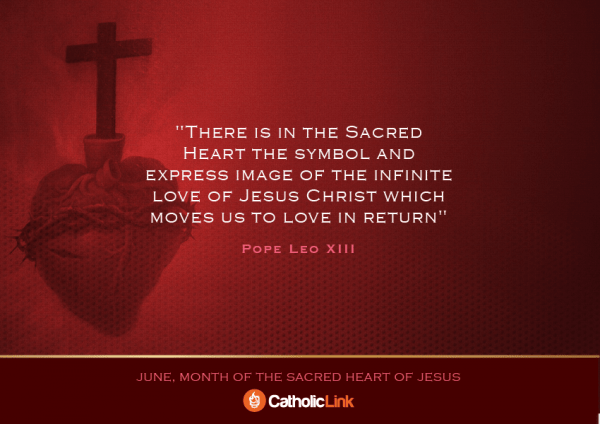
💡 Popes and Formal Recognition: Popes, including Pope St Pius IX, Pope St Leo XIII and Pope St John Paul II played significant roles in recognizing and promoting this devotion.

Pope St Leo XIII consecrated the entire world to the Sacred Heart in 1899.

💡 Liturgical Celebration: The Solemnity of the Sacred Heart is celebrated on the Friday following the second Sunday after Pentecost, providing a liturgical expression of this devotion.

🙏🏻SPIRITUAL SIGNIFICANCE

🔷 Symbol of Love: The Sacred Heart symbolizes Jesus’ immense and unconditional love for humanity

🔷 Call to Reparation: Jesus’ revelations emphasized a call to make amends (reparation) for the indifference and offenses against His Sacred Heart.

🔷 First Fridays Devotion: This practice involves receiving Holy Communion on the first Fridays of nine consecutive months, a sign of love and reparation.

🔷 Consecration: Consecrating oneself, family, and the world to the Sacred Heart is a significant aspect of this devotion.

🔷 Sacramental Life: Followers of Christ are encouraged to participate in the sacraments, especially Holy Communion,_ as a means of growing in love and holiness.

🔷 Source of Strength: In times of trials, challenges, and uncertainties, devotion to the Sacred Heart becomes a source of spiritual strength and refuge.

🔷 Transformative Love: Embracing the Sacred Heart’s love inspires a transformative journey of becoming vessels of love, compassion, and mercy in the world.

🌐 PRACTICAL TIPS

💠 Daily Offering: Begin each day with a simple prayer, offering it to the Sacred Heart and seeking His guidance and protection.

💠 First Fridays Devotion: Commit to the First Fridays Devotion, fostering a consistent practice of receiving Holy Communion and contemplating the Sacred Heart’s love.

💠 Consecration Prayer: Personally or as a family, make the Act of Consecration to the Sacred Heart, dedicating your lives to Christ’s transformative love.

💠 Image of Sacred Heart: Encouraging the practice of having an image or representation of the Sacred Heart in homes…
… fosters an environment of love, mercy, and devotion.

Families can gather for prayers and reflections, acknowledging Christ’s presence and love in their midst.

May Devotion to the Sacred Heart be a journey of profound love and transformation, drawing us closer to the Compassionate Heart of Jesus.

❇️ Keep the faith!
✅ Live in love!
✳️ Deepen your hope!

God Bless! Live Jesus!

  • Fr Jijo Jose Manjackal MSFS
    Bengaluru, India
    reflectioncapsules@gmail.com

⏩ CATHOLIC CARTRIDGE – A series to learn, revive, love and be faithful… to our Catholic Faith!

❇️ WHAT IS IT?
EUCHARISTIC ADORATION is a revered Catholic practice involving the worship and contemplation of the Blessed Sacrament.

The faithful spend time in the presence of the exposed Eucharist, adoring Jesus, Who is truly present in the Consecrated Host.

Archbishop Fulton Sheen beautifully reminds us: “The greatest love story of the entire world is found in the Tiny White Host!”

🌀 HISTORY
With roots tracing back to the Early Church, Eucharistic Adoration gained prominence in the medieval period.

💡Examples from the Lives of Saints: Saints such as Saint Clare of Assisi and Saint John Vianney were known for their profound devotion to Eucharistic Adoration.

Saint Juliana of Liège and Saint Thomas Aquinas too played pivotal roles in fostering devotion to the Blessed Sacrament.

💡In modern times, especially during the 19th and 20th centuries, saints like Saint Peter Julian Eymard and Saint Thérèse of Lisieux advocated for a deeper understanding and devotion to the Eucharist.

They emphasized the need for personal encounters with Christ in the Eucharist, leading to the establishment of the Feast of Corpus Christi.

💡Formalized by the Council of Trent (16th century), it became a significant element of Catholic piety.

💡Teachings of Popes: Saint Pope John Paul II emphasized the centrality of the Eucharist in the life of the Church. His encyclical “Ecclesia de Eucharistia” underscores the importance of Eucharistic Adoration as a way to deepen one’s faith.

💡Scriptural Basis and Reference: The institution of the Eucharist during the Last Supper (Matthew 26:26-28, Mark 14:22-24, Luke 22:19-20) serves as the foundational scriptural basis for Eucharistic Adoration.

The Gospel of John, particularly chapter 6, highlights the significance of Christ’s Real Presence.

✴️ RELEVANCE IN MODERN STRUGGLES

In the midst of contemporary challenges, Eucharistic Adoration holds profound relevance:

🔶 Digital Distractions: In an era marked by constant digital distractions, Eucharistic Adoration offers a sanctuary of silence, providing respite from the noise and chaos of modern life.

🔶 Escape from Addictions: As many struggle with various addictions and vices, Eucharistic Adoration becomes a source of spiritual healing and liberation.

The Real Presence of Christ becomes a powerful antidote to the allure of fleeting pleasures.

🔶 Peace Amid Anxiety: In a world filled with anxiety and stress, spending time in Eucharistic Adoration allows individuals to experience inner healing and tranquility.

It serves as a reminder that Christ is present in the midst of life’s challenges.

🔶 Encounter with Unconditional Love: In a culture where love is often conditional, Eucharistic Adoration provides an encounter with Christ’s unconditional love.

This experience becomes a transformative force, fostering a deep sense of self-worth and belonging.

🙏🏻SPIRITUAL SIGNIFICANCE

🔷 Real Presence of Jesus: It acknowledges the Real and Substantial Presence of Jesus Christ in the Consecrated Host.

Reflecting on the words of Jesus, “This is my body… This is my blood,” deepens one’s faith in the Eucharist.

🔷 Communion and Contemplation: Beyond the reception of Holy Communion during Mass, Eucharistic Adoration offers an extended period for personal communion and contemplation.

It’s an intimate encounter with the Lord, fostering a deeper relationship.

🔷 Adoration and Thanksgiving: It allows for a dedicated time of adoration and thanksgiving, expressing gratitude for the immense gift of Christ’s Body and Blood.

🔷 Silent Encounter: Embracing the sacredness of silence in Eucharistic Adoration provides a serene space for listening to God’s Voice and responding to His Merciful Love.

🔷 Healing and Transformation: Jesus, truly living in the Holy Eucharist heals and transforms us.

🌐 PRACTICAL TIPS

💠 Schedule Regular Time: Dedicate a specific time in your schedule for Eucharistic Adoration (if possible, daily or weekly, or atleast monthly), creating a consistent routine.

💠 Embrace Silence: In this world obsessed with noise, allow moments of profound silence during Adoration, providing space for personal reflection, prayer, and listening to God.

💠 Bring Intentions: Bring your intentions and concerns before the Lord, seeking His guidance and grace during the time spent in Eucharistic Adoration.

💠 Learn Eucharistic Prayers: Familiarize yourself with Eucharistic prayers, litanies, and devotions to enhance your experience and participation.

May Eucharistic Adoration become a sacred encounter, deepening our “love-bond” with the Living Christ in the Blessed Sacrament.

❇️ Keep the faith!
✅ Live in love!
✳️ Deepen your hope!

God Bless! Live Jesus!

  • Fr Jijo Jose Manjackal MSFS
    Bengaluru, India
    reflectioncapsules@gmail.com

⏩ CATHOLIC CARTRIDGE – A series to learn, revive, love and be faithful… to our Catholic Faith!

❇️ WHAT IS IT?
The Chaplet of the Divine Mercy is a powerful Catholic prayer invoking God’s Mercy.

Using Rosary beads, it includes the repetition of specific prayers such as the Our Father, Hail Mary, and the Divine Mercy Chaplet prayer.

The Chaplet focuses on God’s boundless Mercy, emphasizing trust, repentance, and seeking Divine forgiveness through the merits of Christ’s Passion.

We are reminded that “the ocean of God’s Mercy is greater than all our sins, our failures and our weaknesses!”

🌀 HISTORY

Originating from revelations to St Faustina Kowalska in the early 20th century, the Chaplet gained widespread devotion, especially after her canonization by Saint Pope John Paul II in the Jubilee Year 2000.

Pope John Paul II was greatly instrumental in promoting the Divine Mercy devotion, declaring the Sunday after Easter as Divine Mercy Sunday.

The Chaplet serves as a tangible expression of trust in God’s mercy…
… reflecting Biblical references to God’s compassionate nature.

🙏🏻SPIRITUAL SIGNIFICANCE

The Chaplet of the Divine Mercy holds deep spiritual significance, serving as a profound channel for God’s Mercy.

🔷 Trust in God’s Mercy: The Chaplet invites believers to trust completely in God’s infinite Mercy…
… echoing Jesus’ message to St. Faustina that “even the most hardened sinner can find refuge in His compassionate Heart!”

🔷 Repentance and Forgiveness: Through the Chaplet prayers, we are called to express sincere repentance, seeking God’s forgiveness and mercy.

It serves as a pathway for the contrite heart to experience the transformative power of Divine Mercy.

🔷 Meditation on the Passion: The Chaplet guides us in a meditative reflection on the Passion of Christ…
… deepening our understanding of the immense sacrifice and love revealed on the Cross.

🔷 Intercessory Prayer: Interwoven with the Our Father and Hail Mary, the Chaplet becomes a powerful intercessory prayer…
… invoking God’s mercy not only for oneself but for the entire world, fostering a sense of solidarity with humanity.

🔷 Receiving Graces: Jesus promised specific graces to those who faithfully recite the Chaplet, especially at the hour of death.

🌐 PRACTICAL TIPS
💠 Reflection on the Passion: As you recite the Chaplet, reflect on the profound mysteries of Christ’s Passion, Death, and Resurrection.

💠 Daily Devotion: Make the Chaplet a daily practice (if possible, at 3 o clock – the Hour of Mercy) offering intentions for your needs, the Church, and the entire world.

💠 Participation in the Novena of the Divine Mercy: Initiate/Join the communal recitation of the Novena of the Divine Mercy (starting on Good Friday) and culminating on the Divine Mercy Sunday, receiving the promised graces.

💠 Scriptural Meditation: Ponder on Biblical passages that highlight God’s Mercy, fostering a deeper understanding of the Chaplet’s significance.

May the Chaplet of the Divine Mercy be a source of profound trust, mercy, and transformative healing in our lives.

❇️ Keep the faith!
✅ Live in love!
✳️ Deepen your hope!

God Bless! Live Jesus!

  • Fr Jijo Jose Manjackal MSFS
    Bengaluru, India
    reflectioncapsules@gmail.com

— Pope St John Paul II, Shrine of Divine Mercy in Cracow, Poland on June 7, 1997

⏩ CATHOLIC CARTRIDGE – A series to learn, revive, love, and be faithful… to our Catholic Faith!

❇️ WHAT IS IT?
The Stations of the Cross, or the Way of the Cross, is a heart-touching Catholic devotion inviting believers to accompany Jesus Christ on His journey from condemnation to Crucifixion.

Comprising of 14 stations, each represents a specific event, to reflect deeply on Christ’s path to Calvary.
This transformative experience fosters a personal connection to His ultimate sacrifice for our salvation.

This devotion is an immersive experience for all Catholics, providing a transformative means of spiritual reflection and growth.
… cultivating a personal connection to the pivotal events of Christ’s Passion
… and a richer understanding of the redemptive narrative.

🌀 HISTORY
Pilgrimage Origins: The inception of the Stations can be traced back to pilgrims in the Holy Land retracing Jesus’ steps.

As early as the 4th century, St. Jerome documented pilgrims visiting sacred sites, laying the foundation for this devotion.

Franciscan Formalization: The Franciscans played a pivotal role in structuring the devotion in the 17th century, organizing the 14 Stations.

St. Leonard of Port Maurice, a Franciscan, further popularized the devotion in the 18th century.

Church Adoption: The Catholic Church formally embraced the Stations, incorporating them into the rich legacy of Lenten practices.

Pope Clement XII enriched the devotion in the 18th century, encouraging its observance as a potent means of spiritual reflection.

🔷 THE 14 STATIONS
✝️ Jesus is Condemned to Death: Reflect on Christ’s unjust condemnation, recognizing the weight of innocence unfairly burdened.

✝️ Jesus Takes Up His Cross: Contemplate Jesus embracing the instrument of His sacrifice, symbolizing His redemptive mission.

✝️ Jesus Falls the First Time: Witness the vulnerability of Christ as He stumbles under the weight of our sins.

✝️ Jesus Meets His Blessed Mother: Share in the poignant encounter between Jesus and Mary, acknowledging the deep maternal connection.

✝️ Simon of Cyrene Helps Jesus Carry the Cross: Ponder the unexpected assistance Jesus receives, inviting reflection on communal support.

✝️ Veronica Wipes Jesus’ Face: Delve into the compassionate act of Veronica, embodying kindness amid Christ’s suffering.

✝️ Jesus Falls the Second Time: Acknowledge the enduring physical and spiritual struggle as Jesus stumbles once more.

✝️ Jesus Meets the Women of Jerusalem: Reflect on Jesus’ empathy towards the mourning women, teaching lessons of compassion.

✝️ Jesus Falls the Third Time: Consider the profound resilience of Jesus in the face of overwhelming adversity.

✝️ Jesus is Stripped of His Garments: Contemplate the stripping of Jesus’ garments, revealing vulnerability and humility.

✝️ Jesus is Nailed to the Cross: Enter into the solemnity of Jesus’ crucifixion, recognizing the depth of His sacrifice.

✝️ Jesus Dies on the Cross: Witness the culmination of Christ’s redemptive act, embracing the profound mystery of God’s love.

✝️ Jesus’ Body is Taken Down from the Cross: Reflect on the tender moment as Jesus’ lifeless body is removed, signifying the end of His earthly journey.

✝️ Jesus is Laid in the Tomb: Contemplate the stillness of Jesus in the tomb, awaiting the glory of Resurrection.

🙏🏻 SPIRITUAL SIGNIFICANCE
Sacred Meditation: The devotion offers a unique combination of visual and prayerful meditation on each step of Christ’s suffering, providing a profound way to connect with His sacrificial love.

Biblical Reflection: Rooted in the Gospel accounts of Christ’s Passion and rich traditional accounts, the Stations facilitate contemplative reflection on the scriptural narrative, deepening one’s understanding of the redemptive story.

Universal Participation: The Stations are versatile, allowing for individual or communal practice, providing a universal and accessible means for Catholics to engage in the contemplation of Christ’s sacrifice.

Timeless Devotion: Traditionally observed during Lent, the devotion transcends time, offering continuous spiritual enrichment and a deeper connection to Christ’s love.

🌐 PRACTICAL TIPS
Personalized Reflection: Delve into the significance of specific stations, by personalising each step and allowing the weight of each step to resonate in your heart.

Community Connection: Engage in praying the Stations as a community/family for a shared faith experience, fostering a sense of community and collective devotion.

Consistent Practice: Integrate this devotion into your routine, whether on a weekly basis or as part of your Lenten observance, for sustained spiritual growth

Gain of Indulgence: Devoutly praying the Stations of the Cross, by following the ordinary conditions, along with praying for the intentions of the Holy Father, gains a plenary Indulgence

Accompaniment with Mother Mary: Pray the Stations, by holding the hands of Mother Mary and walking with Her on the journey of Her Beloved Son’s Way of Agony!

May the Stations of the Cross (Way of the Cross) be a transformative journey, drawing us closer to the boundless love of Jesus Christ.

❇️ Keep the faith!
✅ Live in love!
✳️ Deepen your hope!

God Bless! Live Jesus!

  • Fr Jijo Jose Manjackal MSFS
  • Bengaluru, India
  • reflectioncapsules@gmail.com

⏩ CATHOLIC CARTRIDGE – A series to learn, revive, love, and be faithful… to our Catholic Faith!

❇️ WHAT IS IT?
The Liturgy of the Hours, or Divine Office, is a sacred rhythm of daily prayer in the Catholic Church.

It comprises of Psalms, Hymns, and Readings..
… fostering a sense of unity, knowing that you are joining a vast chorus of believers, lifting their hearts to God.

The Liturgy of the Hours consists of several “hours,” prayed at different times

Lauds (Morning Prayer): Praising God at the start of the day.
Sext (Midday Prayer): Offering gratitude and seeking guidance in the middle of the day.
Vespers (Evening Prayer): Thanking God for the day and seeking His mercy.
Compline (Night Prayer): Surrendering the night to God’s protection.
Matins (Office of Readings): A reflective prayer, often including scripture readings, suitable for any time.

The Liturgy of the Hours is not confined to clergy or religious…
… it’s a gift for all the faithful
… offering a structured, yet accessible way to sanctify daily life

🌀 HISTORY
Roots in Tradition: The Liturgy of the Hours – influenced by the Jewish practice of praying at specific times – has been part of the Church’s prayer life since early Christian times.

Monastic Influence: Monastic communities – especially the Benedictines, the Cistercians, the Carthusians, the Dominicans and the Franciscans – played a vital role in shaping and promoting this prayer tradition.

Accessible to All: The Second Vatican Council’s reforms made the Liturgy of the Hours, more accessible, inviting the laity to partake in this spiritual treasure.

🙏🏻 SPIRITUAL SIGNIFICANCE
Daily Connection: The Liturgy of the Hours establishes a daily connection with God, fostering spiritual unity among believers.

Biblical Engagement: Rooted in Scripture, it offers a systematic journey through the Bible, enriching one’s understanding of divine revelation.

Communal or Individual: It can be prayed individually or in groups, fostering communal prayer experiences. Parishes, religious communities, and individuals contribute to the universal chorus of prayer.

Flexible Frequency: While the clergy are to commit to the full cycle, laypeople can adapt and choose specific hours that align with their daily routine. Even reciting one or a few “hours” can enrich spiritual life.

🌐 PRACTICAL TIPS
Consistent Routine: Incorporate the Liturgy of the Hours into daily life, creating a rhythm that aligns with the Church’s universal prayer.

Reflective Pause: Take moments between psalms and readings for silent reflection, allowing the divine words to resonate.

Universal Participation: Acknowledge that by praying the Liturgy of the Hours, you actively join the Church in its ceaseless worship.

May the Liturgy of the Hours become a sacred melody, enhancing our spiritual journey through the day.

❇️ Keep the faith!
✅ Live in love!
✳️ Deepen your hope!

God Bless! Live Jesus!

  • Fr Jijo Jose Manjackal MSFS
    Bengaluru, India
    📧 _reflectioncapsules@gmail.com
St John Paull II Address at St Patrick’s Cathedral, October 3, 1979

⏩ CATHOLIC CARTRIDGE – A series to learn, revive, love and be faithful… to our Catholic Faith!

03 THE HOLY ROSARY

❇️ WHAT IS IT?
The Holy Rosary is a cherished Catholic devotion that involves the repetition of prayers, predominantly the Hail Mary…
… while meditating on significant events in the lives of Jesus Christ and the Blessed Virgin Mary.

This powerful prayer tool consists of beads organized into decades, each representing specific mysteries.

The Rosary is a Christian museum…
… which brings alive the past of the salvation history to the present, and becomes a inspiration for the future!
… which showcases the heritage and history of our faith and awakens many emotions and feelings!

The word Rosary means a “Crown of Roses!”

Our Lady has revealed to several people that each time one says a Hail Mary…
… one is giving her a beautiful rose and that completion of each Rosary, makes her a beautiful crown of roses.

🌀 HISTORY
Origin: The use of beads for prayer traces back to the early Christian Desert Fathers, with the modern Rosary evolving around the 12th century

St. Dominic: Tradition attributes the Rosary’s spread to St. Dominic, who received it from the Virgin Mary in a vision.

Papal Endorsement: Various Popes, especially Pope Leo XIII and Pope John Paul II, have endorsed and encouraged the Rosary as a potent spiritual weapon.

Marian Apparitions: Apparitions of Mary, especially at Lourdes and at Fatima, have emphasized the Rosary’s significance in promoting peace and conversion.

Fruitful Tradition: The Rosary has endured as a cherished Catholic practice, offering solace, protection, and a pathway to deeper contemplation.

🙏🏻SPIRITUAL SIGNIFICANCE
The Holy Rosary serves as a profound meditation on the mysteries of the faith.

Reflective Devotion: This powerful prayer is a meditation on the Joyful, Sorrowful, Glorious and Luminous Mysteries of the Life of Christ:

They invite us to prayerfully contemplate His Life, Passion, Death, and Resurrection, and Mary’s role in the mystery of salvation

Intercessory Power: The Rosary is a beautiful invocation of Mary’s intercession. Every Rosary is a “beautiful meditation on the life of Jesus, holding the hands of Mamma Mary!”

Contemplative Prayer: The repetitive prayers create a contemplative rhythm, fostering spiritual growth.

🌐 PRACTICAL TIPS
💠 Daily Dedication: Incorporate the Rosary into daily prayers, fostering a consistent connection with the Lord.

💠 Family Unity: Pray the Rosary together as a family, reinforcing spiritual bonds and devotion – accompanied by the powerful intercession of Mary, just as at the Wedding at Cana

💠 Intentions and Petitions: Attach specific intentions to each decade, seeking Mary’s intercession for personal and global concerns.

💠 Silent Meditation: Allow moments of silent reflection between Hail Marys to deepen contemplation.

May the Holy Rosary be a steadfast companion, leading us closer to the Heart of Jesus through the loving intercession of Mary…
… remembering that “no one can live continually in sin and continue to say the Rosary: either they will give up sin or they will give up the Rosary!”

❇️ Keep the faith!
✅ Live in love!
✳️ Deepen your hope!

God Bless! Live Jesus!

  • Fr Jijo Jose Manjackal MSFS
    Bengaluru, India
    📧 reflectioncapsules@gmail.com

⏩ CATHOLIC CARTRIDGE – A series to learn, revive, love and be faithful… to our Catholic Faith!

02 THE ANGELUS

❇️ WHAT IS IT?
The Angelus is a traditional Catholic prayer recited three times daily – dawn, noon, and dusk.

It commemorates the Annunciation, involving the Angelus Domini (This is the opening versicle in Latin – “The Angel of the Lord”), three Hail Marys, and a concluding prayer…
… reflecting on key moments in the life of Jesus and Mary.

🌀 HISTORY

  1. It is considered that in the 11th Century, the Franciscan monks had the custom of saying Three Hail Marys, along with the bell that was rung, at their Evening Prayer.

The Three Hail Marys was to honour “the immaculate Virgin Mother and to preserve a perfect purity of mind, heart and body, in the midst of the dangers that are encountered in the world”

This practise was also encouraged among the lay people, especially by St Bonaventure.

  1. Another tradition also says that in the time when England was occupied by the Normans…

In order to control the people, the Normans rang a curfew bell at the end of each day. This was to remind the people to put off all fires, get out of the streets and go back and retire to their homes.

While this was not aimed for prayer, nevertheless this bell got associated with the evening prayer time, which included saying the Hail Mary.

This practice of the bell to be rung at the close of the day, continued, even after the end of the invasion.
The Bishop had encouraged the people: “We exhort you every day, when you hear three short interrupted peals of the bell, at the beginning of the curfew (or, in places where you do not hear it, at vesper time or nightfall) you say with all possible devotion, kneeling wherever you may be, the Angelic Salutation three times at each peal, so as to say it nine times in all”

  1. In 1318 in Italy, there began the practice of saying the Hail Mary, on rising in the morning.

This habit probably came from the monks, who included the Hail Mary in the prayers they said before their workday began.

  1. In 1456, Pope Calisstus III directed the ringing of church bells every day at noon and that Catholics pray three Hail Marys.

The Pope exhorted the faithful to use the noonday prayers to pray for peace in the context of the 15th-century invasion of Europe by the Turks.
The bell rung at noontime became known as the “Peace” bell

  1. The Angelus became a prayer as we know today, towards the end of the 16th century…
    …with three Hail Marys, and short verses in between (called versicles), ending with a prayer.

It was first published in modern form in a catechism around 1560 in Venice.

🙏🏻SPIRITUAL SIGNIFICANCE
The Angelus reminds us of the Angel Gabriel’s annunciation to Mary, Mary’s Fiat, the Incarnation and Our Lord’s passion and resurrection.

It is repeated as a holy invitation, calling us to prayer and meditation.

The Angelus is said kneeling
(symbolic of our humility “to welcome and accept the Will of God to take flesh in us”)

Pope Benedict XIV directed that the Angelus should be recited while standing on Saturday evening and all day on Sunday (to honour and commemorate the Triumphant Resurrection of the Lord)
He also exhorted that, during the Easter Season, the Regina Coeli (Queen of Heaven) be said instead of the Angelus.

There is also the practise of focussing…
… the Angelus in the morning: On the Resurrection
… the Angelus at noon time: On the Passion
… the Angelus at evening: On the Incarnation.

The Three-times recitation of the Angelus calls Christians…
… to interrupt the daily, earthly routines
… to turn to thoughts of God, of the Blessed Mother, and of eternity
… and to respond to the call of the Lord to “pray unceasingly and at all times” (Lk 18: 1, 1 Thess 5:17)

The Angelus is a meditation on the Bible – to recall the Salvation History

We meditate on the words of Mother Mary who called herself the “handmaid of the Lord”
We tell God that we are willing to do His Will, just as Mother Mary did
We invite the Lord “to take flesh” in all our actions and thoughts

🌐 PRACTICAL TIPS
💠 Seek to daily recite three times the Angelus – morning, noon and night (especially, if possible, as a family or a community)

💠 Thank the Triune God – Father, Son and Holy Spirit – for the Salvation History and especially recall the Passion, Death and Resurrection of the Lord and the

💠 Make an examination of the conscience – reviewing the activities done up to that moment…
(a) Thanking Him for His Graces
(b) Asking pardon for faults
(c) Resolving to do better

💠 Seek the intercession of our Blessed Mother to always say “Yes” to God’s Will

Let us grow in our devotion and love for the Lord, by the faithful and prayerful recitation of the Angelus!

❇️ Keep the faith!
✅ Live in love!
✳️ Deepen your hope!

God Bless! Live Jesus!

  • Fr Jijo Jose Manjackal MSFS
    Bengaluru, India
    📧 reflectioncapsules@gmail.com

⏩ CATHOLIC CARTRIDGE – A series to learn, revive, love and be faithful… to our Catholic Faith!

❇️ WHAT IS IT?
The Sign of the Cross is a fundamental Catholic gesture involving tracing a cross on oneself.

This simple yet profound act is made by touching the forehead, chest and the two shoulders.
It serves as a visible proclamation of faith in the Holy Trinity – the Father, the Son, and the Holy Spirit.

🌀 HISTORY

The Sign of the Cross has ancient roots, with early Christians discreetly using it to express their Christian identity.
It evolved into a visible symbol of Christian allegiance and commitment, with all the prayers generally beginning with the Sign of the Cross
Over centuries, the Sign of the Cross became universally recognized, symbolizing and uniting believers in the core tenets of Christianity.

🙏🏻 SPIRITUAL SIGNIFICANCE
The Sign of the Cross holds profound spiritual significance.

It is a visible expression of the Catholic faith in the Triune God.
By invoking the name of the Father, the Son, and the Holy Spirit, believers affirm their Faith in the Lord and their belief in the central mystery of Christianity.

🌐 PRACTICAL TIPS
💠 Begin and End with the Sign of the Cross: Start and conclude your prayers, activities, and endeavors with the Sign of the Cross. It serves as a powerful invocation of God’s presence and protection.

💠 Invoke the Trinity in Daily Actions: When faced with challenges or decisions, silently make the Sign of the Cross as a reminder of God’s guidance. This simple act can bring comfort and strengthen your resolve.

💠 Teach and Share: Pass on the tradition of the Sign of the Cross to others, especially children and newcomers to the faith. Explain its meaning and encourage its incorporation into daily life.

💠 Connect with the Liturgy: Use the Sign of the Cross during Mass, aligning yourself with the communal expressions of faith. Let it deepen your participation in the Eucharistic celebration.

May the Sign of the Cross be more than a habitual gesture; let it be a constant reminder of our Christian identity and a means to invite the divine presence into our daily lives.

❇️ Keep the faith!
✅ Live in love!
✳️ Deepen your hope!

God Bless! Live Jesus!

Fr Jijo Jose Manjackal MSFS
Bengaluru, India
📧 reflectioncapsules@gmail.com

​CATHOLIC CARTRIDGE 02 – THE HOLY DOOR OF MERCY

​CATHOLIC CARTRIDGE – To learn, revive, love and be faithful… to our Catholic Faith! 

02 – THE HOLY DOOR OF MERCY

We are in the Jubilee Year of Mercy

>> The year began on Dec 8, 2015 and concludes on Nov 20, 2016.
Among the many gifts and graces showered in this Jubilee…

… one of the prominent one is The Holy Door of Mercy.
We make a reflection on the importance of the Holy Door of Mercy…

… and thus prepare ourselves, to make use of this opportunity given by the Lord.

A. What is the Holy Door?

The Holy Door or “Porta Sancta” has been opened during this Jubilee Year of Mercy, giving an opportunity to receive a Plenary Indulgence , along with various other significances.


>> It was Pope Martin V, who in 1423, at the Basilica of Saint John Lateran, opened the Holy Door for the first time in the history of the Jubilee. 

>> In the Vatican Basilica, the opening of the Holy Door is first mentioned at Christmas 1499
In every diocese, the Holy Door of Mercy is opened in the Cathedral. 

>> Also depending on the Diocese, a Holy Door is opened in Basilicas, Shrines or churches of importance. 

The Holy Door of Mercy will close on November 13, 2016. 

>> The Holy Door in St Peter’s Basilica, Vatican will close on November 20, 2016.

B. Significance and relevance of Holy Door (Thoughts while entering the Door of Mercy)

1. Our life is a constant journey towards eternity – moving from Sin towards Salvation

>> The crossing of the Holy Door symbolizes that we are ready to leave behind our worldly ways and enter into the life of eternity. 

>> It is a passage signifying leaving the past behind and crossing the threshold from sin to grace, from slavery to freedom, and from darkness to light!

 
2. Entry into the Holy Presence of God

>> In the Old Testament, the High Priest would enter the Holy of Holies once in a year, which was behind the large and heavy Veil

>> The passing through the Holy Door signifies, the Veil, which was torn down by Christ’s Death, is now opened, and we are to enter into the Holy Presence of God
3. Christ is the Door

>> Jesus says in Jn 10:7, “I am the gate for the sheep”

>> He is the Door through which we need to enter, to receive eternal life
4. We respond to Christ’s invitation

>> In Jn 3:20, Jesus says, “Behold I stand at the door and knock…”

>> By entering through the Door of Mercy, we are responding to this invitation of Jesus to “dine with Him”
5. The Door signifies waters of mercy gushing forth

>> In the Old Testament, we read Moses stuck at the rock and the waters gushed forth

>> The Door of Mercy is opened now for us, and the waters of God’s Grace and Mercy flow into us
6. The open Door signifies our hearts and minds

>> By entering through the Holy Door, we are also telling that I am ready to open the door of my mind and heart, to all others – in order to give them God’s mercy and compassion
7. The Door of Mercy is an experience of the Love of God

>> Pope Francis exhorts that ” the Holy Door will become a Door of Mercy through which anyone who enters will experience the love of God who consoles, pardons, and instils hope.”
8. The Holy Door is a reminder to revive and replenish our Sacramental Life

>> Many of the sacramental rituals begin at the Door …

…The parents welcomed as they bring their child for baptism

… The bride and groom blessed as they begin the wedding liturgy

… The catechumens greeted at the rite of acceptance

… The casket received at the beginning of the funeral liturgy.
>> The Holy Door reminds us that Christian Life is strengthened and nurtured by the frequent and worthy reception of the Sacraments of the Church. 

C. The Holy Door of Mercy gives an opportunity to receive a plenary indulgence

An Indulgence is a remission before God of the temporal punishment due to sins whose guilt has already been forgiven.

>> A Plenary Indulgence is one which removes all of the temporary punishments due to sin

(A partial indulgence removes only a part)
What are the conditions to be fulfilled to receive the Plenary Indulgence, while passing through the Holy Door of Mercy?

1. Make a sacramental confession

2. A firm resolution to stay away (complete detachment) from all sins , including venial sins

3. Receive the Holy Communion 

4. Pray for the Intentions of the Holy Father (The Our Father and Hail Mary are suggested)

4. Pass through the Holy Door of Mercy with the intention of receiving the Indulgence

5. Perform ANY ONE of the following:

… A work of piety (a pilgrimage or some pious devotion like Rosary, Stations of the Cross or participate in adoration etc)

… A work of mercy or charity 

… An act of penance (abstinence or fasting)


Ideally, these are to be done on the same day.

>> But if not possible, it is to be carried out in around 2-3 weeks time
The indulgence, which can be gained only once a day, can be applied…

… either to oneself

… or the souls of the deceased

>> They cannot be applied to other persons living on the earth

We are less than 3 months away from the closing of this Jubilee year.
Have we responded to the invitation of the Church to “pass through” this Holy Door?
If not, let us make earnest efforts…

… individually

… or (ideally) as a family or a community

>> To pass through the Holy Door of Mercy and receive the gift of Indulgence!
God Bless! Live Jesus!