EUREKA: Discovering Catholic Treasury – through a Lenten lens! Day 16: “Spe Salvi”

A. What is it?

>> “Spe Salvi” is an Encyclical by Pope Emeritus Benedict XVI promulgated on November 30, 2007, >> “Spe Salvi” is a Latin title which means “Saved in Hope” and is the second Encyclical by the Pope Emeritus.

B. What does it speak of?

>> “Spe Salvi” speaks about the Theological Virtue of Hope.

>> The central thesis of this Encyclical is that Christian hope utterly transforms human life.

>> The Pope reminds us that we can have hope because we have a great goal: our salvation.

>> We can’t take our salvation for granted because it depends on our cooperation with grace.

>> “Spe Salvi” is divided in 8 sections:

(i) Faith is Hope: The solid basis for our Hope is our “Faith in God”.

>> Because we know God, we can have hope and rest secure in the knowledge that as Christians, we “have a future.”

(ii) The concept of faith-based hope in the New Testament and the early Church: Mentions that the encounter with Christ is not something abstract, but can change our lives. That is what attracted people to it in the beginning of the Church.

(iii) Eternal life – what is it? : “Eternal life” is the ultimate goal, what gives sense to our whole life.

(iv) Is Christian hope individualistic? : The role of Hope is vital, for Faith can be interpreted (wrongly) in a merely “informative sense”, whereas genuine Hope always goes beyond the “informative to the performative”.

(v) The transformation of Christian faith-hope in the modern age: Faith…enables us to experience the reality of God’s Kingdom in this present life.

>> This experience in turn becomes the final proof to us that what we hope for is real and true.

(vi) The true shape of Christian hope: Man’s great, true hope that holds firm in spite of all disappointments can only be God—God Who has loved us and Who continues to love us ‘to the end,’ until all ‘is accomplished.’ ”

(vii) ‘Settings’ for learning and practicing hope: The pope identifies four “settings” for learning and practicing hope. (a) Prayer (b) Deeds of Service (c) Suffering (d) Judgment of God

(viii) Mary, Star of Hope: This is a long prayer to our Lady, invoking her intercession.

C. Pointers for Reflections

1. “Spe Salvi” is a reminder of the Great Virtue of Hope

>> The Three Theological virtues are Faith, Love and Hope

>> Of these, often, Hope is often given a “backseat” and sometimes, even taken for granted

>> This Encyclical calls us to consciously grow in this Theological Virtue especially in this world, which is often “tending towards hopelessness and fatalism”

2. “Spe Salvi” demonstrates a variety of examples and illustrations from other Christian authors, books and other philosophical thinkers/writers

>> Pope Emeritus Benedict XVI displays his class by referencing to a number of authors and books – including a funeral oration by St. Ambrose, theologians like Henri de Lubac, mystics as Augustine of Hippo, Bernard of Clairvaux, and Benedict of Nursia, philosophers such as Francis Bacon, Immanuel Kant, Friedrich Engels, Karl Marx, Max Horkheimer, Fyodor Dostoyevsky and Plato along with other authors and thinkers like Vladimir Lenin, Theodor W. Adorno, Cardinal Nguyen Van Thuan.

>> This reminds all Christians of that famous quote: “Every Christian must have a Bible in one hand and a newspaper in the other.”

D. What virtues/points can we pick up from “Spe Salvi” for this Season of Lent?

1. Being a person of hope

2. Having a deeper thirst for knowledge

E. Tips to practice these virtues

1. Being optimist and cheerful in all the situations of life – and especially when things go wrong, to have “hope” that God is always doing everything for our good. (Rom 8:28)

2. Keeping ourselves updated on the happenings of the world, and seeking to find “Christian solutions” to these day-to-day challenges

May this Lent and the familiarity with the Encyclical “Spe Salvi” help us to grow in our acclamation: “Eureka – I have found the Lord”

(The Full Text of “Spe Salvi” can be found at:http://w2.vatican.va/content/benedict-xvi/en/encyclicals/documents/hf_ben-xvi_enc_20071130_spe-salvi.html)

God Bless! Live Jesus!

Mar 7 (Mt 5:17-19)

Here is an interesting read….

First dentistry became painless;

Then bicycles chainless

The latest steel rustless,

And probably laws, enforceless.

Next, cookery became fireless,

Telegraphy wireless,

Cigars nicotineless

And tennis courts, grassless

Soon oranges were seedless,

The proper diet, fatless,

The motor roads dustless,

And coffee, caffeineless.

Our times are such that there are many advancements made as a result of great technology.

However a danger has also appeared in rendering things to be made “¬¬¬____less”

Our prayers seem to be devotionless

Charity heartless

Preaching depthless

And religiosity, faithless!.

While it’s wonderful to allow technology and modern techniques to make our life ‘easier and relaxing’, it’s a grave danger to allow the same “relaxing and easing” tendency to overpower our spiritual endeavours!

The Gospel of the day is a warning by the Lord to be wary of this inclination to “relax” and “loosen” things which are pertaining to God and thus be exposed to the risk of being “lowered” in the eyes of God.

“Whoever then relaxes one of the least of these commandments and teaches men so, shall be called least in the kingdom of heaven… ” (Mt 5: 19)

The Lord addresses Himself as the fulfillment of the Law and the Prophets (Mt 5:18)

God, in the Old Testament, while delivering the commandments to the people of Israel, had strictly enjoined on them to keep His decrees and laws close to their hearts and to follow them carefully:

“But take care, as you value your lives! Do not forget the things which you yourselves have seen, or let them slip from your heart as long as you live; teach them, rather, to your children and to your children’s children.” (Dt 4:9)

But as time passed on and generations went by, the intensity in the following of these commandments drastically reduced.

• The laws began to lose their original spirit and motive.

• The instructions of the Lord were abandoned for their spiritual value

• The commandments began to be followed more from a social perspective

There began a “loosing” and “relaxing” of the commandments and the laws of the Lord!

The Greek word for “relaxing”, that Jesus speaks of in referring to the commandments of God is a word – “luo”.

This word “luo” can imply different meanings:

• It could be to break up or to demolish or to destroy that which is bound up firmly.

• It could be the loosening of the bond of matrimony between a husband and wife

• It could be to loosen any person or thing, that is tied or fastened to something

• It could be the undoing or dissolving of anything or any thought or idea.

• It could be to annul or subvert something especially laws or authority.

This “luo” is a grave danger to which all of us are also exposed to…

The danger to allow lethargy to troop in, in the name of “easiness”

The danger to allow lukewarmness to creep in, in the name of “convenience”

The danger to allow sluggishness to dominate, in the name of “broadmindedness”

The Lord today invites us to examine and probe into areas of our life that needs a real “tightening” and “intensification”

Has my prayer life become relaxed and casual…

>> Can I “tighten” it up, to grow in deeper communion with the Lord?

Has my participation in the Holy Eucharist become too monotonous and more “ritualistic”…

>> Can I “intensify” my preparation and participation in this most sacred act of the world?

Has my reading of the Word of God taken a backseat or lost its significance in my daily life…

>> Can I “tighten” it up, in order to draw strength from the mighty sword of God’s Word?

Has my relationship with my fellow people and the needy ones, devoid charity and kindness…

>> Can I “intensify” with a truer interest in their concerns and making a difference in their lives?

Let us seek to have and live…

A life that is sinless…

A faith that is fearless…

An enthusiasm that is limitless…

A joy that is deceitless

And a hope that is endless!

God Bless! Live Jesus!

Mar 6 (Mt 18:21-35)

A common observation that is noticed among many children, is the fear and apprehensions of some subjects in the school or college.

>> Among these subjects, one which would top the list of subjects which causes tension and undue worry, is certainly, Mathematics!

>> Many have a fear of this subject which deals with figures and numbers.

>> Many have an aversion to this subject which deals with digits and numerals.

Well, it’s not known or certain whether Our Lord had any such aversion or fear or apprehension or even dislike for this subject, Mathematics!

But one thing is for certain…

… that the Lord sure loved to keep out Mathematics when dealing with important spiritual dimensions.

… that the Lord indeed would transgress the norms of Mathematics when engaged in vital spiritual aspects.

The Gospel of the Day is an exhibition of this aspect of the Lord going beyond mathematical boundaries in dealing with the beautiful virtue of forgiveness.

The passage begins with the Lord’s chief and one-of-the-first apostles Peter, raising a query to his Master, ” Lord, how often shall my brother sin against me, and I forgive him? As many as seven times? ” ( Mt 18: 21)

It was probably a genuine doubt of Peter, which arose from his own personal experiences.

He must have had some difficulties in forgiving, out of his wavering temperament, perhaps!

But he now puts forward to Jesus a doubt as to what should be the limit of one’s forgiveness.

>> Peter sought to know what are the exact boundaries that one must limit oneself, while forgiving.

>> He wanted clear-cut rules to define the maximum threshold and frontiers of generosity in pardoning.

But the Lord replies firmly, “I say to you, not seven times, but seventy seven times” (Mt 18:22)

>> The Lord does away with the mathematical rules in forgiveness!

>> The Lord does not confine to the mathematical stipulations in forgiveness!

“Seventy seven times” would refer a number, unlimited and uncountable!

>> The frontiers for how many times to forgive are done away with…

>> The boundaries for how many times to forgive do not hold good…

As the Lord spoke these words to Peter, the apostle would himself have recalled…

“Once beside the sea of Galilee, when I encountered the Holy Master, I realized that I was drowning in the waters of sin… and I had asked pardon from the Lord.

>> Depart from me, Lord, for I am a sinful man (Lk 5:8)”

These words of the Lord would have again echoed in the ears of Peter, later on, after the resurrection of Jesus….

>> Once again, beside a Sea… this time, the Sea of Tiberius, Peter experienced the forgiving power of the Lord in accepting back, though he had betrayed Him three times (Jn 21: 15-18)

Many times Peter…

… had sinned against the Lord…

… had caused pain and ache to the Lord…

… had abandoned and betrayed the Lord…

>> But every time, the Lord forgave, wholeheartedly!

The Lord was truly the Master, “who practised what He preached”

The Lord was truly the Master, “who forgave unconditionally and without any limits”

This Lord, today seeks to impress on us too, this same attitude of forgiveness.

The teaching on forgiveness, is most certainly easy said than done!

>> To forgive….especially to forgive repeatedly, is certainly no easy task…

But it would require a deeper experience of the Unconditional Love of the Lord and our own determination, along with His grace, to reach out in forgiveness and pardon to our constantly erring brothers and sisters!

>> Are we ready to cast away mathematical limitations in forgiving, and extend the mercy of the Lord to others?

>> Are we ready to do away with mathematical countings in pardoning others, knowing that we ourselves have received this favour from the Lord?

God Bless! Live Jesus!

Mar 5 (Lk 4:24-30)

One of the most painful words in perhaps the whole of dictionary is the word … “Rejection”

And this is perhaps one word, that has been experienced in life, by most of us…( if not by all).

>> Most of us have felt the sting of rejection…

>> Most of us can recollect instances and situations of rejection even now…

>> Most of feel a twinge within ourselves when we hear this word ‘rejection’…

The Gospel of the Day presents Jesus, our Master undergoing the painful experience of ‘rejection’.

The background of the Gospel passage of the day is that Jesus is in the Synagogue at Nazareth at the beginning of His ministry.

Being handed over the Scripture from the book of Isaiah, Jesus spoke of the fulfillment of the text that was read:

“The Spirit of the Lord is upon me, because He has anointed me to bring glad tidings to the poor….” (Lk 4:18)

The Graciousness of His words and the Eloquence of His speech attracted the audience to Himself.

The first impression was surely a wonderful impression…

… but as time would prove, it is not always the best and lasting impression.

When He began to teach the people of how God has brought His salvation and the message of hope to not just the Jews, but the Gentiles also, murmurs of rejection began to crop up.

>> The message of straight talk to the heart, which affected their inner lives, caused uneasiness to His listeners.

>> The delivery of the truth which had a direct bearing upon their lives and attitudes, caused edginess to arise among His listeners.

And so, there happened a “conversion”…

…. a conversion, not for the good, but for the bad!

They were converted from having a good opinion of Jesus to forming a detestable view on Him

>> They were converted from nodding their heads in approval to shaking their heads and clenching their fists in refutation and denial.

How true a picture is this of many a human nature….

>> We appreciate those persons who speak what I wish to speak…

… but deny those who speak against us, even if they speak the truth!

>> We encourage those people who harp the same tune that we wish to hear…

… but terribly denounce those who play the melody for a genuine transformation!

The Lord was rejected!

>> And He Himself testified to this naked reality, “No prophet is accepted in his own native place” (Lk 4: 24)

The Gospel of John presents this reality in a more dramatic manner, “He came to His own and His own rejected Him!” (Jn 1:11)

Rejection is a part of each of our lives…

>> And the rejection is much greater and true, when one stands for the Truth and the Virtues of the Gospel!

We get rejected…

… by our friends who don’t approve when we seek to live a holier lives…

… by the society which is unable to appreciate those wanting a sanctified life…

But the Lord assures us.. “In all your rejection, look up to me!”

“There was no one who was rejected as I was…

I was rejected when I was born….

I was rejected when I lived…

I was rejected when I died….”

“Are you also going to reject me… I, who have risen from the dead?”

Some of us who use the mobile phones in the dictionary mode, (especially the older version – and not the smartphones), would have experienced this simple fact…

When one types the word “rejected” in the dictionary mode, in a mobile phone, it appears as “selected”…

Try it if you wish….

The same is true when we type in the word “rejected” in the Divine mode…. before the Lord!

He converts every “reject” to a “select”…

>> He converts our rejection to a selection for grace and sanctification

>> He converts our rejection to a selection for purification and strengthening.

Our lives have suffered much pain and our hearts are a canvas of much agony of rejection.

>> But the Lord today invites us to go to Him and seek solace, healing and consolation from Him.

He who was rejected, is the Lord of acceptance!

>> He who was rejected, is the Saviour of hope!

>> He who was rejected, is the God of healing!

God Bless! Live Jesus!

EUREKA: Discovering Catholic Treasury – through a Lenten lens! Day 15: “Ecclesia de Eucharistia”

A. What is it?

>> “Ecclesia de Eucharistia” is an Encyclical by Pope St John Paul II

>> It was published on April 17, 2003

>> “Ecclesia de Eucharistia” is a Latin phrase for “The Church from the Eucharist”

B. What does it speak of?

>> “Ecclesia de Eucharistia” offers a deeper reflection on the mystery of the Eucharist in its relationship with the Church.

>> The goal of this encyclical was to “rekindle”, at the beginning of the Third Millennium, our “amazement” at the mystery that is the Eucharist

>> “Ecclesia de Eucharistia” is divided into 5 Chapters:

(i) The Mystery of Faith: It explains the sacrificial nature of the Eucharist which, through the ministry of the priest, makes sacramentally present at each Mass the body “given up” and the blood “poured out” by Christ for the world’s salvation.

>> The celebration of the Eucharist is not a repetition of Christ’s Passover. It is the one sacrifice of the Cross, which is re-presented until the end of time.

(ii) “The Eucharist Builds the Church”: When the faithful approach the sacred banquet, not only do they receive Christ, but they in turn are received by Him.

>> The Church is united to Her Lord Who, veiled by the Eucharistic species, dwells within Her and builds Her up.

(iii) “The Apostolicity of the Eucharist and of the Church”: ust as the full reality of Church does not exist without apostolic succession, so there is no true Eucharist without the Bishop. The priest who celebrates the Eucharist acts in the person of Christ the Head.

(iv) “The Eucharist and Ecclesial Communion”: Faithful to the teaching of the Apostles, united in the discipline of the sacraments, she must also manifest in a visible manner her invisible unity.

(v) “The Dignity of the Eucharistic Celebration”: The celebration of the Holy Mass is marked by outward signs aimed at emphasizing the joy which assembles the community around the Incomparable Gift of the Eucharist.

(vi) “At the School of Mary, ‘Woman of the Eucharist’”: Reflects on the analogy between the Mother of God, who by bearing the Body of Jesus in Her Womb became the first “tabernacle”, and the Church who in Her heart, preserves and offers to the world, Christ’s Body and Blood.

>> The Eucharist is given to believers so that their life may become a continuous Magnificat in honor of the Most Holy Trinity.

C. Pointers for Reflections

1. “Ecclesia de Eucharistia” strongly promotes Eucharistic devotion outside of the Mass as a Source of Grace for deepening our own Faith as well as increasing Communion within the Universal Church

>> “The Eucharist is a Priceless Treasure: by not only celebrating it but also by praying before it outside of Mass, we are enabled to make contact with the very Wellspring of Grace.

>> A Christian community, desirous of contemplating the Face of Christ… cannot fail also to develop this aspect of Eucharistic worship, which prolongs and increases the fruits of our Communion in the Body and Blood of the Lord

2. The Encyclical clarifies and sheds light on the allegation that the Catholic Church is attempting to “re-crucify Jesus” every time Mass is celebrated.

>> The Mass makes present the Sacrifice of the Cross; it does not add to that sacrifice nor does it multiply it.

>> What is repeated is its memorial celebration, its “commemorative representation” (memorialis demonstratio), which makes Christ’s One, Definitive Redemptive Sacrifice always present in time.

D. What virtues/points can we pick up from “Ecclesia de Eucharistia” for this Season of Lent?

1. Trying to spend more time in Eucharistic Adoration

2. Learning more about the Teaching on the Holy Eucharist, and trying to explain to those who don’t understand/misunderstand the Holy Mass

E. Tips to practice these virtues

1. Set apart a fixed day/time (depending on the situation and context of one’s life – either once a day/once a week/once a month)…

… to spend time with Jesus in the Holy Eucharist.

>> If possible, do so, along with the entire family/community

2. Read at least the First Chapter of“Ecclesia de Eucharistia” (From articles 1-20)…

… in order, to get more clarity on the Church’s understanding of the Holy Eucharist

May this Lent and the familiarity with the Encyclical “Ecclesia de Eucharistia”help us to grow in our acclamation: “Eureka – I have found the Lord”

(The Full Text of “Ecclesia de Eucharistia” can be found at:

http://www.vatican.va/holy_father/special_features/encyclicals/documents/hf_jp-ii_enc_20030417_ecclesia_eucharistia_en.html)

God Bless! Live Jesus!

March 4 ( Jn 2:13-25)

William Charles Macready was an English drama actor.

There is a tale told about this great artiste.

An eminent preacher of the Word of God, once said to this celebrated actor: “I wish you would explain to me something.”
>> The actor was confused….”Well, what is it? I don’t know what is that I can explain anything to a preacher!” 
 

But the preacher continued to put forth his query: “What is the reason for the difference between you and me?
>> You appear before crowds, night after night with fiction, with fantasy…
… and the crowds come wherever you go.

I preach the essential and unchangeable Truth, and I am hardly getting any crowd.

How do people flock to something unreal and false, but shy away from something which is true and life-saving?” 

With a naughty grin, the talented actor, Macready answered:
“This is quite simple! I can tell you the difference between us.
>> I present my fiction as though it were truth; you present your Truth as though it were fiction!” 

Great answer, right?

 
The actor was able to present on stage, fantasies and imaginations, with a great force of truth and certainty.
>> The preacher was unable to present true and precious facts of God’s Word with the same intensity of conviction and integrity!

Thus, fiction though unreal, received attention and accolades.
>> Facts, though real, failed to be attractive and appealing!

This is a tragedy of our generation perhaps….
>> Worldly and materialistic aspects are presented to be onderful and amazing…
… and they draw fans and admirers

>> Spiritual and Divine aspects fail to be presented as wholesome and salvific…
…and they are drastically losing out on followers and the faithful.

The Gospel of the Day is a strong warning to examine the state of our Christian Faith, and be willing to make radical changes to prevent our lives from the danger of being an anti-witness.

Jesus went up to Jerusalem for the feast of the Passover (Jn 2: 13)

When Jesus arrived in Jerusalem , there would have been hundreds and thousands of people – huge crowds crammed into the narrow city streets and an astonishing hustle, bustle and noise in the temple itself.

This chaotic scene – highly excitable and thrilling experience for those gathered – was also a peak business time for all the religious artefact traders.
>> Selling lambs and oxen and pigeons for sacrifices
>> Retail of  appropriate food items to eat
>> And exchanging of currency for people who came in from different places were the different businesses that were on…

Jesus walked into the Temple… into the midst of all this chaos.
>> He looked around and saw the state of affairs of the Temple.

The place was a Holy Place.
>> It was to be a place…
… of sanctity and purity.
… of worship and prayer.
 

But, now the atmosphere was totally changed!
>> The search for sanctity was replaced with focus only on external rituals.
>> The pilgrimage of holiness was substituted for money matters and business interests
 

Religion was losing its charm and charisma and instead being reduced to mere rituals and external pious practices!
 

This made the Lord, to have His righteous anger kindled.

He drove out the sheep…
>> He chased away the cattle…
>> He threw out the dove sellers…
>> He overturned the money tables…
>> He scattered the money all over the floor…
“Take these out of here, and stop making my Father’s house a marketplace” (Jn 2: 16)

Jesus was not a person opposed to the traditions and law of His time.
>> He was a Jew, born and brought up, steeped in the law and the ways of the synagogue.

But He was certainly opposed to the way it was being practiced!
>> He was certainly opposed to the manner in which the law had lost its essential values!
 
Therefore, as a Prophet, committed to restoring the basics of God’s Law…
… Jesus seeks to reinstate the true meaning of worship of God!
 

“Will God be pleased with thousands of rams, with ten thousand rivers of oil…
>> God has told you what is good; and what does the Lord require of you but to do justice, and to love kindness and to walk humbly with your God?” (Mic 6:7)


Today We are challenged by the Lord, to make a critical examination of our own selves…
>> Is our religion losing its charm and charisma and instead being reduced to mere rituals and external pious practices?

>> Is our Faith failing to make transformations in life and only donning on uninteresting customs, routines and habits?

>> Is my life as a Christian falling short of being passionate and zealous and rather becoming an anti-witness to the ideals and virtues of the Gospel?

There is a much greater attraction today to worldly and pleasurable aspects…
… but a drastic reduction in matters of spirituality and religiosity.

There is a greater pull and attachment to seek gratification in material and transitory aspects…
… but an enormous decline in interests for a holy and sanctified life.
 

We need a real cleansing and a purification…
… of our basic interests and inclinations.

We need a real rejuvenation and restoration…
… of our primary focus on the Kingdom and centering of the heart on True Worship.
 

Let us always remember: “Our lives may be the Only Gospel that people may ever read…”
>> Will it seem to be a fiction…?
… or will it be impressed upon as a fact?


God Bless! Live Jesus!

Mar 3 (Lk 15:1-3,11-32)

There’s a story from the land of Spain about a father and son who had become estranged.

The son had run away as a result of some misunderstanding.

>> But the father set off to find him.

He searched for months and months… but to no avail!

He missed his son…

>> The name of his son was Paco.

He missed Paco…

Finally, in a last desperate effort to find him, the father put an advertisement in a national newspaper.

The ad read:

“Dear Paco, meet me in front of this newspaper office at noon on Saturday. All is forgiven. I accept you, as you are. I love you. Your Father”.

On Saturday, 800 Pacos showed up, looking for forgiveness and love from their fathers!

Paco was a very common name in Spain…and the ad appealed to many Pacos, who were estranged from their father…and sought to come back home!

>> The world is thirsty, seeking to be quenched from the fount of forgiveness.

>> The world is hungry, seeking to be satisfied from the storehouse of forgiveness.

The Gospel of the Day is a strong reminder by Jesus, to experience the forgiving love of the Lord and in turn to become “instruments of forgiveness”!

The Parable of the Prodigal Son is perhaps one of the most popular, the most loved, the most sentimental and the most meaningful of all the parables in the Gospel.

One of the lasting images that this beautiful parable impresses upon the readers is that of a Loving Father in patient waiting for the return of the son.

The Son had abandoned the love and protection of the Father.

It could have been…

… because of some misunderstanding…

… because of some pride and arrogance…

… because of some selfishness and egoism…

… because of some immaturity or peer pressure…

Whatever be the reason…

….  a rupture had occurred in the beautiful relationship!

>> The son sought to find enjoyment in many worldly pleasures…

…meanwhile the Father was left with a seemingly never-ending wait for his beloved!

>> The son drowned himself in the pleasurable waters of enjoyment and gratification…

… meanwhile the Father sought to keep floating on the waters of hope and optimism!

The Father kept waiting…and waiting…

>> Every evening as the sun set… and as the darkness would engulf the land…

… the hopes of the Father would have diminished and a gloom darkened in his mind!

>> Every morning as the sun arose….and as the bright rays enraptured the land…

…the expectations of the Father would have intensified and a glow lit his heart!

And thus the Father kept waiting and waiting for the son to return.

Finally, when the son returned, the long wait of the outstretched arms of the Father, waiting to embrace his beloved was over…

“… while he was still a long way off, his father caught sight of him and was filled with compassion. He ran to his son, embraced him and kissed him…”( Lk 15: 20)

Return of the Prodigal Son, Rembrandt, 1668, Hermitage Museum, St Petersburg

The father’s joys knew no bounds!

The son was considered lost… the son was considered dead…

>> But now here he is… found…and alive!

What a beautiful picture!

>> A son who comes back in repentance, clasped in a deep affectionate hug with his father who longed for the return of his beloved!

Our heavenly Father wishes to have this same picture, with each of us….

We have often gone away from the Love of our Heavenly Father…

… by our sins and disobedience

… by our selfishness and egoism

… by our pride and worldly pleasures

… by our immaturity and misunderstanding

But He now waits in eager expectation and hope for our return to Him…

>> Shall we not run to the open and outstretched arms of our Blessed Father?

In turn, we are also invited, exhorted and challenged to become “an instrument of forgiveness and reconciliation”

May the forgiving love that we have received from our Heavenly Father be extended and widened to all the people in our life too.

Let the words of our Beloved Heavenly Father be a powerful invitation to us, ” All is forgiven. I accept you, as you are. I love you. Your Father.”

God bless! Live Jesus!

EUREKA: Discovering Catholic Treasury – through a Lenten lens! Day 14: “Dignitatis Humanae”

A. What is it?

>> “Dignitatis Humanae” is the Declaration of the Second Vatican Council on the Declaration on Religious Freedom.

>> “Dignitatis Humanae” – the Latin title – means “the Dignity of the Human Person”

>> This declaration was promulgated by Pope Paul VI on December 7, 1965.

B. What does it speak of?

>> “Dignitatis Humanae” speaks of the Church’s support for the protection of religious liberty.

>> The main aspects of “Dignitatis Humanae” are:

(i) The fundamental right to religious liberty: All persons have a right to religious liberty, a right with its foundation in the essential dignity of each human being.

>> All persons must be free to seek the truth without coercion, but are also morally obligated to embrace the Truth of the Catholic faith once they recognize it.

(ii) The responsibility of the state: The government is to protect the rights and equality of all citizens as part of its essential role in promoting the public good

(iii) Religious freedom and Christianity: Christians are called to an even more conscientious respect for religious freedom. Man’s response to God in faith must be free – no person is to be forced to embrace Christianity.

>> God’s own call to serve him binds persons in conscience but is not compulsion.

C. Pointers for Reflections

1. “Dignitatis Humanae” affirms that “the one true religion subsists in the Catholic and Apostolic Church

>> This statement is also bound to the fact that “all men are bound to seek the truth, especially in what concerns God and his Church, and to embrace the truth they come to know, and to hold fast to it.”

2.  Human dignity has only one source and only one guarantee – We are made in the Image and Likeness of God.

>> The Declaration states that it was Christianity that led to the developing and uniquely stressing the idea of the individual person with an eternal destiny.

D. What virtues/points can we pick up from “Dignitatis Humanae” for this Season of Lent?

1. Deepening our love for the Church and drawing more people to the True Faith

2. Growing in our understanding of our own self – that we are in the glorious Image and Likeness of God – and so, each one of us are very good.

E. Tips to practice these virtues

1. Live the teachings of the Church in day-to-day life, and especially practise the basics of Catholic Living – Regular Holy Mass, Confessions, Bible Reading, Examination of Conscience, Recitation of the Holy Rosary, and Praying together in the Family

2. Identify one’s strengths and blessings that God has given, and spend every day at least 10 minutes, to thank the Lord!

May this Lent and the familiarity with the Encyclical “Dignitatis Humanae” help us to grow in our acclamation: “Eureka – I have found the Lord”

(The Full Text of “Dignitatis Humanae”can be found at:

http://www.vatican.va/archive/hist_councils/ii_vatican_council/documents/vat-ii_decl_19651207_dignitatis-humanae_en.html)

God Bless! Live Jesus!

March 02 (Mt 21:33-43, 45-46)

An enigma is a considered as a person or a thing that is mysterious or difficult to understand.
>> The word has its Greek and Latin roots, in words which mean “a riddle” or “a puzzle”.

•       An enigma has the tremendous capacity to attract followers or to detract the critics.
•       An enigma has the intriguing potential to captivate its fans or to puzzle its doubters.

When we analyze history and personalities down through the centuries, one can definitely come to a conclusion…
… that there has been no person who deserves a greater merit to being an “Enigma” than Jesus Christ.

The life of Jesus, historically speaking, was a journey from being a semi-skilled Jewish carpenter in a tiny village in northern Palestine…
… to an itinerant prophet, a wonder worker and a social revolutionary!
>> One who confronted the religious and social institutions of His times so radically that He was put to death for it.

The Gospel of the Day presents this “Enigmatic” Jesus confronting closed minds and blocked hearts, in recognizing Him as the Messiah and Saviour…
… and an invitation to make a radical choice for Him!

Jesus puts forward the parable of the tenants.

The tenants were entrusted with the vineyard by the Master, and were expected to provide the produce in due time.
>> They were entrusted fully with the taking care of the vineyard.

The Master places a lot of trust in the servants.

He gives the freedom… a responsible freedom…
…which could be meaningfully used and nurtured
…or which could be woefully misused and manipulated.

However, the tenants, who were trusted immensely, probably lost their focus on the real trust and diminished in their commitment and responsibility to their Master as well as their duty.
•       Their personal interests gained greater prominence over their entrusted duties.
•       Their selfish agenda gained the upper hand over the faithfulness to the Master.

This led to them to a total denial of all the emissaries and servants of the Master, who were sent to collect the produce.
>> This denial was extended even to the Master’s own Son!

This denial of the Son led to the letting loose of the anger and fury of the Just Master!
•       A squandering away of the responsible freedom, led to the downfall of the tenants!
•       A failure to give heed to the emissaries and servants caused them to face the Master’s rage!
•       A denial and rejection of the Master’s own Son, with a cruel intent, caused their destruction!

Are we also, as Christians, as tenants of the Heavenly Master failing in our responsibilities and duties?

The Lord presents Himself as the cornerstone…
… “the stone which the builders rejected has become the cornerstone..” (Mt 21:42)

In ancient practices of building, the cornerstone was the principal stone.
>> It was placed at the corner of the edifice or the building.

The cornerstone was usually one of the largest, the most solid, and the most carefully constructed of any in the whole building structure.
>> A cornerstone gives direction to the rest of the foundation.
>> It also is the support on which the rest of the building relies for strength and stability.

Jesus is the cornerstone…of Salvation.. of the Church.. of His People!
>> At the same time, Jesus can also be  “a stumbling block”

As it is written in Romans 9:33, “Behold, I lay in Zion a stumbling stone and rock of offense,
And whoever believes on Him will not be put to shame”

•       To those who believe, Jesus is the cornerstone of their faith and their life.
•       To those who do not believe, Jesus is the stumbling block in their faith!     

Who is Jesus in our life?
>> The cornerstone? Or a stumbling block?

The cornerstone to build a wonderful life in God and grow in holiness…
… or a stumbling block which causes us to be proud in our own merits and not depend on Him?

The cornerstone to stand firm and strong in faith to withstand every storm of life…
… or a stumbling block which makes us uncertain, hesitant and cause a collapse in life?

Jesus is indeed the greatest “enigma”
>> This “enigmatic” Jesus has the tremendous capacity to attract followers or to detract the critics.
>> This “enigmatic” Jesus has the intriguing potential to captivate its fans or to puzzle its doubters.

Jesus can remain the “enigma” who will be forever misunderstood or mysterious…
… or He can be the “enigma” which becomes the guiding force for fullness in life!

Let us make Jesus the “cornerstone” of our life and faith!

Live Jesus! God Bless!

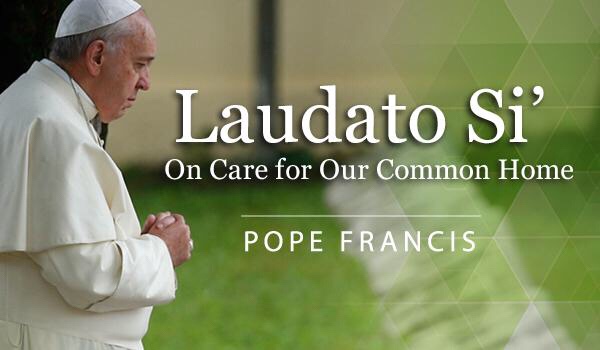
EUREKA: Discovering Catholic Treasury – through a Lenten lens! Day 13: “Laudato Si”

A. What is it?

>> “Laudato Si” is an Encycical by Pope Francis, released on June 18, 2015.

>> “Laudato Si” which means “Praise be to You” is the 2nd Encyclical of Pope Francis

>> The title is inspired from St Francis of Assisi’s 13th-century “Canticle of the Sun” (also called the Canticle of the Creatures), a poem and prayer.

B. What does it speak of?

>> “Laudato Si” is addressed to “every person living on this planet” with the hope of entering “into dialogue with all people about the Earth – our common home.”

>> 6 Chapters make up “Laudato Si”

(i) “What is happening to our Common Home”: Looks at the various symptoms of environmental degradation. The encyclical postulates that a truly ecological approach is also inherently social – an approach that simultaneously hears the cry of the earth and the cry of the poor.

(ii) “The Gospel of Creation”: Considers the world the way that God intended it. The chapter surveys the rich scriptural traditions to show that there is no Biblical justification for “a tyrannical anthropocentrism unconcerned for other creatures.” A person who is truly concerned about the trafficking of endangered species is automatically concerned with the trafficking of humans.

(iii) “The Human Roots of the Ecological Crisis”: Examines the twin notions of “technocratic paradigm” and a “modern anthropocentrism”.

>> These views see nature as devoid of any spiritual or transcendental value.

>> This has led to the misplaced ideas that the earth’s resources are infinite and that economic growth and technology alone can solve global hunger and poverty.

(iv) “Integral Ecology”: It charts a path to recapture awareness of the interconnectedness of creation. It is essential to appreciate the impact of environmental degradation on “cultural ecology”. The experience of indigenous peoples is specifically referred to in this regard.

(v) “Lines of Approach and Action”: This Chapter sets out various international collective actions needed.

(vi) “Ecological Education and Spirituality”: It shifts attention to the individual believer, families and communities, and invites them to make a difference in small but tangible ways.

>> Consumer choices, the cultivation of ecological virtues such as reducing wastefulness, and environmental education for the young are explained as practical steps leading to a deeper, spiritual “ecological conversion” through which the follower of Christ recognizes the true worth of all created entities.

C. Pointers for Reflections

1. “What kind of world do we want to leave to those who come after us, to children who are now growing up?”

>> This question is at the heart of“Laudato Si’

>> We have forgotten that “we ourselves are dust of the earth; our very bodies are made up of her elements, we breathe her air and we receive life and refreshment from her waters.”

>> The Encyclical encourages all to have an “ecological conversion”

2. Living our vocation to be protectors of God’s handiwork is essential to a life of virtue.

>> This “corrected lifestyle” it is not an optional or a secondary aspect of our Christian experience

D. What virtues/points can we pick up from the “Story of the Soul”” for this Season of Lent?

1. Cultivate greater sensitivity to nature

2. Deepen and thank God as the Creator

E. Tips to practice these virtues

1.  Make a list, and practise, a few but very practical steps to protect the nature

2. Raise a prayer of Thanks to the Lord, for all the things we see around

>> Let nature, become a time of meditation with the Lord

May this Lent and the familiarity with the Encyclical “Laudato Si” help us to grow in our acclamation: “Eureka – I have found the Lord”

(The Full Text of “Laudato Si” can be found at:

http://w2.vatican.va/content/francesco/en/encyclicals/documents/papa-francesco_20150524_enciclica-laudato-si.pdf)

God Bless! Live Jesus!