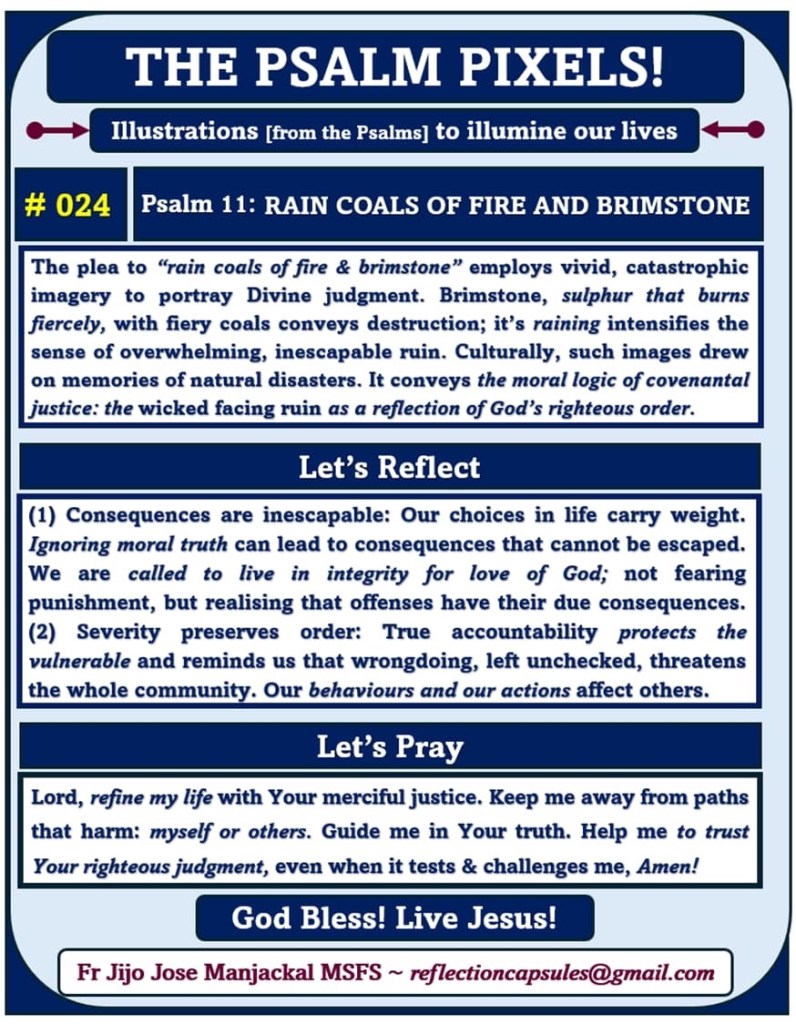
The Psalm Pixels! #024
“Joyfully exclaiming the Awesomeness of God and His Splendour!”
(Based on 2 Sam 11:1-4a, 5-10a, 13-17 and Mk 4:26-34 – Friday of the 3rd Week in Ordinary Time, Year 2)
A family was visiting an art museum.
As they went around with much amazement, excitement and wonder, they came to a famous painting titled “Wheatfield under clouded sky”
This painting was by Vincent Willem van Gogh – a Dutch painter – who posthumously became one of the most famous and influential figures in the history of Western art.
He had created about 2,100 artworks, including around 860 oil paintings, include those of landscapes, still lives, portraits and self-portraits
As the children gazed in admiration at this classical painting, the mother of the family, exclaimed:
“If this work of art, that portrays the beauty of nature, makes us acclaim so much…
… how much more is the Beauty, Power and Goodness of the God Who has created all of this nature!”
And with a great sense of gratitude and appreciation to the Awesomeness of God, she went on to say:
“God writes with a pen that never blots…
… speaks with a tongue that never slips
… and acts with a hand that never fails!”
Yes, our God is an awesome God!
And the entire world – all of nature – beautifully sings forth the glory and splendour of God, Who is in total charge!
The Gospel of Day is a beautiful narration of Jesus, using an example from nature, to teach about the Glory and Splendour of God.
In His teaching ministry, Jesus used different examples, metaphors and symbols to explain about the Kingdom of God.
Today, Jesus speaks about a man who scatters seeds on the land.
Without his awareness there is a growth.
“…and the seed would sprout and grow, he knows not how” (Mk 4:27)
One of the most tender ideas that this parable presents is that there are many things in life that are not understood and yet, it turns out to be beautiful!
The seed that grows, unnoticed and unseen, is a sign of the Kingdom of God.
The seed takes root.
The seed sprouts.
The seed grows.
But HOW this takes place, is unknown and unseen…
The effect of the growth is seen, but the process of the growth is unknown!
The result of the progress is observed, but the manner of the progress is hidden!
In John 3:8, we read, “The wind blows where it wills, and you can hear the sound it makes, but you do not know where it comes from or where it goes… so it is with everyone born of the Spirit”
The movement of the Spirit of God is gentle and mild!
The growth of God’s Kingdom is hidden and concealed!
This points to the tremendous fact that God is in total charge and control!
…that God is in perfect sovereignty and power!
…that God is in total dominion and management!
We are sometimes people prone to a lot of strategies and planning.
When situations don’t fall in line with what we envisaged, we get anxious and upset!
But, today God tells… I am in total control!
When my life seems to be in a complete mess and nothing is understood by us…
God says, “I am in total control”
When circumstances around me go haywire and I lose control of things…
God says, “I am in total control”
When conditions are highly worse and it seems to be the end of the world for me…
God says, “I am in total control”
This is not to say that we need to have a passive and lethargic attitude to life.
… or we need to have a casual and a lazy mentality in life.
This is not even to say that we should not have plans and strategies in our life
But this is a great reminder to know and realise that God is the Ultimate Master!
There are no accidents… no “by chance” happenings…
… for a Christian.
Everything finds its place, in the Permissive Will of the Lord!
Let us enjoy the silent working of the Spirit within us, and be part of the
… unseen, yet dynamic..
… silent, yet spectacular…
growth of the Kingdom of God!
As we gaze at the “large canvas of miracles” that we experience every day, every moment of our life…
… let us joyfully exclaim the Awesomeness of God and His Splendour, by confessing:
“God writes with a pen that never blots…
… speaks with a tongue that never slips
… and acts with a hand that never fails!”
God Bless! Live Jesus!

“Letting the ‘light of God’s Love’ shine through our life of simplicity and passionate tenderness!”
(Based on 2 Sam 7:18-19, 24-29 and Mk 4:21-25 – Thursday of the 3rd Week in Ordinary Time, Year 2)
An incident is narrated in the life of St Thomas Aquinas, whose feast we celebrated on Jan 28.
One day as St Thomas Aquinas was preaching to the local people on the love of God, he observed an old woman listening attentively to his every word.
The old woman impressed the great saint by her simplicity, attentiveness and keenness.
Inspired by her eagerness to learn more about God whom she loved so dearly, he said to the people:
“It is better to be this unlearned woman, loving God with all her heart…
… than the most learned theologian lacking love!”
The lady was able to let the “light of God’s Love” shine through her life of simplicity and passionate tenderness.
We are all invited to lead a saintly life – filled with love – and allow others to experience the Light of God’s love!
Our Christian life exhorts us to be glowing with a holy life, to let others to see the Radiance of God’s Peace!
The Gospel of the Day is an exhortation and a reminder by Jesus to become a “light to the other”
Jesus presents a simple parable, “Is a lamp brought in to be put under a bushel or under a bed and not on a stand?” (Mk 4: 21)
In Jesus’ time, homes were illuminated by small oil lamps, usually made of clay.
Archaeology from first-century Galilee shows lamps…
… with a rounded body, a central opening for olive oil
… and a narrow nozzle where a wick burned. >> Olive oil was widely produced in the region, which made these lamps common in ordinary households…
… though the oil itself was still valuable and used carefully.
Since these lamps produced a limited but steady light, their placement was essential. >> They were normally set on a lampstand, on a raised shelf, or in a niche in the wall…
… so that the light could spread across the room.
A lamp placed too low would fail to illuminate anything beyond a small area.
Covering a lit lamp with a grain basket or placing it under a bed would have been both impractical and dangerous!
Such actions would quickly smother the flame or cause damage…
…. defeating the very purpose for which the lamp was lit.
These lamps also required attention…
… the oil needed refilling
… the wick needed trimming to keep the flame steady.
Light in these ancient homes, therefore, did not work automatically!
They had to be intentionally maintained and intentionally displayed!
The Lord presents this familiar image of the lamp to remind us
… that Christian life is meant to be visible, not hidden!
… that Gospel values must be intentionally placed where they can give light!
… that even a small and fragile light, when properly set, can push back great darkness!
The world we live in is often marked by darkness and confusion.
As followers of Christ, we have the responsibility not only to possess the light…
… but to hold it high
… and not place it where it cannot be seen.
The world often stumbles into the darkness of sin and destructive choices…
… Am I willing to be a lamp, placed where it matters, drawing others toward Christ’s light by a life that is faithful, disciplined, and shaped by the Gospel?
Many people are forced to live in the shadows of guilt, shame, and suffering…
… Am I willing to be a lamp, kept burning through prayer, sacrifice and concrete acts of love, so that Christ’s light may reach those who feel forgotten or unseen?
In the Old Testament, King David humbled himself before the awesome majesty and power of God….
… recognising that his life needed the “light of God’s guidance!”
He acknowledges the Merciful Providence of God and with sincerity, sought to be led by the Lord:
“Now therefore may it please Thee to bless the house of Thy servant, that it may continue forever before Thee; for Thou, O Lord God, hast spoken, and with Thy blessing shall the house of Thy servant be blessed for ever!” (2 Sam 7:29)
When we humble ourselves before the mighty power of God, we allow “His Light” to shine through us.
Our lives become “a glowing lamp of God’s Light”…
… when we acknowledge His Great Presence in our lives and allow ourselves to be totally dependent on Him!
The Lord invites us
… not merely to possess His light, but to let it be seen through our actions and choices.
… not to conceal it within ourselves, but to allow His light to shape and illuminate our thoughts, our vision, and our way of seeing the world.
Let us understand that, “it is better to be an unlearned person, loving God with all her heart…
… than to be the most learned theologian lacking love!
And thus, may we let the “light of God’s Love” shine through our life of simplicity and passionate tenderness!
God Bless! Live Jesus!
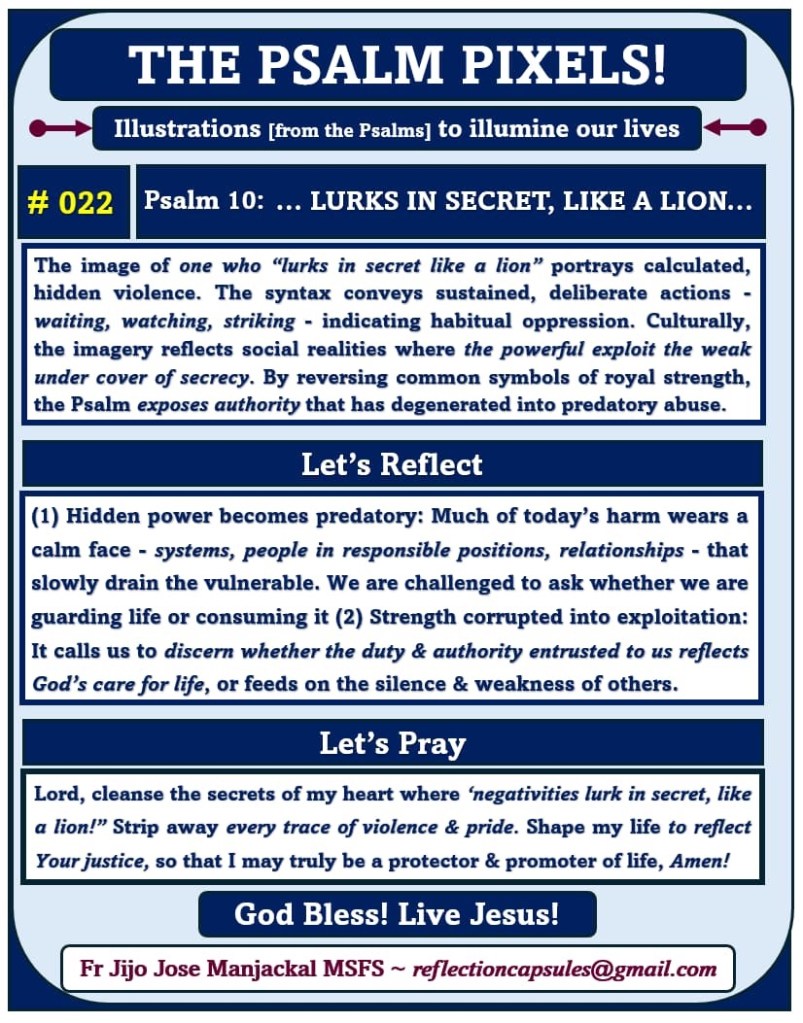
“Seek to listen to the voice of the Lord and to be faithful to His Holy Will!”
(Based on 2 Sam 7:4-17 and Mk 4:1-20 – Wednesday of the 3rd Week in Ordinary Time, Year 2)
Miss Clara, a fourth-grade Cathecism teacher told her kids one day:
“Children, let me tell you today about a quiet man – who used to be immersed into much reading and writing.
This man was big and gentle, but because he stayed silent, people thought he wasn’t very smart.
One day, his friends played a trick on him.
As he was busy writing, pointed to the window and shouted, ‘Look, there’s an angel!’
He ran to see, but there was nothing there. Everyone laughed.”
“But do you know how he responded?”
Miss Clara continued, “He said, ‘I’d rather believe there was an angel than think my friends would lie.’
He didn’t fight back nor get angry. He didn’t care if people laughed at him or thought he was slow.
He only cared about doing what God wanted him to do.”
People often teased him, calling him as ‘The Dumb Ox,’…
… but his mentor had so much confidence in him that he said, ‘This ox will one day roar so loud, that the whole world will hear him.’
And that’s exactly what happened!”
Her voice softened as she continued, “That quiet man was St. Thomas Aquinas.
He is today one of the greatest saints in the Church.
And he became great because he always, with prayer and trust, chose to do God’s Will.”
Yes….
Life is not about what others think of you!
It’s about…
… listening to the voice of the Lord!
… being faithful to His Holy Will!
This is what is expounded by Jesus in the Gospel of the Day…
… the Parable of the Sower.
The Gospel begins with St Mark mentioning that “a very large crowd gathered around him…” (Mk 4:1)
The people were growing in excitement to know and experience the person of Jesus
… His miraculous works and welcoming attitude had generated much hope and expectation
The Lord however, doesn’t allow Himself to be captivated by mere peripheral knowledge and trifle expectations!
He sows the “seeds of truth” and invites them to purify their intentions in being His follower!
And so, with the crowds swelling around, He exhorts his “large followers” with a pertinent term: “LISTEN!” (Cf Mk 4:3)
LISTEN to the voice of the Lord and examine what type of a follower are you…
Are you someone who only casually listens to the Word – like the seed that fell on the path
… failing to give any space for the Lord to work in your life or allowing the birds of the evil one to devour the graces of the Lord?
Are you someone who is only emotionally attracted to the Word – like the seed that fell on rocky ground…
… failing to allow the Word to take deeper roots in life or getting scorched when the sun of struggles and difficulties blaze brightly?
Are you someone who fails to give priority to the Word – like the seed that fell among the thorns…
… failing to give the first place to the Kingdom of God and allowing the thorny desires and fleeting pleasures of the world to take control of life?
OR
Can we be the one who receives the Word with much devotion and preparation – like the seed that fell into good soil…
… and allowing His Word to take total possession of life and allowing His Word to bear much fruit?
May the Word of God always have a transformative effect in our lives, as we seek to always…
… listen to the voice of the Lord!
… be faithful to His Holy Will!
Today as we celebrate the Feast of St Thomas Aquinas, the great Doctor and Theologian…
… let us learn to humble ourselves before the Almighty Power of God
Towards the end of his life – this great learned person who had written much on the Lord…
… during prayer, Christ is said to have told him, “You have written well of me, Thomas. >> What reward would you have for your labour?”
Thomas replied, “Nothing but you, Lord.”
Let us be inspired by this Great Saint…
… who humbled himself before the Will of God
… as we learn from him, “The Mystery and the Will of God is not to be solved or understood, but to be adored and loved!”
God Bless! Live Jesus!
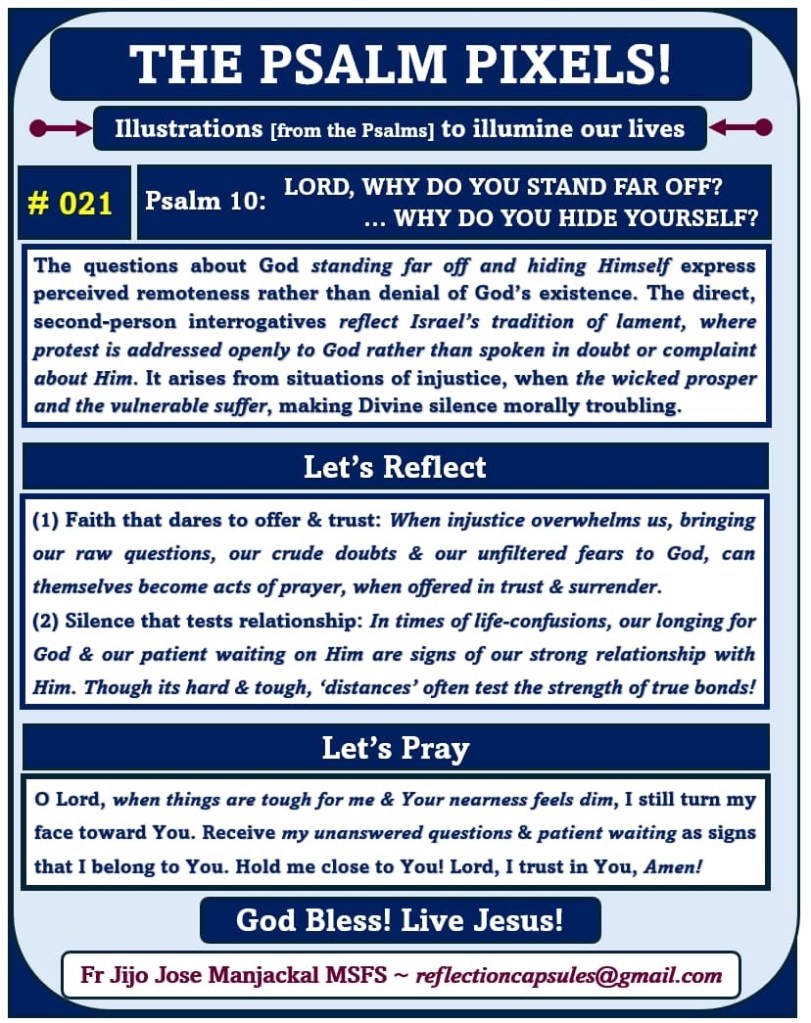
“Aligning our hearts with God’s commands, and making our life ‘an orchestra of obedience!'”
(Based on 2 Sam 6:12b-15, 17-19 and Mk 3:31-35 – Tuesday of the 3rd Week in Ordinary Time, Year 2)
In a lively city, a conductor gathered musicians for a grand orchestra.
Excitement filled the room as they prepared for a special performance.
As they were about to commence their rehearsal, the conductor exhorted: “Each of you has a unique role, a special note to play. >> Together, we’ll create something extraordinary.”
During practice, however, a violinist approached the conductor, saying, “I’ve been thinking, maestro. What if I add a little flair, my own touch, you know? Spice things up a bit!”
The conductor, with a smile, replied: “Ah, my dear, your enthusiasm is admirable, but remember, our strength lies in unity.
Each note, as written, contributes to the masterpiece.
Let’s stick to the composition for the melodious music to unfold.”
On the big night, the orchestra played in perfect harmony, captivating the audience.
However, the spirited violinist, unable to resist the temptation, added a personal twist to the melody.
The result was a discordant note that disrupted the once-perfect symphony.
The conductor, with a gentle yet firm tone warned: “My friend, dont forget that the beauty is in the shared adherence to the score.
Your unique flair, though admirable, has momentarily disrupted our unity.”
Realizing the negative impact, the violinist nodded, as the conductor encouraged: “Let’s finish strong, together.”
As the orchestra resumed, the unity was restored.
The symphony reached its crescendo, leaving the audience in awe.
Our lives are instruments in God’s symphony.
True commitment means joyfully following God’s commands…
… and creating a harmonious composition
The readings of the day are a call to rejoice in following Lord’s ways…
… and to make our life “an orchestra of obedience!”
The First Reading – 2 Samuel 6:12-15, 17-19 – presenting David joyfully dancing before the Ark of the Covenant as it is brought to Jerusalem, offers us points for reflection:
1) Expressive Worship: David’s exuberant dance before the Ark showcases a devotion that goes beyond mere ritual…
… emphasizing the importance of expressing joy and gratitude in our relationship with God.
When we delight in the commands of God, we begin to be joyful and expressive in our love for the Lord and in His service
2) Holiness in our acts of devotion: David’s act of wearing a linen ephod during the procession emphasizes the sacredness of worship.
When we pray, we are called to seek for holiness in life, and translate our prayer life into devout acts of service to God and others, in daily life
3) Community Celebration: The involvement of the entire house of Israel in bringing the Ark and joining David in shouts of joy highlights the communal aspect of worship.
We are reminded that our relationship with God is not only personal, but also has a community dimension – as we are called to live in unity
David gives the highest honour to God – by restoring the Ark, in the City of Jerusalem, reminding us…
… obedience leads to expressive workshop
… obedience impels us to pursue holiness in our acts of devotion
… obedience inspires us to have community dimension in our prayer
The Gospel (Mk 3:31-35) is a strong reminder of who is part of the family of Jesus: Only those who do God’s Will!
We are called to check if our life “is centered on seeking and doing the Will of God, at every moment, in every situation!”
What is our attitude and mentality…
Am I primarily concerned with worldly affairs, or do I engage myself more into spiritual realities?
Am I obsessed more with worldly gains, or am I zealous for spiritual graces and blessings?
David’s example encourages a prioritization of our spiritual journey…
… recognizing the significance of honouring God’s presence
Jesus declares that only those who do God’s Will are His disciples…
… recognizing also the powerful discipleship of Mary
Let us align our hearts with God’s commands…
… and make our life “an orchestra of obedience!”
God Bless! Live Jesus!
“Avoiding all ‘lame’ excuses and wholeheartedly accepting the mission mandate of the Lord, inspired by the example of St Timothy and St Titus!”
(Based on Memorial of Saints Timothy and Titus, Bishops)
A lady – affected much with polio – and able to walk with just one leg approached a visa desk to go to the missions in the land of Africa.
She had been greatly influenced by the call of the Lord in the Gospels, to “be a missionary” and so decided to give her life totally for the missions.
The visa officer – himself a Christian – after reviewing and verifying her documents…
… had one last question to be ask, before giving the approval:
“Can you give me a convincing answer as to why, with just one leg, you are taking up this risky mission journey?”
The lady, with a grin replied: “Well, I don’t find those with two legs going!”
The visa request was immediately granted!
Zeal for missions… zeal for reaching out in help and service
… is a task entrusted to every Christian.
Do we wholeheartedly accept this responsibility…
… or do we make ‘lame’ excuses and avoid this mandate?
Today, the Church celebrates the Feast of St Timothy and St Titus…
… Bishops in the early Church and close companions of St Paul
1) St Timothy…
… (came from Lystra in present-day Turkey) was the son of a Jewish mother and a non-Jewish father
After St. Paul’s visit to Timothy’s home region of Lycaonia, around the year 51, the young man joined the apostle and accompanied him in his travels.
St Paul later sent him to Thessalonica to help the Church during a period of persecution.
Later, they came together in Corinth, and Timothy accompanied Paul on many of his missionary travels.
Around the year 64, Timothy became the first bishop of the Church of Ephesus.
In the year 93 AD, during his leadership of the Church in Ephesus, he took a stand against the worship of idols and was consequently killed by a mob.
St. John retreated to Ephesus before eventually dying on the island of Patmos, and that the Virgin Mary followed John to Ephesus, living in a house above the town.
It is also quite possible, that St. Timothy – being the Bishop of Ephesus – also had interactions with Mother Mary and St John, who had (as many scholars say and many writings testify) spent their last years in Ephesus.
St Timothy therefore would have drunk from the deepest wells of the Christian tradition – hearing about the life of Christ from the lips of the most important witnesses of His Life and Death!
2) St Titus…
… was born into a pagan family – is said to have studied Greek philosophy and poetry in his early years.
He pursued a life of virtue, and purportedly had a prophetic dream that caused him to begin reading the Hebrew Scriptures.
According to tradition, Titus journeyed to Jerusalem and witnessed the preaching of Christ during the Lord’s ministry on earth….
… only later, however – after the conversion of St. Paul and the beginning of his ministry – did Titus receive baptism from the apostle, who called the pagan convert his “true child in our common faith.”
St Titus accompanied Paul to the Apostolic Council of Jerusalem during the year 51, and was later sent to the Corinthian Church on two occasions.
After the end of Paul’s first imprisonment in Rome, the apostle ordained Titus as the Bishop of Crete…
… He is credited with leading the Church of Crete, overturning paganism and promoting the faith through his prayers and preaching.
These two great saints teach us important lessons on living as a follower of Christ…
… Christ reminds and exhorts every one of us: “The harvest is plentiful, but the labourers are few; therefore ask the Lord of the harvest to send out labourers into his harvest. Go on your way. See, I am sending you out like lambs into the midst of wolves…” (Lk 10:2-3)
a. Being ready to face any challenge or opposition in being a witness to the Gospel
St Timothy and St Titus had to face innumerable opposition – from within community, from the persecutors around, in their mission journeys etc
… yet to remained firm and faithful to their mission mandate
Are we ready to brave every challenge to be a courageous witness of the Gospel in our own life situations?
Are we ready to depend on the Lord for everything?
b. Untiring zeal and passion for the Kingdom
St Timothy and St Titus accompanied St Paul in his missionary journeys…
… and learnt the “art of passionate zeal for missions” in imitation of Christ
Are we ready to be enrolled into the school of Jesus, the Greatest Missionary and learn from him the “art of passionate zeal for missions?”
Zeal for missions… zeal for reaching out in help and service
… is indeed a task entrusted to every Christian.
God has blessed us immensely with many good things…
… and it is our duty to put all these blessings and graces for the Glory of the Lord
Do we wholeheartedly accept this responsibility…
… or do we make ‘lame’ excuses and avoid this mandate?
May the missionary zeal of St Timothy and St Titus inspire us…
… and help us to “rekindle the gift of God that is within…” (Cf. 2 Tim 1:6)
Happy Feast of St Timothy and St Titus!
God Bless! Live Jesus!
 Reflection Capsules