✝️💜 REFLECTION CAPSULE – Mar 01, 2024: Friday

“Making Jesus as the ‘cornerstone’ of our life and faith, and being responsible stewards for the Kingdom of God!”

(Based on Gen 37:3-4, 12-13a, 17b-28a and Mt 21:33-43, 45-46 – Friday of the 2nd Week in Lent)

A patient in a hospital – lying on the bed – accidentally knocked over a cup of water, kept on the side-table…
… which spilled on the floor, beside the bed.

The patient was afraid he might slip on the water if he got out of the bed, so he asked a nurse’s aide to mop it up.

The patient however, didn’t know it; but the hospital policy said that…
… small spills were the responsibility of the nurse’s aides
… while large spills were to be mopped up by the hospital’s housekeeping group.

The nurse’s aide decided the spill was a large one…
… and she called the housekeeping department.

A housekeeper arrived and declared the spill to be a small one.

An argument followed.
“It’s not my responsibility,” said the nurse’s aide, “because it’s a large puddle.” >> The housekeeper did not agree. “Well, it’s not mine,” she said, “the spill of water is too small.”

The exasperated patient listened for a while, wondering at this “futile game of passing the responsibility of who mops the spilled water'”….
… then took a pitcher of water from his night table
… and poured the whole thing on the floor, as he retorted: “Is that big enough now, for you two to decide?”

It was…
… and that was the end of the argument!

Very often, we tend to ‘close our minds and block our hearts’ and stay away from doing our responsibilities…
… citing excuses and claims which favour our personal agenda.

Am I also engaged in the “futile game of passing the responsibility?”

The Gospel of the Day presents Jesus confronting closed minds and blocked hearts, in recognizing Him as the Messiah and Saviour…
… with an invitation to “take up responsibilities in life!”

Jesus puts forward the parable of the tenants.

The tenants were entrusted with the vineyard by the Master, and were expected to provide the produce in due time.

They were entrusted fully with the taking care of the vineyard.

The Master places a lot of trust in the servants.

He gives freedom – a responsible freedom
… which could be meaningfully used and nurtured
… or which could be woefully misused and manipulated.

However, the tenants, who were trusted immensely, probably lost their focus on the real trust and diminished in their commitment and responsibility to their Master as well as their duty.

Their personal interests gained greater prominence over their entrusted duties.

This led to them to a total denial of all the emissaries and servants of the Master, who were sent to collect the produce.

This denial was extended even to the Master’s own Son!

This denial of the Son led to the letting loose of the anger and fury of the Just Master!

A squandering away of the responsible freedom, led to the downfall of the tenants!
A failure to give heed to the emissaries and servants caused them to face the Master’s rage!
A denial and rejection of the Master’s own Son, with a cruel intent, caused their destruction!

Are we also, as Christians, as tenants of the Heavenly Master failing in our responsibilities and duties?

The Lord presents Himself as the cornerstone…
… “the stone which the builders rejected has become the cornerstone..” (Mt 21:42)

In ancient practices of building, the cornerstone was the principal stone.

It was placed at the corner of the edifice or the building.

The cornerstone was usually one of the largest, the most solid, and the most carefully constructed of any in the whole building structure.

A cornerstone gives direction to the rest of the foundation.
It is also the support on which the rest of the building relies for strength and stability.

Jesus is the cornerstone…of Salvation… of the Church… of His People!

Conversely, Jesus can also be “a stumbling block”

As it is written in Romans 9:33, “Behold, I lay in Zion a stumbling stone and rock of offense; and whoever believes on Him will not be put to shame”

To those who believe, Jesus is the cornerstone of their faith and their life.

To those who do not believe, Jesus is the stumbling block in their faith!

Who is Jesus in our life?

The cornerstone? or a stumbling block?

The cornerstone to build a wonderful life in God and grow in holiness…
… or a stumbling block which causes us to take pride in our own merits, and not depend on Him?

The cornerstone to stand firm and strong in faith to withstand every storm of life…
… or a stumbling block which makes us uncertain, hesitant and cause a collapse in life?

As we enter into the new month of March, we are called to take up responsibilities in our life…
… to stop the tendency to ‘close our minds and block our hearts’
… and citing excuses and claims which favour our personal agenda.

Let us make Jesus the “cornerstone” of our life and faith…
… and be responsible stewards for the Kingdom of God!

Live Jesus! God Bless!


📖 Discovering the beauty of the Catholic Church through the Catechism
LIFE IN CHRIST – PARTICIPATION IN SOCIAL LIFE

Authority is exercised legitimately only when it seeks the common good of the group concerned…
… and if it employs morally licit means to attain it.
If rulers were to enact unjust laws or take measures contrary to the moral order…
… such arrangements would not be binding in conscience.

In such a case, “authority breaks down completely and results in shameful abuse.” (CCC # 1903)
⏩ CATHOLIC CARTRIDGE – A series to learn, revive, love and be faithful…to our Catholic Faith!

09 DEVOTION AND PRAYERS TO THE SAINTS

❇️ WHAT IS IT?

DEVOTION AND PRAYERS TO THE SAINTS is a profound Catholic practice involving veneration, prayers, and seeking intercession from the saints.

It encourages the faithful to recognize the Communion of Saints, where those who have gone before us in faith continue to intercede for the living on earth

🌀 HISTORY

💡 Scriptural Foundation: Rooted in the Scriptural understanding of the Church as a communion of saints, found in passages like Hebrews 12:1: “Therefore, since we are surrounded by so great a cloud of witnesses…”

This underscores the beautiful bond between the Church on earth and the saints in heaven.

💡 Early Christian Witness: From the early days of Christianity, there is evidence of believers seeking the intercession of martyrs and confessors, understanding them as powerful advocates before God.

💡 Development of Feasts: The celebration of feasts dedicated to specific Saints began in the early Church, fostering devotion and inspiring the faithful to follow their examples.

💡 Teachings of the Church Fathers: Church Fathers like St. Augustine and St. Jerome affirmed the practice of invoking the intercession of Saints as a sign of unity in the Body of Christ.

💡 Second Vatican Council: The Council reaffirmed the importance of devotion to the Saints, emphasizing that they share in the holiness of Christ and can be invoked for their intercession.

📜 LEARN FROM THE SAINTS

🔶 St. Francis de Sales: “Have patience with all things but, first of all with yourself.”

🔶 St. Francis of Assisi: “Start by doing what’s necessary; then do what’s possible, and suddenly you are doing the impossible.”

🔶 St. Augustine: “You have made us for yourself, O Lord, and our heart is restless until it rests in you.”

🔶 St. Thomas Aquinas: “To love God is something greater than to know Him.”

🔶 St. Thérèse of Lisieux (Little Flower): “Miss no single opportunity of making some small sacrifice, here by a smiling look, there by a kindly word; always doing the smallest right and doing it all for love.”

🔶 St. Vincent de Paul: “Go to the poor: you will find God.”

🔶 Pope St. John Paul II: “Do not be afraid. Do not be satisfied with mediocrity. Put out into the deep and let down your nets for a catch.”

🙏🏻 SPIRITUAL SIGNIFICANCE

🔷 Communion of Saints: The practice emphasizes the unity between the Church on earth (Church Militant), in purgatory (Church Suffering), and in heaven (Church Triumphant), recognizing the unity and relationship of the entire Body of Christ.

The “Communion of Saints” teaches that believers, whether in heaven, on earth, or in purgatory, are united in Christ and are called to support each other through their prayers.

🔷 Inspiration and Intercession: Devotion to the saints serves as a source of inspiration, learning from their virtues, and seeking their intercession in times of need.

Reading the life and learning from the saints becomes a way to understand the practical application of Christian virtues.

🔷 Models of Holiness: The saints, as models of holiness, showcase the transformative power of God’s Grace and inspire believers to strive for sanctity in their own lives.

These extraordinary examples demonstrate that holiness is achievable for ordinary people.

🔷 Intercessors in Heaven: Believers turn to the saints, asking for their prayers and intercession, trusting in their closeness to God and their intercession to present petitions before Him.

This practice reflects the Church’s belief in the “intercessory power” of the saints.

🔷 Universal Church: Devotion to the saints fosters a sense of unity within the universal Church, transcending time and space as believers invoke the intercession of saints from various eras and places.

🌐 PRACTICAL TIPS

💠 Prayer to Patron Saints: Identify patron saints associated with various aspects of life, seeking their intercession in specific circumstances or challenges.

💠 Learning from Saints: Explore the lives and writings of saints, discovering their unique journeys of faith, and drawing inspiration for one’s spiritual growth.

Recognize that saints were ordinary people who responded to God’s Grace in extraordinary ways.

💠 Liturgical Feasts: Participate in Liturgical celebrations of saints’ feasts, deepening the connection with the Communion of Saints within the Church’s liturgical calendar.

Celebrate these Feasts at home/communities, just like we do at Christmas or Easter.

💠 Family Saints: Encourage families to have patron saints, fostering an environment where children learn about and seek the intercession of their heavenly companions.

May Devotion and Prayers to the Saints be a path of inspiration, intercession, and unity within the rich Communion of Saints, as we respond to the call of the Lord “to be holy and to be a Saint!”

❇️ Keep the faith!
Live in love!
✳️ Deepen your hope!

God Bless! Live Jesus!

– Fr Jijo Jose Manjackal MSFS
Bengaluru, India
reflectioncapsules@gmail.com

What we need to contemplate is the totality of their life, their entire journey of growth in holiness, the reflection of Jesus Christ that emerges when we grasp their overall meaning as a person.”

– Pope Francis

✝️💜 REFLECTION CAPSULE – Feb 29, 2024: Thursday

“‘Leaping into a life’ marked not by the accumulation of wealth, but by the joy found in sharing the currency of love and generosity!”

(Based on Jer 17:5-10 and Lk 16:19-31 – Thursday of the 2nd Week in Lent)

A London newspaper offered a prize for the best definition of money.

It was awarded to a man whose definition was:
“Money is an article…
… which may be used as a universal passport to everywhere, except heaven
… and as a universal provider of everything, except happiness!”

Money sometimes clouds our minds so much…
… that we overestimate and overrate its power and influence

And thus we tend to get “indifferent in life” and “self-centred in our approach with others!”

We need to examine our lives:

Does the pursuit for money and wealth, hinder me from reaching out to the needy, even though I am able?
Has self-centredness become a way of life for me?
Am I a person who misses out on doing the good we can?

The Gospel of the Day is a powerful message to look deeper into these aspects of our life…
… and seek to be more other-centred and heaven-oriented!

The parable of the rich man “who was clothed in purple and fine linen and who feasted sumptuously every day,”…
… and of Lazarus, “full of sores, who desired to be fed with what fell from the rich man’s table; moreover the dogs came and licked his sores” (Cf. Lk 16:19-21)
… is a remarkable story that challenges us to get out of our “zones of comfort and indifference!”

The ways of the world constantly allure us…

  1. To be “clothed in purple and fine linen” (Lk 16:19) and to be self-centred: An attitude of just going about with our business and not considering other’s needs
  2. To be “feasting sumptuously” (Lk 16:19) and to look to only one’s own comforts: An attitude of not caring about others, when I have my own cares to be attended to!
  3. To be neglecting “a poor man, lying at the gate” (Lk 16:20) and to avoid the cry of the needy: An attitude of wilfully rejecting the ones who extend their hands for help and assistance!

But the Christian way of life is a challenge to this “rich man’s style of living”

There can be no excuse given to us…
… if we miss out on doing the good we can!
… if we fail to reach out to the needy, even though we are able!
… if self-centeredness has become a way of life for us!

Let’s realise…
…. time is short, and our life is limited!

Prophet Amos very powerfully warns and reminds all those who are complacent and lethargic: “Woe to the complacent in Zion!

Lying upon beds of ivory…
… stretched comfortably on their couches
… they eat lambs taken from the flock, and calves from the stall!” (Amos 6:1a)

St Paul exhorts:
“But you, man of God, pursue righteousness, devotion, faith, love, patience, and gentleness.

Compete well for the faith.
Lay hold of eternal life, to which you were called…
… when you made the noble confession in the presence of many witnesses.” (1 Tim 6:11-12)

Let us begin today, with no further delay…
To do the good we can…
… in the best way we can!
… to all the people we are able!
… in every situation that is possible!
Yes… let us seek to be more other-centred and heaven-oriented!

We are called to realise that “money is an article…
… which may be used as a universal passport to everywhere, except heaven
… and as a universal provider of everything, except happiness!”

And thus avoid the tendency to get “indifferent in life” and “self-centred in our approach with others!”

Today is February 29
Today is Leap Day

This day comes just once in four years!
It’s indeed a rare day!

Just as this day occurs only once in four years…
… let’s reflect on the rarity of time
… and the true wealth that lies in “moments shared” and “memories made!”

On this Leap Day, let’s “leap into a life” marked not by the accumulation of wealth…
… but by the joy found in sharing the currency of love and generosity!

God Bless! Live Jesus!


📖 Discovering the beauty of the Catholic Church through the Catechism
LIFE IN CHRIST – PARTICIPATION IN SOCIAL LIFE

A human law has the character of law to the extent that it accords with right reason…
… and thus derives from the eternal law.
Insofar as it falls short of right reason it is said to be an unjust law…

… and thus has not so much the nature of law as of a kind of violence. (CCC # 1902)

⏩ CATHOLIC CARTRIDGE – A series to learn, revive, love and be faithful…to our Catholic Faith!

❇️ WHAT IS IT?

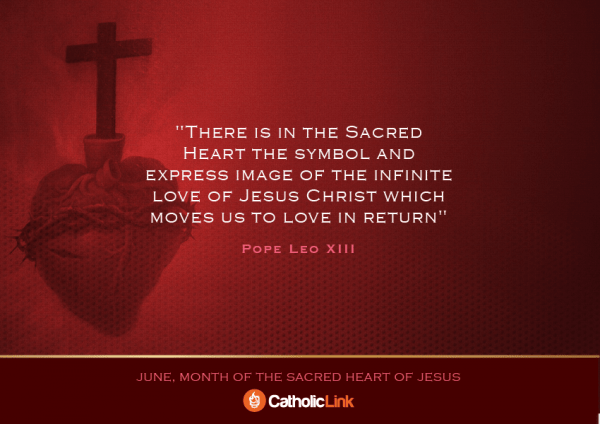
DEVOTION TO THE SACRED HEART OF JESUS is a cherished Catholic practice that centres on adoring and expressing love for the Compassionate Heart of Jesus Christ.

It invites the faithful to contemplate and embrace the Sacred Heart, pierced and aflame with Divine Love.

🌀 HISTORY

💡 Scriptural Foundation: This devotion finds its roots in scriptural themes of God’s love and compassion, symbolized by the heart as a center of love.

It is especially witnessed as described in Jn 19:34: “But one of the soldiers pierced his side with a spear, and at once there came out blood and water.”
This event symbolizes the sacrificial love of Jesus, with the blood and water representing the sacraments of the Eucharist and Baptism…
… emphasizing the spiritual nourishment and cleansing provided by Christ’s sacrifice.

💡 Revelations to Saint Margaret Mary: In the 17th century, Jesus revealed His Sacred Heart to St Margaret Mary Alacoque, conveying His burning love for humanity.

These revelations call for personal devotion, reparation, and receiving Holy Communion on the first Fridays.

💡 Fathers of the Church: Early Church Fathers, such as St Augustine and St John Chrysostom, contributed to the understanding of Christ’s Sacred Heart as a symbol of Divine Love and Mercy.

💡 St Francis de Sales: Known as the ‘Doctor of Love,’ St Francis de Sales, fostered devotion by his spiritual writings, which emphasized love, humility, and union with Christ’s Sacred Heart.

St Francis de Sales is the founder of the Visitation Order, the congregation to which St Margaret Mary Alacoque belonged.

💡 St Claude de la Colombière: A Jesuit priest, confessor to Saint Margaret Mary, and saintly advocate for the devotion to the Sacred Heart…
… Saint Claude de la Colombière played a crucial role in spreading awareness of these revelations.

💡 Popes and Formal Recognition: Popes, including Pope St Pius IX, Pope St Leo XIII and Pope St John Paul II played significant roles in recognizing and promoting this devotion.

Pope St Leo XIII consecrated the entire world to the Sacred Heart in 1899.

💡 Liturgical Celebration: The Solemnity of the Sacred Heart is celebrated on the Friday following the second Sunday after Pentecost, providing a liturgical expression of this devotion.

🙏🏻SPIRITUAL SIGNIFICANCE

🔷 Symbol of Love: The Sacred Heart symbolizes Jesus’ immense and unconditional love for humanity

🔷 Call to Reparation: Jesus’ revelations emphasized a call to make amends (reparation) for the indifference and offenses against His Sacred Heart.

🔷 First Fridays Devotion: This practice involves receiving Holy Communion on the first Fridays of nine consecutive months, a sign of love and reparation.

🔷 Consecration: Consecrating oneself, family, and the world to the Sacred Heart is a significant aspect of this devotion.

🔷 Sacramental Life: Followers of Christ are encouraged to participate in the sacraments, especially Holy Communion,_ as a means of growing in love and holiness.

🔷 Source of Strength: In times of trials, challenges, and uncertainties, devotion to the Sacred Heart becomes a source of spiritual strength and refuge.

🔷 Transformative Love: Embracing the Sacred Heart’s love inspires a transformative journey of becoming vessels of love, compassion, and mercy in the world.

🌐 PRACTICAL TIPS

💠 Daily Offering: Begin each day with a simple prayer, offering it to the Sacred Heart and seeking His guidance and protection.

💠 First Fridays Devotion: Commit to the First Fridays Devotion, fostering a consistent practice of receiving Holy Communion and contemplating the Sacred Heart’s love.

💠 Consecration Prayer: Personally or as a family, make the Act of Consecration to the Sacred Heart, dedicating your lives to Christ’s transformative love.

💠 Image of Sacred Heart: Encouraging the practice of having an image or representation of the Sacred Heart in homes…
… fosters an environment of love, mercy, and devotion.

Families can gather for prayers and reflections, acknowledging Christ’s presence and love in their midst.

May Devotion to the Sacred Heart be a journey of profound love and transformation, drawing us closer to the Compassionate Heart of Jesus.

❇️ Keep the faith!
✅ Live in love!
✳️ Deepen your hope!

God Bless! Live Jesus!

  • Fr Jijo Jose Manjackal MSFS
    Bengaluru, India
    reflectioncapsules@gmail.com

✝️💜 REFLECTION CAPSULE – Feb 28, 2024: Wednesday

“Daring to follow the path of humility, as we tread the way of the Cross!”

(Based on Jer 18:18-20 and Mt 20:17-28 – Wednesday of the 2nd Week in Lent)

A rich businessman had grown greatly in his endevours.

He became greatly possessed with acquiring more wealth and seeking for greater power.

His sole intention in life was to find ways and means to gain more wealth (by hook or crook; by honest or corrupt ways!) and capture more positions of power.

Though a Christian…
… he cared hardly for his family
… he bothered least about his faith

One day, while sitting in his posh office, pondering on ways to augment his wealth and prestige in the society…
… his eyes went towards the Crucifix that was placed on his table.

Looking from the place where he was sitting, he could see…
… The Crucifix and a Chair that was placed opposite him.

And suddenly a thought came across his mind:
“What is more important for you in life?

Cross or Chair?”

This thought stuck him badly.

Being greatly disturbed… he sought to ward off that idea from his mind.

But it kept disturbing him…. “Cross or Chair… Cross or Chair!”

Well, it’s not known whether that incident changed his life.

But this question is placed before each of us:
“What is more important for you in life?

Cross or Chair?”

The Gospel of the Day is the incident of the mother of the sons of Zebedee aspiring to obtain a place of honour for her children…
… through which, Jesus poses this question of supreme importance to us as well:
“What is more important for you in life?

Cross or Chair?”

This incident is sandwiched between two important instructions by Jesus..

  1. His master plan of establishing the Kingdom: His Passion, Death and Resurrection
  2. His master technique to allow access to the Kingdom: The way of Humility
  3. His master plan of establishing the Kingdom: His Passion, Death and Resurrection

Jesus predicts about His sufferings to His disciples (Mt 20: 17-19)

It was clearly His way of telling His chosen ones, that His Kingdom is not to be one that accords prime importance to power and position…
… instead it was about obedience and self-giving.

  1. His master technique to allow access to the Kingdom: The way of Humility

Jesus further teaches His disciples that the key to enter the Kingdom is the way of humility (Mt 20:26-28)

It was clearly a reminder as well as a warning, that His Kingdom is not reserved for the powerful or the mighty…
… instead it is to be given to those of meek heart and lowly self.

It’s in between these two powerful “Kingdom” teachings, that we have the incident of the mother of the sons of Zebedee seeking for a place of honour for her children (Mt 20: 20-24)

The incident showed that they had quite badly misunderstood Jesus…

They mistook His master plan of establishing the Kingdom as being “through force and power and might!”
They mistook His master technique to allow access to the Kingdom as being “the way of Supremacy!”

But Jesus shatters this misconception by posing a master question: “Can you drink the cup that I am going to drink?” (Mt 20: 22)

“Drinking the Cup” for Jesus meant the Master Plan of His Passion, Death and Resurrection
“Drinking the Cup” for Jesus meant the Master Technique of the way of Humility

This incident is a reminder and warning for each of us as well:

  1. Are we willing to be in accord with the Lord’s master plan of establishing the Kingdom: His Passion, Death and Resurrection?
  2. Are we ready to practise the Lord’s master technique to allow access to the Kingdom: The way of Humility ?

Jesus clearly poses this question of supreme importance:
“What is more important for you in life?

Cross or Chair?”

Very often we settle down to sit on the “Chair”…
… the ‘chair’ of comfort and relaxation
… the ‘chair’ of lethargy and indifference
… the ‘chair’ of materialism and individualism

But the Lord challenges us to carry the “Cross”…
… the ‘Cross’ of responsibility and commitment
… the ‘Cross’ of witnessing to the Lord and trusting in Him
… the ‘Cross’ of serving the deprived and being sensitive to the need of the other

The way of the Christian is none but the Way of the Cross.

The path of the Christian can be none but the Path of Humility.

Yes, let us dare to follow the Path of Humility…
… and seek to positively answer to the question that Jesus poses to each of us:
“What is more important for you in life?

Cross or Chair?”

God Bless! Live Jesus!


📖 Discovering the beauty of the Catholic Church through the Catechism
LIFE IN CHRIST – PARTICIPATION IN SOCIAL LIFE

Regimes whose nature is contrary to the natural law, to the public order…
… and to the fundamental rights of persons

… cannot achieve the common good of the nations on which they have been imposed. (CCC # 1902)

⏩ CATHOLIC CARTRIDGE – A series to learn, revive, love and be faithful… to our Catholic Faith!

❇️ WHAT IS IT?
EUCHARISTIC ADORATION is a revered Catholic practice involving the worship and contemplation of the Blessed Sacrament.

The faithful spend time in the presence of the exposed Eucharist, adoring Jesus, Who is truly present in the Consecrated Host.

Archbishop Fulton Sheen beautifully reminds us: “The greatest love story of the entire world is found in the Tiny White Host!”

🌀 HISTORY
With roots tracing back to the Early Church, Eucharistic Adoration gained prominence in the medieval period.

💡Examples from the Lives of Saints: Saints such as Saint Clare of Assisi and Saint John Vianney were known for their profound devotion to Eucharistic Adoration.

Saint Juliana of Liège and Saint Thomas Aquinas too played pivotal roles in fostering devotion to the Blessed Sacrament.

💡In modern times, especially during the 19th and 20th centuries, saints like Saint Peter Julian Eymard and Saint Thérèse of Lisieux advocated for a deeper understanding and devotion to the Eucharist.

They emphasized the need for personal encounters with Christ in the Eucharist, leading to the establishment of the Feast of Corpus Christi.

💡Formalized by the Council of Trent (16th century), it became a significant element of Catholic piety.

💡Teachings of Popes: Saint Pope John Paul II emphasized the centrality of the Eucharist in the life of the Church. His encyclical “Ecclesia de Eucharistia” underscores the importance of Eucharistic Adoration as a way to deepen one’s faith.

💡Scriptural Basis and Reference: The institution of the Eucharist during the Last Supper (Matthew 26:26-28, Mark 14:22-24, Luke 22:19-20) serves as the foundational scriptural basis for Eucharistic Adoration.

The Gospel of John, particularly chapter 6, highlights the significance of Christ’s Real Presence.

✴️ RELEVANCE IN MODERN STRUGGLES

In the midst of contemporary challenges, Eucharistic Adoration holds profound relevance:

🔶 Digital Distractions: In an era marked by constant digital distractions, Eucharistic Adoration offers a sanctuary of silence, providing respite from the noise and chaos of modern life.

🔶 Escape from Addictions: As many struggle with various addictions and vices, Eucharistic Adoration becomes a source of spiritual healing and liberation.

The Real Presence of Christ becomes a powerful antidote to the allure of fleeting pleasures.

🔶 Peace Amid Anxiety: In a world filled with anxiety and stress, spending time in Eucharistic Adoration allows individuals to experience inner healing and tranquility.

It serves as a reminder that Christ is present in the midst of life’s challenges.

🔶 Encounter with Unconditional Love: In a culture where love is often conditional, Eucharistic Adoration provides an encounter with Christ’s unconditional love.

This experience becomes a transformative force, fostering a deep sense of self-worth and belonging.

🙏🏻SPIRITUAL SIGNIFICANCE

🔷 Real Presence of Jesus: It acknowledges the Real and Substantial Presence of Jesus Christ in the Consecrated Host.

Reflecting on the words of Jesus, “This is my body… This is my blood,” deepens one’s faith in the Eucharist.

🔷 Communion and Contemplation: Beyond the reception of Holy Communion during Mass, Eucharistic Adoration offers an extended period for personal communion and contemplation.

It’s an intimate encounter with the Lord, fostering a deeper relationship.

🔷 Adoration and Thanksgiving: It allows for a dedicated time of adoration and thanksgiving, expressing gratitude for the immense gift of Christ’s Body and Blood.

🔷 Silent Encounter: Embracing the sacredness of silence in Eucharistic Adoration provides a serene space for listening to God’s Voice and responding to His Merciful Love.

🔷 Healing and Transformation: Jesus, truly living in the Holy Eucharist heals and transforms us.

🌐 PRACTICAL TIPS

💠 Schedule Regular Time: Dedicate a specific time in your schedule for Eucharistic Adoration (if possible, daily or weekly, or atleast monthly), creating a consistent routine.

💠 Embrace Silence: In this world obsessed with noise, allow moments of profound silence during Adoration, providing space for personal reflection, prayer, and listening to God.

💠 Bring Intentions: Bring your intentions and concerns before the Lord, seeking His guidance and grace during the time spent in Eucharistic Adoration.

💠 Learn Eucharistic Prayers: Familiarize yourself with Eucharistic prayers, litanies, and devotions to enhance your experience and participation.

May Eucharistic Adoration become a sacred encounter, deepening our “love-bond” with the Living Christ in the Blessed Sacrament.

❇️ Keep the faith!
✅ Live in love!
✳️ Deepen your hope!

God Bless! Live Jesus!

  • Fr Jijo Jose Manjackal MSFS
    Bengaluru, India
    reflectioncapsules@gmail.com

✝️💜 REFLECTION CAPSULE – Feb 27, 2024: Tuesday

“Doing away with the ‘hypocritical and tactical’ tendency and adopting the ‘way of humility & truth!'”

(Based on Isa 1:10, 16-20 and Mt 23:1-12 – Tuesday of the 2nd Week in Lent)

Here is an interesting letter from a boy to a girl:

“Dearest Marie,

No words could ever express the great unhappiness I’ve felt…
… since breaking our engagement.
>> Please say you’ll take me back.
>> No one could ever take your place in my heart, so please forgive me.
I love you, I love you, I love you!

Yours forever, Jimmy


P.S., And yeah… congratulations on winning the state bumper lottery!”


That’s how very often, our attitudes and approaches in life are!
>> We tend to get very manipulative
And thus, we end up being…
… hypocritical and calculative in our relations
… haughty and proud in our behaviour


The call of the Gospel is to do away with this “hypocritical and tactical” tendency…
… and to adopt the “way of humility & truth!”


Am I a person who is willing to lower myself in humility?

Jesus says in today’s Gospel, “Whoever exalts himself will be humbled; but whoever humbles himself will be exalted” (Mt 23: 12)


The 23rd Chapter of the Gospel of St Matthew begins with Jesus turning the attention of His disciples and of the crowds…
… towards the Scribes and the Pharisees.


Focusing on the religious leaders and on their practices, Jesus launches a volley of critically true statements about their wicked misdeeds!
>> The chapter ends with the “Painful Lament” by Jesus over Jerusalem – the city of the Lord!


One of the highlights in this highly volatile and strongly-worded chapter is the number of times Jesus mentions the two groups of people – “Scribes and Pharisees”

There is, in total, 7 occurrences of the phrase, “Scribes and Pharisees” – a biblical number for totality!
>> This chapter is a therefore, a full-blown critique and condemnation of the ways of the Scribes and Pharisees.


Why is Jesus so outright in His condemnation, so merciless in His usage of words and so blatant in His attacks on the Scribes and Pharisees?


(Meanwhile, when we go through these critical attacks of our Blessed Lord on this group, one must always remember the words of Jesus Himself: “I have come not to call the righteous, but sinners to repentance” [Lk 5:32]

There was deep pain in the heart of the Lord, in seeing the way religion was being manhandled, misused and misinterpreted by the religious leaders of His time
>> As the Son of His Beloved Father, it was hurting for the Son to see a section of people, trampling upon God’s precious and venerable truths…
… and twisting them for their own self-interests and self-agenda
>> A strong form of condemnation was reserved only to those who were hardened in heart – as a means for them to repent and turn back their ways to the Lord.

The method of ‘sharp condemnation’ was reserved only to the proud and the arrogant; never to the poor sinners!)


The reason for Jesus making a scathing attack on the religious authorities of His times…
… could be summarized into one crucial point: Glorification of one’s own self at the expense of the Glory of God and the Mercy deserving for His people!

Therefore, Jesus goes on to point out the many occasions and circumstances when the Self-Interest of the Pharisees and Scribes took extreme priority over God Himself!


It is this self-centred and self-glorifying act that makes Jesus to tell, “For they preach, but they do not practise!” (Mt 23: 3b)


How easily can this be our own state of affairs, in our life…!

We may be people…
… who “appear” to be very fine and kind – but perhaps, we are persons who find it too hard to let go of our pride, in reaching out to the needy, in humble service!
… who speak a lot on helping others and being generous – but perhaps, we go through grilling moments in lowering ourselves and adopting a lowly status to extend a helping hand!
… who desire happiness in communities and peace at homes – but perhaps, we discover
ourselves to be persons who are unwilling to let go of our ego, and allow a listening ear to the opinions of others!


The call, today, therefore is…
… to “work for a cause – not applause!”
… to “live life to express – and not simply to impress!”


We are called to avoid being hypocritical and calculative!

Yes…
Let’s do away with “hypocritical and tactical” tendency…
… and adopt the “way of humility & truth!”


God Bless! Live Jesus!

—————————–
📖 Discovering the beauty of the Catholic Church through the Catechism
LIFE IN CHRIST – PARTICIPATION IN SOCIAL LIFE
>> The diversity of political regimes is morally acceptable…
… provided they serve the legitimate good of the communities that adopt them. (CCC # 1901)
———

⏩ CATHOLIC CARTRIDGE – A series to learn, revive, love and be faithful… to our Catholic Faith!

❇️ WHAT IS IT?
The Chaplet of the Divine Mercy is a powerful Catholic prayer invoking God’s Mercy.

Using Rosary beads, it includes the repetition of specific prayers such as the Our Father, Hail Mary, and the Divine Mercy Chaplet prayer.

The Chaplet focuses on God’s boundless Mercy, emphasizing trust, repentance, and seeking Divine forgiveness through the merits of Christ’s Passion.

We are reminded that “the ocean of God’s Mercy is greater than all our sins, our failures and our weaknesses!”

🌀 HISTORY

Originating from revelations to St Faustina Kowalska in the early 20th century, the Chaplet gained widespread devotion, especially after her canonization by Saint Pope John Paul II in the Jubilee Year 2000.

Pope John Paul II was greatly instrumental in promoting the Divine Mercy devotion, declaring the Sunday after Easter as Divine Mercy Sunday.

The Chaplet serves as a tangible expression of trust in God’s mercy…
… reflecting Biblical references to God’s compassionate nature.

🙏🏻SPIRITUAL SIGNIFICANCE

The Chaplet of the Divine Mercy holds deep spiritual significance, serving as a profound channel for God’s Mercy.

🔷 Trust in God’s Mercy: The Chaplet invites believers to trust completely in God’s infinite Mercy…
… echoing Jesus’ message to St. Faustina that “even the most hardened sinner can find refuge in His compassionate Heart!”

🔷 Repentance and Forgiveness: Through the Chaplet prayers, we are called to express sincere repentance, seeking God’s forgiveness and mercy.

It serves as a pathway for the contrite heart to experience the transformative power of Divine Mercy.

🔷 Meditation on the Passion: The Chaplet guides us in a meditative reflection on the Passion of Christ…
… deepening our understanding of the immense sacrifice and love revealed on the Cross.

🔷 Intercessory Prayer: Interwoven with the Our Father and Hail Mary, the Chaplet becomes a powerful intercessory prayer…
… invoking God’s mercy not only for oneself but for the entire world, fostering a sense of solidarity with humanity.

🔷 Receiving Graces: Jesus promised specific graces to those who faithfully recite the Chaplet, especially at the hour of death.

🌐 PRACTICAL TIPS
💠 Reflection on the Passion: As you recite the Chaplet, reflect on the profound mysteries of Christ’s Passion, Death, and Resurrection.

💠 Daily Devotion: Make the Chaplet a daily practice (if possible, at 3 o clock – the Hour of Mercy) offering intentions for your needs, the Church, and the entire world.

💠 Participation in the Novena of the Divine Mercy: Initiate/Join the communal recitation of the Novena of the Divine Mercy (starting on Good Friday) and culminating on the Divine Mercy Sunday, receiving the promised graces.

💠 Scriptural Meditation: Ponder on Biblical passages that highlight God’s Mercy, fostering a deeper understanding of the Chaplet’s significance.

May the Chaplet of the Divine Mercy be a source of profound trust, mercy, and transformative healing in our lives.

❇️ Keep the faith!
✅ Live in love!
✳️ Deepen your hope!

God Bless! Live Jesus!

  • Fr Jijo Jose Manjackal MSFS
    Bengaluru, India
    reflectioncapsules@gmail.com

— Pope St John Paul II, Shrine of Divine Mercy in Cracow, Poland on June 7, 1997

✝️💜 REFLECTION CAPSULE – Feb 26, 2024: Monday

“Cultivating a harvest of goodness and generosity!”

(Based on Dan 9:4b-10 and Lk 6:36-38 – Monday of the 2nd Week in Lent)

This story is told that one day a beggar by the roadside asked for alms…
… from Alexander the Great, as he passed by.

The man was poor and wretched and had no claim upon the ruler…
… no right even to lift a solicitous hand.

Yet the Emperor threw him several gold coins.

A courtier was astonished at his generosity and commented:
“Sir, copper coins would adequately meet a beggar’s need.

Why give him gold?”

Alexander responded in royal fashion:
“Copper coins would suit the beggar’s need…
… but gold coins suit Alexander’s giving.”

Generosity is not just about fulfilling needs…
… it’s a reflection of our character and our inner goodness!

Our behaviours towards others should not be a mere reaction to their actions…
… instead, they should mirror the essence of our own character.

The Gospel of the Day calls for ‘cultivating a harvest of goodness and generosity.’

The Lord, continuing His teachings on a practical Christian life, exhorts, “…give and it will be given to you; good measure, pressed down, shaken together, running over, will be put into your lap. For the measure you give, is the measure you get back” (Lk 6:38)

In illustrating the importance of generosity, Jesus draws upon a vivid scene from the bustling markets of Israel…
… reflecting the common marketplace dynamics prevalent in the Middle East.

Picture the vibrant open-air markets…
… where farmers display their grains—wheat, corn, barley
… on mats laid out on the ground.

In a familiar ritual, potential buyers engage in negotiations…
… bargaining over prices, quality, and quantity of the goods.

Amid this lively exchange, a customer would eventually settle on a price.

The buyer then presents their container…
… whether a sizable bowl, pot, or an open vessel.
The seller, with a measuring scoop, proceeds to fill the container, completing the exchange.

There would be some interesting steps in this process of measuring the grain for a customer and which Jesus quotes in His approach to giving:

First, the seller would fill the container to the top.
Secondly, he would press the grain down and fill some more.
Thirdly, he would shake the container so the grain would settle and then fill in some more.
Finally, he would fill the container until it overflowed!
The contents of this overflowing container would then be transferred to a pouch or a bag so that the buyer could bring home the contents from the market.

Well, this process could sound a bit strange and weird to us in the modern world.

We live in times…
… when contents are sold by the weight, and not the volume
… when manipulations are done to give as less as possible

But this is where, Jesus, bringing in the example of the market, invites generosity in giving
… He encourages us to embrace a spirit of open-handed generosity i

Our giving ought to be measured not by weight, but by volume…
… and that refers to a far-greater amount of giving – generous and lavish!

Our giving ought not to be a calculated effort…
… rather should be a overflow from the heart!

St Paul in 2 Cor 9:6 says, “Whoever sows sparingly, will also reap sparingly; whoever reaps bountifully will also reap bountifully”

When we engage is such a lavish and generous giving, God too will shower His abundance – in fact, in a much better fashion!
“For the measure you give, will be the measure you get back” (Lk 6:38)

Of course, that is not to say that we are limiting God’s power of giving or determining His giving to our actions
But the Lord invites us to be involved in a Divine Barter System…

Give to God, Who deserves all, so that we may be worthy to receive His blessings.
Give to God, Who is worthy of all, so that we may be blessed to receive His graces.

In the Divine barter system, the advantage is that, we get much more than what we give…
… we obtain far greater than what we offer!

God’s giving is not to be seen just from material or physical aspects…

In fact, that would just be a very limited and low level of understanding.

God’s gifts are to be understood more from a spiritual perspective:
… Gift of His mercy to live a life in union with Him.
… Gift of His grace to be faithful and more committed.
… Gift of His love to be better human beings and be more charitable.
… Gift of His salvation to enjoy eternal bliss and happiness with Him .

All these gifts will be surely lavished and given… “good measure, pressed down, shaken together, running over, will be poured out into our laps!”

The greatest exchange – the Divine barter system – is seen and experienced in the Holy Eucharist…
… at every Holy Mass.

Let us give ourselves entirely to the Lord – especially at Holy Mass…

And through the Mass
… at all times of the day
… to all people in our life

Then, in the words of Fulton Sheen, we will be graced to hear the words of the Divine Lord telling us…

You give me your humanity, and I will give you my Divinity!
You give me your time, and I will give you My eternity!
You give me your broken heart, and I will give you Love!
You give me your nothingness, and I will give you My all!

Let’s realize that “generosity is not just about fulfilling needs…
… it’s a reflection of our character and our inner goodness!”

Offer to others “not just the copper coins of unwilling obligations…”
… rather, generously give “the gold coins of joyful service and care!”

God Bless! Live Jesus!


📖 Discovering the beauty of the Catholic Church through the Catechism
LIFE IN CHRIST – PARTICIPATION IN SOCIAL LIFE

If authority belongs to the order established by God…

… “the choice of the political regime and the appointment of rulers are left to the free decision of the citizens!” (CCC # 1901)

⏩ CATHOLIC CARTRIDGE – A series to learn, revive, love, and be faithful… to our Catholic Faith!

❇️ WHAT IS IT?
The Stations of the Cross, or the Way of the Cross, is a heart-touching Catholic devotion inviting believers to accompany Jesus Christ on His journey from condemnation to Crucifixion.

Comprising of 14 stations, each represents a specific event, to reflect deeply on Christ’s path to Calvary.
This transformative experience fosters a personal connection to His ultimate sacrifice for our salvation.

This devotion is an immersive experience for all Catholics, providing a transformative means of spiritual reflection and growth.
… cultivating a personal connection to the pivotal events of Christ’s Passion
… and a richer understanding of the redemptive narrative.

🌀 HISTORY
Pilgrimage Origins: The inception of the Stations can be traced back to pilgrims in the Holy Land retracing Jesus’ steps.

As early as the 4th century, St. Jerome documented pilgrims visiting sacred sites, laying the foundation for this devotion.

Franciscan Formalization: The Franciscans played a pivotal role in structuring the devotion in the 17th century, organizing the 14 Stations.

St. Leonard of Port Maurice, a Franciscan, further popularized the devotion in the 18th century.

Church Adoption: The Catholic Church formally embraced the Stations, incorporating them into the rich legacy of Lenten practices.

Pope Clement XII enriched the devotion in the 18th century, encouraging its observance as a potent means of spiritual reflection.

🔷 THE 14 STATIONS
✝️ Jesus is Condemned to Death: Reflect on Christ’s unjust condemnation, recognizing the weight of innocence unfairly burdened.

✝️ Jesus Takes Up His Cross: Contemplate Jesus embracing the instrument of His sacrifice, symbolizing His redemptive mission.

✝️ Jesus Falls the First Time: Witness the vulnerability of Christ as He stumbles under the weight of our sins.

✝️ Jesus Meets His Blessed Mother: Share in the poignant encounter between Jesus and Mary, acknowledging the deep maternal connection.

✝️ Simon of Cyrene Helps Jesus Carry the Cross: Ponder the unexpected assistance Jesus receives, inviting reflection on communal support.

✝️ Veronica Wipes Jesus’ Face: Delve into the compassionate act of Veronica, embodying kindness amid Christ’s suffering.

✝️ Jesus Falls the Second Time: Acknowledge the enduring physical and spiritual struggle as Jesus stumbles once more.

✝️ Jesus Meets the Women of Jerusalem: Reflect on Jesus’ empathy towards the mourning women, teaching lessons of compassion.

✝️ Jesus Falls the Third Time: Consider the profound resilience of Jesus in the face of overwhelming adversity.

✝️ Jesus is Stripped of His Garments: Contemplate the stripping of Jesus’ garments, revealing vulnerability and humility.

✝️ Jesus is Nailed to the Cross: Enter into the solemnity of Jesus’ crucifixion, recognizing the depth of His sacrifice.

✝️ Jesus Dies on the Cross: Witness the culmination of Christ’s redemptive act, embracing the profound mystery of God’s love.

✝️ Jesus’ Body is Taken Down from the Cross: Reflect on the tender moment as Jesus’ lifeless body is removed, signifying the end of His earthly journey.

✝️ Jesus is Laid in the Tomb: Contemplate the stillness of Jesus in the tomb, awaiting the glory of Resurrection.

🙏🏻 SPIRITUAL SIGNIFICANCE
Sacred Meditation: The devotion offers a unique combination of visual and prayerful meditation on each step of Christ’s suffering, providing a profound way to connect with His sacrificial love.

Biblical Reflection: Rooted in the Gospel accounts of Christ’s Passion and rich traditional accounts, the Stations facilitate contemplative reflection on the scriptural narrative, deepening one’s understanding of the redemptive story.

Universal Participation: The Stations are versatile, allowing for individual or communal practice, providing a universal and accessible means for Catholics to engage in the contemplation of Christ’s sacrifice.

Timeless Devotion: Traditionally observed during Lent, the devotion transcends time, offering continuous spiritual enrichment and a deeper connection to Christ’s love.

🌐 PRACTICAL TIPS
Personalized Reflection: Delve into the significance of specific stations, by personalising each step and allowing the weight of each step to resonate in your heart.

Community Connection: Engage in praying the Stations as a community/family for a shared faith experience, fostering a sense of community and collective devotion.

Consistent Practice: Integrate this devotion into your routine, whether on a weekly basis or as part of your Lenten observance, for sustained spiritual growth

Gain of Indulgence: Devoutly praying the Stations of the Cross, by following the ordinary conditions, along with praying for the intentions of the Holy Father, gains a plenary Indulgence

Accompaniment with Mother Mary: Pray the Stations, by holding the hands of Mother Mary and walking with Her on the journey of Her Beloved Son’s Way of Agony!

May the Stations of the Cross (Way of the Cross) be a transformative journey, drawing us closer to the boundless love of Jesus Christ.

❇️ Keep the faith!
✅ Live in love!
✳️ Deepen your hope!

God Bless! Live Jesus!

  • Fr Jijo Jose Manjackal MSFS
  • Bengaluru, India
  • reflectioncapsules@gmail.com