✝️ REFLECTION CAPSULES – March 13, 2023: Monday

“Learning from the gentle and humble ways of the Lord, and becoming persons, who are open to the workings of the Holy Spirit!”

(Based on 2 Kgs 5:1-15ab and Lk 4:24-30 – Monday of the 3rd Week in Lent)

An incident is told of a popular boxer who was infamous for bragging about himself.

Once, before the take-off on an airline flight, the stewardess reminded the boxer to fasten his seatbelt.
“Superman don’t need seatbelt,” he told her with pride.

The stewardess was unwilling to compromise…

So she retorted, “Superman don’t need airplane, either.”

The man was discomfited in his pride.

In shame, he fastened his seatbelt without saying an extra word.

Pride can block a person from being open to the views, trends and wavelengths of other people and situations.

This is much truer, when it comes to spiritual matters

A proud mind…
… rejects the plans and workings of God in one’s life…

And makes one to say, “I can manage my life by myself!”

A haughty spirit…
… opposes any movements that causes one to get out of one’s comfort zones…

And makes one to say, “I know what’s best for me! None need to teach me!”

An arrogant heart…
… rejects any good inspirations or constructive feedbacks…

And makes one to say, “I don’t need anyone’s advices. Only I can advise myself!”

The Gospel of the Day presents the rejection of Jesus, in the Synagogue at Nazareth, by the people…
… who displayed a proud mentality, a haughty spirit and an arrogant heart.

Jesus, is in His hometown.

He entered the synagogue and began to teach.

Though initially, there was a wave of excitement…
… the words of Jesus caused a major setback to the people.

This caused people to reject Jesus…
… they even try to kill Him ( Lk 4: 29-30)

St Luke uses a very strong word to describe the feelings of the people…
“When the people in the synagogue heard, they were all FILLED WITH FURY”

Or another translation: “… they were all FILLED WITH WRATH”

When one’s pride is hurt…
…. one tends to become angry and hurt

When one is made to get out of one’s comfort zones…
… one tends to become restless and agitated.

This is what happened to the people in the Synagogue.

Their pride was hurt…
… because Jesus spoke to them on the need to be humble, and accept the “all-embracing” love of the Lord!

They were made to get out of the comfortable zones…
… because Jesus spoke to them on the need to change their closed ways of thought-pattern, and to accept the “all-merciful” invitation to the Kingdom of God!

This “instigation” can happen in our life too…

When we are challenged to move out of our “traditional” style of thinking…
….and accept instead, the merciful and compassionate ways of God

When we are forced to change our crippling attitudes of rejecting people on the basis of caste, creed, colour, language etc…
… and accept instead, the “all-welcoming” style of the Kingdom of God

It is human tendency, to “get used to” comfortable situations…
… even if they are fruitless or unproductive and useless

In the 2nd Book of the Kings, Naaman had to overcome his “fixated mentality” and listen to the Word of the Lord that came through Prophet Elisha (2 Kings 5:1-15)

He would understand the importance of humbling himself before the Power of the Lord and experience the Lord’s Healing!

The Lord today, invites and challenges us in our proud mentality, a haughty spirit and an arrogant heart.

This is the constant invitation by Jesus:
“Learn from Me… for I am gentle and humble in heart”

Let us learn from the gentle and humble ways of the Lord, and become persons, who are open to the workings of the Holy Spirit.

God Bless! Live Jesus!


Discovering the beauty of the Catholic Church through the Catechism
THE SACRAMENT OF HOLY ORDERS IN THE ECONOMY OF SALVATION – THE ORDINATION OF PRIESTS – CO-WORKERS OF THE BISHOPS

“Christ, whom the Father hallowed and sent into the world, has, through his apostles, made their successors, the bishops namely, sharers in his consecration and mission; and these, in their turn, duly entrusted in varying degrees various members of the Church with the office of their ministry.”

“The function of the bishops’ ministry was handed over in a subordinate degree to priests so that they might be appointed in the order of the priesthood and be co-workers of the episcopal order for the proper fulfilment of the apostolic mission that had been entrusted to it by Christ. (CCC #1562)
✝️ REFLECTION CAPSULE – March 12, 2023: Sunday

“Quenching our thirst with the unconditional love of the Lord!”

(Based on Exod 17:3-7, Rom 5:1-2, 5-8 and Jn 4:5-42 – 3rd Sunday in Lent)

One of the very simplest moral stories that all of us have heard is that of the thirsty crow.

One warm day, a thirsty crow flew all over, looking for water.

For a long time, he could not find any.
He felt weak, and lost all hope.

Suddenly, he saw a water jug below the tree. He flew straight down, and was delighted to see some water inside it!

Sadly, he found that the neck of the jug was too narrow and it was impossible for him to access the water.

He tried to push the jug to tilt, for the water to flow out but the jug was too heavy

The crow thought hard for a while.
Then looking around it, he saw some pebbles and an idea struck him.

He started picking up the pebbles one by one, dropping each into the jug.
As more and more pebbles filled the jug, the water level kept rising.
Soon it was high enough for the crow to drink.

His plan had worked!

His thirst had been quenched!

The moral of this story is to “Think and work hard, you may find solution to any problem”.

But when we consider this story from another perspective, we notice that it also shows the deep craving inside every creature, to satisfy one’s thirst.

One is restless till this thirst is fulfilled…
One is impatient till this craving is satisfied…

This agitated thirst is also innate in every human being…
… a thirst for the Divine, for the Transcendental.

And this thirst, compels humans…
… to search… to seek…
… for the source of satisfaction
… for the fountain of fulfilment

But how wonderful it would be to be knowing and to be convinced that this “thirst” can find its fulfillment only in God.

And how wonderful it would be, if all human beings could be properly guided and correctly directed on this path of finding true contentment.

The Gospel of the Day presents the beautiful incident of a “thirsty” Jesus who quenches a “thirsty” woman

The “thirsty” woman – Samaritan woman – expresses her desire for water…
… “Sir, give me this water, so that I may not be thirsty or have to keep coming here to draw water” (Jn 4: 15)

The “thirsty” Jesus promises fulfilment and contentment to all those who come to Him and believe in Him – the source of Divine Waters of Life….
… “Whoever drinks the water I shall give, will never thirst; the water I shall give, will become in him, a spring of water welling up to eternal life (Jn 4:14)

The Samaritan Woman in her encounter with the Lord is led, from a lower level to the higher level…

  1. Talks on material concerns
    (>> “How can you, a Jew, ask a Samaritan woman for a drink?”)
    (>> “Sir, you don’t even have a bucket…where then can you get this living water?”)
    (>> “Sir, give me this water that I may not be thirsty or have to keep coming to draw water”)
  2. Talks on spiritual matters
    (>> “Our ancestors worshipped on this mountain, but you people say that the place to worship is Jerusalem”)
  3. Talks that would lead to a complete life transformation.
    (>> “Go call your husband and come back”)
    (>> “I am He, the One Who is speaking to you”)

This is the story of our experience with religion and spirituality.

Many times, many of us perform religious practices…
… only for material concerns
Some of us, practise faith and spirituality…
… to merely engage in spiritual talks and reflections

But the higher level is the one…
… which leads to life transformation.

The Samaritan woman was led by Jesus, in having this life transformation…
… and she would go on to lead an entire town to believe in Jesus (Jn 4: 39-42)

This entire incident is built around that simple premise: A desire
… a desire that is expressed in the form of “thirst”

The desire of the Samaritan woman – to receive water, so that one may not be thirsty again – is the innate desire and longing within each human being…

In the Old Testament, the people of Israel had murmured and complained against God, in the wilderness for the struggle in food and water…
… “Why did you bring us up out of Egypt, to kill us and our children, and our cattle with thirst?” (Ex 17:3)

They longed to have their thirst quenched and their desires fulfilled…

Each of us, deep within, are thirsty and hungry….wanting to drink water that will quench the longing, forever.

It is this search that makes people to go out and seek the various sources of satisfaction.

Some feel to have found this fulfilment…
… through worldly pleasures and bad habits like smoking, drinking, obsession with sex, drugs etc, which only lead to momentary external satisfaction and short-lived bursts of thrill.

Some claim to have found this fulfilment…
… in the various philosophies, new-age patterns of life and naturalistic means of spirituality etc, which may have traces of truth, but fail to provide authentic and fullness of life.

But Jesus, today, boldly and unambiguously declares that its only in HIM that true and complete fulfilment of life can be found:
… “Whoever drinks the water I shall give, will never thirst; the water I shall give, will become in him, a spring of water welling up to eternal life (Jn 4:14)

Jesus also tells…
… “He who comes to me shall not hunger and he who believes in me shall never thirst” (Jn 6: 35)

Are we convinced of this fact, that its only in Jesus, that I can achieve true and complete happiness…?
Like the Samaritan Woman (Jn 4: 16-18)…
… we may have strayed away from this path of truth, to seek our own means and ways to find happiness and satisfaction.

But the Lord, today, calls us back to Him…
… to His Heart… … to His Church… to His Eucharist
… to experience Him fully.

To those who have strayed…
… the call of the Gospel, is to come back to the paths of truth

To those who are holding on to Him…
… the call of the Gospel, is to deepen the conviction, that in Him alone, can the hunger of my soul and the thirst of my heart be fulfilled.

To those who have strayed…
… the Lord invites to build the virtues of humility, docility and openness to the Spirit.

To those who are holding on to Him…
… the Lord invites to build the virtues of patience, firm trust and a passionate longing.

The Lord has displayed His unconditional and unparalleled love for each one of us, by offering His Life on the Cross for all of us, sinners…

“God shows his love for us in that while we were yet sinners Christ died for us!” (Rom 5:8)

May Jesus, the Source of Life-giving Waters…
… the One Who alone can quench our thirst
… the One Who loves us unconditionally
… always be the source and summit of our Christian living!

God Bless! Live Jesus!


📖 Discovering the beauty of the Catholic Church through the Catechism
EPISCOPAL ORDINATION – _FULLNESS OF THE SACRAMENT OF HOLY ORDERS

The Eucharist celebrated by the Bishop has a quite special significance…
… as an expression of the Church gathered around the altar

… with the one who represents Christ, the Good Shepherd and Head of his Church, presiding. (CCC # 1561)

EUREKA 11: Discovering Catholic Treasury – through a Lenten lens!

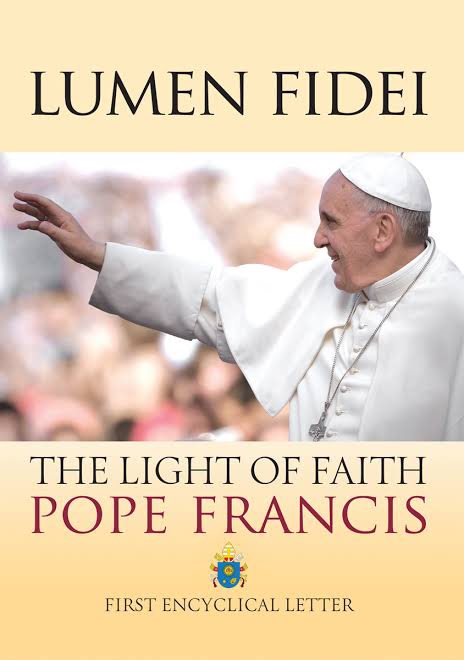
“LUMEN FIDEI”

A. What is it?
“Lumen Fidei” is the First Encyclical of Pope Francis. It was the completion of the work of his predecessor Pope Benedict XVI.

It was issued on June 29, 2013 in conjunction with the Year of Faith
“Lumen Fidei” means “The Light of Faith”
The document, completed the Papal Trilogy on the three theological virtues, following Pope Benedict XVI’s encyclicals Deus Caritas Est (on Charity) and Spe Salvi (on Hope).

B. What does it speak of?
“Lumen Fidei” celebrates Christian faith as the guiding light of a “successful and fruitful life”, inspiring social action as well as devotion to God…
… and illuminating “every aspect of human existence”, including philosophy and the natural sciences.

“Lumen Fidei” is divided into four chapters, each drawn from a passage in Scripture:
(i) We have believed in love. (1 Jn 4:16)
Reviews Salvation History—the story of God’s people—to see Faith throughout history.

Explores the rootedness of faith in the absolute fidelity of God, Who is completely trustworthy.
God enters human history and invites each person to participate in His plan of love.

(ii) Unless you believe, you will not understand. (Is 7:9)
Seeks to understand the relationship between Faith and several other aspects – Reason, Love, Truth, and Theology.

As Faith comes through hearing and sight, it is an intensely personal experience which opens out into a unique trustworthy knowledge…
… stimulating a constant dialogue between Faith and Reason.

(iii) I delivered to you what I also received. (1 Cor 15:3)
Ultimately, Faith and Truth are received in community.

We accept this Faith in a community and in the communion of the Church. Specially, the Sacraments allow us to experience this Faith.
This Community stays unified through the Apostolic Tradition and Apostolic Succession which safeguards Truth and allows our Faith to be handed on.
The Church extends the relational reality of Faith not only through Her Doctrines, but through Her very Sacramental Life

(iv) God prepares a city for them. (Heb 11:16)
Shows how faith should be the foundation of our society. Faith is needed for the foundation of our society, marriage and family.

Faith in God provides the common Faith so that our societies can endure.
Faith does not answer every question, but provides a lamp to help us navigate through the darkness and the Presence of God, who is with us, personally in our suffering.

C. Pointers for Reflections

  1. “Lumen Fidei” fortifies our Faith by responding to various contemporary doubts and attitudes that undermine believing

Faith is not an outdated relic of the Dark Ages. Christian Faith, rather, provides the foundation for fidelity in interpersonal relationships, without which society would be debilitated by fear.

  1. Contradicts the Philosophy of Secularism (= being without God and glorifying only human abilities)
    The power of secularism which tends to portray God as distant or dead is negated, as Faith makes God tangible and Christ-like Love possible.
  2. Faith is not only personal, but essentially has a Communitarian dimension
    Faith in the One God, directed toward the One Lord, is shared in the One Church, and so must be professed in its full unity and integrity.

D. What virtues/points can we pick up from the “Imitation of Christ” for this Season of Lent?

  1. Understanding and deepening our Fundamentals of Faith
  2. Reviving our Sacramental Life (especially Holy Eucharist and Confession)

E. Tips to practice these virtues

  1. Pick up the 12 basic articles of the Apostles Creed (I Believe) and make a study on each of those Basics of our Faith

Prepare a list of possible doubts and contradictions
Try to find reasonable solutions, which could be used as a tool to defend and proclaim our Faith

  1. Go for Holy Mass, with due preparation, as often as possible (without restriction to only Sunday Mass)

Make it a point to go for Confession, at least, once every month

May this Lent and the familiarity with the Encyclical “Lumen Fidei” help us to grow in our acclamation: “Eureka – I have found the Lord”

(The Full Text of “Lumen Fidei” can be found at:
http://w2.vatican.va/content/francesco/en/encyclicals/documents/papa-francesco_20130629_enciclica-lumen-fidei.html)

God Bless! Live Jesus!

✝️ REFLECTION CAPSULE – March 11, 2023: Saturday

“Running into the embrace of the Merciful Father, with a sincere repentance and contrition of heart, and pledging to live for Him, and with Him!”

(Based on Mic 7:14-15, 18-20 and Lk 15:1-3, 11-32 – Saturday of the 2nd Week in Lent)

Charles Dickens – an English writer and a social critic – is known to be one of the greatest novelists of all times.

He has created some of the world’s best-known fictional characters and his works enjoyed unprecedented popularity during his lifetime

By the 20th century, critics and scholars had recognised him as a literary genius.
His novels and short stories are still widely read today.

Someone asked Charles Dickens once, what was the best short story in the English language.

Without any hesitation, came his reply: “The Prodigal Son!”

The Gospel of the Day is the beautiful rendition of this classic: “The Prodigal Son!”

This Parable of the Prodigal Son(s) – is the beautiful exposition of the Unconditionally True Love of the Heavenly Father to each of His beloved children!

The Parable of the Prodigal Son(s) is surely one of the most popular, the most loved and the most touching parables of Jesus.

This parable has three main characters and we could view any of them as playing the main role in the story:

  1. The Prodigal Son – Younger son
    He went away from the love of his father

Inheritance was given to children only after the death of the father

In asking the inheritance, therefore, alluded to the fact that the prodigal son considered his father to be dead!

But having spent his life in useless living, he realised the emptiness and vacuum that filled his heart.

And so he decided to turn back…
… and go to his father

  1. The Prodigal Son – Elder Son

He remained the faithful “servant” of the house

But when he saw, that his brother – who had wasted away the inheritance, was received with so much warmth, his temper rose!

He couldn’t digest the fact that his brother who lived a “wasted life” was honoured….
… whereas he was never given the chance to “enjoy with his friends”

The context of the parable is Jesus speaking to the “Pharisees and scribes” who were “complaining that Jesus always accepted sinners” (Lk 15: 1-2)

In this context, the character of the Elder Son portrayed the attitude of the Pharisees and Scribes.

  1. The Loving Father

Beyond these two characters of the two prodigal sons – the younger and the elder – towers high the Image of the Father – the Father who loved and accepted his lost sons!

He suffered a deep pain when his younger son went away

He underwent immense pain waiting for the son to come back
He went through moments of dilemma when his elder son was opposing the welcome of the younger one.

Yet through all this, the character of the Father towers high!

He is the Father of Mercies – Who accepts all, just as they are
He is the Father of Love – Who loves everyone, unconditionally
He is the Father of Compassion – Who receives all to His loving embrace

In our life, often as children – like the Prodigal Son(s) – we go away.

We try to do something good…
… but our life turns into a mess!

Our student life gets messed up with lack of commitment and failures
Our marriage hits the rocks with misunderstandings and lack of acceptance
Our family life gets into a crisis with lack of unity and peace of mind

We feel our life is all in a mess…

We find ourselves lost, frustrated and upset!

But in all such situations, we need to look up…
… and see how the Loving Father is waiting to embrace us… And love us!

As Prophet Micah very beautifully reminds us:
“Who is a God like thee, pardoning iniquity and passing over transgression for the remnant of his inheritance?

He does not retain his anger for ever because he delights in steadfast love.
He will again have compassion upon us, he will tread our iniquities under foot.
… Thou wilt cast all our sins into the depths of the sea!” (Mic 5:18-19)

Yes, the Merciful Father is waiting for each one of us…
… Whatever be the mess, that my life may be in!

Let us run into His embrace of Love…
… with a sincere repentance and contrition of heart

And pledge to live for Him, and with Him!
For you, forever!

God Bless! Live Jesus!


📖 Discovering the beauty of the Catholic Church through the Catechism
EPISCOPAL ORDINATION – FULLNESS OF THE SACRAMENT OF HOLY ORDERS

As Christ’s vicar, each bishop has the pastoral care of the particular Church entrusted to him…
… but at the same time he bears collegially with all his brothers in the episcopacy the solicitude for all the Churches:
“Though each bishop is the lawful pastor only of the portion of the flock entrusted to his care…

… as a legitimate successor of the apostles he is, by divine institution and precept, responsible with the other bishops for the apostolic mission of the Church. (CCC # 1560)

✝️ REFLECTION CAPSULE – March 09, 2023: Friday

“Doing away with any ’personal agenda or selfish motives’ and instead, making the Lord as the Centre of our lives!”

(Based on Gen 37:3-4, 12-13a, 17b-28a and Mt 21:33-43, 45-46 – Friday of the 2nd Week in Lent)

An incident is said about a former American astronaut who took over as the President of a major airline.

He was determined to make the airline’s service the best in the industry.
He sought ‘commitment to work’, by all the employees in all the departments.

One day, as the new president walked through a particular department, he saw an employee resting…
… with his feet on a desk, while the telephone on the desk rang continuously. .

“What are you doing? Aren’t you going to answer that phone?” the boss demanded.

“This isn’t my department, Am here, just to relax!” answered the employee, with a total indifference!
(He had not recognized his new boss, and so chose to answer with apathy!)

“I work in the maintenance department”, he went on to say.

“Not anymore!” snapped the president, “You no longer will work in my company!”

The President, with his liking for “committed work” and “achieving excellence”…
… made sure there was no room for “people with lack of commitment and zeal!”

As Christians, we are all co-workers of the Project Kingdom!

Do we work with commitment?
… or are we often found to be people of indifference, “lacking commitment and zeal?”

The Gospel of the Day is a strong message to examine one’s level of commitment to the Kingdom of God…
… exhorting to do away with any “personal agenda” or “selfish motives”

The Gospel presents to us the very volatile and conscience-wrenching parable of the Wicked Tenants.

The tenants were entrusted the vineyard by the Master…
… with much hope and expectation.

They were expected to provide the produce in the season.

However, the tenants quite miserably let down the hopes of the Master!

Filled with much pride and arrogance…
… they inflicted harm on all the servants who came on behalf of the Master

They even made an attack on the “own of the Master” – the Master’s Son!

A sense of total rigidity, pride and casualness caused these tenants to abhor the Master!

What about us?

How is our attitude to our Lord – the Master of our lives?

We may feel that we don’t abhor or despise the Will of the Lord in our life – to this extent, as these tenants.

But let us realise…

Every time, we reject the voice of the Lord, and seek to do as our wills lure us…
Every time, remain in stubbornness to pursue our wrong habits and evil tendencies…
Every time, we cause pain to the other by our words of rash judgement and condemnation…
… we are failing to obey the Master and denying His role as a Master in our life!

As Christians, we are indeed co-workers of the Project Kingdom!

The Master has entrusted the vineyard to us
… our homes, our places of work, our neighbourhood, our families and communities…
…. the people we meet daily, the problems we encounter constantly, the situations we are challenged with…

These are “our vineyard!”

Do we work with commitment?

Or are we often found to be people of indifference, “lacking commitment and zeal?”

Let us never have to hear from Our Master, “Not anymore! You no longer will work in my company!”

Instead…
… let us do away with any “personal agenda” or “selfish motives” as the workers of the Vineyard…

And seek to be impressed by the personality of Jesus…
… making Him the Centre of our Lives!

God Bless! Live Jesus!


📖 Discovering the beauty of the Catholic Church through the Catechism
EPISCOPAL ORDINATION – FULLNESS OF THE SACRAMENT OF HOLY ORDERS

One is constituted a member of the episcopal body in virtue of the sacramental consecration and by the hierarchical communion with the head and members of the college.”
The character and collegial nature of the episcopal order are evidenced among other ways by the Church’s ancient practice which calls for several bishops to participate in the consecration of a new bishop.
In our day, the lawful ordination of a bishop requires a special intervention of the Bishop of Rome…

… because he is the supreme visible bond of the communion of the particular Churches in the one Church and the guarantor of their freedom. (CCC # 1559)

✝️ REFLECTION CAPSULE – March 09, 2023: Thursday

“Making our life a Good News of Comfort and Consolation!”

(Based on Jer 17:5-10 and Lk 16:19-31 – Thursday of the 2nd Week in Lent)

We live in a world of contrasts.

Contrasts are encountered at every sphere of our life.

Socially, we find contrasts among the various classes…
… the rich and the poor, the haves and the have-nots, the caste distinctions, the racial and language divides…

Emotionally, we find contrasts in our experiences…
… joyful situations sandwiched between tragic moments, moods varying between situations and people, temperaments changing from person to person…

The Gospel of day presents some of these contrasts in a vivid manner…
… and could be termed as a “parable of contrasts” – the Parable of the Rich Man and Lazarus.

This parable is set out as a play… a two-act play.

The plays takes place on two stages…
… the stage of this world
… and the stage of the other-world.

The contrasts are plenty:

In the First Act….

A rich man – a poor man
The man is rich but unnamed – the man is poor but is named, Lazarus (meaning ‘God Helps’)
The rich man clothed in purple – Lazarus clothed fully with sores
The rich man caressed with fine linen – Lazarus licked by the dogs
The rich man feasted sumptuously – Lazarus desired to be fed by what fell from the table.
The rich man died and was buried – Lazarus died but was carried by the angels.

In the Second Act…

Lazarus is in Abraham’s bosom – the rich man is in Hades.
Lazarus receives good things – the rich man was in torment.
Lazarus was comforted – the rich man was in anguish

This “parable of contrasts” is also …
… a “parable of comfort and consolation”
… a “parable of challenge and confrontation”

It’s a “parable of comfort and consolation” because….
… Lazarus, who had undergone great misery and suffering was blessed with the presence of joy of the Lord.

It gives comfort and consolation to us, who need to be strengthened in our moments of trials and hardships, knowing that the Lord will surely look with mercy on His needy ones.

It’s a “parable of challenge and confrontation” because…
… the rich man, who had a luxurious life, was condemned to torments, and had to endure the flames of suffering.

It’s a great challenge and a confrontation before us, who need to realise that indifference and an attitude of closing one’s eyes to the misery of the other can be disastrous and punishable

“He who shuts his ears to the cries of the poor will be ignored in his own time of need.” (Prov. 21:13)

The world of contrasts needs a Gospel of Comfort and Consolation, and towards this, we are challenged and confronted…

Challenged to get rid of our attitudes of indifference and lethargy to help the needy ones.
Confronted to overcome our tendencies to remain satisfied in our comforts and close our eyes conveniently to the necessities of the other.

Let us make our life a Good News of Comfort and Consolation.

God Bless! Live Jesus!


📖 Discovering the beauty of the Catholic Church through the Catechism
EPISCOPAL ORDINATION – FULLNESS OF THE SACRAMENT OF HOLY ORDERS

Episcopal consecration confers, together with the office of sanctifying, also the offices of teaching and ruling.

In fact, by the imposition of hands and through the words of the consecration, the grace of the Holy Spirit is given…
… and a sacred character is impressed in such wise that bishops, in an eminent and visible manner, take the place of Christ himself, teacher, shepherd, and priest, and act as his representative (in Eius persona agant).”

“By virtue, therefore, of the Holy Spirit who has been given to them, bishops have been constituted true and authentic teachers of the faith and have been made pontiffs and pastors.” (CCC # 1558)

EUREKA 10: Discovering Catholic Treasury – through a Lenten lens!

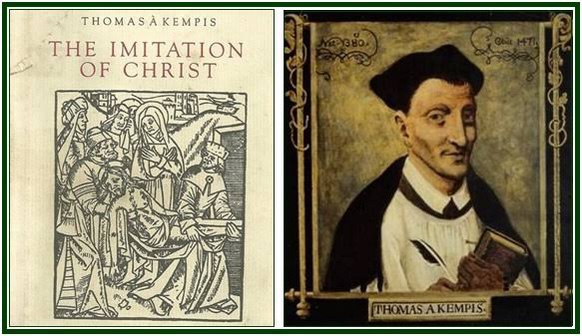
“IMITATION OF CHRIST”

A. What is it?
The “Imitation of Christ” is a Christian Devotional Book by Thomas a Kempis (He was a German-Dutch Canon Regular Priest)

It was composed around 1418-1427, in Latin
The “Imitation of Christ” is perhaps one of the most widely read Christian book, after the Holy Bible.

B. What does it speak of?

The “Imitation of Christ” presents the idea that the study of Christ’s life and the emulation of His Example is the highest pursuit that human beings can achieve.
Christ is the ultimate example of Christian’s spiritual lifestyle.
Love is exalted as taking the highest place and faith is fundamental to the spiritual life. >> The “Imitation of Christ” seeks to repair and develop our spiritual life and meditate on God as the source of everything.

The “Imitation of Christ” comprises of 114 Chapters, divided into Four Books:
(i) “Helpful Counsels of the Spiritual Life”
The “Imitation of Christ” derives its title from the First Chapter of Book I, “The Imitation of Christ and contempt for the vanities of the world”

Book One deals emphasizes an interior life by renouncing all that is vain and illusory, resisting temptations and distractions of life, giving up the pride of learning and to be humble, and patiently enduring the world’s contempt and contradiction.

(ii) “Directives for the Interior Life”
It contains instructions concerning “inward peace, purity of heart, a good conscience and for moderating our longings and desires.

It calls the reader to grow in the virtues of Patience, Submission to the Will of GOD, Love of Jesus, Enduring the loss of comfort, and Taking up the Cross.

(iii) “On Interior Consolation”
This longest book (consisting of 59 chapters) is in the form of a dialogue between Jesus and the disciple – a call to come into closer union with Him

A beautiful call by Jesus is: I am the Way, the Truth, and the Life.

Without the Way, there is no going; without the Truth, there is no knowing; without Life, there is no living.
I am the Way you are to follow; I am the Truth you are to believe; I am the Life you are to hope for.”

(iv) “On the Blessed Sacrament”
The Fourth book emphasizes on the fact that Jesus says “there is no Offering more worthy, no satisfaction greater, for the washing away of sins and to offer oneself purely and completely to God at the time the Body of Christ is offered in the Mass and in Communion!”

In order to receive the Sacrament, the Lord invites to “make clean the mansions of your heart. Shut out the whole world and all its sinful din…

… and sit as a solitary sparrow on a housetop and, in the bitterness of your soul, meditate on your transgressions.”

C. Pointers for Reflections

  1. The “Imitation of Christ” is a guide in changing our lives and learning to grow closer to Christ in Spirit and in Deeds.

We are constantly required to ask ourselves: “How am I really following Christ in my life?”

  1. The “Imitation of Christ” strongly speaks on the necessity to have “humility of the heart”
    In a world that glorifies sensationalization and pride, and in a culture of worldly ambition and crazy power-mongering, this Book is a mighty challenge!
  2. The “Imitation of Christ” calls forth to have moments of silence, reflection and deep prayer
    In a world where we “cherish and feel out-of-place without noise”, the Book comes as an eye-opener to make suitable changes in our lifestyle to nurture moments of silence – and thus to come in closer Imitation of Christ!

D. What virtues/points can we pick up from the “Imitation of Christ” for this Season of Lent?

  1. Growing in the Humility
  2. Becoming more and more Christ-like in our attitudes and conduct towards others
  3. Cultivating the Spirit of Prayerful Silence, even in our “busy and noise” schedule

E. Tips to practice these virtues

  1. Practise every day, an action of humility
  2. Ask this practical question to ourselves: “WWJD – What Would Jesus Do?”
  3. Consciously set apart, at least sometime in the day, for a time of silence – and seek to grow in union with the Lord and His Will

We usually like to always have “words” in prayers and feel “awkward and incomplete” when there are no words or “talking”
Let us seek to spend time with the Lord, “in silence” and in the stillness of our hearts and minds, grow in the Experience of God’s Love!

May this Lent and the familiarity with the Spiritual Classic – “Imitation of Christ” – help us to grow in our acclamation: “Eureka – I have found the Lord”

(The Full Text of “Imitation of Christ” can be found at:
https://www.gutenberg.org/cache/epub/1653/pg1653-images.html)

God Bless! Live Jesus!

✝️ REFLECTION CAPSULE – March 08, 2023: Wednesday

“Daring to follow the path of humility and making the right priorities in life!”

(Based on Jer 18:18-20 and Mt 20:17-28 – Wednesday of the 2nd Week in Lent)

A rich businessman had grown greatly in his endeavours.

He became greatly possessed with acquiring more wealth and seeking for greater power.

His sole intention in life was to find ways and means to gain more wealth (by hook or crook; by honest or corrupt ways!) and capture more positions of power.

Though a Christian…
… he cared hardly for his family
… he bothered least about his faith

One day, while sitting in his posh office, pondering on ways to augment his wealth and prestige in the society…
… his eyes went towards the Crucifix that was placed on his table.

Looking from the place where he was sitting, he could see…
… The Crucifix and a Chair that was placed opposite him.

And suddenly a thought came across his mind:
“What is more important for you in life?

Cross or Chair?”

This thought stuck him badly.

Being greatly disturbed, he sought to ward off that idea from his mind.

But it kept disturbing him…. “Cross or Chair… Cross or Chair!”

Well, it’s not known whether that incident changed his life.

But this question is placed before each of us: “What is more important for you in life?

Cross or Chair?”

The Gospel of the Day is the incident of the mother of the sons of Zebedee aspiring to obtain a place of honour for her children…
… through which, Jesus poses this question of supreme importance to us as well:
“What is more important for you in life?

Cross or Chair?”

This incident is sandwiched between two important instructions by Jesus…

  1. His master plan of establishing the Kingdom: His Passion, Death and Resurrection
  2. His master technique to allow access to the Kingdom: The way of Humility
  3. His master plan of establishing the Kingdom: His Passion, Death and Resurrection

Jesus predicts about His sufferings to His disciples (Mt 20: 17-19)

It was clearly His way of telling His chosen ones, that His Kingdom is not to be one that accords prime importance to power and position…
… instead it was about obedience and self-giving.

  1. His master technique to allow access to the Kingdom: The way of Humility

Jesus further teaches His disciples that the key to enter the Kingdom is the way of humility (Mt 20: 26-28)

It was clearly a reminder as well as a warning, that His Kingdom is not reserved for the powerful or the mighty…
… instead it is to be given to those of meek heart and lowly self.

It’s in between these two powerful “Kingdom” teachings, that we have the incident of the mother of the sons of Zebedee seeking for a place of honour for her children (Mt 20: 20-24)

The incident showed that they had quite badly misunderstood Jesus…

They mistook His master plan of establishing the Kingdom as being “through force and power and might!”
They mistook His master technique to allow access to the Kingdom as being “the way of Supremacy!”

But Jesus shatters this misconception by posing a master question: “Can you drink the cup that I am going to drink?” (Mt 20: 22)

“Drinking the Cup” for Jesus meant…
… the Master Plan of His Passion, Death and Resurrection
… the Master Technique of the way of Humility

This incident is a reminder and warning for each of us as well:

Are we willing to be in accord with the Lord’s master plan of establishing the Kingdom: His Passion, Death and Resurrection?
Are we ready to practise the Lord’s master technique to allow access to the Kingdom: The way of Humility?

Jesus clearly poses this question of supreme importance:
“What is more important for you in life?

Cross or Chair?”

Very often we settle down to sit on the “Chair”…
… the ‘chair’ of comfort and relaxation
… the ‘chair’ of lethargy and indifference
… the ‘chair’ of materialism and individualism

But the Lord challenges us to carry the “Cross”…
… the ‘Cross’ of responsibility and commitment
… the ‘Cross’ of witnessing to the Lord and trusting in Him
… the ‘Cross’ of serving the deprived and being sensitive to the need of the other

The way of the Christian is none but the Way of the Cross.

The path of the Christian can be none but the Path of Humility.

Yes, let us dare to follow the path of humility…
… and seek to positively answer to the question that Jesus poses to each of us:
“What is more important for you in life?

Cross or Chair?”

God Bless! Live Jesus!


📖 Discovering the beauty of the Catholic Church through the Catechism
EPISCOPAL ORDINATION – FULLNESS OF THE SACRAMENT OF HOLY ORDERS

The Second Vatican Council “teaches . . . that the fullness of the sacrament of Holy Orders is conferred by episcopal consecration…

… that fullness namely which, both in the liturgical tradition of the Church and the language of the Fathers of the Church, is called the high priesthood, the acme (summa) of the sacred ministry. (CCC # 1557)

✝️💜 REFLECTION CAPSULE FOR THE DAY – March 07, 2023: Tuesday

“Daring to pick up the ‘towels’ of service and kindness and living a life ‘clothed in humility!’”

(Based on Is 1:10,16-20 and Mt 23:1-12 – Tuesday of the 2nd Week in Lent)

Maundy Thursday is associated with a customary practice that is followed in many of the Churches all around the world…
>> It consists of choosing of twelve persons from the Church – based on various parameters or criteria.

These twelve are given the “privilege” to have the feet washed by the Main Celebrant (usually the parish priest) during the Holy Mass.

This is a symbolic remembrance of the “washing of the feet” that Jesus had undertaken on the evening of the Last Supper.


Preaching on this custom, on a Holy Thursday, a priest once spoke the following in his sermon:
>> “There are twelve of us, who have been chosen from among us, whose feet will be washed this evening.

Perhaps, there were many others also who had a desire that their feet also be washed.
>> Probably, some of you, children, are dreaming of growing up faster in life, so that one day, you too may be chosen to have your feet washed.

But here is a point to be considered…
Most of us probably are thinking only about ‘having our feet washed’.
>> But I really do wonder, how many of us – be it those who have got a chance or those who have missed – think also of ‘being the one who washes the feet of others?’

We all probably are desiring and wishing only for the chair, to be seated, and have our feet washed.
>> But how many of us also wish and desire for the ‘towel’?”


It was his direct way of telling that there were very few who will to be the last, the least and the lowest in the Church, the Body of Christ.


Am I a person who is willing to lower myself in humility?

Jesus says in today’s Gospel, “Whoever exalts himself will be humbled; but whoever humbles himself will be exalted” (Mt 23: 12)


The 23rd Chapter of the Gospel of St Matthew begins with Jesus turning the attention of His disciples and of the crowds, towards the Scribes and the Pharisees.


Focussing on the religious leaders and on their practices, Jesus launches a volley of critically true statements, a string of their hypocritical misconduct and a barrage of their wicked misdeeds!
>> The chapter ends with the “Painful Lament” by Jesus over Jerusalem – the city of the Lord!


One of the highlights in this highly volatile and strongly-worded Chapter is the number of times Jesus mentions the two groups of people – “Scribes and Pharisees”

There is, in total, 7 occurrences of the phrase, “Scribes and Pharisees” – a biblical number for totality!

This Chapter is a therefore, a full-blown critique and condemnation of the ways of the Scribes and Pharisees.


Why is Jesus so outright in His condemnation, so merciless in His usage of words and so blatant in His attacks on the Scribes and Pharisees?

[Meanwhile, when we go through these critical attacks of our Blessed Lord on this group, one must always remember the words of Jesus Himself: “I have come not to call the righteous, but sinners to repentance” (Lk 5:32)

There was deep pain in the heart of the Lord, in seeing the way religion was being manhandled, misused and misinterpreted by the religious leaders of His time

As the Son of His Beloved Father, it was hurting for the Son to see a section of people, trampling upon God’s precious and venerable truths, and twisting them for their own self-interests and self-agenda

A strong form of condemnation was reserved only to those who were hardened in heart – as a means for them to repent and turn back their ways to the Lord. The method of ‘sharp condemnation’ was reserved only to the proud and the arrogant; never to the poor sinners!]


The reason for Jesus making a scathing attack on the religious authorities of His times, could be summarized into one crucial point:
>> Glorification of one’s own self at the expense of the Glory of God and the Mercy deserving for His people!


Therefore, Jesus goes on to point out the many occasions and circumstances when the self-interest of the Pharisees and Scribes took extreme priority over God Himself!

It is this self-centred and self-glorifying act that makes Jesus to tell, “For they preach, but they do not practise!” (Mt 23:3b)


How easily can this be our own state of affairs, in our life…!

We may be people…
… who “appear” to be very fine and kind – but perhaps, we are persons who find it too hard to let go of our pride, in reaching out to the needy, in humble service!
… who speak a lot on helping others and being generous – but perhaps, we go through grilling moments in lowering ourselves and adopting a lowly status to extend a helping hand!
… who desire happiness in communities and peace at homes – but perhaps, we discover ourselves to be persons who are unwilling to let go of my ego and allow a listening ear to the views and opinions of others!


The call, today, therefore is…
… “to work for a cause – not applause!”
… “to live life to express – and not simply to impress!”


Following the great example of Jesus, may we dare to pick up the “towels” of service and kindness and live a life “clothed in humility!”


God Bless! Live Jesus!

——————————-
📖 Discovering the beauty of the Catholic Church through the Catechism
EPISCOPAL ORDINATION – FULLNESS OF THE SACRAMENT OF HOLY ORDERS
>> To fulfill their exalted mission, “the apostles were endowed by Christ with a special outpouring of the Holy Spirit coming upon them…
… and by the imposition of hands they passed on to their auxiliaries the gift of the Spirit, which is transmitted. (CCC # 1556)
———————————

EUREKA 09: Discovering Catholic Treasury – through a Lenten lens!

“DEI VERBUM”

A. What is it?

“Dei Verbum” is the Vatican II Dogmatic Constitution on Divine Revelation, promulgated by Pope Paul VI on 18 November 1965
The phrase “Dei Verbum” is Latin for “Word of God”
It is one of the smallest Vatican II Documents (26 paragraphs or roughly 3,000 words in Latin)

B. What does it speak of?

“Dei Verbum” addresses the Catholic Church’s beliefs in regards to Sacred Scripture.
“Dei Verbum” is laid out into 6 Chapters:

  1. Chapter 1: Divine Revelation Itself

Speaking on the Nature of Revelation, this chapter demonstrates God’s desire to communicate with human beings, revealing the mystery of the Divine Will.
It offers a summary of the Salvation History
It also emphasizes the Truth of this Revelation and the fact that it is accomplished in such a way that human beings can comprehend it.

  1. Chapter 2: Transmission of Divine Revelation

The Truth of Revelation, is rooted in Christ’s very person and in his own proclamation of the Gospel; having commissioned the Apostles to carry it forward…, the truth of the

The Gospel also lies in the Apostolic Tradition.

Both Scripture and Tradition must be accepted and honoured with equal devotion and reverence”.
Tradition and Scripture make up a single Sacred deposit of the Word of God

  1. Chapter 3: Sacred Scripture: Its Divine Inspiration and Interpretation

It affirms the importance of both- the Old Testament and New Testament
It adopts the threefold-process of the Formation of the Gospels with the three levels: (i) the time of the Historical Jesus (ii) The oral preaching of the earliest apostles (iii) The time of the Evangelists

  1. Chapter 4: The Old Testament

The plan of salvation was spoken through the authors of the Old Testament.
Its purpose was to prepare for the coming of the Christ and to show to all, how God interacts and deals with mankind in justice and mercy.
God wisely arranged for the New Testament to be hidden in the Old, and the Old to be made manifest in the New. While Christ made the new covenant with His blood, the Old Testament sheds light on and explains this mystery.

  1. Chapter 5: The New Testament

The New Testament stands as a Perpetual and Divine Witness to the Reality of Salvation.
The Gospel Authors wrote about things handed on by word of mouth or in writing, sometimes a synthesis, sometimes as a proclamation, but always the honest truth about Jesus.

  1. Chapter 6: Sacred Scripture in the Life of the Church

The Church has always venerated the scripture together with the Tradition as the supreme Rule of Faith.

The Church encourages the study of the Church Fathers as well as those exegetes who so well illuminate the teaching within the scriptures.
Individuals should read with enthusiasm, following the mind of the Church.
All clergy must read the scriptures with diligence. The same is encouraged for the laity and Religious. All faithful should not forget that prayer should always be the companion to reading God’s Word.

C. Pointers for Reflections

  1. “Dei Verbum” is considered as one of the important achievements of the Vatican Council II since its implications is for the treatment of Sacred Scripture itself.

It accords rightful significance to the Bible as the special locus of Divine Communication or Divine Revelation.

  1. It presents three key principles of Catholic biblical interpretation:
    (i) Pay attention to the content and unity of all the Sacred Scriptures.
    (ii) Read and interpret the Bible within the living tradition of the Church.
    (iii) Keep in mind the coherence of all the truths of revelation
  2. The understanding from “Dei Verbum” is enshrined in the Catechism of the catholic Church (CCC), affirming reading Scripture for its four classical sense – the literal sense, and then the spiritual sense divided into three: the allegorical, topological, and anagogical senses.

The allegorical sense (Typology) concerns how the Old and New Testaments relate, the topological sense is the moral sense, and the anagogical sense concerns the soul’s progress to heaven.

D. What virtues/points can we pick up from the “Dei Verbum” for this Season of Lent?

  1. Making it a Daily Habit to Read the Bible
  2. Studying the Bible and going deeper into understanding the meaning of Scripture in our daily life

E. Tips to practice these virtues

  1. Set apart a time, daily, to read God’s Word.

Just as our meals become a daily “must”, so should the Bible be part of our daily “sustenance for strength”
“Ignorance of Scriptures is ignorance of Christ” says St Jerome
Christ is the primary and ultimate revelation of God. So the more we read and reflect on Scripture, the more we can know Him and love Him

  1. Learn, practise and revive the Catholic Tradition of the “Lectio Divina”(= a Latin term, means “divine reading”)
    (i) The first stage is LECTIO (reading): Read any passage of the Word of God, slowly and reflectively so that it sinks into us
    (ii) The second stage is MEDITATIO (reflection): Think about the text we have chosen and ruminate upon it so that we take from it what God wants to give us
    (iii) The third stage is ORATIO (response): Leave thinking aside and simply let the heart to speak to God.
    (iv) The final stage is CONTEMPLATIO (rest): Let go of our own ideas, plans and meditations and also holy words and thoughts. Simply rest in the Word of God and listen, to God, who speaks within us with a still small voice.

As we listen, we are gradually transformed from within and this will have a profound effect on the way we actually live.

May this Lent and the familiarity with “Dei Verbum” – the Vatican II Dogmatic Constitution on Divine Revelation – help us to grow in our acclamation: “Eureka – I have found the Lord”

(The Full Text of “Dei Verbum” can be found at:
http://www.vatican.va/archive/hist_councils/ii_vatican_council/documents/vat-ii_const_19651118_dei-verbum_en.html)

God Bless! Live Jesus!