✝ REFLECTION CAPSULES – March 20, 2023: Monday

“May St Joseph, the model of obedience, help us to choose ‘obedientia et pax – obedience and peace’ as a motto for our lives”

(Based on the Solemnity of Saint Joseph, spouse of the Blessed Virgin Mary)

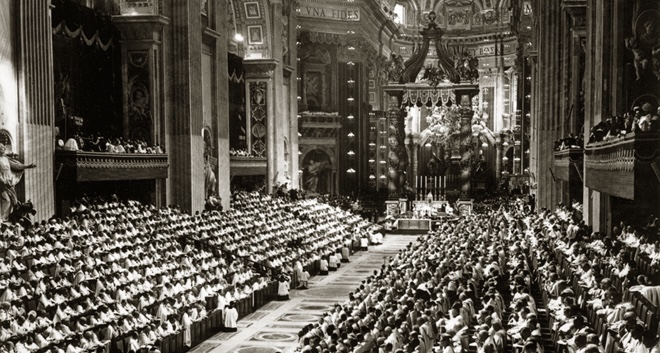
St Pope John XXIII is one of the most popular Pope of the 20th century.

He was the one who convoked the historical Vatican Council II, which paved the way for “throwing open the windows of the church, to let the fresh air of the Spirit blow through.”

When he was chosen as pope, John XXIII announced that his motto would be “obedientia et pax,” which is Latin for “obedience and peace.”

This was because St Joseph was his favourite saint.

The new Pope sought to follow the path of St Joseph, a model of obedience, because he believed…
… that “obedience to God, to His commandments, His will, and His inspirations, is the highway to true interior peace.”

Today we celebrate the Feast of this great model of Obedience – St Joseph.

Traditionally, the feast is celebrated on March 19th.

But when it falls on a Sunday, the feast is either anticipated or postponed by one day
(It depends on each Regional Episcopal Conference)

What lessons does St Joseph, the Patron of the Universal Church teach us?

  1. St Joseph was ever attentive and obedient to the voice of God
    One of the standout qualities that we observe in St Joseph is his prompt obedience to the voice of God

He listened to the Angel…
… in moments of dilemma, and obediently took Mary as his wife (Mt 1:20-24)
… in moments of danger, and obediently took the Mother and Child to Egypt (Mt 1:13-15)
… in moments of doubt, and obediently settled the Holy Family in Nazareth (Mt 1: 20, 22b)

St Joseph was able to let go of his personal choices and his desired comforts and give top priority to do what God wanted him to do.

St Joseph teaches us that “holiness consists in doing what God wants – when and where He wants.”

  1. St Joseph teaches us the love for Jesus and Mary
    Ever since he recognised the plan of God in his life, St Joseph displayed unflinched commitment and love to Jesus and Mary

He had many occasions of choices to let go of them…
… to leave Mary when she was found with Child, even before the marriage
… to leave his pregnant Wife when they found no place in the inn
… to abandon the Child and Mother when a life-danger against them was sensed

But, nothing could deter St Joseph from leaving or abandoning them. He knew that in God’s plan, They belonged to him, and he would safeguard them – treasuring Them close to his heart.

Our faith has blessed us with love for Jesus and Mother Mary.

St Joseph invites us to also have “Jesus and Mary close to our hearts.”

  1. Humility is a virtue radiated by St Joseph
    St Joseph had to face many moments of humiliation, disappointment and uncertainty.

But in his humility, he remained true to God in all those moments

Life sometimes drags us into situations of sadness and even shame.

Many times we let go of God’s Hands, saying that “He is not fair” or “He doesn’t understand me”!

St Joseph teaches us that “there is much value in humbling oneself, before the mighty power of the Almighty.”

  1. St Joseph was content to be the “silent worker” in the awesome work of Salvation
    St Joseph, was honoured to be sharing the most intimate physical presence with the two holiest persons of this world – Jesus, the Son of God and Mary, the Immaculate Mother.

And yet, he contented himself to be the “silent hard-worker”.

He is a mighty challenge to our world, where seeking for honour, position, fame and reputation become cheap motives, in doing works of charity or even, sadly to say, in ministries of the Church.

St Joseph exhorts us to become “a yeast, that works silent wonders, in the history of salvation.”

  1. St Joseph is the model of chastity
    Mary is the New Ark of Covenant, bearing Divinity in Her.

St Jerome, says that St Joseph, the son of David, shared his royal ancestor’s fear of coming into overly close contact with the Tabernacle of the Lord: “Who am I,” asked King David, “that the Ark of the Lord should come to me?” (2 Sam. 6:9)

That is why, St Joseph is often depicted with a White Lily in his hand, to depict purity and holiness

Chastity is the virtue that moderates the desire for sexual pleasure according to the principles of faith and right reason.

In married people, chastity moderates the desire in conformity with their state of life
In unmarried people who wish to marry, the desire is moderated by abstention or unless they get married
In those who resolve not to marry, the desire is sacrificed entirely.

St Joseph teaches us to “preserve the purity of life, and thus be a witness of the Kingdom of God.”

  1. St Joseph was prefigured in Joseph of the Old Testament
    In the Old Testament, we read Joseph, the son of Jacob, had stored up, in Egypt, grain to provide bread for the preservation of the People of Israel (Gen 42)

In the New Testament, St Joseph, safeguarded, in Egypt, the Bread of Life, for the salvation of the People of God. (Mt 1: 14)

St Joseph shows us the way “to be a protector and safeguard to the needy and the distressed.”

  1. St Joseph is a model leader

True to being a Father, St Joseph displayed many leadership qualities, which needs to be imitated by us, in our practical life
Defender of the community/team members: St Joseph preserved Mother Mary from idle talks of gossip and malicious speculation
Protection of those in care: St Joseph did not give up in the face of hostile situations, when it was time for the Birth of the Child
Needful and prompt action: St Joseph acted quickly and promptly, in response to situations of danger and of need.

St Joseph teaches us “to shoulder up responsibilities, depending solely on the Power and Grace of God”

The solemnity of St Joseph comes us a reminder to us to learn many things from the life of this Great Saint.

Let us constantly seek the help of St Joseph, and recognize his loving and fatherly protection in our lives.

May St Joseph, the model of obedience, help us to choose “obedientia et pax – obedience and peace” as a motto for our lives, so that we may realise…
… that “obedience to God, to His commandments, His will, and His inspirations, is the highway to true interior peace.”

Happy Feast of St Joseph!

God Bless! Live Jesus!


Discovering the beauty of the Catholic Church through the Catechism
THE SACRAMENT OF HOLY ORDERS IN THE ECONOMY OF SALVATION – THE ORDINATION OF PRIESTS – CO-WORKERS OF THE BISHOPS

“Because it is joined with the episcopal order the office of priests shares in the authority by which Christ himself builds up and sanctifies and rules his Body.
Hence the priesthood of priests, while presupposing the sacraments of initiation, is nevertheless conferred by its own particular sacrament.

Through that sacrament priests by the anointing of the Holy Spirit are signed with a special character and so are configured to Christ the priest in such a way that they are able to act in the person of Christ the head.” (CCC #1563)
✝️ REFLECTION CAPSULE – March 19, 2023: Sunday

“Allowing ourselves to be led into the light and thus ‘feeling blessed’ in encountering Jesus, the Sun!”

(Based on 1 Sam 16:1b, 6-7, 10-13a, Eph 5:8-14 and Jn 9:1-41 – 4th Sunday in Lent)

Plato was a Greek philosopher, who along with Aristotle, is considered to have laid the foundations of Western Philosophy.

In his work, “Republic”, he writes about the famous “Allegory of the Cave.”

The allegory begins with an imagination of a cave, where people have been imprisoned from birth.

These prisoners are chained so that their legs and necks are fixed, forcing them to gaze at the wall in front of them and not look around at the cave, each other, or themselves.

Behind the prisoners is a fire, and between the fire and the prisoners is a raised walkway with a low wall…
… behind which people walk carrying objects or puppets “of men and other living things”.

The prisoners are only able to see the shadows cast upon the cave wall in front of them.

The sounds of the people talking echo off the walls, and the prisoners believe these sounds come from the shadows.
For the prisoners, the shadows are reality, because they have never seen anything else.

They do not realize that what they see are shadows of objects in front of a fire, much less that these objects are inspired by real things outside the cave.

The allegory then invites us to suppose that one prisoner is freed.

This “freed” prisoner would look around and see the fire.
The light would hurt his eyes and make it difficult for him to see the objects casting the shadows.

He would escape from this struggle by turning away to the things which he was able to look at…
… and these he would believe to be clearer than what was being shown to him.

Now suppose that someone should drag him…the steep way up, into the light of the sun.
The prisoner would be angry and in pain.

However, slowly, his eyes would adjust to the light of the sun.

First he sees only the shadows.
Gradually he sees the reflections of people and things in water and then later see the people and things themselves.
Eventually, he is able to look at the stars and moon at night until finally he can look upon the sun itself.

He would make an Upward movement – towards faith and trust!

The allegory goes on to say that the freed prisoner “would feel blessed for the change”, and pity the other prisoners…
… and would want to bring his fellow cave dwellers out of the cave and into the sunlight.

The returning prisoner, whose eyes have become accustomed to the sunlight, would be blind when he re-enters the cave…
… just as he was when he was first exposed to the sun.

The prisoners, inside however, would infer from the returning man’s blindness, that the journey out of the cave had harmed him and that they should not undertake a similar journey.

These chained prisoners would be “filled with anger and antagonism” and resist the truth!

In fact, if they, were able, would even reach out and kill anyone who attempted to take them out of the cave.

They would make a Downward movement – towards scepticism and unbelief!

This allegory very beautifully speaks of a similar situation in the Gospel of the Day…
… a man – who was imprisoned by blindness – “feeling blessed” in having encountered Jesus, the Sun
… other men – who remained chained in ignorance and darkness – “filled with anger and antagonism” – resisting the Truth!

Chapter 9 of the Gospel of St John is a story of “blindness” encountering Light- with contrasting effects:

A man who is “born blind”, touched by the Light of the World, experiences healing
Other people “remain blind”, by opposing the Light of the World, emitting hostility.

We thus see, in this long yet beautiful passage contrasting movements:
An Upward movement – towards faith and trust – of the man who was born blind
A Downward movement – towards scepticism and unbelief – of the people who clung to prejudices

  1. The Upward movement – towards faith and trust – of the man who was born blind
    Jesus declares that the blindness of the man was an occasion for “the glory of God to be revealed” (Jn 9: 3)

This revelation of the Glory of God comes about with Jesus doing a unique action…
… “spitting on the ground, making clay with the saliva and smearing the clay in the eyes” of the man born blind (Jn:6)

This action of the Son would remind us of the action done by His Father, who at the beginning of creation, would reveal His Glory, by “forming man out of the clay of the ground, and blowing in his nostrils, the breath of life!” (Gen2:7)

This act of the revelation of God would trigger the upward movement- of faith and trust- of the blind man…
a. Initially he on being asked about Jesus, he would say, “I don’t know” (Jn 9:12)
b. Then, he would say how Jesus is “a prophet” (Jn 9: 17)
c. Then, he would get defensive about Jesus and say that “if He is not from God, He would not be able to do anything” (Jn 9: 33)
d. Finally, after realising that Jesus is the Son of God, he would worship Him and say, “I do believe, Lord!” (Jn 9: 38)

  1. A Downward movement – towards scepticism and unbelief – of the people who clung to prejudices

An act of goodness always gathers detractors and critics…
… and Jesus, the Perfection of Goodness greatly experienced it.

a. Initially, the Pharisees pointed to the violation of the Sabbath Law, to prove that He is not from God: “This man is not from God, because He does not keep the Sabbath” (Jn 9: 16)
b. Then, they would question the parents of the man, because they thought, he had not been blind from birth: “Is this your son, who you say was born blind? How does he now see?” (Jn 9: 19)
c. Then, they would defend their arguments basing on their loyalty to the authenticity of Moses, the law-giver: “We know that God spoke to Moses, but we do not know where this One is from” (Jn 9: 29)
d. Finally, they would engage into a direct dispute with the Lord Himself: “Surely, we are not also blind, are we?” (Jn 9: 40)

Jesus perfectly sums up…

The Upward Movement- towards faith and trust
The Downward Movement – towards scepticism and unbelief…
… by saying: ” I came into this world, for judgment, so that those who DO NOT SEE MIGHT SEE… and those WHO DO SEE MIGHT BECOME BLIND” (Jn 9: 39)

We need to ask ourselves:
“What is the direction of my Spiritual Life…
… is it having an Upward Movement, towards Faith and trust?
… or is it having a Downward Movement, towards, Scepticism and Unbelief?”

St Paul says, that we need to “live as children of Light, for Light produces every kind of goodness and righteousness and truth” (Eph 5:8-9)

We need to also remind ourselves of the mind of the Lord, as revealed in 1st Book of Samuel:
“The Lord does not see as mortals see; they look on the outward appearance, but the Lord looks on the heart!”(1 Sam 16:7)

The Lord, in our every day of life, uses a number of occasions – pleasant and unpleasant situations – to “reveal His glory”

Do we remain open to His Light in order to have an upward movement into deeper faith and trust?
… or do we get closed in darkness and thus make a downward movement into deeper scepticism and unbelief?

As in the “Allegory of the Cave”…
… let us not remain chained in ignorance and darkness – “filled with anger and antagonism” – resisting the Truth

Instead, allow ourselves to be led into the light and thus “feel blessed” in having encountered Jesus, the Sun!

God Bless! Live Jesus!


📖 Discovering the beauty of the Catholic Church through the Catechism
THE SACRAMENT OF HOLY ORDERS IN THE ECONOMY OF SALVATION – THE ORDINATION OF PRIESTS – CO-WORKERS OF THE BISHOPS

“All priests, who are constituted in the order of priesthood by the sacrament of Order, are bound together by an intimate sacramental brotherhood, but in a special way they form one priestly body in the diocese to which they are attached under their own bishop.”

The unity of the Presbyterium finds liturgical expression in the custom of the presbyters’ imposing hands, after the bishop, during the rite of ordination. (CCC # 1568)

EUREKA 14: Discovering Catholic Treasury – through a Lenten lens!

“DIGNITATIS HUMANAE”

A. What is it?
“Dignitatis Humanae” is the Declaration of the Second Vatican Council on the Declaration on Religious Freedom.

“Dignitatis Humanae” – the Latin title – means “the Dignity of the Human Person”
This declaration was promulgated by Pope Paul VI on December 7, 1965.

B. What does it speak of?
“Dignitatis Humanae” speaks of the Church’s support for the protection of religious liberty.

The main aspects of “Dignitatis Humanae” are:
(i) The fundamental right to religious liberty: All persons have a right to religious liberty, a right with its foundation in the essential dignity of each human being.

All persons must be free to seek the truth without coercion, but are also morally obligated to embrace the Truth of the Catholic faith once they recognize it.

(ii) The responsibility of the state: The government is to protect the rights and equality of all citizens as part of its essential role in promoting the public good

(iii) Religious freedom and Christianity: Christians are called to an even more conscientious respect for religious freedom. Man’s response to God in faith must be free – no person is to be forced to embrace Christianity.

God’s own call to serve him binds persons in conscience but is not compulsion.

C. Pointers for Reflections

  1. “Dignitatis Humanae” affirms that “the one true religion subsists in the Catholic and Apostolic Church

This statement is also bound to the fact that “all men are bound to seek the truth, especially in what concerns God and his Church, and to embrace the truth they come to know, and to hold fast to it.”

  1. Human dignity has only one source and only one guarantee – We are made in the Image and Likeness of God.

The Declaration states that it was Christianity that led to the developing and uniquely stressing the idea of the individual person with an eternal destiny.

D. What virtues/points can we pick up from “Dignitatis Humanae” for this Season of Lent?

  1. Deepening our love for the Church and drawing more people to the True Faith
  2. Growing in our understanding of our own self – that we are in the glorious Image and Likeness of God – and so, each one of us are very good

E. Tips to practice these virtues

  1. Live the teachings of the Church in day-to-day life, and especially practise the basics of Catholic Living – Regular Holy Mass, Confessions, Bible Reading, Examination of Conscience, Recitation of the Holy Rosary, and Praying together in the Family
  2. Identify one’s strengths and blessings that God has given, and spend every day at least 10 minutes, to thank the Lord!

May this Lent and the familiarity with the Encyclical “Dignitatis Humanae” help us to grow in our acclamation: “Eureka – I have found the Lord”

(The Full Text of “Dignitatis Humanae” can be found at:
http://www.vatican.va/archive/hist_councils/ii_vatican_council/documents/vat-ii_decl_19651207_dignitatis-humanae_en.html)

God Bless! Live Jesus!

✝️ REFLECTION CAPSULE – March 18, 2023: Saturday

“Casting away pride and embracing humility and dependence on God!”

(Based on Hos 6:1-6 and Lk 18:9-14 – Saturday of the 3rd Week in Lent)

In the summer of 1986, two ships collided in the Black Sea off the coast of Russia.

Hundreds of passengers died as they were hurled into the icy waters below.

This news of the disaster was further darkened when an investigation revealed the real cause of the accident.
… it wasn’t a technology problem like radar malfunction
… it wasn’t a climate-related issue like thick fog.

The real cause was human stubbornness and pride!

Each captain was well aware of the other ship’s presence nearby.

Both could have steered clear…
… but according to news reports, neither captain wanted to give way to the other.
Each was too proud to yield first.

By the time they came to their senses, it was too late!

This is what stubbornness and pride can do…
… harm lives
… break hearts
… destroy reputations

The Gospel of the Day exhorts a strong message on this deadly vice of “being full of ourselves”
… in a single word – “Pride”.

Chapter 18 of the Gospel of St Luke begins with two parables, that teach on the aspect of Prayer.

The parable of the Widow who was persistent (Lk 18: 1-8)
The parable of the Pharisee and the Tax Collector (Lk 18: 9-14)

The Parable of the Pharisee and the Tax Collector have interesting comparisons with respect to the various gestures and actions that they take:

Both go up to the Temple area to pray…

The Pharisee took up his position…
… the tax collector stood off at a distance
The Pharisee spoke the prayer to himself…
… the tax collector would not even raise his eyes to heaven
The Pharisee spoke of his personal glories…
… the tax collector acknowledged being a sinner, in need of mercy.

Though the Gospel doesn’t speak of it, it seems that both, the Pharisee and the tax collector had taken a mirror with themselves, when they went to pray….

A mirror… yeah!

But, the strange fact is that, both of them used the mirror in contrasting manners!

The Pharisee used the mirror and saw his many achievements and accomplishments…
… being unlike the rest of the sinful humanity like the greedy, dishonest or adulterous
… fasting twice a week
… pay tithes on his whole income

The tax collector, also used a mirror…but saw in it, his many failures and shortcomings…
… the moments when he had cheated others to have greater financial gains
… the times he had subjected himself to be a traitor by working against his own people
… the need to seek for God’s mercy acknowledging his sinfulness

Prayer is like a mirror…
… but it depends on one’s attitude and disposition what one sees

If one is filled with pride and self-conceit, one sees only one’s accomplishments…
… and thus pushes out God and replaces oneself as the source of all good works!
If one is truly humble and modest, one sees one’s weaknesses and limitations…
… and thus acknowledge the dependence on God and on His grace in life!

Prayer could be made into a time of reciting the litany of one’s great achievements…
…or prayer could be made into a moment of seeking God’s mercy and compassion.

Prayer could be made into an occasion to boast of oneself and put down others…
… or prayer could be made into a moment to see the glittering light of God guiding us.

What is our attitude and disposition?

Am I afflicted with the sickness of pride which makes me to flaunt only myself at the expense of the other?
Am I distressed with the disease of arrogance which makes me to see myself as the greatest person in the world, casting aside all people and even God?

There is something of “this” Pharisee, perhaps, in all of us which needs to be shun…
There is something of “this” tax collector, which needs to be cultivated…

This “this”…
… is the need to cast away pride and the need to embrace humility and dependence on God!

Let us be willing to “give way to the other”
… so that we can avoid collision of lives
… and thus prevent harming lives, breaking hearts and destroying reputations!

God Bless! Live Jesus!


📖 Discovering the beauty of the Catholic Church through the Catechism
THE SACRAMENT OF HOLY ORDERS IN THE ECONOMY OF SALVATION – THE ORDINATION OF PRIESTS – CO-WORKERS OF THE BISHOPS

“The priests, prudent co-operators of the episcopal college and its support and instrument, called to the service of the People of God, constitute, together with their bishop, a unique sacerdotal college (presbyterium) dedicated, it is true, to a variety of distinct duties.
In each local assembly of the faithful they represent, in a certain sense, the bishop, with whom they are associated in all trust and generosity; in part they take upon themselves his duties and solicitude and in their daily toils discharge them.”

Priests can exercise their ministry only in dependence on the bishop and in communion with him. >> The promise of obedience they make to the bishop at the moment of ordination and the kiss of peace from him at the end of the ordination liturgy mean that the bishop considers them his co-workers, his sons, his brothers and his friends, and that they in return owe him love and obedience. (CCC # 1567)

✝️ REFLECTION CAPSULE – March 17, 2023: Friday

“Living under the banner of the two fundamental commands of Christian life – Love of God and Love of neighbour!”

(Based on Hos 14:2-10 and Mk 12:28-34 – Friday of the 3rd Week in Lent)

“Papa, do you love Jesus?” asked a little child to her father.

The father was an extremely irreligious man – even hating and condemning all religious practices.

So, with a sense of irritation, the father replied, “Jesus is dead, my dear, long, long ago. He was crucified, and that was the end of Him.”

“But Jesus rose again, and did what no other man could do”, continued the innocent child, “and if Jesus was not living now, we could not be living either, as He gives us life and everything else, Papa.”

But the father questioned back, “But how can I love whom I have never seen, my child? Tell me that, my dear!”

The child, at first didn’t know what to reply.

The father was extremely happy that his question had puzzled the daughter and hoped that now she would stop the topic.

But the little girl put forth another question, “Papa, how old was I when Mamma died?”
“Hmm…six months, my child”, replied the father.

“Then I can say”, said the child, “that I never saw her, for I don’t remember her at all.

But you have always tried to make me love Mummy, by telling me how good and kind she was; and I do love her!”
And then with a deeper sense of affection, she continued, “Even though I don’t remember having seen her, I still do love her, Papa!”

By this time the tears were running down the father’s cheeks.

He kissed his beloved child and said, “God has spoken to me by you, my dear!

I realize I do need to love God, even though I have not seen Him!
And now you must pray for me, and ask God to give me a new heart, with which I shall love Jesus.”

(Undoubtedly, the prayer of the innocent child was soon answered!)

What about me….
Do I love God?

Do I really love God?

Even though sometimes I am not able to experience His presence…
Even though at times, I go through the hardships and grinds of life…

DO I LOVE GOD?

The Gospel of the Day is a mighty invitation and reminder by the Lord, to Love God with our “ALL”…
… All our heart

… All our soul
… All our mind
… All our strength

The passage begins with a member of the scribe, approaching Jesus with a question:
“Which is the greatest of all commandments?” (Mk 12: 28)

This man, who questioned Jesus was no ordinary man or any ignorant person.
He was a scribe

Some translations would put it as “a Lawyer”
The Gospel of St Matthew describes him as a “Scholar of the Law” (Mt 22: 35)

He was an expert in the Mosaic Law.
… someone who studied the law, interpreted the law and taught the law!

Just prior to the questioning by this scribe, Jesus had silenced six groups of people…

  1. The Chief Priests
  2. The Scribes
  3. The Elders
    “As Jesus was walking in the temple area, the chief priests, the scribes and the elders approached Him, and said….” (Mk 11:27)
  4. The Pharisees
  5. The Herodians
    “They sent some Pharisees and Herodians to Jesus to ensnare him in his speech” (Mk 12:13)
  6. The Sadducees
    “Some Sadducees who say there is no resurrection, came to Jesus….” (Mk 12: 18)

Most of them had approached and questioned Jesus…
… not to know or learn more about the Law, but to question Him and trap Him!
… not with genuineness in their heart, but with malice and viciousness!

However, Jesus, aware of all this background…

the wicked conspiracy that was brewing against Him
the plot of testing that was hanging in the air
… responds with something immensely marvellous and spectacular:
“The Lord our God, is Lord alone. Love the Lord your God, with all your heart, with all your soul, with all your mind and with all your strength”(Mk 12:29- 30) and
“Love your neighbour as yourself” (Mk 12: 31)

Here was a classic answer…

The background in which the question was put forth quite “hateful” and “repulsive”
… but Jesus dares to answer with the sublime answer of “Love!”

The Lord was being targeted badly with stones of “hatred, jealousy, aversion and hostility”
… but He gently, but firmly showers back the flowers of “Love, Tenderness and Commitment”!

Love, as Jesus defines, is not simply about feelings and emotions, as is the popular and the ‘commercial’ understanding.

Undoubtedly, Love has the dimensions of being a tender feeling and an expressive emotion.
But beyond that, Love is…

A Commitment
A Dedication
A Decision
…. that one makes to be faithful – to a person or a duty or a situation!

“Agape” is the Love to which we are called…
… a self-giving love
… a self-sacrificing love
… an other-centered love

Life sometimes can be quite harsh to us – making us feel totally lost out, abandoned even by God and even causing us to question the presence and existence of a Just and Loving God…
… But, can we still dare to “love God?”

Life sometimes hits very hard at us – in the form of others not accepting us, others ridiculing, criticizing us and we finding ourselves as the subject of hatred and injustice.
… But, can we still dare to “love our neighbours?”

Life sometimes is very unfair to us, we feel – by not rewarding us with rewards, that we consider, we deserve, in answer to the hard-work we put in… or by not allowing us to enjoy the joys of life and instead bombards us with tensions and worries
… Can we still go out of the way and live a life “In Love and For Love?”

When one’s life is truly centred on love for God, one also begins to express this love to one’s neighbours , in concrete and certain acts of love

When one’s life is drawn into real service for humankind, one slowly but surely has to realise that the source of these charitable deeds is God and thereby one is to draw closer to the Lord.

May our life be a constant check to see if we are living under the banner of these two fundamental commands of Christian life – Love of God and Love of neighbour!

And thus, in the depths of our hearts…
… even with all the troubles, problems and uncertainties clouding our lives
… even if we are unable to see the power of God leading us
We can still whisper and even shout: “I REALLY LOVE YOU, MY GOD!

God Bless! Live Jesus!


📖 Discovering the beauty of the Catholic Church through the Catechism
THE SACRAMENT OF HOLY ORDERS IN THE ECONOMY OF SALVATION – “In the Name of the whole Church”

It is in the Eucharistic cult or in the Eucharistic assembly of the faithful (synaxis) that they exercise in a supreme degree their sacred office; there, acting in the person of Christ and proclaiming his mystery, they unite the votive offerings of the faithful to the sacrifice of Christ their head…
… and in the sacrifice of the Mass they make present again and apply, until the coming of the Lord, the unique sacrifice of the New Testament, that namely of Christ offering himself once for all a spotless victim to the Father.”

From this unique sacrifice their whole priestly ministry draws its strength. (CCC # 1566)

EUREKA 13: Discovering Catholic Treasury – through a Lenten lens!

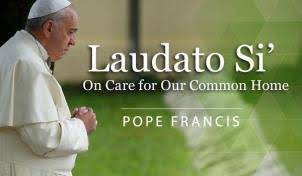
“LAUDATO SI”

A. What is it?
“Laudato Si” is an Encyclical by Pope Francis, released on June 18, 2015.

“Laudato Si” which means “Praise be to You” is the 2nd Encyclical of Pope Francis
The title is inspired from St Francis of Assisi’s 13th-century “Canticle of the Sun” (also called the Canticle of the Creatures), a poem and prayer.

B. What does it speak of?
“Laudato Si” is addressed to “every person living on this planet” with the hope of entering “into dialogue with all people about the Earth – our common home.”

6 Chapters make up “Laudato Si”
(i) “What is happening to our Common Home”: Looks at the various symptoms of environmental degradation. The encyclical postulates that a truly ecological approach is also inherently social – an approach that simultaneously hears the cry of the earth and the cry of the poor.

(ii) “The Gospel of Creation”: Considers the world the way that God intended it. The chapter surveys the rich scriptural traditions to show that there is no Biblical justification for “a tyrannical anthropocentrism unconcerned for other creatures.” A person who is truly concerned about the trafficking of endangered species is automatically concerned with the trafficking of humans.

(iii) “The Human Roots of the Ecological Crisis”: Examines the twin notions of “technocratic paradigm” and a “modern anthropocentrism”.
These views see nature as devoid of any spiritual or transcendental value.

This has led to the misplaced ideas that the earth’s resources are infinite and that economic growth and technology alone can solve global hunger and poverty.

(iv) “Integral Ecology”: It charts a path to recapture awareness of the interconnectedness of creation. It is essential to appreciate the impact of environmental degradation on “cultural ecology”. The experience of indigenous peoples is specifically referred to in this regard.

(v) “Lines of Approach and Action”: This Chapter sets out various international collective actions needed.

(vi) “Ecological Education and Spirituality”: It shifts attention to the individual believer, families and communities, and invites them to make a difference in small but tangible ways.
Consumer choices, the cultivation of ecological virtues such as reducing wastefulness, and environmental education for the young are explained as practical steps leading to a deeper, spiritual “ecological conversion” through which the follower of Christ recognizes the true worth of all created entities.

C. Pointers for Reflections

  1. “What kind of world do we want to leave to those who come after us, to children who are now growing up?”
    This question is at the heart of “Laudato Si’

We have forgotten that “we ourselves are dust of the earth; our very bodies are made up of her elements, we breathe her air and we receive life and refreshment from her waters.”
The Encyclical encourages all to have an “ecological conversion”

  1. Living our vocation to be protectors of God’s handiwork is essential to a life of virtue.
    This “corrected lifestyle” it is not an optional or a secondary aspect of our Christian experience

D. What virtues/points can we pick up from the “Story of the Soul”” for this Season of Lent?

  1. Cultivate greater sensitivity to nature
  2. Deepen and thank God as the Creator

E. Tips to practice these virtues

  1. Make a list, and practise, a few but very practical steps to protect the nature
  2. Raise a prayer of thanks to the Lord, for all the things we see around

Let time with nature, become a time of meditation with the Lord

May this Lent and the familiarity with the Encyclical “Laudato Si” help us to grow in our acclamation: “Eureka – I have found the Lord”

(The Full Text of “Laudato Si” can be found at:
http://w2.vatican.va/content/francesco/en/encyclicals/documents/papa-francesco_20150524_enciclica-laudato-si.pdf

God Bless! Live Jesus!

✝️ REFLECTION CAPSULE – March 16, 2023: Thursday

“Allowing ourselves not to be ‘influenced and altered’ by the ways of the world!”

(Based on Jer 7:23-28 and Lk 11:14-23 – Thursday of the 3rd Week in Lent)

A group of two brothers were roaming in the forest, when they found a couple of tiny birds of the family of linnets.

When the boys got the birds home, they put the linnets in a cage, opposite the canary bird, which was tied in another cage.
(Canary birds are known to be “Singing Birds”)

They explained to their mother that they hoped the linnets – being so young – would learn to imitate the singing canary…
… Instead of cheeping as normally birds do, they expected them to sing (like the canary)

The next day the boys entered the room, and exclaimed:
“Mother, come here, look what has happened!

Our canary is cheeping like a linnet!”

The mother came in… and found it so!

Instead of the linnets learning to sing, the canary bird forgot its ability to sing!

Thus, the canary had to be separated from the wild birds of the wood and kept under cover for a time before regaining the singing ability.

Such is the case with Christians who allow themselves to “influenced and altered” by the ways of the world!

We may end up losing the “Song of our Faith!”

Yes, Christian life requires that we be constantly “on the watch and guard”, because it is…
… a constant struggle between the forces of evil and the power of goodness…
… a relentless warfare between the coercion of sin and the strength of holiness…

The Gospel of the Day presents this struggle between…
… Jesus and the Pharisees
… the Holy One and the evil forces
… the Kingdom of Heaven and the kingdom of Satan

The Lord came to the world to usher in the Kingdom of God.

Bringing to forefront the Kingdom of Power and Holiness, the Lord casts out a demon from a person who is dumb. (Lk 11:14)

This mighty action of healing and deliverance had a tremendous effect…
… the dumb man spoke
… and the people marvelled.

But, this wondrous act of power and authority also triggered a volley of struggles…
… a struggle of words between the Pharisees and Jesus
… a teaching on the struggle between the Kingdom of God and the forces of evil

The Lord lashes out in authority and conviction, on being accused of siding with evil powers to cast out demons: “Every kingdom divided against itself is laid waste and a divided household falls” (Lk 11: 17)

Jesus makes it clear that one cannot be siding with negative forces in order to perform deeds of goodness and salvation!
Jesus makes it clear that one cannot be on the side of evil and sin and yet be authentic and genuine in doing works of true deliverance and righteousness!

This brings us to an important dimension that needs our honest and critical consideration:
Am I a person truly on the side of God when I engage in works and ministries of the Lord…
… but still continuing to be on the side of the Evil One by living a life of sin?

Am I a person imbued with the Spirit of the Holy Lord in professing to be a Christian…
… or am I living a dual-life by failing to give up immoral tendencies and obliging the evil spirit?

Am I a person who may be performing a lot of good works in the name of God…
… but failing to have an intimate relationship and union with the God of all power and glory?

Venerable Fr Peter Marie Mermier, the founder of the Congregation of the Missionaries of St Francis de Sales puts it beautifully:
“The ministry of a priest without prayer, is a barren ministry, without any effect, even harmful; it is a ministry of death!

Instead of enlightening, it blinds; instead of healing, it kills!
But the ministry of the one who prays, is a ministry of life!”

Christian life is not to be just defined by external works of piety and works…
… but is to be a reflection of the inner intimacy and relation with the Lord.

Christian Life is not to be merely characterized by many deeds of charity and devotion…
… but is to be a manifestation of one’s true faith and closeness to the Divine Master.

A true inner disposition and authority is a must to be effective and credible in our life.
A proper grounding is an absolute requirement to be engaged in the works of the Lord.

I may find myself often in the “cage” of faith and unbelief…

But am I clear in taking the side of the Lord and Him alone?

I may find myself often in the “cage” of actions of goodness and temptations of the evil…

But am I convinced of taking the side of the Kingdom of God alone?

Christian Life is a constant struggle
… between the evil and good
… between the Devil and Jesus
… between the Kingdom of God and the powers of wickedness

Which side are we on?

Let us be careful not to allow ourselves to be “influenced and altered” by the ways of the world…
… so that we may not end up losing the “song of our Faith!”

God Bless! Live Jesus!


📖 Discovering the beauty of the Catholic Church through the Catechism
THE SACRAMENT OF HOLY ORDERS IN THE ECONOMY OF SALVATION – “In the Name of the whole Church”

Through the sacrament of Holy Orders priests share in the universal dimensions of the mission that Christ entrusted to the apostles.

The spiritual gift they have received in ordination prepares them, not for a limited and restricted mission, “but for the fullest, in fact the universal mission of salvation ‘to the end of the earth,”‘ “prepared in spirit to preach the Gospel everywhere.” (CCC # 1565)

✝️ REFLECTION CAPSULES – March 15, 2023: Wednesday

“Making efforts to grow into convinced and certain and confident Christians!”

(Based on Deut 4:1, 5-9 and Mt 5:17-19 – Wednesday of the 3rd Week in Lent)

A university student was seen with a large “K” printed on his T- shirt.

When someone asked him what the “K” stood for, he said, “Confused.”
“But,” the questioner replied, “you don’t spell “confused” with a “K!”

The student answered, “Well, you don’t know how confused I am!”

The confused state of mind led be the boy to display a perplexed and puzzled look!

How often is this true in our own lives as Christians…

We fail to have certain convictions in our faith…
… and the resultant life that is displayed outside, is one of confusion or uncertainty.
We fail to be sure of what our life of faith is…
… and as a result, we fail to bring people to experience God’s love and instead, sometimes even lead others astray.

The Gospel of the Day is a peek into the conviction that Jesus had in His life of preaching and mission…
… and a challenge for us to become persons who become fervent and convinced in teaching the commandments of the Kingdom of God.

The Gospel is a continuation of the Sermon on the Mount.

Jesus says, “Do not think that I have come to abolish the law or the prophets. I have come not to abolish but to fulfil” (Mt 5: 17)

One of the distinguishing features in the preaching and teaching ministry of Jesus was His deep conviction and certainty.

Jesus did not speak as if He was blabbering on some unknown topic.
Jesus did not mutter words as if He was whiling away time to talk on a strange issue.

Instead, Jesus was thoroughly convinced of what He spoke and taught.

It was this deep-seated conviction that made Him say that He had “come not to abolish the law or the prophets”.

The message of Jesus contained newness and freshness.

However, it was not a preaching that was entirely new

It was a teaching that was born in deep certainty and delivered with utmost conviction.

He was the fullness of the teachings of all the Law.
He was the fulfilment of the prophecies of all the Prophets.

This gave it a fresh crispiness.
This gave it a refreshing perspective.

Do we also possess a similar conviction and certainty in our Life of Faith, just as Jesus displayed?

The Lord demands such a requirement.

Hence, He would say, that “whoever breaks one of the least of these commandments and teaches others to do so, will be called least in the Kingdom of Heaven” (Mt 5: 19)

Our Christian lives are sometimes marked by unwarranted uncertainties and confusing convictions.

We know a little bit about our faith…
… but not deep enough.
We know a little bit concerning our teachings…
… but not in its depth.
We know a little bit about the virtues we are to live…
… but not fully convinced of it.

As a result of this ‘unsure’ attitude and ‘confused’ mentality, we are unable to
… (1) live a true and honest Christian lives
… (2) witness and teach others our genuine faith

Let us not remain confused Christians; rather experience the love and mercy of the Lord…
… and make efforts to growing into convinced and certain and confident Christians!

God Bless! Live Jesus!


Discovering the beauty of the Catholic Church through the Catechism
THE SACRAMENT OF HOLY ORDERS IN THE ECONOMY OF SALVATION – THE ORDINATION OF PRIESTS_ – CO-WORKERS OF THE BISHOPS

“Whilst not having the supreme degree of the pontifical office, and notwithstanding the fact that they depend on the bishops in the exercise of their own proper power…
.. the priests are for all that associated with them by reason of their sacerdotal dignity; and in virtue of the sacrament of Holy Orders, after the image of Christ, the supreme and eternal priest

… they are consecrated in order to preach the Gospel and shepherd the faithful as well as to celebrate divine worship as true priests of the New Testament.” (CCC #1564)

✝️💜 REFLECTION CAPSULES – March 14, 2023: Tuesday

“Doing away with mathematical countings in pardoning others, knowing that we ourselves have received this favour from the Lord!”

(Based on Dan 3:25, 34-43 and Mt 18:21-35 – Tuesday of the 3rd Week in Lent)

An incident is said of a worker named Richard Weaver (He would later on become a popular preacher of the Word) who was working in a mine.

During the course of the work, unintentionally, he hit a fellow-miner.

The fellow-miner, however lost his cool and retorted: “I feel like giving you a hard smack on your face!”

“Very well”, said Weaver, “If that will do any good, you may do it.”

The man struck him.

Weaver turned to him the other cheek.
The man struck again.

This was repeated five times; and when Weaver presented his cheek for the sixth time, the man turned away, cursing.

Weaver cried after him: “The Lord forgive you, for I do; and the Lord save you!”

The following morning, as work started, this man was the first person that Richard Weaver met.

As Weaver approached him, he burst into tears.

“Oh Richard” he cried as he knelt before him, “do you really forgive me?”

Richard Weaver helped him get up…

As he rose…
… a changed and transformed man!

That’s the Power of Forgiveness!

The Gospel of the Day presents this Mighty and Power Message of Forgiveness…
… an exhibition of the Lord going beyond mathematical boundaries in dealing with the beautiful virtue of forgiveness.

The passage begins with Peter, raising a query to his Master, ” Lord, how often shall my brother sin against me, and I forgive him? As many as seven times?” (Mt 18: 21)

It was probably a genuine doubt of Peter, which arose from his own personal experiences.

He must have had some difficulties in forgiving, out of his wavering temperament, perhaps!

But he now puts forward to Jesus a doubt as to what should be the limit of one’s forgiveness.

Peter sought to know the exact boundaries that one must limit oneself, while forgiving.

He wanted clear-cut rules to define the maximum threshold and frontiers of generosity in pardoning.

But the Lord replies firmly, “I say to you, not seven times, but seventy seven times” (Mt 18:22)

The Lord does away with the mathematical rules in forgiveness!
The Lord does not confine to the mathematical stipulations in forgiveness!

“Seventy seven times” would refer a number, unlimited and uncountable!

The frontiers for how many times to forgive are done away with…
The boundaries for how many times to forgive do not hold good…

As the Lord spoke these words to Peter, the apostle would himself have recalled…
“Once beside the sea of Galilee, when I encountered the Holy Master, I realized that I was drowning in the waters of sin… and I had asked pardon from the Lord.
Depart from me, Lord, for I am a sinful man (Lk 5:8)”

These words of the Lord would have again echoed in the ears of Peter, later on, after the resurrection of Jesus….

Once again, beside a Sea… this time, the Sea of Tiberius, Peter would experience the forgiving power of the Lord in accepting back, though he had betrayed Him three times (Jn 21: 15-18)

Many times he had sinned against the Lord…
Many times he had caused pain and ache to the Lord…
Many times he had abandoned and betrayed the Lord…

But every time, the Lord forgave, wholeheartedly!

The Lord was truly the Master, “who practised what He preached”
The Lord was truly the Master, “who forgave unconditionally and without any limits”

The Lord, today seeks to impress on us too, this same attitude of forgiveness.

The teaching on forgiveness, is most certainly easily said than done!

To forgive….especially to forgive repeatedly, is certainly no easy task…

But it would require a deeper experience of the Unconditional Love of the Lord and our own determination…
… along with His grace, to reach out in forgiveness and pardon to our constantly erring brothers and sisters!

Are we ready to cast away mathematical limitations in forgiving, and extend the mercy of the Lord to others?

God Bless! Live Jesus!


Discovering the beauty of the Catholic Church through the Catechism
THE SACRAMENT OF HOLY ORDERS IN THE ECONOMY OF SALVATION – THE ORDINATION OF PRIESTS – CO-WORKERS OF THE BISHOPS

“Because it is joined with the episcopal order the office of priests shares in the authority by which Christ himself builds up and sanctifies and rules his Body.
Hence the priesthood of priests, while presupposing the sacraments of initiation, is nevertheless conferred by its own particular sacrament.

Through that sacrament priests by the anointing of the Holy Spirit are signed with a special character and so are configured to Christ the priest in such a way that they are able to act in the person of Christ the head.” (CCC #1563)
EUREKA 12: Discovering Catholic Treasury – through a Lenten lens!

“STORY OF A SOUL”

A. What is it?
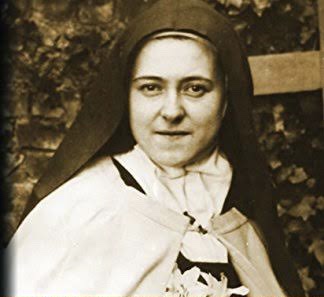
“Story of a Soul” is the autobiography of St Thérèse of Lisieux- also called as The Little Flower.

It was first published on September 30, 1898 – one year after her death at the age of 24.
This book outlines the spirituality that was lived and exhorted by the St Therese – “The Little Way”

B. What does it speak of?
The ‘Story of a Soul’ is St. Therese’s autobiography.

The book is divided into 11 chapters:
… Beginning with her first memory, it traces her life, ending with her blissful death in the convent.

“Story of a Soul” tells of how the Way to Holiness was not great and noble deeds but the fulfillment of the smallest duties with great love and complete reliance upon God.

Desiring the lowest place in all things and fulfilling all the duties of the state in life…
… the Little Flower describes of how she offered many penances for the conversion of sinners, especially during her final illness and the dark night of the soul she suffered at that time.

C. Pointers for Reflections

  1. Focuses on the “Little Way” of Holiness

It is a challenge to break the notion that “spirituality and holiness” consists primarily in heavy austerity and hard penances alone
It shows of the most important element needed towards holiness – perfect trust and holy love

  1. Presents the method of “offering to God” all what we do in life

Every action of ours can become an “offering to God” and thus “an act of saving” others

D. What virtues/points can we pick up from the “Story of the Soul” for this Season of Lent?

  1. Doing everything with love
  2. The virtue of Trusting in God

E. Tips to practice these virtues

  1. Consciously make a prayer (or at least, become aware) – “I am doing this work/activity, for the Love of God and only for His Glory!”
  2. Love God and give Him the First Priority and Place in life.

May this Lent and the familiarity with the Classical Book of Spirituality “Story of a Soul” help us to grow in our acclamation: “Eureka – I have found the Lord”

CLICK TO READ the full text of “Story of a Soul”:
http://www.catholicbible101.com/St.%20Therese%20Story%20of%20a%20soul.pdf

God Bless! Live Jesus!