EUREKA 19: Discovering Catholic Treasury – through a Lenten lens!

“SUMMA THEOLOGICA”

A. What is it?
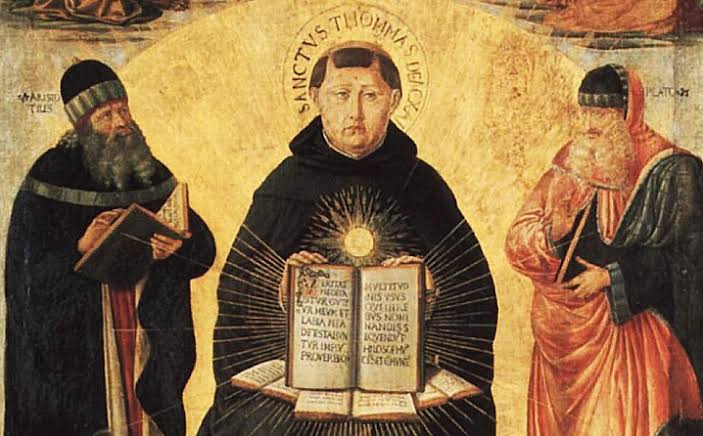
“Summa Theologica” is one of the very important Christian Classical Books written by St Thomas Aquinas in 1265-1274.

It is a compendium of all of the main theological teachings of the Catholic Church. It presents the reasoning for almost all points of Christian theology.
“Summa Theoligica” means “Summary of Theology”. It is regarded as one of the most precise, detailed collections of Christian theology

B. What does it speak of?
“Summa Theoligica” is divided into three parts, and each of these three parts contains numerous subdivisions.
(i) Part 1 deals primarily with God and comprises discussions of 119 questions concerning the existence and nature of God, the Creation, angels, the work of the six days of Creation, the essence and nature of man, and divine government.

(ii) Part 2 deals with man and includes discussions of 303 questions concerning the purpose of man, habits, types of law, vices and virtues, prudence and justice, fortitude and temperance, graces, and the religious versus the secular life.

(iii) Part 3 deals with Christ and comprises discussions of 90 questions concerning the Incarnation, the Sacraments, and the Resurrection.

C. Pointers for Reflections

  1. “Summa Theoligica” provides with lucid explanations about the various practical questions that we have about our faith

This includes the popular 5 arguments about the Existence of God, the role of Faith and Reason, the nature and limits of Human Knowledge and various philosophical and practical queries of Faith

  1. “Summa Theoligica” presents a rational and philosophical explanation to the various aspects of faith

The modern man is today beset with “questions of rationality” – everything in life, is questioned, and nothing seems to be accepted, until a “Reasonable Answer” is provided
“Summa Theoligica” seeks to provide deep insights for us to have a strong basis and foundation of the Teachings of Christ

D. What virtues/points can we pick up from “Summa Theologica” for this Season of Lent?

  1. Building a strong foundation for our Faith
  2. Following the Principle: “To Love God more – by knowing Him More – and thus to Serve Him better”

E. Tips to practice these virtues

  1. Have an openness to seek for answers to the genuine doubts, of our faith, from competent sources
  2. Grow in the Love of God by growing in the Knowledge of His Church

May this Lent and the familiarity with “Summa Theologica” help us to grow in our acclamation: “Eureka – I have found the Lord”

CLICK TO READ the Full Text of “Summa Theoligica” at:
http://www.catholictheology.info/summa-theologica/summa-part1.php

God Bless! Live Jesus!

✝ REFLECTION CAPSULES – March 26, 2023: Sunday

“Exclaiming with hope and trust: ‘Thank you Lord for the pain! I know there is a purpose! I know I am loved!’”

(Based on Ezek 37:12-14, Rom 8:8-11 and Jn 11:1-45 – 5th Sunday in Lent)

An incident is narrated of a 6-year old boy, who was diagnosed with leukaemia (cancer of the blood/bone-marrow).

One day, the child had to undergo a very painful procedure called “spinal tap”.
(‘Spinal Tap’ is a procedure in which a needle is inserted into the spinal cord in order to take out fluid for the purpose of diagnosis or treatment).

The mother, knowing that her child would have to undergo a lot of pain, approached him and told:
“Remember, if it hurts, it’s because you are loved, and there is purpose for the pain!”

The child remembered this sentence and took it to heart.

As the procedure was conducted, the child yelled and sobbed and cried…
… with the horrendous pain.

When the process was finally getting through, the child, with tears in his reddish eyes, looked up to the doctor and exclaimed:
“Thank you Doctor for the pain!
I know there is a purpose!
I know I am loved!”

(The incident goes on to say, that the child survived the painful illness and went on to live a normal life!)

Well, life often takes us through “painful procedures,” right?

In all such situations, our Christian faith reminds us:
“Remember, if it hurts, it’s because you are loved, and there is purpose for the pain!”

The Gospel of the Day – the raising of Lazarus – is a powerful teaching on this dimension of how we need to put our trust in the Lord…
… and realise, that there is a purpose that God has in store for us, even in the most painful situations of our life.

The narration of the raising of Lazarus is the longest single narrative/story in the entire Gospels (Jn 11: 1-45).
Long as it is, this incident also teaches us a number of essential lessons for life…

  1. The Providence of God, that answers, even when we do not “feel” His presence around us (Jn 11:4-6)

“So when Jesus heard, that Lazarus was ill, He remained for two days in the place where He was” (Jn 11:6)

Thus teaching us…
… we need to depend on the Lord at all times, even in our dark moments of life
… the Lord will never abandon us and in fact, can never leave us

  1. The slow understanding of the Disciples, who were with the Lord for a while, and yet had not understood His Ways and Words (Jn 11:8-16)

“Master, if he is asleep, he will be saved” (Jn 11:12)

Thus teaching us…
… doubts and dilemmas are very much part of one’s life as a disciple
… the patience of the Lord in dealing with those who are called and chosen

  1. The power of trust and hope in the Lord, even in hard and trying situations of life (Jn 11:21-27)

Martha said to Jesus, ‘Yes Lord, I have come to believe, that You are the Messiah, the Son of God…” (Jn 11:27)

Thus teaching us…
… as gold is tested in furnace, so our faith will be tested in the crucible of pains and sufferings
… we need to resign ourselves to the Power of the Lord, even though we may not understand many things

  1. The empathy of the Lord in sharing with the pain of humanity (Jn 11:35)

“And Jesus wept” (Jn 11:35)

Thus teaching us…
… in our suffering moments, the Lord is very much close to us, and suffers with us
… our tears are precious to the Lord and He stores them in a bottle (Ps 56:9)

  1. The power of God’s Word (Jn 11:43-44)

“Jesus cried out in a loud voice, ‘Lazarus, come out!'” (Jn 11:43)

Thus teaching us…
… the Word Which created the entire universe, is given to us in the Holy Bible, for us to read, cherish and find strength!
… the promises given by His Word will come to fruition in due season and no powers on this earth can diffuse or dilute it!

In the midst of all these and various other “food for transformation” that this incident offers…
… we focus our attention on one message: “God’s delays are not His denials”

Yes, God’s delays are, certainly, not His denials!

One of the striking aspects we encounter in this Gospel passage is the delay that Jesus “purposely” entails in coming to Lazarus.

The Gospel says that “… when Jesus heard that Lazarus was ill, he remained for two days in the place where he was.” (Jn 11:6)

This statement is on one side surprising; while on the other, shocking!

It was clearly known that Jesus was closely associated with Lazarus.

“A friend in need, is a friend indeed” is a phrase that we are aware.

Then why did Jesus delay in going to Lazarus?

As the Lord Himself answers: “This illness is not to end in death, but is for the glory of God, that the Son of God may be glorified through it.” (Jn 11:4)

This verse then is the key to many of our problems and anxieties about “prayers not being answered!”

How many are the times, when we go through the struggles of life, and we expect the Lord to work a wondrous deed…
… but when nothing as such happens, we become feeble in our faith!

How many are the occasions, when we face a problem in our material or spiritual life, and we hope that something terrific is going to happen…
… but when the situation remains the same, we begin to waver in our belief!

This is where the words of the Lord, “this illness is not to end in death, but is for the glory of God”…
… ought to come to our aid!

We need to examine our life…
… Am I only having “belief in the Lord”, but not having “trust in Him?”
… Am I only “professing the Lord with my lips”, but failing to “recognize His power from my heart?”

“Belief in the Lord” would only consist of declaring oneself to be a Christian, and having a name that one is a follower of Christ…
… But “trust in the Lord” would translate to also follow the commandments of being a Christian, and seek to live as Christ lived, by seeking and doing God’s Will in life.

“Professing the Lord with my lips” would only include saying vocal prayers, being regular to the practices of devotion and piety and finding satisfaction in doing the external duties of the religion…
… But “recognizing His Power from the heart” would mean to also remain calm in the face of problems, being patient even in great darkness and being joyful in the midst of turbulent life situations.

As Christians, the only way is the “Way of the Cross”
… a way filled with pains and sufferings

But, we must also realise, that it is this “way of the Cross” alone…
… that would lead to the “joy of the Resurrection!”

All our “unwanted” situations of life – pains, struggles, difficulties and crisis – have a meaning and purpose in the eternal plan of God…
“… all things work for good, for those who love God…” (Rom 8:28)
“… I know well that plans for you, says the Lord, plans for your welfare, not for woe…” (Jer 29:11)

The Word of God assures us through Prophet Ezekiel and St Paul that God will raise us up from every grave and from every “dead situation” – the “grave and the death of sicknesses, hopelessness and fear!”

“And you shall know that I am the Lord, when I open your graves, and raise you from your graves, O my people…
… And I will put my Spirit within you, and you shall live…!” (Ezek 37:13-14)
“If the Spirit of him who raised Jesus from the dead dwells in you, he who raised Christ Jesus from the dead will give life to your mortal bodies also through his Spirit who dwells in you!” (Rom 8:11)

Yes, in all our struggles and hardships of life, let us seek…
… to move higher in our faith and belief towards a real “trust in the Lord”
… to advance from just “professing the Lord with my lips” to “recognizing His power from our hearts!”

And thus, in every situation of life let us with hope and trust exclaim:
“Thank you Lord for the pain!
I know there is a purpose!
I know I am loved!”

God Bless! Live Jesus!


Discovering the beauty of the Catholic Church through the Catechism
THE SACRAMENT OF HOLY ORDERS IN THE ECONOMY OF SALVATION – THE CELEBRATION OF THIS SACRAMENT

As in all the sacraments, additional rites surround the celebration.

Varying greatly among the different liturgical traditions, these rites have in common the expression of the multiple aspects of sacramental grace. (CCC #1574)
✝️ REFLECTION CAPSULE – March 25, 2023: Saturday

“Allowing our Blessed Lord and Mamma Mary with St Joseph, to enter into the ‘train of our life’ and to have a journey of ‘joy and mirth!'”

(Based on the Solemnity of the Annunciation of the Lord)

This simple and beautiful little story is told about a long, tedious train journey, made by some elderly residents of a nursing home who were on their way to a vacation spot.

At one station, a young mother with a small child entered the train.

The child smiled at all the grim faces around him and began moving from one lap to another…
… talking, shouting with joy and chatting with everyone.

Instantly, the grim and silent atmosphere in the train was changed to one of joy and happiness.

Today is the celebration of the day when our Blessed Lord and Mamma Mary entered into the “train of human life” to begin a journey of “joy and mirth!”

On this Solemnity of the Annunciation of the Lord, we remember with joy and gratitude how Mary said: “Yes to the Divine Plan”….
… to pave the way for Her Divine Son Jesus to transform a hopeless, joyless and sinful world into a place of joy and happiness!

This Announcement of the Good News of the beginning of salvation history, with the encounter of the Blessed Virgin Mary with Angel Gabriel…
… is the Feast of the Annunciation of the Lord.

Mother Mary, at the Annunciation, teaches us many things…

  1. Mother Mary teaches the supreme goodness of obedience
    Heaven had chosen a simple girl, Mary to be the Mother of Jesus, the Saviour.

When Angel Gabriel was sent to seek Her consent, Mary, after the initial moments of fear, bowed Herself in obedience: “Behold, I am the Handmaid of the Lord. May it be done to Me, according to Your Word” (Lk 1: 38)

This obedience to God’s Will would turn out to be Her fortress and strength – in moments of uncertainty, loneliness, dread and agony.

  1. “Faithfulness, thy true Daughter is Mary!”
    One of the most outstanding qualities to be admired and imitated from our Blessed Mother is “to be faithful”

In Mother Mary, we have a person, who remained faithful at all times…
… even when there were dark clouds of unwarranted humiliation looming over her
… even when unforeseen difficulties encountered Her during the birth of Jesus
… even when she encountered many situations which She did not understand
… even when life surrounded her with agonising moments and heartbreaking instances

The “Fiat” at the Annunciation would be lived all through Her life

This act of being “faithful forever” resulted from the constant choices that She made to always listen and obey God’s Will.

  1. Mary was ready to be moulded and shaped by God
    When Mary was entrusted with the greatness of the task, She gave Herself readily to the power of God

She didn’t hold back anything
She was complete in Her surrender

It is when we offer ourselves wholly and be ready to be moulded and shaped by the Lord, that He can perform wonders through us.

Mary held on to Jesus as the Greatest Treasure of Her life

The greatness and the eminence of Mother Mary came as a result of Her single-minded focus and love: Everything for Jesus and in Jesus.

When in the womb…
… Her sole attention was on Jesus
While in the manger…
… Her whole care was for Jesus
While in His ministry…
… Her thoughts were centred on Him
While on the Cross…
… Her entire self rested on Him

It is when Jesus becomes the Treasure of our life, that our lives get enshrined in Grace and Holiness

  1. Mary is the New Ark of the Covenant, bearing Jesus.
    The Scriptures easily point to the fact that Mother Mary is the New Ark of the Covenant

The ark in the OT travelled to the land of Judah and remained for 3 months (2 Sam: 6:1-11)

The Ark in the NT, Mary travels to Judah, to meet Her cousin Elizabeth and remained for 3 months (Lk 1:39, 56)

David danced and leapt, and shouted before the ark in the OT (2 Sam 6:14)

In the NT, John, the babe, leapt and Elizabeth exclaimed with a loud cry before Mary (Lk 1: 41, 43)

Inside the ark of the Old Covenant was the manna – the miraculous bread from heaven, the staff of Aaron, the Priest and the tablets of the covenant (Heb 9:4)

The NT Ark, Mother Mary had within Her Jesus, the Bread of Life, Jesus, the Eternal Priest and Jesus, the Law-giving Word!

As the New Ark of the Covenant, Mother Mary deserves our highest veneration and honour, which will lead us to a greater closeness and intimacy with the One, She derives all Her praise – Jesus, Her Son and our Brother!
(The last book of the Bible testifies to this greatness of the “Ark of the Covenant…
… now present in the temple of God, in heaven – “Then God’s temple in heaven was opened, and the ark of his covenant was seen within his temple..” [Rev 11:19])

Let us embrace Mary, the beautiful instrument chosen by God…
… and be led to love the Lord more!

The Feast of the Annunciation is an invitation for us:

To grow deeper into embracing the Will of God in our lives.
To give consent to the inspirations of the Lord that come constantly to us.
To be open to march forward in faith and hope, in our life of faith in the Lord.

The Lord is wishing to find a place in a willing heart, even today…

Just as Mary, our Loving Mother, who said Yes to the Will of the Lord, let us also say Yes to God’s Will…
… and allow our Blessed Lord and Mamma Mary with St Joseph, to enter into the “train of our life” and to have a journey of “joy and mirth!”

Happy Feast of the Annunciation.

God Bless! Live Jesus!


📖 Discovering the beauty of the Catholic Church through the Catechism
THE SACRAMENT OF HOLY ORDERS IN THE ECONOMY OF SALVATION – THE CELEBRATION OF THIS SACRAMENT

The essential rite of the sacrament of Holy Orders for all three degrees consists in the bishop’s imposition of hands on the head of the ordinand…

… and in the bishop’s specific consecratory prayer asking God for the outpouring of the Holy Spirit and his gifts proper to the ministry to which the candidate is being ordained. (CCC # 1573)

EUREKA 18: Discovering Catholic Treasury – through a Lenten lens!

“LUMEN GENTIUM”

A. What is it?
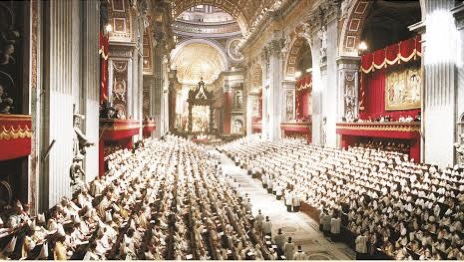
“Lumen Gentium” is a Second Vatican Council Dogmatic Constitution on the Church

“Lumen Gentium” is the Latin phrase for “Light of the Nations”
It was promulgated by Pope Paul VI on 21 November 1964

B. What does it speak of?
“Lumen Gentium” has a two-fold purpose:
(a) To explain the Church’s nature as “a sign and instrument of communion with God and of unity among all men”
(b) To clarify the Church’s universal mission as the sacrament of human salvation.

“Lumen Gentium” consists of 7 chapters
(i) Chapter 1: “The Mystery of the Church”
It provides a summary of the very nature of the Church – as both the visible and invisible reality – through which all persons are called to participate in the Trinitarian, Divine life of God through, with, and in Christ Jesus.

(ii) Chapter 2: “On the People of God”
It teaches that God wills to save people not just as individuals but as a people.

Because Christ’s love and mission are universal, so the Church’s missionary love extends to all people
In union with Him, the members of this people share in His anointing and thus in His mission. Baptism confers the dignity of being prophet, priest, and king in Christ.

(iii) Chapter 3: “On the Hierarchical Structure of the Church and in Particular on the Episcopate”
Christ entrusted the apostles with the mission of leading, assigning Peter as the head. Their successors, the bishops, are entrusted with the same mission until the end of the world.

The Bishop’s highest priorities are to lead the people towards order, harmony, and unity.

(iv) Chapter 4: “The Laity”

Christ continues His threefold messianic mission through the laity as well as the hierarchy.
The laity profoundly evangelize by how they live their everyday lives.

(v) Chapter 5: “The Call to Holiness”

The key to holiness rests in Love – Love of God.
This call to holiness is from Christ himself.
It is the Holy Spirit who moves us closer to God’s holiness.
All the faithful of Christ of whatever rank or status, are called to the fullness of the Christian life and to the perfection of charity

(vi) Chapter 6: “The Religious”

The religious state clearly manifests that the Kingdom of God and its needs, in a very special way, are raised above all earthly considerations.
It is considered a “deepening of the baptismal character”.

(vii) The Eschatological Nature of the Pilgrim Church and Its Union with the Church in Heaven

We are in a special way connected to all those who have attained Christ’s promise.
Our union in the Mystical Body of Christ is never more real than when we participate in the Sacred Liturgy/the Mass.
Celebrating the Eucharist closely unites us to the Church in heaven. We are together in communion with those in heaven and we worship God together, through Christ, in the Spirit.

(viii) “Our Lady”

The Church honors Mary because she is the beloved Mother of Jesus.
As the Mother of God and as the Mother of the Redeemer, She maintains a place of honor in both the earthly Church and in the Heavenly.
We honor and have piety toward Mary for no other reason than to better know Christ and to open the whole world up to receiving the graces of Christ.
It encouraged people to cultivate a loving devotion to Mary and strongly urged theologians and pastors to abstain from gross exaggerations and or neglectful omission in considering the dignity of Mary.

C. Pointers for Reflections

  1. “Lumen Gentium” emphasizes on “the Call to Holiness and a Fully Human Life”

Christ instituted the Seven Sacraments and established the Apostles and their Successors to represent Him as Head of the Church. Through them Christ continues to teach, to sanctify, and to rule over the Church.
The Church, possesses the fullness of the means of sanctification.

  1. It speaks of “a Church of the Poor and for the Poor”

In loving the poor, the Church practices the Lord’s admonition to love those who are unable to make kind of return (Lk 6:32-34)
To be poor like Christ means to rely entirely on God.

D. What virtues/points can we pick up from “Lumen Gentium” for this Season of Lent?

  1. Focusing on the Primary Duty of our Christian vocation: To be Holy
  2. Love the Church – Be proud to belong to the Church

E. Tips to practice these virtues

  1. Everyday making an examination and ask: How much did I try to grow in holiness today?
  2. Pray for the Church everyday – especially in these days of crisis and scandal…
    … trusting that God will always protect the Church and keep Her safe.

May this Lent and the familiarity with the Encyclical “Lumen Gentium” help us to grow in our acclamation: “Eureka – I have found the Lord”

( Full Text of “Lumen Gentium” can be found at:

http://www.vatican.va/archive/hist_councils/ii_vatican_council/documents/vat-ii_const_19641121

God Bless! Live Jesus!

✝️ REFLECTION CAPSULE – March 23, 2023: Thursday

“Being true and faithful, rather than trying to be popular!”

(Based on Exod 32:7-14 and Jn 5:31-47 – Thursday of the 4th Week in Lent)

Written on the stone pavements of a street in a remote village are the following words:
“One of the evils of this modern day, is the scarcity of men and women in places of leadership who are willing to speak their convictions…
… at the risk of popularity!”

Christian life is a constant challenge between two aspects: Being Popular or being Right!

There is a constant challenge to stand against prospects of gaining false fame and phony popularity…
… by compromising on one’s Christian ideologies and values.

Can we be Christians…
… who value one’s integrity for Christ’s sake, than to compromise one’s principles and turn popular?
… who give priority to being honest for the Lord’s honour, than to dilute one’s ethics and gain cheap fame?

The Gospel of the Day presents Jesus who stood firm and rock-solid, in his mission commitment, even in the face of opposition, indifference and apathy from the Jews.

The context of today’s Gospel Passage – Jn 5:31-47 – is the aftermath of the Healing of the Crippled Man by the pool of Bethesda, on the Sabbath Day (Jn 5:1-18)

This incident had sparked a rage of opposition against Jesus…

He was persecuted because the act of healing was done on the Sabbath (Jn 5: 16)
His defense caused the Jews to kill Him, because Jesus equated Himself with God (Jn 5:18)

There was a strong wave of antagonism and hostility, against Jesus…
… that was pressurizing Him to compromise His teachings
….that was coercing Him to dilute His principles

But Jesus stood firm and rock-solid, in his mission commitment, even in the face of opposition, indifference and apathy from the Jews.

He therefore presents before the Jews, witnesses which would testify to Him, to His Divinity.

He uses the language of a courtroom – “witnesses” – to prove His credibility as the Divine Person

Our Christian Life is a constant challenge…
… to let go of our values and principles
… to compromise on our efforts and mission works

We find in the Book of Exodus, how the people of Israel abandoned the ways of the Lord…
… and “made for themselves a molten calf… worshiped it and sacrificed to it, and said, ‘These are your gods, O Israel, who brought you up out of the land of Egypt!’” (Cf. Exod 32:8)

So often, we also create “molten calves” of money, power, position, sinfulness…
… and worship and give our priority to them!

We are quick in forgetting the many blessings and mercies of God…
… and turn away from the commandments of God!

We need to imitate our Blessed Lord…
… Who was unwilling to let go of His Commitment and Dedication to the Mission

Let us seek the Grace to remain ever uncompromising in our Christian Life.
… to stand for God and His Kingdom
… to live to share His Love and Mercy

Yes…
…. “one of the evils of this modern day, is the scarcity of men and women in places of leadership who are willing to speak their convictions…
… at the risk of popularity!”

Let us dare to show this “spirit of leadership” like Jesus our Master…
… by seeking to be true and faithful, rather than just be popular!

God Bless! Live Jesus!


📖 Discovering the beauty of the Catholic Church through the Catechism
THE SACRAMENT OF HOLY ORDERS IN THE ECONOMY OF SALVATION – THE ORDINATION OF DEACONS – “IN ORDER TO SERVE”

Since the Second Vatican Council the Latin Church has restored the diaconate “as a proper and permanent rank of the hierarchy,”…
… while the Churches of the East had always maintained it.
This permanent diaconate, which can be conferred on married men, constitutes an important enrichment for the Church’s mission.
Indeed it is appropriate and useful that men who carry out a truly diaconal ministry in the Church, whether in its liturgical and pastoral life or whether in its social and charitable works, should “be strengthened by the imposition of hands which has come down from the apostles.

They would be more closely bound to the altar and their ministry would be made more fruitful through the sacramental grace of the diaconate. (CCC # 1571)

EUREKA 17: Discovering Catholic Treasury – through a Lenten lens!

“SPIRITUAL COMBAT”

A. What is it?
“Spiritual Combat” is a 17th century Catholic Spiritual Classic on Ascetic Theology

Fr Lorenzo Scupoli is considered to be its author.
St. Frances de Sales called the “Spiritual Combat” as the “Golden Book”. This “the favorite, the dear book” of the great master of spiritual life was carried by him for 18 years. The Saint read some pages of it every day, entrusted to its supernatural and human wisdom, the guidance of his soul, and recommended it to all under his direction.

B. What does it speak of?
“Spiritual Combat” is a practical manual of living. It is a personal “do-it-yourself” book that allows the reader to put the truths of Christian spiritual warfare into practice on a daily basis.

The purpose of the book is to lead the soul to the summit of spiritual perfection, by means of a constant, courageous struggle against our evil nature, which tends to keep us away from that goal.

The “Spiritual Combat” consists of 66 short chapters based on the maxim that in the spiritual life one must either “fight or die”.

It shows the Christian how to combat his passions and vices, especially impurity and sloth, in order to arrive at victory.

C. Pointers for Reflections

  1. “Spiritual Combat” analyses various human situations and advises how to cope with them, preserving a pure conscience and improving virtue.
    The whole human history has been the story of the combat with the powers of evil. In the midst of the battlefield, human beings have to struggle to do what is right, and it is at great cost to himself, and aided by God’s grace, that he succeeds in achieving his own inner integrity.

The fundamental scripture at the heart of the “Spiritual Combat” is “None shall be crowned who has not fought well” (2 Tim 2:5)

  1. Battle One Passion, at a time!
    Don’t randomly practice virtues.

Instead, wage war against your worst passions and practice the opposite virtue.

  1. There are 7 Spiritual weapons that are prescribed
    (i) Distrust of Self (ii) Trust in God
    (iii) Spiritual Exercises (Practise of 1 virtue at a time)
    (iv) Prayer (v) Holy Eucharist (vi) Spiritual Communion
    (vii) Examination of Conscience

D. What virtues/points can we pick up from “Spiritual Combat” for this Season of Lent?

  1. Recognizing that we are Soldiers for Christ in this world
  2. Never being discouraged, even in the midst of immense hardships

E. Tips to practice these virtues

  1. Being optimistic and trusting in God, even when things don’t seem to be going “our way”
  2. Filling our hearts with the “Spirit of Joy” by invoking a short prayer, especially in moments of tension and anxiety: Jesus, I trust in You!

May this Lent and the familiarity with the Catholic Classic “Spiritual Combat” help us to grow in our acclamation: “Eureka – I have found the Lord”

CLICK TO READ the Full Text of “Spiritual Combat” at:
http://www.catholictradition.org/Classics/combat.htm

God Bless! Live Jesus!

✝️ REFLECTION CAPSULE – March 22, 2023: Wednesday

“Realising that it is only by ‘the Power of the Master that we can create the beautiful paintings’ of God’s Love and Mercy in this world”

(Based on Is 49:8-15 and Jn 5:17-30 – Wednesday of the 4th Week in Lent)

After the death of a great painter a young Italian boy went to the painting studio and asked for the great artist’s brush.

The boy tried the brush…
but found he could not paint any better with it than with his own.

It was then he realized…
… the power of painting, was not in the brush

It was in the Master!

The boy lacked the master’s power.

It was the power of the Master that created the beautiful paintings.

Jesus, displayed immense strength and courage…
… as a result of His Powerful Union with His Father!

This Power led Him to create “beautiful paintings” of Mercy and Love in the world.

The Gospel of the Day is an amazing revelation by Jesus on His relationship with the Father.

This passage has its background in the healing that Jesus performed on a Sabbath day, of a man who had been ill for a very long time – thirty-eight years (Jn 5: 1-16).

When the Jews found out from the healed person, that it was Jesus who had done this work, they were extremely furious.

Their objection was that…
… Jesus had done this miracle on a Sabbath
… Jesus had made the person to perform a work – of carrying the mat – on the Sabbath day.

They, therefore, began to persecute Jesus (Jn 5: 16).

But Jesus brought out a fair logic in defending Himself, “My Father is at work until now, so I am at work” (Jn 5:17)

  • Jesus equates Himself to the Father….
  • Jesus establishes Himself as the Son of God…

And He draws the point, that just as, on the Sabbath Day, His Father….
… creates and sustains, so is He renewing and bringing life to the world!
… supplies life and maintains, so is He nourishing and refreshing the world!

  • Jesus, as the Son has every right and privilege to engage in life-saving works, just as His Father
  • Jesus, as the Son has every justification and claim to do life-redeeming works, just as His Father

As followers of Jesus, we are to be the extension of His life-saving and redeeming works in the world…
… Am I willing to become a person, filled the power of the Lord, in order to bring healing to the world, by my deeds of kindness and goodness?
… Am I willing to become an extension of the Lord, imbued with His spirit, in order to spread His love and mercy to our broken and struggling world?

As followers of Jesus, we need to have the proper and true understanding of the Sabbath…

The Sabbath is a day of solemn rest, holy to the Lord…
… Do I give it to the Lord, entirely, engaging only in deeds that help me come closer to Him?

The Sabbath is a memorial of Israel’s liberation from bondage in Egypt
… Do I remind myself of being a person to be liberated from the bondage of sin, and seeking to grow in holiness?

The Sabbath is sign of the irrevocable covenant between God and human beings…
… Do I renew the spirit of this pledge and promise to the Lord with salvific deeds of love?

Let us deepen our relationship and grow in our efforts to be more in union with the Lord…
… the One who guides the world, the One who sustains each of us and the One who fills life in all!

Jesus, displayed immense strength and courage…
… as a result of His Powerful Union with His Father!

This Power led Him to create “beautiful paintings” of Mercy and Love in the world.

Let us also realize that it is only by “the Power of the Master that we can create the ‘beautiful paintings’ of God’s Love and Mercy in this world”

God Bless! Live Jesus!


📖 Discovering the beauty of the Catholic Church through the Catechism
THE SACRAMENT OF HOLY ORDERS IN THE ECONOMY OF SALVATION – THE ORDINATION OF DEACONS – “IN ORDER TO SERVE”

Deacons share in Christ’s mission and grace in a special way.
The sacrament of Holy Orders marks them with an imprint (“character”) which cannot be removed and which configures them to Christ, who made himself the “deacon” or servant of all.
Among other tasks, it is the task of deacons to assist the bishop and priests in the celebration of the divine mysteries
… above all the Eucharist, in the distribution of Holy Communion
…. in assisting at and blessing marriages
… in the proclamation of the Gospel and preaching
… in presiding over funerals

… and in dedicating themselves to the various ministries of charity. (CCC # 1570)

EUREKA 16: Discovering Catholic Treasury – through a Lenten lens!

“SPE SALVI”

A. What is it?
“Spe Salvi” is an Encyclical by Pope Emeritus Benedict XVI promulgated on November 30, 2007,

“Spe Salvi” is a Latin title which means “Saved in Hope” and is the second Encyclical by Pope Benedict XVI.

B. What does it speak of?
Spe Salvi” speaks about the Theological Virtue of Hope.

The central thesis of this Encyclical is that Christian hope utterly transforms human life.
The Pope reminds us that we can have hope because we have a great goal: our salvation.
We can’t take our salvation for granted because it depends on our cooperation with grace.

“Spe Salvi” is divided in 8 sections:
(i) Faith is Hope: The solid basis for our Hope is our “Faith in God”.

Because we know God, we can have hope and rest secure in the knowledge that as Christians, we “have a future.”

(ii) The concept of faith-based hope in the New Testament and the early Church: Mentions that the encounter with Christ is not something abstract, but can change our lives. That is what attracted people to it in the beginning of the Church.

(iii) Eternal life – what is it? : “Eternal life” is the ultimate goal, which gives sense to our whole life.

(iv) Is Christian hope individualistic? : The role of Hope is vital, for Faith can be interpreted (wrongly) in a merely “informative sense”, whereas genuine Hope always goes beyond the “informative to the performative”.

(v) The transformation of Christian faith-hope in the modern age: Faith…enables us to experience the reality of God’s Kingdom in this present life.

This experience becomes the final proof to us that what we hope for is real and true.

(vi) The true shape of Christian hope: Man’s great, true hope that holds firm in spite of all disappointments can only be God—God Who has loved us and Who continues to love us ‘to the end,’ until all ‘is accomplished.’ “

(vii) ‘Settings’ for learning and practising hope: The pope identifies four “settings” for learning and practising hope. (a) Prayer (b) Deeds of Service (c) Suffering (d) Judgment of God

(viii) Mary, Star of Hope: This is a long prayer to our Lady, invoking her intercession.

C. Pointers for Reflections

  1. “Spe Salvi” is a reminder of the Great Virtue of Hope
    The Three Theological virtues are Faith, Love and Hope

Of these, often, Hope is often given a “backseat” and sometimes, even taken for granted
This Encyclical calls us to consciously grow in this Theological Virtue, especially in this world, which is often “tending towards hopelessness and fatalism”

  1. “Spe Salvi” demonstrates a variety of examples and illustrations from other Christian authors, books and other philosophical thinkers/writers
    Pope Benedict XVI displays his class by giving reference to a number of authors and books – including a funeral oration by St. Ambrose, theologians like Henri de Lubac, mystics such as Augustine of Hippo, Bernard of Clairvaux, and Benedict of Nursia, philosophers such as Francis Bacon, Immanuel Kant, Friedrich Engels, Karl Marx, Max Horkheimer, Fyodor Dostoyevsky and Plato along with other authors and thinkers like Vladimir Lenin, Theodor W. Adorno, Cardinal Nguyen Van Thuan.

This reminds all Christians of that famous quote: “Every Christian must have a Bible in one hand and a newspaper in the other.”

D. What virtues/points can we pick up from “Spe Salvi” for this Season of Lent?

  1. Being a person of hope
  2. Having a deeper thirst for knowledge

E. Tips to practice these virtues

  1. Being optimist and cheerful in all the situations of life – and especially when things go wrong, to have “hope” that God is always doing everything for our good. (Rom 8:28)
  2. Keeping ourselves updated on the happenings of the world, and seeking to find “Christian solutions” to these day-to-day challenges

May this Lent and the familiarity with the Encyclical “Spe Salvi” help us to grow in our acclamation: “Eureka – I have found the Lord”

CLICK TO READ the full text of “Spe Salvi” at:
http://w2.vatican.va/content/benedict-xvi/en/encyclicals/documents/hf_ben-xvi_enc_20071130_spe-salvi.html

God Bless! Live Jesus!

✝️ REFLECTION CAPSULE – March 21, 2023: Tuesday

“Delaying no more, in drawing closer to the Streams of Graces and Healing!”

(Based on Ezek 47:1-9, 12 and Jn 5:1-16 – Tuesday of the 4th Week in Lent)

The entrance of a particular church once had a large banner that had large, bold letters printed on it.

The words in this banner, read thus:

Those people who expect salvation at the eleventh hour…
… often die at 10:30!

Postponement in spiritual matters, is indeed a perilous matter!

Procrastination – the tendency to postpone/delay – is an inclination that is to be greatly avoided in our spiritual journey.

Life often takes us through paralyzing and crippling situations

And this may cause us to often “delay or postpone”

But the Gospel of the Day is a mighty reminder on how we ought to not postpone…
… rather be “proactive” in our spiritual life.

The Gospel passage is a beautiful presentation of this aspect: On how to have our heads raised up, in hope and trust, despite many crushing and crippling causes in life.

Jesus is in Jerusalem for the feast of the Passover. As he passed through the town, he came near a pool, named Bethzatha.

Jesus encounters a person there, who has been ill for a very long period… thirty eight years! (Jn 5:5)

We are not exactly told what illness was it…

Probably a paralyzing illness…
… a cripple of the legs
… or even a combination of many other sicknesses.

But one thing is known: this sickness made the person to not walk!

The sickness had immobilized him.

But more than his physical body, it seems, that the sickness had crippled also his mind:

His way of thinking seemed jammed in having hope in life…
His outlook to life seemed blurred to see optimism and hope…
His perspective of people seemed to distort his confidence and trust…

When Jesus questions the man, “Do you want to be well?” the man answers not with a positive affirmation or an optimistic assertion.

Instead he begins to get into a complaining and a pitiable mode, “Sir, I have no one…” (Jn 5: 7)

A ray of hope was offered to him…
… but instead the man continued to see only the dark clouds.
A glimpse of joy was revealed to him…
… but instead the man persisted on the sad aspects alone.

The long period of sickness had blotted his vision and faded his hopes.

But the Lord – the ever-challenging God – does not allow the man to remain in this unfortunate and “look-on-me-with-sympathy-please” mode…

Instead, Jesus charges him, “Rise, take up your mat and walk” (Jn 5:8)

And immediately the man became well, took up his mat and walked!

The presence of the Lord vanished away the man’s doubts and lame excuses…
The mighty word of the Lord purged away the man’s feelings of looking at life negatively…

The man who had the tendency to probably “procrastinate – delay and postpone”…
… now becomes “proactive!”

The man became proactive…
… casting away his attitude of complaining to become a person of courage
… dropping off his crippling attitude of “none-to-help” and picking up the mat of power and grace

Problems beset each of us in this world.
Difficulties surround all of us, at various times and situations

But, the one who is “proactive” in life, is able to get over these “paralyzing” factors of life!

Jesus gives us this courage and the hope to “not postpone or delay” matters connected to our spiritual life

Such a pro-active action is spurred by the mighty love and mercy of the Lord.
Such a pro-active move is an approach, impelled by a tremendous faith and hope in the Lord.

You and I, very often may find ourselves in crippling situations of life.

We may keep on lying down
We may keep on being a “complaint-box”
We may keep on postponing our good and only blame people and situations

Or…

We may raise up our heads to see the Lord challenging us to walk
We may garner strength and courage and be bold to pick up our mats of suffering
We may imbue ourselves with the Lord’s power to never let anything cripple our minds

We are invited to draw Power and Strength from the living streams of God’s Grace, offered to us, in the Sacraments…
…and in particular, in this time of immense struggle and challenge, through various acts of devotion especially the Rosary, Stations of the Cross, Devotional Reading of the Bible, Chaplet of the Divine Mercy etc.

Through Prophet Ezekiel, we are reminded and encouraged to understand that where the Waters of God’s Grace flows, there is life and healing:
“And wherever the river goes, every living creature which swarms will live, and there will be very many fish; for this water goes there, that the waters of the sea may become fresh…
… so everything will live where the river goes.

And on the banks, on both sides of the river, there will grow all kinds of trees for food. Their leaves will not wither nor their fruit fail, but they will bear fresh fruit every month…
… because the water for them flows from the sanctuary. Their fruit will be for food, and their leaves for healing.” (Ezek 47:9, 12)

Let us delay no more, in drawing closer to these Streams of Graces and Healing!

Yes, Postponement in spiritual matters, is indeed a perilous matter!

Let’s remember: Those people who expect salvation at the eleventh hour…
… often die at 10:30!

Shall we be ready, “to rise, take up our mats, and walk?”

God Bless! Live Jesus!


📖 Discovering the beauty of the Catholic Church through the Catechism
THE SACRAMENT OF HOLY ORDERS IN THE ECONOMY OF SALVATION – THE ORDINATION OF DEACONS – “IN ORDER TO SERVE”

“At a lower level of the hierarchy are to be found deacons, who receive the imposition of hands ‘not unto the priesthood, but unto the ministry.”‘

At an ordination to the diaconate only the bishop lays hands on the candidate, thus signifying the deacon’s special attachment to the bishop in the tasks of his “diakonia. (CCC # 1569)

EUREKA 15: Discovering Catholic Treasury – through a Lenten lens!

“ECCLESIA DE EUCHARISTIA”

A. What is it?
“Ecclesia de Eucharistia” is an Encyclical by Pope St John Paul II

It was published on April 17, 2003
“Ecclesia de Eucharistia” is a Latin phrase for “The Church from the Eucharist”

B. What does it speak of?
“Ecclesia de Eucharistia” offers a deeper reflection on the mystery of the Eucharist in its relationship with the Church.

The goal of this encyclical was to “rekindle”, at the beginning of the Third Millennium, our “amazement” at the mystery that is the Eucharist

“Ecclesia de Eucharistia” is divided into 5 Chapters:
(i) The Mystery of Faith: It explains the sacrificial nature of the Eucharist which, through the ministry of the priest, makes sacramentally present at each Mass the body “given up” and the blood “poured out” by Christ for the world’s salvation.

The celebration of the Eucharist is not a repetition of Christ’s Passover. It is the one sacrifice of the Cross, which is re-presented until the end of time.

(ii) “The Eucharist Builds the Church”: When the faithful approach the sacred banquet, not only do they receive Christ, but they in turn are received by Him.

The Church is united to Her Lord Who, veiled by the Eucharistic species, dwells within Her and builds Her up.

(iii) “The Apostolicity of the Eucharist and of the Church”: ust as the full reality of Church does not exist without apostolic succession, so there is no true Eucharist without the Bishop. The priest who celebrates the Eucharist acts in the person of Christ the Head.

(iv) “The Eucharist and Ecclesial Communion”: Faithful to the teaching of the Apostles, united in the discipline of the sacraments, she must also manifest in a visible manner her invisible unity.

(v) “The Dignity of the Eucharistic Celebration”: The celebration of the Holy Mass is marked by outward signs aimed at emphasizing the joy which assembles the community around the Incomparable Gift of the Eucharist.

(vi) “At the School of Mary, ‘Woman of the Eucharist’”: Reflects on the analogy between the Mother of God, who by bearing the Body of Jesus in Her Womb became the first “tabernacle”, and the Church who in Her heart, preserves and offers to the world, Christ’s Body and Blood.

The Eucharist is given to believers so that their life may become a continuous Magnificat in honor of the Most Holy Trinity.

C. Pointers for Reflections

  1. “Ecclesia de Eucharistia” strongly promotes Eucharistic devotion outside of the Mass as a Source of Grace for deepening our own Faith as well as increasing Communion within the Universal Church

“The Eucharist is a priceless treasure: by not only celebrating it but also by praying before it outside of Mass, we are enabled to make contact with the very Wellspring of Grace.
A Christian community desirous of contemplating the Face of Christ… cannot fail also to develop this aspect of Eucharistic worship, which prolongs and increases the fruits of our Communion in the Body and Blood of the Lord

  1. The Encyclical clarifies and sheds light on the allegation that the Catholic Church is attempting to “re-crucify Jesus” every time Mass is celebrated.

The Mass makes present the Sacrifice of the Cross; it does not add to that sacrifice nor does it multiply it.
What is repeated is its memorial celebration, its “commemorative representation” (memorialis demonstratio), which makes Christ’s One, Definitive Redemptive Sacrifice always present in time.

D. What virtues/points can we pick up from “Ecclesia de Eucharistia” for this Season of Lent?

  1. Trying to spend more time in Eucharistic Adoration
  2. Learning more about the Teaching on the Holy Eucharist, and trying to explain to those who don’t understand/misunderstand the Holy Mass

E. Tips to practice these virtues

  1. Set apart a fixed day/time (depending on the situation and context of one’s life – either once a day/once a week/once a month)…
    … to spend time with Jesus in the Holy Eucharist.

If possible, do so, along with the entire family/community

  1. Read at least the First Chapter of “Ecclesia de Eucharistia” (From articles 1-20)…
    … in order, to get more clarity on the Church’s understanding of the Holy Eucharist

May this Lent and the familiarity with the Encyclical “Ecclesia de Eucharistia” help us to grow in our acclamation: “Eureka – I have found the Lord”

The Full Text of “Ecclesia de Eucharistia” can be found at:
http://www.vatican.va/holy_father/special_features/encyclicals/documents/hf_jp-ii_enc_20030417_ecclesia_eucharistia_en.html

God Bless! Live Jesus!