“Raising an anthem of thanksgiving, love and affection, to our Beloved Mamma Mary, the Queen of the Heavens and the Earth… and of our hearts!”
(Based on the Feast of Our Lady: Mother and Queen)
“Saare jahaan mein acha!” (“Better than all in the entire world!”)
This was the chorus we sang in unison and love… The Holy Trinity, the Holy Angels and all people of faith on the earth… just seven days back…
… on the 15th of August – the Feast of the Assumption of our Blessed Mother Mary!
Today we are back to chanting the same chorus and the same refrain with a deeper enthusiasm and stronger gusto…
… as we celebrate with heaven, the Coronation of our Blessed Mamma as the Queen of Heaven and Earth!
This Feast of the Queenship of Mary was instituted by Pope Pius XII at the conclusion of the Marian Year in 1954.
It was not…
… a new policy
… a new doctrine.
… or a new teaching
.. or even a new understanding!
This declaration was merely an affirmation of the age-old faith that has been celebrated down through the ages!
St Ephrem referred to Mother Mary as the “Majestic and Heavenly Maid, Lady, Queen.”
>> St Gregory Nazianzen called her, “the Mother of the King of the Universe.”
On this Feast Day of the Queenship of Mary…
… we are presented with the Reading on the Annunciation (Lk 1:26-38)
Let us travel with Mary, our Mamma and Queen….through this life transforming event of Her life…
This incident will highlight the journey of Grace and Mercy that God worked, to raise Her to a glorious state!
1. The Simple Mary
Mary was a simple and unnoticed girl in the unpopular town of Nazareth.
>> She was an ordinary person betrothed to a man named Joseph.
She had…
… her dreams
… her wishes for a family life
… her desires for a peaceful life!
>> But God had bigger dreams for Her…
… a dream which would make Her the Blessed among all…
>> God had higher wishes for Her…
… a wish which would make the Nazareth Family a model for all…
>> God had bigger desires for Her…
… a desire which would fill her with Peace amidst every pain…
2. The Troubled Mary
Mary was deeply troubled when she encountered Angel Gabriel.
>> The greeting of the Divine Being made Her simple heart to be filled with feelings of concern and disturbance.
She had…
… her concerns
… her share of uneasy feelings
… her moments of worry!
>> But God had greater cares for Her…
… care which would make her a Mother to all those who have concerns…
>> God had finer feelings for Her…
… a feeling which would help her to Feel for those who go through life’s pains…
>> God had greater comforts for Her…
… a comfort which will lead Her to be a Comforter to the Uncomforted…
3. The confused Mary
It was a moment of great confusion and perhaps even total puzzlement as to how could the words of Angel Gabriel be believed.
>> There was great uncertainty as to how could a conception of this sort take place and what made Heaven grant Her this choice of being the Mother of the Son of God!
She had…
… Her confusions
… Her perplexity
… Her moments of inner turmoil.
>> But God had a deeper solution to Her confusion…
… He assured Her of the Presence of His Mighty Spirit…
>> God had an enhanced way out of Her perplexity…
… He calmed Her by opening Her eyes to His great works…
>> God had a deeper answer to Her turmoil…
… He relieved Her by reminding Her that all things are possible for Him…
4. The willing Mary
The Fiat Moment – the time when Mary said the Big Yes to God’s Plan of Salvation!
>> It was a sacred time when Mary consented and became willing to allow God’s Script to work in Her unadorned Life!
She had…
… Her mysterious moments
… Her ‘what-next’ moments
… Her moments of indefiniteness!
>> But God had His superior light beyond all mysteries…
… She was to be the Woman of the Mystery of God’s Salvation …
>> God had His clear plan beyond all doubts…
… She was to be the Perfect Executor of Heaven’s Plans for humanity…
>> God had his superior design across all indefiniteness…
… She was to be the Refuge of all in Uncertainty…
Today, Is my Life…
… just too simple and ordinary?
… just too troubled?
… just too confused?
Then Mother Mary is a model to us…
… a perfect example
… a shining witness
… a great challenge to us!
In all our ordinariness, troubles and confusions, let us trust and have faith in God…
… just like Mother Mary
>> And seek to always say to God, “FIAT – Yes, Be it done to me according to Your Will!”
Let us raise an anthem of thanksgiving, love and affection…
… to our Beloved Mamma, the Queen of the Heavens and the Earth… and of our hearts!”
>> And in harmony & accord, with deep joy, acclaim Her to be –
“Saare jahaan mein acha!” (“Better than all in the entire world!”)
Happy Feast of the Beloved Queen Mamma united with Her son, King Jesus, to all of us, Her little children!
God Bless! Live Jesus!
—————————————————-
Discovering the beauty of the Catholic Church through the Catechism
THE EUCHARIST IN THE ECONOMY OF SALVATION – The signs of bread and wine
>> In the Old Covenant bread and wine were offered in sacrifice among the first fruits of the earth as a sign of grateful acknowledgment to the Creator.
>> But they also received a new significance in the context of the Exodus…
… the unleavened bread that Israel eats every year at Passover commemorates the haste of the departure that liberated them from Egypt
… the remembrance of the manna in the desert will always recall to Israel that it lives by the bread of the Word of God
… their daily bread is the fruit of the promised land, the pledge of God’s faithfulness to his promises.
>> The “cup of blessing” at the end of the Jewish Passover meal adds to the festive joy of wine an eschatological dimension: the messianic expectation of the rebuilding of Jerusalem.
>> When Jesus instituted the Eucharist, he gave a new and definitive meaning to the blessing of the bread and the cup. (CCC #1334)
—————————————————-
Month: August 2022
✝️ REFLECTION CAPSULE – Aug 21, 2022: Sunday
“Responding to the invitation of the Lord to experience life with Him, in eternity, saying: ‘Plus Ultra – More Beyond’”
(Based on Isa 66:18-21, Heb 12:5-7, 11-13 and Lk 13:22-30 – 21st Sunday in Ordinary Time, Cycle C)
It is said that Hercules, the Greek mythological figure constructed two pillars near the Straits of Gibraltar…
… to mark the edge of the then known world.
>> These pillars had a warning on them: “Ne plus ultra – No More Beyond”.
This was a warning to sailors and navigators to go no farther!
Till the 1400s, this belief was so strong…
… that “Ne Plus ultra” was written on the edge of the maps
… that Spain even adopted that phrase as their national motto.
But in 1492, Christopher Columbus set sail into the unfamiliar areas of the world…
>> Unknown waters were explored
>> New lands were discovered
After his death in 1506 in Valladolid, Spain, a memorial was built in honour of Columbus.
A peculiar yet very interesting feature of this memorial is the statue of a lion, destroying one of those Latin words
>> The word being torn away by the lion is “ne”
Thus, the motto is made to read: “Plus Ultra – More Beyond!”
And this indeed is the truth of human life: There certainly is “More Beyond”
>> “More Beyond” this present materialistic life
>> “More Beyond” the transitory nature of this earthly life
Human beings, by nature, are inquisitive and curious.
>> There is a tendency to seek to know many things.
One of the prime aspects among all such seeking are the questions concerning the life after this life.
>> What will happen after I die?
>> Where will I go after my death?
>> Is there such thing called as a heaven or hell?
>> Will God really punish or will He lavish the license of heaven to all?
Such eschatological questions often disturb our minds & we become a bit perplexed over an uncertain future.
The Gospel of the Day presents such an eschatological question being posed to Jesus:
“Lord, will only a few be saved?” (Lk 13:23)
Jesus, has a very unique way of dealing with questions and doubts.
When we scan through some of such incidents, wherein Jesus has been asked a question or a doubt, we often find that He either doesn’t give a straight answer or sometimes even doesn’t give any answer…
>> A lawyer comes to Jesus and asks, “Who is my neighbour?” (Lk 10:29)
… Jesus doesn’t give a direct answer; instead responds with the Parable of the Good Samaritan.
>> Some people tell Jesus about the Galileans whose blood Pilate had mingled with the sacrifices, and expected Jesus to make some comments (Lk 13:1)
… Jesus doesn’t explicit a clear teaching; instead responds with the Parable of the Barren Fig Tree.
In today’s Gospel incident too, Jesus is asked about how many will be saved.
>> But Jesus chooses to respond with the Illustration of the Narrow Door.
Why does Jesus do so?
>> Why does He not respond directly to such questions, and instead answer in some other form?
One of the tendencies among many believers, including perhaps some of us, is that…
…we tend to miss the actual point, in the process of discussion.
…we fail to grasp the actual thing needed, in the course of many doubts.
We wonder about who all will be saved…
>> We wonder when this world will come to an end.
>> We wonder how many people will make to heaven
>> We wonder how many will get cast into hell.
These simple questions lead to complicated ones…
What about people who have never heard about God?
>> What about those souls in distant lands who never had a chance to know what is God?
These complicated questions further leads to some drastic conclusions (sadly!)…
What kind of God sends people to hell?!
>> If the God of the Bible is so cruel, then I don’t want to believe in Him!
>> I would better not believe in any God and rather live my life the way I want!
Well… this is the sad part!
>> It’s not that questionings or doubts are bad…or not that they are not encouraged…
But sometimes, such interrogations make us to miss the main point.
We get so entangled with doubts of the future, that we fail to prepare for the future.
>> We get so busy asking about eternal life, that we fail to live a life worthy of it!
But Jesus brings home to point…
What is needed utmost is an upright life…
… in faith and in repentance.
What is most needed is to live a life pleasing to God…
… and in seeking to do His Will.
This is the narrow way!
>> To live a life of faith, in the midst of challenges and crises, is hard!
>> To live in total repentance and brushing aside sin at every point of life, is hard!
>> To live a life seeking to live in tune with God’s Will, even if it is demanding, is hard!
This is the narrow way, to which the Lord invites us.
Let us not get too much webbed in the questions and doubts, and lose focus of what’s most needed…
… Faith, Repentance and Doing His Will.
>> Yes, we don’t live in a world which has a motto “Ne plus ultra – No More Beyond!”
Instead, Jesus, the Lion of Judah destroys that word “ne”…
>> And invites us to experience life with Him, in eternity, saying: “Plus Ultra – More Beyond”
God Bless! Live Jesus!
——————————–
📖 Discovering the beauty of the Catholic Church through the Catechism
THE EUCHARIST IN THE ECONOMY OF SALVATION – The signs of bread and wine
>> At the heart of the Eucharistic celebration are the bread and wine that, by the words of Christ and the invocation of the Holy Spirit, become Christ’s Body and Blood.
>> Faithful to the Lord’s command the Church continues to do, in his memory and until his glorious return, what he did on the eve of his Passion:
“He took bread….” “He took the cup filled with wine….” the signs of bread and wine become, in a way surpassing understanding, the Body and Blood of Christ; they continue also to signify the goodness of creation.
>> Thus in the Offertory we give thanks to the Creator for bread and wine, fruit of the “work of human hands,” but above all as “fruit of the earth” and “of the vine” – gifts of the Creator.
>> The Church sees in the gesture of the king-priest Melchizedek, who “brought out bread and wine,” a prefiguring of her own offering. (CCC #1333)
———————————
✝️ REFLECTION – Aug 20, 2022: Saturday
“Daring to pick up the ‘towels’ of service and kindness and living a life ‘clothed in humility!’”
(Based on Ezek 43:1-7 and Mt 23:1-12 – Saturday of the 20th Week in Ordinary Time, Year 2)
Maundy Thursday is associated with a customary practice that is followed in many of the Churches all around the world…
It consists of choosing of twelve persons from the Church – based on various parameters or criteria.
These twelve are given the “privilege” to have the feet washed by the Main Celebrant (usually the parish priest) during the Holy Mass.
This is a symbolic remembrance of the “washing of the feet” that Jesus had undertaken on the evening of the Last Supper.
Preaching on this custom, on a Holy Thursday, a priest once spoke the following in his sermon:
“There are twelve of us, who have been chosen from among us, whose feet will be washed this evening.
Perhaps, there were many others also who had a desire that their feet also be washed.
Probably, some of you, children, are dreaming of growing up faster in life, so that one day, you too may be chosen to have your feet washed.
But here is a point to be considered…
Most of us probably are thinking only about ‘having our feet washed’.
But I really do wonder, how many of us – be it those who have got a chance or those who have missed – think also of ‘being the one who washes the feet of others?’
We all probably are desiring and wishing only for the chair, to be seated, and have our feet washed.
But how many of us also wish and desire for the ‘towel’?”
It was his direct way of telling that there were very few who will to be the last, the least and the lowest in the Church, the Body of Christ.
Am I a person who is willing to lower myself in humility?
Jesus says in today’s Gospel, “Whoever exalts himself will be humbled; but whoever humbles himself will be exalted” (Mt 23: 12)
The 23rd Chapter of the Gospel of St Matthew begins with Jesus turning the attention of His disciples and of the crowds, towards the Scribes and the Pharisees.
Focussing on the religious leaders and on their practices, Jesus launches a volley of critically true statements, a string of their hypocritical misconduct and a barrage of their wicked misdeeds!
The chapter ends with the “Painful Lament” by Jesus over Jerusalem – the city of the Lord!
One of the highlights in this highly volatile and strongly-worded Chapter is the number of times Jesus mentions the two groups of people – “Scribes and Pharisees”
There is, in total, 7 occurrences of the phrase, “Scribes and Pharisees” – a biblical number for totality!
This Chapter is a therefore, a full-blown critique and condemnation of the ways of the Scribes and Pharisees.
Why is Jesus so outright in His condemnation, so merciless in His usage of words and so blatant in His attacks on the Scribes and Pharisees?
[Meanwhile, when we go through these critical attacks of our Blessed Lord on this group, one must always remember the words of Jesus Himself: “I have come not to call the righteous, but sinners to repentance” (Lk 5:32)
There was deep pain in the heart of the Lord, in seeing the way religion was being manhandled, misused and misinterpreted by the religious leaders of His time
As the Son of His Beloved Father, it was hurting for the Son to see a section of people, trampling upon God’s precious and venerable truths, and twisting them for their own self-interests and self-agenda
A strong form of condemnation was reserved only to those who were hardened in heart – as a means for them to repent and turn back their ways to the Lord. The method of ‘sharp condemnation’ was reserved only to the proud and the arrogant; never to the poor sinners!]
The reason for Jesus making a scathing attack on the religious authorities of His times, could be summarized into one crucial point: Glorification of one’s own self at the expense of the Glory of God and the Mercy deserving for His people!
Therefore, Jesus goes on to point out the many occasions and circumstances when the self-interest of the Pharisees and Scribes took extreme priority over God Himself!
It is this self-centred and self-glorifying act that makes Jesus to tell, “For they preach, but they do not practise!” (Mt 23:3b)
How easily can this be our own state of affairs, in our life…!
We may be people…
… who “appear” to be very fine and kind – but perhaps, we are persons who find it too hard to let go of our pride, in reaching out to the needy, in humble service!
… who speak a lot on helping others and being generous – but perhaps, we go through grilling moments in lowering ourselves and adopting a lowly status to extend a helping hand!
… who desire happiness in communities and peace at homes – but perhaps, we discover ourselves to be persons who are unwilling to let go of my ego and allow a listening ear to the views and opinions of others!
The call, today, therefore is…
… “to work for a cause – not applause!”
… “to live life to express – and not simply to impress!”
Following the great example of Jesus, may we dare to pick up the “towels” of service and kindness and live a life “clothed in humility!”
God Bless! Live Jesus!
📖 Discovering the beauty of the Catholic Church through the Catechism
THE EUCHARIST – What is This Sacrament Called?
Holy Communion, because by this sacrament we unite ourselves to Christ, who makes us sharers in his Body and Blood to form a single body.
We also call it: the holy things (ta hagia; sancta) – the first meaning of the phrase “communion of saints” in the Apostles’ Creed – the bread of angels, bread from heaven, medicine of immortality, viaticum.Holy Mass (Missa), because the liturgy in which the mystery of salvation is accomplished concludes with the sending forth (missio) of the faithful, so that they may fulfil God’s will in their daily lives. (CCC #1331-1332)
✝️ REFLECTION CAPSULE – Aug 19, 2022: Friday
“Becoming an Apostle and Agent and Ambassador of Love!”
(Based on Ezek 37:1-14 and Mt 22:34-40 – Friday of the 20th Week in Ordinary Time, Year 2)
There once was a farmer who grew award-winning ‘corn’ (maize).
Each year he entered his corn in the fair-competition conducted at the state-level, where it won a prize.
One year a newspaper reporter interviewed him.
Among the many great practices that this farmer had adopted, the reporter also learned something highly interesting about how this farmer grew corn…
…and which made him to win a prize every year.
The reporter discovered that the farmer shared his seed corn… his best variety seed…
… with his neighbouring farmers!
“How can you afford to share your best seed corn with your neighbours…
… when they are also entering into competition with you?” enquired the bewildered reporter.
“Why sir,” replied back the farmer, “didn’t you know one of the important realities of life?
The wind picks up pollen from the ripening corn and swirls it from field to field.
If my neighbours grow inferior variety of corn, the cross-pollination will steadily degrade the quality of my corn as well.
If I am to grow good corn, I must help my neighbors grow good corn.
This is the reality of life that I have realized: In order to get the best out of life, I need to give my best to the other!”
Yes, the farmer was very much aware of the relatedness of life.
His corn could not improve unless his neighbor’s corn also improved.
Have we realized this reality of our lives?
In order to get the best out of life, I need to give my best to the other!”
Those who choose to live well, must help others to live well too.
The value of a life is measured by the lives it touches and the love we display
And those who choose to be happy must help others to find happiness…
… for the welfare of each is bound up with the welfare of all!
Yes, Love is the starting point, the end and the essence of a Christian Life.
The Gospel of the Day emphasizes and affirms this aspect of Love: Love of God and Love of neighbour.
The Pharisees come together to trap Jesus with a question from the Law: “Teacher, which is the most important commandment of the Law?” (Mt 22: 36).
The Lord of Love is sought to be trapped in a web of malice!
This was a complicated question that was put forward to Jesus.
The Jewish Law of the Torah comprised 613 precepts.
It was certainly a challenge to condense these codes into a single commandment.
Probably Jesus would’ve looked into the eyes of the one who asked this question and thought, “Why do you seek to put me to the test?”
There was malice and a corrupt intention in the one who questioned.
But the greatness of the Lord overwhelms the evil designs of humans.
Jesus answers the question which had an evil bent, with an answer filled with goodness…
… “Love the Lord your God with all your heart, with all your soul and with all your mind….
Love your neighbour as yourself”! (Mt 22: 37)
Bingo..!
Two birds with one shot!
He not just answered His interrogators but He also proclaimed the summary of the Gospel.
He not just silenced His critics but He also won many followers for the Good News.
The Pharisee came asking which is “the” greatest commandment (Mt 22: 36)
He expected just one commandment.
But Jesus answers with two…and showed that those two commandments are nothing but one!
The Love of God and the Love of neighbour…
They were two dimensions of the same Love.
And this One Love, with two facets, formed the basis of all the other commandments of the Law!
The tragedy of our world and our spirituality very often, is the separation of these two dimensions…
One loves God….but fails to love one’s neighbour!
Another loves the neighbour…but fails to love God!
One loves to read and hear and understand God’s Word… but fails to apply it in real life.
Another loves to have a lot of social relations… but fails to build a strong spiritual basis.
One loves to preach deeply over virtues of the Gospel… but fails to live them in actuality.
Another loves to be in friendship with all… but fails in closeness with God, the source of Love.
One loves the Church and her teachings… but falls short to serve the society and its peoples.
Another serves people… but vehemently hates the Church, the ark of the Sacraments of Love!
Christian love is not just about emotions.
Christian love is not just about feelings.
Christian love, is…
… making a decision to serve, even if one does not feel so.
… being faithful, even if one is rejected or even shown indifference.
… being committed, even if one feels an aversion towards the other.
Easier said, than done….right?
This is where, we need to…
… depend on God, the Source of Love itself!
… draw strength from the Sacraments that the Church offers!
… display a Passionate love of God in order to share it with others!
Unless we are in Communion with the Lord, all this reflection remains merely a theory.
Unless we are joined to God, the Source of Love, all our meditations remain superficial.
We need to pray as the Psalmist says: “I love you, Lord, my strength” (Ps 18: 2).
He is the strength for us to love our neighbour.
He is the source for us to share our lives with our neighbour.
He is the supplier of hope for us to sustain in our difficulties to love.
The world is thirsting for Love…
Each one of us is called to radiate this Love: Love of God and Love of Neighbour.
Yes, let us deepen our realization: In order to get the best out of life, I need to give my best to the other!”
Let us become an Apostle and Agent and Ambassador of Love!
God Bless! Live Jesus!
📖 Discovering the beauty of the Catholic Church through the Catechism
THE EUCHARIST – What is This Sacrament Called?
The memorial of the Lord’s Passion and Resurrection.
The Holy Sacrifice, because it makes present the one sacrifice of Christ the Savior and includes the Church’s offering. >> The terms holy sacrifice of the Mass, “sacrifice of praise,” spiritual sacrifice, pure and holy sacrifice are also used, since it completes and surpasses all the sacrifices of the Old Covenant.
The Holy and Divine Liturgy, because the Church’s whole liturgy finds its center and most intense expression in the celebration of this sacrament; in the same sense we also call its celebration the Sacred Mysteries.
We speak of the Most Blessed Sacrament because it is the Sacrament of sacraments.The Eucharistic species reserved in the tabernacle are designated by this same name. (CCC #1330)
✝️ REFLECTION CAPSULE – Aug 18, 2022: Thursday
“Being willing to respond to the invitation and following the norms of Love, to be among the chosen ones!”
(Based on Ezek 36:23-28 and Mt 22:1-14 – Thursday of the 20th Week in Ordinary Time, Year 2)
A story goes of a King in the olden days and of his “clown” or “jester”
This jester would sometimes say very foolish things whereas sometimes he would make some wise utterances.
One day, it so happened, that this jester said something so foolish that the King handed him a staff and mocked at him saying, “Take this, and keep it… till you find a bigger fool than yourself!”
Years later, the kind fell ill and was on his deathbed.
His favourite courtiers were summoned to him; his family and other friends were also around him.
The King, sick and pale, addressed them saying, “I am about to leave.
I am going on a very long journey and will never be returning to this place.
In deep sorrow, I wish all of you ‘goodbye'”
At that moment, the Jester stepped forward and said to the King, “Your Majesty, May I, please, ask a question?”
“When you journeyed abroad – visiting your people, or paying diplomatic visits to other Kingdoms, you have always made sure there is a great deal of preparation that is ensured.
May I kindly ask, what preparations has your Majesty made for this long journey that he is about to take?”
With tears and remorse and self-realization, the King replied, “Alas! I have made no preparation!”
‘Then,’ said the jester, here is this staff for you. For now I have found a bigger fool than myself.’
Is the state of the King – being unprepared for the journey towards heaven – finding resonance with our own lack of preparations, with respect to eternal life?
The Gospel of the Day presents the parable of the Wedding Feast with a mighty warning to “stay prepared” in our endeavors to be part of the Banquet of Eternal Joy in Heaven.
The Parable of the Wedding Feast, broadly speaking, presents two dangerous attitudes that can overpower a Christian:
- The arrogant attitude of rejecting God’s omnipotence
- The lethargic attitude of taking for granted God’s graciousness
In the first part of the parable, we come across the group of people, who turn down the offer of the King for the Wedding Banquet (Mt 22: 5-6)
They made several excuses…
… some ignored the invitation and went away
… one to his farm
… another to his business
… the rest manhandled the King’s servants
On display was their highly casual and lethargic attitude towards the King.
They were least bothered regarding the royal nature of the invitation
They cared little for the feelings and the sentiments of the King who had called them with much expectations
In the second part of the Gospel, we come across the guest, who failed to wear to the appropriate wedding garment (Mt 22: 11-12)
It was a sheer lack of failure to follow the customs of the land and was a betrayal of the host’s generosity…
… It was customary for the hosts to provide the suitable wedding apparel
… The “speechless” silence of the man, showed his inability to produce any valid reason for this act of disobedience and non-compliance
On display was his highly diminishing and disrespectful attitude towards the King.
He was overly adamant in keeping up the wedding protocols of his times
He was exceedingly proud to acknowledge the generosity of the King and chose to purposely insult the King
These two extremes, then, are fearful plagues that a Christian needs to be wary of…
- A devastating tendency to be arrogantly proud towards the Mercies and Favours of God
- A dissipated tendency to be lethargic towards the Graces and Blessings of God
Do I put down the power of God…
… by failing to give any response to His constant calls and inspirations to lead a more holy life?
… by busying myself in my worldly activities and failing to give any heed to the works of the Kingdom?
… by engaging constantly only for self-centered glory and side-line anything that promotes the Glory of God?
Do I make a mockery of the Grace of God…
… by professing to be a Christian and yet failing to wear the garments of doing God’s Will and in living His Gospel Virtues?
… by wanting to be proudly seen as a follower of Christ and yet unwilling to follow His teachings and commandments in daily life?
… by enjoying all the comforts that comes alone with being a ‘Christian’ but shamelessly failing to perform the duties associated with it?
The foretaste of the Heavenly Banquet is seen in the Holy Eucharistic Celebration.
The seriousness in our preparation for the Holy Mass is a clear indicator of our seriousness in preparation for the Heavenly Banquet.
Do I approach the wonderful foretaste of Heaven – the Holy Eucharist – with greater devotion and preparation…
… or do I adopt an attitude of arrogant denial of its Holiness or an attitude of lethargy and “taking for granted”?
The Lord adopts a tone of seriousness and strictness, when it comes to our question of preparation for Eternal Life.
There is only one life here on earth – and it deserves to be lived in its utmost fullness by responding to God’s Graces.
May we respond to this demanding call of the Lord – and make ourselves worthy of Life Eternal, to the best of our possibilities and capabilities.
“Many are invited and a few are chosen” (Mt 22:14)
Are we willing to respond to the invitation and follow the norms of Love, to be among the chosen ones?
God Bless! Live Jesus!
📖 Discovering the beauty of the Catholic Church through the Catechism
THE EUCHARIST – What is This Sacrament Called?
The Lord’s Supper, because of its connection with the supper which the Lord took with his disciples on the eve of his Passion and because it anticipates the wedding feast of the Lamb in the heavenly Jerusalem.
The Breaking of Bread, because Jesus used this rite, part of a Jewish meat when as master of the table he blessed and distributed the bread, above all at the Last Supper.
It is by this action that his disciples will recognize him after his Resurrection, and it is this expression that the first Christians will use to designate their Eucharistic assemblies…
… by doing so they signified that all who eat the one broken bread, Christ, enter into communion with him and form but one body in him.The Eucharistic assembly (synaxis), because the Eucharist is celebrated amid the assembly of the faithful, the visible expression of the Church. (CCC #1329)
✝️ REFLECTION CAPSULE – Aug 17, 2022: Wednesday
“Recognizing and realising the immense wonders of God’s Grace at every step of our life, and leading our life with joyful faces!”
(Based on Ezek 34:1-11 and Mt 20:1-16 – Wednesday of the 20th Week in Ordinary Time, Year 2)
Grumbling and complaining had become a habit for old Mrs. Dolly.
She would find a point to be critical for anything and everything.
Finally, it so happened one day, that the parish priest felt he had found something about which she could make no complaint: the old lady had a very excellent produce in her vegetable garden – of the finest potatoes in that area.
“Oh, finally, I hope you must be well pleased” said the parish priest, with a gleaning smile, to Old Mrs Dolly, “Every one’s excitedly talking about how wonderful are the potatoes in your garden this year!”
However, with a frown, the old lady rumbled back, “Well, they are not so bad.
But where are the bad ones for the pigs?”
Well, the one who puts on the tinted spectacles of grumbling, invariably finds a reason to complain about anything in life, isn’t it?
As it is said, “it is usually not so much the greatness of our troubles as the littleness of our spirit that makes us complain.”
The Gospel of the Day presents a group of people who find their way into grumbling even about, perhaps the most undeserved subject of complaining: the Free Gift of the Grace of the Generous God!
Jesus presents the parable of the Workers in the Vineyard liking it to the Kingdom of Heaven (Mt 20: 1)
“It’s not fair” is a common phrase that we raise in our day-to-day activities.
Children, while playing games with each other, invariably raise a “It’s not fair” slogan, especially when they feel some cheating is done by the umpires or the opposite team players
Students quote the “It’s not fair” phrase when sometimes they get lesser marks than expected, and blame the professor or the system
Employees in a company chant “It’s not fair” when they feel that somehow they have been given lesser pay or treated unfairly with respect to promotions etc.
Family members or friends shout “It’s not fair” when there are impartialities or favouritism or ignorance discovered in relationships
A sense of dissatisfaction reigns in many circumstances of our daily life.
Such was the displeasure expressed by those workers, who had toiled the whole day and received just one denarius, in the Parable of Jesus of the Workers in the Vineyard: “It’s not fair!”
These workers felt… “It was not fair”…
… that the landowner had equated the wages of those who came in last to them, who had toiled the whole day!
… that there had been no consideration to the immense toil in the blazing sun that they had put in!
… that the principle of justice and impartiality had been badly violated and trampled upon!
But the Master of the Vineyard was quick to point out to them their fallacy in such a thinking…
He reminded them first of all, that the wages that they received, was something that they had already agreed upon
He also brought to their notice that the wages given to the others were simply out of his generosity and good-will
How often do we also raise the cry of complains and ring in the growls of grumbling when we see others finding pleasure in greater favours and happiness of life…
“I toil so much in life, and I don’t seem to be really growing prosperous or at least being freed from the pangs of daily life struggles…
… But someone else, has a relaxed and cosy life and still find themselves enjoying with the comforts and luxuries of life”“I try my level best, with much hard-work and labour in order to excel in my talents and I don’t seem to reap its fruits…
… But someone else, maybe blessed by natural talents or sheer out of luck, seems to be doing much better and enjoying greater harvests of success”
The workers who grumbled did not complain because they did not get the “just” wage…
… but their complaint was because “they were made equal to the others”
It was a complaint arising out of…
… “unfair comparison”
… “jealousy in seeing others being rewarded more”
… “we being made small before others”
Perhaps, this is where we need to make a radical shift in our perspectives.
God’s Grace comes to human persons in different levels and measures.
Grace is defined as “favour – the free and undeserved help that God gives us to respond to His call to become children of God…partakers of the divine nature and of eternal life”.
Therefore to make bargains on Grace… to make it a “countable” entity…
… would be a clear violation of its very essential nature of being a “free gift!”
Hence, what is required is to make a shift in perspectives…
… from “complaining” to being “thankful”
… from “grumbling” to being “grateful”
… from saying “It’s not fair!” to saying “It’s Your Grace”
Life constantly pushes us into corners which make us to have “grumpy” faces, “complaining” tongues and “grumbling” tones.
But, can we recognise and realise the immense wonders of God’s Grace at every step of our life…
… and lead a life with “joyful” faces, “grateful” tongues and “thankful” tones?
God Bless! Live Jesus!
📖 Discovering the beauty of the Catholic Church through the Catechism
THE EUCHARIST – What is This Sacrament Called?
The inexhaustible richness of this sacrament is expressed in the different names we give it.
Each name evokes certain aspects of it.
It is called: Eucharist, because it is an action of thanksgiving to God.The Greek words ‘Eucharistein’ and ‘Eulogein’ recall the Jewish blessings that proclaim – especially during a meal – God’s works: creation, redemption, and sanctification. (CCC #1328)
✝️ REFLECTION CAPSULE – Aug 16, 2022: Tuesday
“Realizing the worthlessness of clinging on to riches and wealthy, and seeking to make Christ as the greatest possession and treasure of our lives!”
(Based on Ezek 28:1-10 and Mt 19:23-30 – Tuesday of the 20th Week in Ordinary Time, Year 2)
A distinguished man was lying on his death-bed.
As he lay, some of his precious ornaments, priceless stones and his fine collection of exquisite watches were brought to him.
Turning a cold glance on the treasure, which he would once have clutched with an eager grasp…
… he said with a sigh:
“Alas! this is a very fine thing in this country…
… but I am going to a country where it will be of no use to me!”
The man, at his death-bed realized the worthlessness of clinging on to riches and wealth!
If only, he had realized it, when he had years to live…
… life would have been much peaceful and contented
… life would have been better utilized to prepare for eternal life
Well…
… all of us, do have time to realize – the worthlessness of clinging on to riches and wealthy..
Do we seek to make Christ as the greatest possession and treasure of our lives?
Do we mend our lives accordingly, and live in pursuit of heaven?
Jesus, in the Gospel of the Day gives a triple perspective on the aspect of riches (Mt 19:23-30)
- The difficulties that attachments to riches pose, in entering the Kingdom of God
- The power of God that alone can assist and help one to attain eternity
- The promise of reward to those who live a life of detachment
Jesus says, “Amen, I say to you, it will be hard for one who is rich to enter the Kingdom of heaven” (Mt 19: 23)
The reason why riches are given such a strong reprimand by the Lord is because:
Attachment to riches can easily take away one’s heart from the Lord…
… The Lord, Who stripped Himself of all glory and became poor is often given less priority!
Being obsessed with riches leaves us with little time and thought for things of eternity
… Our plannings, aspirations and projects often end up being only earthly in nature!
Having too many riches can pose a danger to feel proud and independent
… A sense of “I can manage all by myself” creeps in; in the process, keeping aside God from our lives!
Venerable Bishop Fulton Sheen says:
“It is ever true that the richer the soul is on the inside, the less need it has of luxuries on the outside;
Excessive adornments and an inordinate love of comforts are proof of our inner nakedness!”
The power of God that alone can assist and help one to attain eternity
On hearing of the difficulty of the rich to enter the Kingdom of God, the disciples asked Jesus, “Who then can be saved?” (Mt 19:25)
Jesus replied, “For human beings, this is impossible; but for God all things are possible” (Mt 19: 26)
The demands of Christianity to live a life of detachment from riches, can sometimes cause undue anxieties.
And we begin to ask…
… Is it really possible for us to live as Jesus expected of us?
… Is it not beyond my capabilities to achieve what the Lord wishes of us?
Such kind of anxieties and worries, can often cause weariness our soul!
St Francis de Sales says:
“Anxiety is the greatest evil that can befall a soul, except sin!
Have patience with all things, but first of all with yourself!”
The Lord tells us that even in our efforts to be detached…
… we need to depend on Him
… we need to know that His Grace will take us through
Therefore, to have detachment…
… we ought to come to the Lord in prayer, surrendering our lives
… we need to thank the Lord continually for all His blessings, acknowledging Him as the source
… we need to reach out to the Lord in the poor, the weak and the needy (Mt 25:40)
The promise of reward to those who live a life of detachment
Jesus says: “Everyone who has given up”…will receive a hundred times more and will inherit eternal life” (Mt 19:29)
A question of despair or hopelessness sometimes nags a Christian…
… What is the use of living an honest and virtuous life?
… Why is my life unrewarded, whereas many others thrive even by unjust means?
The Lord however, gives an answer…
… that none of such sacrifices will go unrewarded
He does promise His rewards – temporal as well as spiritual…
… but these are to be received in accordance to the Will of God.
Many times, the Will of God, is not taken into consideration…
… when we look for rewards in having made a sacrifice.
… when we seek for answers to our prayers
… when we expect fruits for our efforts
The Lord therefore invites and challenges us…
… to purify our motives when we make sacrifices
… to align our interests to God’s Will when we work for Him
That’s why Jesus would say: “Seek first the Kingdom of God and His righteousness… and all other things shall be added unto you” (Mt 6:33)
The words of Mother Angelica, the founder of EWTN (Eternal Word Television Network) are a reminder to us:
“Have we lost sight of this world being a pilgrimage?
It’s a journey! You’re not home yet!
A Christian must never lose sight of this passing reality of life”
Yes, let us come to this realization about attachments to riches:
“Alas! This is a very fine thing in this country…
… but I am going to a country where it will be of no use to me!”
God Bless! Live Jesus!
📖 Discovering the beauty of the Catholic Church through the Catechism
THE EUCHARIST – SOURCE AND SUMMIT OF ECCLESIAL LIFE
By the Eucharistic celebration we already unite ourselves with the heavenly liturgy and anticipate eternal life, when God will be all in all.
The Eucharist is the sum and summary of our faith: “Our way of thinking is attuned to the Eucharist, and the Eucharist in turn confirms our way of thinking” (CCC #1326-1327)
✝️ REFLECTION CAPSULE – Aug 15, 2022: Monday
“Through the intercession and inspiration of Mother Mary, seeking to grow in holiness, and making the best use of our freedom as Children of God!”
(Based on the Solemnity of the Assumption of our Blessed Mother Mary – Independence Day of India)
“Saare jahaan se acha!” (“Better than the entire world!”)
These were words, exclaimed by Rakesh Sharma – with a jubilant face and an excited voice – high up in the outer space.
The first man to go up to space from India, was replying to the query by Indira Gandhi, the Prime Minister of India, as to ‘how the nation looked from the outer space’.
“Saare jahaan mein acha!” (“Better than all in the entire world!”)
These were probably the Words, exclaimed by God – with a Radiant Face and a Splendid Voice – transcending the entire universe, looking at Blessed Mother Mary.
These triumphant words are proclaimed and repeated by the entire Church in unison and acclamation!
Rakesh Sharma stated India to be the Better than the Entire world!
God declared Blessed Mother Mary to be better than all in the Entire World!
Sentiments of Patriotism and Sentiments of God’s Abundant Grace and Mercy join hands on this day
The 15th of August…
… the Independence Day of India and the Assumption of our Blessed Mother Mary!
This day has much to teach us… much to thank the Lord… and much to exhort us!
This day has much to be nostalgic… much to be joyful… and much to be hopeful of!
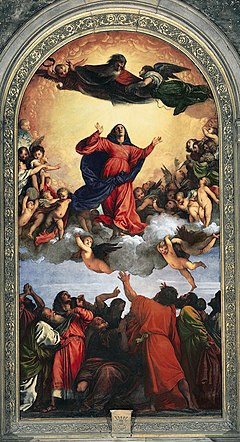
The Solemnity of the Assumption of our Blessed Mother Mary celebrates Jesus, the Son-King sharing His Glory with His Mother.
Human kingdoms have followed the tradition of the son who is the King of the Land, crowning his mother, as the Queen of the Kingdom.
The Old Testament bears witness to this fact:
King Solomon on assuming charge of the throne, after King David, raised his mother Bathsheba to his side, to be the royal queen (1 Kings 2: 19)
The Assumption of Mother Mary is one of the four Marian Dogmas that the Catholic Church pronounces.
A dogma is a doctrine that is solemnly proposed by the Church as formally revealed in Scripture or Tradition.
The four Marian Dogmas are:
- Mary as the Mother of God
- The Perpetual Virginity of Mary
- The Immaculate Conception of Mary
- The Assumption of Mary into heaven
The declaration of the Dogma of the Assumption of Mary is as follows:
“By the authority of our Lord Jesus Christ, of the Blessed Apostles Peter and Paul, and by our own authority, we pronounce, declare, and define it to be a divinely revealed dogma…
… that the Immaculate Mother of God, the ever Virgin Mary, having completed the course of her earthly life, was assumed body and soul into heavenly glory.”
This Dogma of the Assumption was proclaimed on November 1, 1950, by Pope Pius XII in the Apostolic Constitution “Munificentissimus Deus”
This proclamation was not defining something new in the Church…
… rather it was an official recognition of the centuries-old belief on Christians about the Assumption of their Heavenly Mother.
The Feast of the Assumption is one of the most important feasts of our Lady.
The Assumption was the reward God granted to our Blessed Mother for the Right use of Her Freedom!
Freedom plays a vital role in the destiny…
… of a person
… of a family
… of a society
… of a nation
… of the world!
Mamma was invited to be the Mother of God by Angel Gabriel…
… in true freedom, She said Yes!Mamma felt the need to be a Helper of the Needy by her cousin Elizabeth…
… in true freedom, She said Yes!Mamma was to be a model of Patience in difficulties at the birth of Jesus…
… in true freedom, She said Yes!Mamma was requested to be a Silent Contemplative during His boyhood…
… in true freedom, She said Yes!Mamma sensed an urgency to be an Intercessor before God at Cana…
… in true freedom, She said Yes!Mamma was called to be a Serene Bearer during the Passion of the Lord…
… in true freedom, She said Yes!Mamma was called to be a Model of Prayer at the Upper Room…
… in true freedom, She said Yes!
A responsible use of freedom is a sign of true and authentic spirituality and is a pathway to greater glory!
Freedom is not simply doing what we want…
… Freedom is assuming responsibility for ours and others’ lives!Freedom is not simply getting our pleasures fulfilled…
… Freedom is fulfilling our tasks in the best way possible!
The Assumption of Blessed Mother Mary is an invitation and a challenge for each one of us….
… to focus our attention on things of heaven & transcendence and not get fixated with cares of this world!
… to live a life of holiness and purity and seeking to do God’s will at all times and in every situation!
… to share with the pain and passion of the Lord and become partakers in the salvation of the world!
… to realize that to be Holy & a Saint is a call of every Christian & we need to prioritize our life on them!
We need to be reminded that Mary had exclaimed, “Behold, I am the Handmaid of the Lord” (Lk 1:38)
Mary was an ordinary human being.
She too had Her ordinary and humble beginnings.
She too went through common life’s struggles and strains.
But through these “ordinary” circumstances…
God “raised” Her to the Heights
God “assumed” Her into Glory
… because She “found favour with God” and lived a life worthy of that call
In total submission, humble obedience and loyally faithful!
This then is our call too…
As Baptized Christians, we have “found favour” with God.
We dwell in “ordinary” circumstances of life – with hardships and pains.
But if we also…
… seek and live the Will of the Lord at all times
… constantly submit to what He wants
… and dutifully bow to His mercy and grace
The glory which Jesus has “won” for us at Resurrection, can be ours!
God’s plans are indeed wonderful…
In the “Story of the Fall” a mother (Eve) had been involved intimately with a man (Adam) and humanity fell into the sea of sin!
In the “Story of the Rise”, a Mother (Mary) was involved intimately with a Man (Jesus) and humanity is promised to “assume” to the skies of glory!
Are we ready to co-operate with God’s plans in our lives, just as Mother Mary did…
… and thus receive the “Privilege of Assumption into Glory” just as Mother Mary received?
Today is a BIG Day…
… a Day to thank the Lord for Mamma’s Holiness and Her exemplary Life of Responsible Freedom …
… a Day to thank the Lord for our nation’s freedom and her valiant freedom fighters!
Let us become mindful of our Loyalty & Obligation to our Nation…
… safeguard the Precious Gift of Freedom!
Let us become conscious of our Responsibility & Duty to the Lord…
… grow in the Prized Treasure of Holiness!
May Blessed Mamma intercede for our Beloved Nation India…
And may we hold Her loving hands…
… as we seek to grow in Holiness and making the best use of our freedom as Children of God!
A very Happy Time to Blessed Mamma reigning with Her Divine Princely Child…
… and a Happy Feast to all of us, Her little ones on the earth!
A Very Precious Future to Mother India, on her Independence Day…
… and a Precious Day to all of us, her beloved citizens!
God Bless! Live Jesus!
📖 Discovering the beauty of the Catholic Church through the Catechism
THE EUCHARIST – SOURCE AND SUMMIT OF ECCLESIAL LIFE
“The Eucharist is the efficacious sign and sublime cause of that communion in the divine life and that unity of the People of God by which the Church is kept in being.”
It is the culmination both of God’s action sanctifying the world in Christ…… and of the worship men offer to Christ and through him to the Father in the Holy Spirit. (CCC #1325)
✝️ REFLECTION CAPSULE – Aug 14, 2022: Sunday
“Striving to be sincere followers of Christ who are ‘willing to be counted’ to stand up for the Kingdom values!”
(Based on Jer 38:4-6, 8-10, Heb 12:1-4 and Lk 12:49-53 – 20th Sunday in Ordinary Time, Cycle C)
An interesting incident is narrated of how some years ago, the prime minister of a certain country was speaking before several distinguished leaders as well statesman.
He was severely critical of his predecessor who was known to be a harsh dictator.
While he was speaking someone from the audience sent up a note:
“How about you? What were you doing when the dictator committed all these atrocities?”
At that, the Prime Minister – filled with fury and rage – shouted: “Who sent up that note?”
Not a single person stirred.
“I’ll give him one minute to stand up!”
The seconds ticked off.
Still no one moved.
“All right, I’ll tell you what I was doing.
I was doing exactly what the writer of this note was doing – exactly nothing!
I was afraid to be counted!”
As a Christian, am I afraid to be counted…
… and thus fail to stand up for Christ and His Values?
Every Christian is expected to set the world on fire…
… by being passionate in their love for the Lord
… and being compassionate to the people of God!
Our Blessed Lord was greatly filled with zeal to “set the earth on fire”…
… and desires all His followers to share in this passion for the Kingdom of God.
The Gospel of the Day begins with Jesus exclaiming:
“I have come to set the earth on fire, and how I wish it were already blazing” (Lk 12: 49)
“Fire” in the Bible is an imagery of many aspects…
God’s judgment (Jdt 16:17; Is 66:16; Am 7:4; 2 Pt 3:7)
God’s protective presence (Ex 13: 21, 2 Kgs 6:17)
Purification (Nm 31:23; Ez 22:19-22, Zec 13: 9),
The Holy Spirit (Mt 3:11, Acts 2:3).
God’s Holiness (Dt 4:24)
God’s glory (Ez 1:4, 13)
Fire also has many characteristics:
It warms… refines… transforms… burns!
The Lord who was greatly zealous to “set the earth on fire” invites us to examine:
Am I filled with zeal, to blaze the world “on fire”…
… the fire of God’s love?
… the fire of God’s purging mercy?
… the fire of God’s judgment with respect to sin and evil?
The following verse of the Gospel passage comes in as a shock…
“Do you think that I have come to establish peace on the earth? No, I tell you, division!” (Lk 12:51)
The Gospel of St. Mathew’s version of the same verse reads:
“Do not think I have come to bring peace. I have to come not to bring peace, but a sword… (Mt 10: 34)
These verses become more surprising in the context of…
The Sermon of the Mount where in Mt 5:9, it says, “Blessed are the peacemakers”
The description of the Messiah where in Isa 9: 6 it says, “He (Messiah) will be called “Prince of Peace”
Why does St Mathew use the words “peace and sword?”
Why does St Luke use the words “peace and division?”
This could be a technique called “Juxtaposing”.
Juxtaposing simply means to place two things side-by-side or next to each other…
… especially to compare or to emphasize on the contrast.
This technique is used extensively in the Bible…
“Unless a grain of wheat dies, it will not give life” (Jn 12: 24)
“A good tree cannot bear bad fruit” (Mt 7:18)
“Light shines in the darkness” ( Jn 1:5)
Thus we see…
… life and death
… good and bad
… light and darkness
This “juxtaposition” we also observe in our daily life.
Any artist or a person with some aesthetic sense will vouch for the fact that, in order a highlight some light-coloured flowers in a bouquet…
… a darker background is preferred.Even in our style of dressing, we prefer to wear dark-coloured trousers…
… along with light-coloured shirts.
The logic is simple: Juxtaposing two contrasting stuff emphasizes the meaning.
Peace, is generally defined as a situation where there is no violence or war.
Sword, on the other hand, signifies conflict, struggle and death.
Peace, is normally understood as a situation of calm and absence of conflicts
Division, on the other hand, points to disturbances, instability and turmoil.
What is the meaning of this usage of “juxtaposition” in today’s Gospel passage?
The Kingdom of God is righteousness, peace and joy (Rom 14: 17)
To establish this peace or this Kingdom of God…
… sword is an inevitable reality!
… division is an inescapable consequence!
Disturbances, instability, turmoil, conflict, struggle and even death is a real possibility!
That’s why Jesus would go on to say:
“From now on a household of five will be divided… three against two and two against three…” (Lk 12: 52)
These verses are an import from Mic 7:6 which speaks of “division in the household”.
In the Jewish Society…
… the household was one of the strongest units of loyalty and binding.
However, Jesus shatters all these pre-conceived notions and demands:
“Loyalty of a disciple to Jesus is to be much higher than even to his own household!”
All intimate relations, even that within the family, are to be given subordinate status in our Love for Jesus.
It is also interesting to note the order of people mentioned in Lk 12: 53:
… Father vs Son, Daughter vs Mother, Daughter-in- law vs Mother in Law.
It is always the young vs the old.
What could be the meaning?
The Kingdom of God will cause a sword of division…
… It will be a division of the Young vs Old!
Young and Old are not to be considered in the physical sense…
… but in the spiritual sense!
Young as being people who are “new”… those by giving up a life of sin, choosing to be part of the Kingdom of God.
Old as being those people who are “unrepentant”… those who cling on to sinful ways and oppose the Kingdom.
The Kingdom of God is always characterized by people who are willing to be “new” in the Spirit…
… young at heart and mind, full of dynamism and full of enthusiasm.
What are the implications of all what we have said today?
- The establishment of peace in the Kingdom of God is always accompanied by the sword of division
Are we ready to face the struggles and difficulties that surely will come on our way, as we work for the Kingdom?
- In this our mission of establishing the Kingdom, we are demanded to have a loyalty to Jesus that is higher than all other relationships.
Are we ready to sacrifice… perhaps our relationships or our way of thinking or even our lifestyle – all for the sake of loyalty to Christ?
- The Kingdom of God demands that we always be young – dynamic, enthusiastic, cheerful and energetic.
Are we ready to always remain Young at heart and in mind, for the sake of the Kingdom of God?
Jesus, Who was greatly filled with zeal to “set the earth on fire”…
… desires all His followers to also share in this passion for the Kingdom of God.
Yes, let us become Christians “who set the world on fire!”…
… and strive to be sincere followers of Christ who are ‘willing to be counted’ to stand up for the Kingdom values!
God Bless! Live Jesus!
📖 Discovering the beauty of the Catholic Church through the Catechism
THE EUCHARIST – SOURCE AND SUMMIT OF ECCLESIAL LIFE
The Eucharist is “the source and summit of the Christian life.”
“The other sacraments, and indeed all ecclesiastical ministries and works of the apostolate, are bound up with the Eucharist and are oriented toward it.”For in the blessed Eucharist is contained the whole spiritual good of the Church, namely Christ himself, our Pasch. (CCC #1324)
✝️ REFLECTION CAPSULE – Aug 13, 2022: Saturday
“Being responsible and receptive to others, and redeeming and restoring the lives of others!”
(Based on Ezek 18:1-10, 13b, 30-32 and Mt 19:13-15 – Saturday of the 19th Week in Ordinary Time, Year 2)
Charles Francis Adams was a 19th century American historical editor, politician and diplomat.
>> His son was Brooks Adams, who became a historian.
A researcher, while making a study on the life of the Adams Family came across their personal diaries.
Both, the father and son, had entered a description of a particular day…
… It was a day when they had gone fishing.
However, interestingly, their descriptions had a world of difference…
The father, wrote in his diary:
“Went fishing with son. Day wasted.”
The son, however wrote in his diary:
“Went fishing with my father. The most wonderful day of my life!”
Why such a huge contrast in the description of the same day?
The son Brooks, was only twelve years at that time.
>> It was a bad day at fishing as they didn’t catch any fish…
… but they spent a lot of time talking
The boy had asked a number of questions, and the father had creatively answered…
… in the process, explained many important aspects about life.
>> The father, on the other hand, felt it as a waste of time…
… without even any fish being caught!
Our attitude in life makes a world of difference!
Seeing the world through the eyes of a child – in openness, sincerity, wonder and innocence – can help us to have “a wonderful day,” every day of our life!
Hence, in the context of a family life, there is a popular quote which says:
“A house is built with bricks and beams…
… A home is built with love and dreams!”
The Gospel of the Day presents to us an occasion to dwell on a reflection on our families…
… and some of the basic essentials that needs to be part of every family (religious community included as well)
Family Life is an important component of every society.
The Gospel of St. Matthew, Chapter 19, has an interesting structure or a progression with respect to the topics discussed and the persons involved.
The chapter begins with a discussion on the institution of ‘Marriage’. (Mt 19: 2-10)
Jesus explains the importance of this sacred bond and a strong exhortation is given on the need to do away with divorce.
>> The chapter proceeds, as we see in today’s reading, with a discussion on ‘little children’. (Mt 19: 13-15)
>> This discussion is followed by an incident in which a ‘young man’ encounters Jesus (Mt 19: 16-22)
>> The Chapter will finally end with an exhortation by Jesus to have maturity as an ‘adult’ is making choices for the Kingdom of God! (Mt 19: 23-30)
Thus, the Chapter 19 of Matthew is a travel through a FAMILY context…
… starting from MARRIAGE…and the need to avoid DIVORCE…
… to little CHILDREN
… to the problems of a YOUTH
… and finally ending with the choices as an ADULT.
In today’s Gospel, we have the discussion on Little Children (Mt 19:13-15)
Though it’s a short passage, the Gospel gives us enough food for thought…
… especially in the context of a family or a community life.
We see four different groups or sets of people in today’s Gospel Passage, and we can learn some aspects from each of those sets…
>> Three of them give us a positive quality which is to be inculcated
>> One gives a negative quality which is to be avoided in life.
1. Firstly, the Gospel begins with the statement, “Little children were brought to Jesus…” (Mt 19: 13a)
Probably the parents, the elder brothers/sisters or the guardians of the children would have brought them to Jesus.
So we see here, the First set of people… Parents, Guardians, Elders etc…. and they teach us the First Positive Quality – the Spirit of Responsibility!
>> They were Responsible in caring for the good and future of the children.
It was an ancient practice that children would be brought to Rabbis to be blessed and prayed over.
>> This first set of people teach us to be responsible for the growth of others in our family and in our communities.
2. The Second set of people are obviously the Little Children.
These little ones teach us the Second Positive Quality, needed in a family or a community – the Spirit of Receptivity!
Children display a great sense of receptivity and openness.
>> They are able to accept the affection, the care, the love and the blessings that are given to them.
>> They do not close themselves to the good things in life.
We too need to cultivate this Spirit of Receptivity, to be open to the actions, thoughts, views and feelings of others in our family and our community.
3. The Third Set of people display a negative attitude which we need to avoid.
When the children were brought to Jesus, the Disciples refuse to accept them and want to keep them away (Mt 19: 13b)
They show a Spirit of Rejection!
>> They perhaps felt that these children would be a nuisance to Jesus and His ministry.
They felt it as a waste of time and energy to entertain the children.
>> Little things in life were considered to be a useless and futile activity.
We need to avoid this Spirit of Rejection…
In our families or communities, we can have this attitude towards those who don’t do any work or fail to contribute anything.
We often fail to understand the importance…
… of little tokens of love
… tiny expressions of care by our family and community members
And we, instead, tend to reject and avoid them.
4. The fourth Set is represented by Jesus Himself…
… and He presents the Spirit of Restoration and Redemption.
He does not reject…
… rather, He accepts and seeks to redeem the little children.
>> He seeks to restore the little ones who are rejected…
… who are avoided and who are not given the due importance.
In our lives, we too need to be having a Spirit of Redemption and Restoration…
>> To redeem the ones who are at the periphery and who fail to get any attention
>> To restore the ones who are broken and abused and are shunned!
Thus, this powerful Gospel passage teaches us…
To avoid the Negative Quality of the Spirit of Rejection…
Rather…
To adopt the positive qualities of…
… The Spirit of Responsibility,
… The Spirit of Receptivity
… The Spirit of Redemption and Restoration!
Let us seek the grace that we may avoid the tendency to reject people…
>> And instead, we may be…
… responsible towards others
… receptive to others
… and redeem and Restore the lives of others!
And thus build happy and loving homes!
May we always understand that “our attitude in life makes a world of difference!”
Seeing the world through the eyes of a child – in openness, sincerity, wonder and innocence – can help us to have “a wonderful day,” every day of our life!
God Bless! Live Jesus!
——————————–
📖 Discovering the beauty of the Catholic Church through the Catechism
THE SACRAMENT OF THE EUCHARIST
>> The Holy Eucharist completes Christian initiation.
>> Those who have been raised to the dignity of the royal priesthood by Baptism and configured more deeply to Christ by Confirmation…
… participate with the whole community in the Lord’s own sacrifice by means of the Eucharist. (CCC #1322-1323)
———————————
 Reflection Capsules