REFLECTION CAPSULE – November 21, 2021: Sunday

“Always saying ‘Yes’ to the King of Hearts – Christ the Crucified King!”

(Based on the Solemnity of Christ the King)
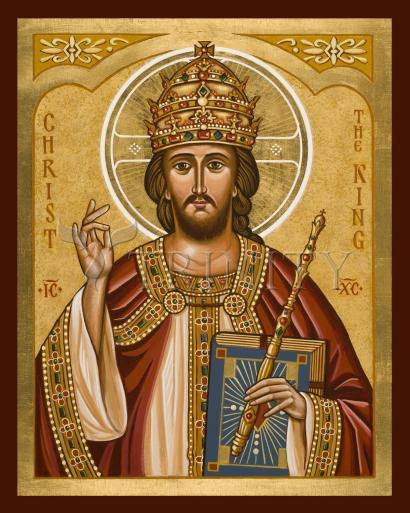
It is said of one of the great Tsars (emperors) of Russia of how he would often visit the people of his kingdom, in disguise.

This was his method of recognizing the welfare and the well-being of his people.

On one occasion, he dressed up in the garment of a peasant (farmer).

He knocked at the door of an inn for a night shelter.

The innkeeper, who opened the door, had a long look at the peasant.

With hands folded, the man was pleading for a place to stay in the inn.

Seeing his shabby clothes and his haggard appearance, the innkeeper began to dismiss him saying:
“Tonight, there are many of the King’s courtiers and noblemen taking lodging in this inn.

You may look for a place somewhere else!”

But as he said this, one of the King’s noblemen, who heard the sound of the peasant man, rushed to the door, and motioned to let him in, saying:
“The dress may be that of a peasant, but the voice is the voice of my lord, the King!”

Very often something similar happens in our lives – God, our King comes to us, in disguise…
… in the supplication of a needy neighbour or a distressed companion
… in the silence of a broken soul or an unhappy relationship
… in the pleading of an oppressed cry or a troubled heart

Do we recognize our King in all these?

Perhaps the word “King” always brings to our minds, images of…
… royal dresses and majestic clothings
… bane arrogance and vain haughtiness
… super-riches and wealthy adornments

But Christianity always comes to break such notions and shatter such worldly conceptions

Are we ready to be the sincere followers of this True and Just King?

The Church today, on this last day of the liturgical year, invites Her children to HAIL this Mighty King – Jesus…
… with the Solemnity of Christ the King!

Today is the Feast of Christ the King.

It is the Last Sunday of the Liturgical year

This feast is a relatively new feast.

It was established by Pope Pius XI in 1925 through an encyclical letter called “Quas Primas” (In the First)

In the history of the Church, liturgical feasts have been instituted in answer to particular needs that arise in the life of the world & Church.

This Feast of Christ the King was in response to the grave and disturbing situation of the world:

The world in 1925, was still recovering from the devastation effects of the First World War.

Nations had been devastated.
New weapons and armoury had been introduced.

A wave of terror and danger was still vivid.

Modernity had crept into the human mind.

Human reason was considered to have enough power and capability for unlimited progress.

Human societies were abandoning Christian values and sought to do away with divine and spiritual dimensions of life.

It’s at the height of this secularization of the world, that we are presented with this great Feast of Christ the King.

Human progress gives a feeling that humans have absolute power over all forces in the universe.
Scientific technology makes us think that any discoveries and inventions are humanly possible.
Human mind is considered to be having capabilities that can overcome and defy any limitation..

But this feast reminds us, that Christ still reigns above all.

He is the source of every intelligence and intellect.
He is the powerhouse of every discovery and invention.
He is the ultimate in conquering any problems or difficulties.

The Kingdom of Christ the King is under several threats today…

The forces of materialism and consumerism…
… have clouded the minds of several with riches and pleasures.

The forces of sensualism and sensationalism…
… have corrupted many innocent hearts and destroyed many simple minds.

The forces of authoritarianism and individualism…
… have shattered many families and community lives.

The forces of relativism and practical atheism…
… are strongly raging against the practice of faith and the teachings of the Church.

As Christians, we are soldiers belonging to the Kingdom of God, with Christ as our King.

A soldier ought to be one who is deeply convinced and highly passionate of one’s King and Kingdom

As a Christian…
… am I deeply convinced of my faith and love for Christ and His Kingdom?
… am I passionately enthusiastic to live my Christian virtues in this world?

There are many who say that they are willing to give up their lives and die for Christ.

But today, the Lord also demands, “Are you willing to LIVE for Christ?”

There is an urgent need to become Christ the King’s living witnesses in this world.

Kings are often identified with a lot of pomp and grandeur and power and triumphalism.

But Christ our King is not bothered about any such external pageantry or vain flashiness.

Then what is the identification of this Christ the King?

In Mt 2:2, we read a question, “Where is the (newborn) King of the Jews?”

The answer to this question will be found at the end of the Gospel, with Jesus hanging on the Cross and a statement which reads in Mt 27:37, “This is the King of the Jews”!

The Gospel of the Day presents Pilate questioning the Kingship of Jesus.

Jesus, however, plainly clarifies…
… “My kingship is not of this world….” (Jn 18:36)

Where the Cross is, there is Christ the King!

Where the lost, the sinful, the abandoned and the lonely are… there is Christ the King.
Where the poor, the suffering, the miserable and the abused are… there is Christ the King.

The Cross is the identity and symbol of Christ the King!

As this Crucified King’s soldiers, we too are invited to be sharers in the Cross of Christ.

It is said that people who are crucified with Christ will have three distinct marks:

Since they are crucified…

  1. They can only look in one direction
  2. They can never turn back
  3. They no longer have plans of their own.

And these three characteristics ought to reflect in our Christian lives…

Being totally focused on Jesus and His kingdom… (looking in one direction)
Never to turn back from our commitment and get attracted to the ways of the world… (never turning back)
Giving up any of our personal goals and agenda which can deter us from God’s will… (no plans of their own)

Yes, let us hearken to His voice…Christ, the King – The Great King.
No land to reign, but our hearts…

No majestic throne, but the Cross…

No mighty army, but a few people to spread His word…

No royal treats all the time, but pain and suffering that leads to salvation…

No grand fiesta, but the sacrifice of the Calvary, in the Most Holy Eucharist…

This king invites us today to renew our commitment to Him

He comes to us in many different situations and circumstances of our life…

Let us never say to Him, “You may look for a place somewhere else!”

Instead, even in situations when the externals appear vague…
… filled with a clear disposition of the Lord reigning in our hearts, let us say: “The dress may be that of a peasant, but the voice is the voice of my lord, the King!”

Shall we always say “Yes” to this King of Hearts – Christ the Crucified King?

Fanfare is less, but faithfulness is assured….

Popularity is rare, but blessings are plenty.

Happy Feast to all the Valiant and Faithful Soldiers of Christ, the Awesome King!

God Bless! Live Jesus!


Discovering the beauty of the Catholic Church through the Catechism
EACH PARTICULAR CHURCH IS CATHOLIC!

The phrase “particular church,” which is the diocese (or eparchy), refers to a community of the Christian faithful in communion of faith and sacraments with their bishop ordained in apostolic succession.
These particular Churches “are constituted after the model of the universal Church; it is in these and formed out of them that the one and unique Catholic Church exists.”
Particular Churches are fully Catholic through their communion with one of them, the Church of Rome “which presides in charity.”
“For with this church, by reason of its pre-eminence, the whole Church, that is the faithful everywhere, must necessarily be in accord.”
Indeed, “from the Incarnate Word’s descent to us, all Christian churches everywhere have held and hold the great Church that is here [at Rome] to be their only basis and foundation since, according to the Saviour’s promise, the gates of hell have never prevailed against her.”
“Let us be very careful not to conceive of the universal Church as the simple sum, or… the more or less anomalous federation of essentially different particular churches.
In the mind of the Lord the Church is universal by vocation and mission, but when she pub down her roots in a variety of cultural, social, and human terrains, she takes on different external expressions and appearances in each part of the world.”

The rich variety of ecclesiastical disciplines, liturgical rites, and theological and spiritual heritages proper to the local churches “unified in a common effort, shows all the more resplendently the catholicity of the undivided Church!” (CCC # 833-835)

REFLECTION CAPSULE – November 20, 2021: Saturday

“Growing in our faith in the Resurrection and living in holiness and sanctity in a way to boldly proclaim this belief to all!”

(Based on 1 Macc 6:1-13 and Lk 20:27-40 – Saturday of the 33rd Week in Ordinary Time)

There is a story of a man who had been afflicted with a terminal disease.

With much fear of death, he sought counselling and help from one of his Christian doctors.

The doctor, was initially lost for words.

He did not know how to console the dying man.

As he was fumbling for an answer, he heard the noise of scratching on his door.

He got the answer of consolation.

“Do you hear that?” he asked his patient, calling his attention to the scratching noise on the door.
“Well!” continued the doctor, “that’s my dog!
I left him downstairs.

But he has become very impatient and has come up, hearing my voice.
He doesn’t have much idea, of what’s happening in here- beyond the door…
… but he knows one thing: ‘That I am here!’
And so, if I open the door now, he would just jump over me, into this room!”

The doctor continued, looking into the eyes of the patients, “Isn’t it the same with our lives?
We don’t have much idea of what lies beyond the Door, but we know that the Master is there!”

This is the Christian Faith: that beyond the Door of this Life, is the Master!

This is the hope of Resurrection!

The Gospel of the Day is an invitation to reinforce our faith and hope in the Resurrection.
The Sadducees who did not believe in the Resurrection, put forth a question of “after-life” to Jesus. (Lk 20: 27-33)

Jesus, Who knows the intentions of all hearts and the craftiness of every mind, spoke…
… of the difference in the nature of life – in this world and in the next
… of His sovereignty over those who have died and those who are alive

Referring to the passage of the Burning Jesus, Jesus proclaims, “… He is not God of the dead, but of the living, for to him, all are alive!” (Lk 20: 38)

This verse of the Lord is one of the direct and easy-to-understand basis…
…for the Catholic teaching and practice of “praying for the dead”.

Many are the times when this noble piety of the Catholics is put into question…

“It is unbiblical to pray for the dead”
“Our prayers have no effect on those who are dead, since it is not our works, but their faith, which saves”
… These are some of the statements said against the Catholic practice of “praying for the dead”

But the Lord very clearly shows, through today’s Gospel…
… that God is the God of all – the living and the dead
… that all are living for Him – even though for us, apparently those who are gone from us, are dead

It is our human experience, that while living on this earth…
… we do seek the help of one another – especially through prayers

We ask one another’s help and prayers…
… when we are going through a crisis or problem
… when we are struggling through sufferings
Then can’t the same logic be applied to those who have died (who are actually alive in the eyes of God!)
Can’t those who are away from this world – the faithful departed – seek for our help and assistance, in their moments of suffering and struggles?

(For those of us… who may have doubts as to “what kind of suffering do the dead have…”

The Church teaches us …
…. Nothing unclean will enter the presence of God in heaven (Rev. 21:27)
While we may die with our mortal sins forgiven, there can still be many impurities in us…
….especially venial sins and the temporal punishment due to sins already forgiven.

Therefore, it is needed to have “purification, so as to achieve the holiness necessary to enter the joy of heaven… “

This is called as “purgatory”.
This purification causes suffering… as a purification that takes place in fire!
The dead – the faithful departed – seek our prayers, for a deliverance from this struggle of sufferings!)

November is a month especially dedicated to pray for the Faithful Departed.
The Church invites her children in this world…

To remember and pray
To offer sacrifices and penances
To lead a life away from sin, in holiness
… for the faithful departed!

Yes, it is our faith and hope in the Resurrection, that spurs us…
… to live a life of holiness
… to be zealous in reaching out the message of salvation to all
… to be fervent in our prayers for the suffering who have passed away from us

Let us cease to be a “practical Sadducee”: professing belief in the Resurrection only in lips but failing to display this belief by a life of holiness!

It is true that we don’t have much awareness of how the “next life” would be…
… We do fall short of words to explain the nature of the life-to-come or rationally describing “how heaven would be!”
… We may even have our own fears and anxieties in thinking of death or in the parting moments of our loved ones!

But we do know for certain one thing: that we would be one with our Lord- the lover of our soul…
… the fullness of joy
… the supremacy of holiness
… the culmination of every desire

Yes, we don’t have much idea of what lies beyond the Door, but we know that the Master is there!

Let us grow in our faith in the Resurrection…
… and let us live a life of holiness and sanctity – that would boldly proclaim this belief to all!

God Bless! Live Jesus!


📖 Discovering the beauty of the Catholic Church through the Catechism
EACH PARTICULAR CHURCH IS “CATHOLIC”

“The Church of Christ is really present in all legitimately organized local groups of the faithful, which, in so far as they are united to their pastors, are also quite appropriately called Churches in the New Testament
In them, the faithful are gathered together through the preaching of the Gospel of Christ, and the mystery of the Lord’s Supper is celebrated

In these communities, though they may often be small and poor, or existing in the diaspora, Christ is present, through whose power and influence the One, Holy, Catholic, and Apostolic Church is constituted (CCC # 832)

REFLECTION CAPSULE – November 19, 2021: Friday

“In our spiritual journey, never neglecting or forgetting the ‘white bag? – the bag of holiness and sacredness!”

(Based on 1 Macc 4:36-37,52-59 and Lk 19:45-48 – Friday of the 33rd Week in Ordinary Time)

A family of four were on a holiday trip – a ten day cruise.

They had a good number of bags with them – 13 in all.

As they were set to enter the ship, loading in all their stuffed baggage, the absent-minded husband remarked, “Oh, I missed to take the white-coloured bag that was kept on our main table!”

The wife, who was pretty exasperated with the large number of bags exclaimed, “What? We already have more than a dozen bags, and you wanted another one?”

The man, sheepishly replied: “Well… our cruise tickets are in that white bag!”

This humorous incident reflects an important dimension of our lives: We often miss out of picking up the right priorities of life!

In our spiritual journey, do we sometimes neglect in carrying the ‘white bag?’ – the bag of holiness and sacredness?

Do we sometimes end up missing out “the sense of the Sacred” in our lives?

The Gospel of the day presents a classic case of this loss of the Sacred Sense.

The Temple of Jerusalem is desecrated by a loss of the Sacred Sense and Jesus seeks to restore it by cleansing the temple.
“Then Jesus entered the temple area and proceeded to drive out those who were selling things” (Lk 19:45)

One of the basic characteristics of religion is the aspect of Sacredness.

God is Holy.
And all matters pertaining to this holy God, has a Sense of the Sacred.

Worship becomes meaningful, when one becomes aware of this Sense of the Sacred.

Preaching becomes powerful, when one is convinced of this Sense of the Sacred.
Liturgy becomes heart-touching, when one acknowledges this Sense of the Sacred.

The Gospel of the Day – the incident of the cleansing of the Jerusalem Temple invites us to make a deep examination…

Is my Worship of God becoming merely external and losing its inner values?

Is my Preaching of God reduced to great talks but devoid of conviction and passion?
Is my Liturgy more a ritualistic and obligatory exercise than truly an experiential one?

If the answer to any of the above questions is a ‘Yes’…
… then we are perhaps losing the Sense of the Sacred.
… then perhaps, the “bag of holiness” is missing in our journey of life.

The Jerusalem Temple was very dear to the faith of the people of Israel.

Worshipping in this temple was the ultimate for the Israelites, in their honouring of God.

At the Passover, Jews from around the world came to the temple to sacrifice to the Lord (Ex. 12:1-28; Lev. 23:4-8).

It was highly impractical to bring sacrificial animals long distances.

So they were made available in the Jerusalem Temple.

Most Jews also paid the temple tax during the Passover.

Since, they came from various places and bore pagan Roman seals, money-changers were there in the temple, to convert the Roman coinage into appropriate currency.

Pagan symbols on Roman money made it unacceptable for Yahweh’s house.

Where there is money, corruption slowly creeps in…!

Pilgrims had to pay exorbitant rates to change money, and sellers exploited those in poverty, overcharging for the poor man’s offering of pigeons and doves (Lev. 5:7).

To make things worse, these merchants set up shop in the Court of the Gentiles, making it useless as a place of prayer due to the hustle and bustle of the buying and the selling of goods..

Though not inherently evil, these practices became occasions for sin.

What started for a noble cause, led to immense corruption!

There began the loss of the “Sense of the Sacred”…

And this is so true in our own lives…

The beginning of the loss of the Sense of the Sacred begins with trivial things.

We allow a little delays and some relaxations in our prayer life…

And suddenly, we find no excitement in spending time in prayer.

We allow laxity and silence and indifference in our relationships…

And suddenly, we find no meaning in many of our relations…

We allow unpreparedness and disinterest to walk into our celebration and participation of Mass…

And suddenly, we find no meaning in the Holy Eucharist.

The loss of the Sense of the Sacred happens in a very subtle and quiet way.

And unless, we remain vigilant and careful, we can lose our way in the spiritual warfare.

It is this reminder and warning that the Lord delivers today, by cleansing the Jerusalem Temple.
“It is written, ‘My house shall be a house of prayer, but you have made it into a den of robbers'” (Lk 19: 46)

Today we have converted many of the places into “dens of robbers”…

Today we have badly defiled the “Sense of the Sacred” in many places…

Cinemas and movies have a heavy stench of vulgarity and indecency.

They rob the society of its ethical culture and moral innocence.

Posters, hoardings and advertisements have become mediums of immorality and offensiveness

They rob its viewers of their principles and convictions in life.

The Internet and new media are badly misused to become snares of promoting life-threatening and life-abusing activities.

They rob its users of their proper purposes & instead addict them to many compulsions & cravings, which are hard to be given up.

Families and communities often become places lacking in genuine love, unity and peace

They rob one of the chance to grow in a spirit of sharing and understanding.

Our bodies are often manipulated with many addictions, improper practises and ungodly behaviours.

They rob the person of the purity and holiness that is engraved deep within.

The Cleansing of the Jerusalem Temple is a strong reminder for us, to check the areas and the manner in which we have lost the Sense of the Sacred…

We complain that the world is becoming more materialistic and less spiritual.

We complain that the Church is becoming more “worldly” and less inspiring.

One of the root problems lies in the fact, that we perhaps losing the “Sense of the Sacred”

Unless we are in awe of the God who has created this beautiful and majestic world, we will continue to abuse and misuse the world.

Unless we are in wonder of the God who has gifted the Church with life-saving sacraments, we will continue to blame the Church and lose precious graces that we can obtain through her.

Let us revive the “Sense of the Sacred”…

Let us cleanse anything which diminishes this “Sense of the Sacred” and become a people who radiate joy and enthusiasm

In our spiritual journey, may we never neglect or forget to carry the ‘white bag?’ – the bag of holiness and sacredness…
… ‘cos in them contain the tickets to heaven!

God Bless! Live Jesus!


📖 Discovering the beauty of the Catholic Church through the Catechism
THE CHURCH IS CATHOLIC
The Church is catholic because she has been sent out by Christ on a mission to the whole of the human race

All are called to belong to the new People of God. This People, therefore, while remaining one and only one, is to be spread throughout the whole world and to all ages in order that the design of God’s Will may be fulfilled
He made human nature one in the beginning, and has decreed that all His children who were scattered should be finally gathered together as one – the character of universality which adorns the People of God, is a gift from the Lord Himself…

… whereby the Catholic Church ceaselessly and efficaciously seeks for the return of all humanity and all its goods, under Christ the Head in the unity of His Spirit (CCC # 831)

REFLECTION CAPSULE – November 17, 2021: Wednesday

“’Sticking our necks out’ to progress in the ways of God!”

(Based on 2 Macc 7:1,20-31 and Lk 19:11-28 – Wednesday of the 33rd Week in Ordinary Time)

A little tortoise was constantly facing a complex of feeling too low in life.

Seeing the various other animals, moving swiftly and speedily…
… the tortoise would very often hide itself in its shell.

It felt that it could never progress in life!

One day, it came across a wise person and sought an advice of how to get the best from life.

The sage – a wise person – replied:
“My little tortoise, always remember that you have been created specifically.
So never feel low or bad about yourself.

And as far as progressing is concerned…
… Always remember: ‘Unless you stick your neck out, you can never progress!”

That was a simple, yet effective piece of advice, isn’t it
Unless the tortoise “stuck its neck out, it could never progress!”

Sticking the neck out of course, meant “taking a risk”…
… but unless that was done, progress was not going to happen.

The same is true for us in our life as well:

Unless we take risks… Unless we “stick out our necks”
… we can never progress!

The Gospel of the Day is a parable of a person who refused “to stick out his neck”…
… and thus not only failed to progress, but ended up on the losing side!

Jesus presents the very-practical “Parable of the Productive Servants”

A nobleman who, before going to a faraway country, entrusts money to his servants with an instruction, “Engage in trade with these, until I return” (Lk 19: 13)

The money given was a “mina”

A mina was a Greek coin.

The lowest level of the Greek Coinage System was the drachma…
…. equal to one day’s wages. (1 Drachma = 1 day’s wages)

One hundred drachmas equaled one Mina (100 Drachmas = 1 Mina).

Therefore, One Mina equaled nearly 100 days of wages (1 Mina = 100 days wages; i.e. nearly 3 months)

With this (fairly huge) amount of money, the Master instructs the servants to “invest”

Investment always means a “sense of risk!”

The parable goes on to say that…
… one of them made another ten (Lk 19: 16)
… the other made another five (Lk 19:18)

These two are greatly rewarded.

The one “who is willing to take risks” always finds life more rewarding and satisfying!

But, its over here, the parable presents the third servant, who decided to be “Mr. Keep it Safe!”
He came back to his master, with an excuse: “Sir, here is your coin” (Lk 19: 20)

He failed to make any investment

He failed to take “any risk”
He refused to “stick out his neck!”

Sticking the neck out of course, meant “taking a risk”…
… but unless that was done, progress was not going to happen.

And that would make him to end up on the losing side!

The Bible is replete with personalities, who would take “risks”…
… and thus emerge successful!

Noah would “take the risk” of listening to God and build the Ark for rescue from the deluge
Abraham would “take the risk” by obeying God and leaving His country and people
Moses would “take the risk” and trust in God to lead the people out of slavery
Jeremiah would “take the risk” of being a prophet despite of several oppositions to his life
Peter would “take the risk” of leaving his fishing profession to be ‘fishers of men’
… and many many more!

They “risked their life” for God – His Will and His Kingdom!

They would “stick our their neck” in progressing in the ways of God!

How about us?

Do we “take risks”?
… the “risk” to trust in God, in spite of the uncertainties of life
… the “risk” to know God has the best plan for us, despite the many hardships we face in life
… the “risk” to believe that God always walks with us, even though we go through the ‘deserts of life’

Let us always realize:
Unless we take risks… Unless we “stick out our necks”
… we can never progress!

God Bless! Live Jesus!


📖 Discovering the beauty of the Catholic Church through the Catechism

By canonizing some of the faithful, i.e., by solemnly proclaiming that they practiced heroic virtue and lived in fidelity to God’s grace, the Church recognizes the power of the Spirit of holiness within her…
… and sustains the hope of believers by proposing the saints to them as models and intercessors.
“The saints have always been the source and origin of renewal in the most difficult moments in the Church’s history.”
Indeed, “Holiness is the hidden source and infallible measure of her apostolic activity and missionary zeal.”
But while in the most Blessed Virgin, the Church has already reached that perfection whereby she exists without spot or wrinkle, the faithful still strive to conquer sin and increase in holiness.

And so they turn their eyes to Mary”: in her, the Church is already the “all-holy.” (CCC # 828-829)

REFLECTION CAPSULE – November 16, 2021: Tuesday

“Making significant changes in our life, to experience the magnanimous wonders and graces from our Big God!”

(Based on 2 Macc 6:18-31 and Lk 19:1-10 – Tuesday of the 33rd Week in Ordinary Time)

Biblical stories are interesting and motivating.

One of the Biblical story which is not just interesting & motivating, but also greatly popular is of the little man – Zacchaeus.

The Gospel of the Day takes us through this life-changing incident of this Little Man.

Thought little, this person teaches us big things
Though small, the story tells many great lessons.

The story begins with Jesus coming to Jericho and intending to pass through the town (Lk 19:1)

Jericho has a long history, especially seen in the Old Testament.

Jericho was the first city to be conquered by the Israelites under Joshua. (Josh 6:1-27)

It was surrounded by a huge wall. However, with directives from God & under the leadership of Joshua, the city was laid siege.

On the appointed day, Joshua ordered the people to shout & the walls of the city collapsed and the Israelites destroyed it.

Joshua laid a curse on the one who would rebuild this city.

Thus, Jericho bore the brunt of a curse.

It is to this ‘place of curse’ that Jesus makes his entry.

As Jesus makes his entry to this cursed place, a little man named Zacchaeus climbs & hides himself behind the leaves of a sycamore tree.

Zacchaeus was a rejected man.

This rejection was on two levels:

  1. A personal level
  2. A societal level

The Gospel mentions that Zacchaeus was “short in stature” (Lk 19:3)

It is interesting to note that “Zacchaeus” in Greek means…
… the pure – a just one

However when St Luke speaks of him as being “short in stature”, it was a pointer…
… that he was perhaps living a life contradictory to what his own name suggested.

His being short was probably referring to the fact…
… that as a tax collector, he was living a life of corruption
… that as a rich man, he was still quite unsatisfied in life

Being short, he faced a sense of rejection…
… in his own self!

At the same time, Zacchaeus was also rejected by the society.

The Gospel describes him as being a tax collector.

Under the Roman system, tax collecting jobs were outsourced to people…
… who bought the right to collect taxes.

Tax collectors paid a fixed amount of tax to Rome

After that, they enriched themselves by forcing the public to pay far more than what Rome required.

Zacchaeus thus became a tax collector for the hated Roman government

He was probably treated as a heathen…
… isolated from all social life
… equated with the Gentiles at a distance when he went to the temple!

Thus, being a tax-collector, he faced a sense of rejection…
… in his own society and among his own people!

Besides, Zacchaeus was a “chief” tax collector…
… so his rejection was still more “chief” – greater and graver.

Do we also find ourselves to be rejected – just as Zacchaeus was?

Despising ourselves because of our own weaknesses and shortcomings?
… Being despised by the society, when we take a conviction that is opposed to the worldly and materialistic ways?

Despising ourselves, because of the weight of habitual sins and prolonged bad habits?
… Being despised by the society, when we fail to abide by the unholy trends of the modern world?

Zacchaeus, however, stands as an example and challenge to us…
… to not get dejected by such rejections!

Instead to “deeply desire” for the Lord and be ready to climb the sycamore tree of “sadness, rejection, disappointment and dejection” in our lives!

The Lord is gazing, addressing and seeking for us.

Am I ready to encounter, to listen and to be found by Him?

A Yes to the question, will also mean taking some radical decisions in our life, just like Zacchaeus did…

Giving up of possessions…
Letting go of my undue desire for money, cheap popularity, the riches in my life etc.
Repaying those whom I have cheated…
Forgiving and accepting those whom I hurt, whom I don’t like, whom I am not in good terms etc.

Zacchaeus was a despised man.

He was despised because of his short stature.
He was despised because as a tax collector, he worked for the enemy-government and would cheat and defraud people.
He was despised because Jesus came to his house – a house of a sinner.

But the encounter with Jesus made him a transformed person

The encounter with Jesus made him to go beyond all complexes and filled him with deep joy!

This same transformation is at hand for us…

Let, us, learn from the Little Man and make significant changes in our life, in order to experience the magnanimous wonders and graces from our Big God!

God Bless! Live Jesus!


Discovering the beauty of the Catholic Church through the Catechism

Christ, ‘holy, innocent, and undefiled,’ knew nothing of sin, but came only to expiate the sins of the people.
The Church, however, clasping sinners to her bosom, at once holy and always in need of purification, follows constantly the path of penance and renewal.”
All members of the Church, including her ministers, must acknowledge that they are sinners.
In everyone, the weeds of sin will still be mixed with the good wheat of the Gospel until the end of time.
Hence the Church gathers sinners already caught up in Christ’s salvation but still on the way to holiness: The Church is therefore holy, though having sinners in her midst, because she herself has no other life but the life of grace. If they live her life, her members are sanctified; if they move away from her life, they fall into sins and disorders that prevent the radiation of her sanctity.

This is why she suffers and does penance for those offenses, of which she has the power to free her children through the blood of Christ and the gift of the Holy Spirit (CCC # 827)

REFLECTION CAPSULE – November 15, 2021: Monday

“Seeking the Lord of Light in our moments of darkness and blindness!”

(Based on 1 Macc 1:10-15, 41-43, 54-57, 62-64 and Lk 18:35-43 – Monday of the 33rd Week in Ordinary Time)

Every person in the world faces a moment of darkness.

Some of us get encompassed by it.
Some of us get dejected by it.

The Gospel of Day presents the healing of a blind man.

The blind man, faced immense darkness, but did not allow to get encompassed or dejected by it.

Let us travel with him through this exciting journey of moving from “Tamas”(darkness) to “Jyothi”(light)…

These blind man takes us through four stages of a spiritual life:

  1. A State of Blindness

The man was stuck with blindness.
There is no idea as to when or how or why he became blind.

Maybe he was blind from birth.
Maybe he was blind due to some sickness as he grew up
Maybe he was blind as a result of some accident or calamity

The reasons for his blindness is unknown

Perhaps, many of us are in a state of blindness….

Blindness of being rejected and not accepted…
Blindness of inferiority complexes…
Blindness of inner brokenness…
Blindness of family crisis…

Some of us maybe experiencing this darkness from the time of our birth.

Some of us maybe experiencing this darkness due to calamities striking our lives as we grew

  1. A State of Seeking

A life of blindness meant a life of total dependence on others…
…at times facing the ire of the people…at times facing the rejection of the people.

The blind man could have become dejected and totally depressed.
He could have given up in life and cursed their destiny.

But the blind man, did not allow the darkness to cloud his lives.

He probably would have heard about Jesus and the wonders He had done.
He sought with hope, the One who could banish his darkness.
His sought with faith, the One who could heal his gloominess.

Our state of blindness should not become a hindrance to seek the Lord.

We need to seek the Lord with our entire being…
We need to seek the plan of God and His providential care in our shadows..
We need to seek the road ahead with Hope and Faith in His Divine plans…

  1. The State of Faith

The blind man, after making a deliberate choice to seek the Lord, expressed his deep faith in the healing power of the Lord.

The Lord makes a test of his trust and hope in Him.

“What do you want me to do for you?”
He said, “Lord, let me receive my sight” (Lk 18:41)

Our seeking for the Lord, needs to be supplemented greatly with the vitamin of Faith!

Delays in our prayer requests, should become an incentive to grow deeper in faith.
Addition of more problems in life, ought to be a moment to have more faith in Him

  1. The Stage of Proclamation

The blind man, who was healed by Jesus, now, was filled with tremendous joy and enthusiasm.

His happiness is so much overflowing, that he goes beyond the words of Jesus, and proclaims His wonderful miracle to the peoples.

“And immediately, he received his sight and followed Jesus, glorifying God” (Lk 18: 43)

Once we are touched by the Lord, our happiness would know no bounds.
Once we are healed by the Lord, our enthusiasm would get highly contagious.

The Blind man in the Gospel take us through these four stages…
The Stage of Blindness… The Stage of Seeking…the Stage of Faith…the Stage of Proclamation.

Let us be inspired and challenged by him

Let us seek the Lord of Light in our darkness.
Let us seek the Lord of healing in our sicknesses.
Let us seek the Lord of holiness in our blindness.

God Bless! Live Jesus!


Discovering the beauty of the Catholic Church through the Catechism
THE CHURCH IS HOLY

The Church on earth is endowed already with a sanctity that is real though imperfect.”
In her members perfect holiness is something yet to be acquired: “Strengthened by so many and such great means of salvation, all the faithful, whatever their condition or state – though each in his own way – are called by the Lord to that perfection of sanctity by which the Father himself is perfect.
Charity is the soul of the holiness to which all are called: it “governs, shapes, and perfects all the means of sanctification.”
St Therese of Child Jesus said, “If the Church was a body composed of different members, it couldn’t lack the noblest of all; it must have a Heart, and a Heart BURNING WITH LOVE.

This love alone was the true motive force which enabled the other members of the Church to act; if it ceased to function, the Apostles would forget to preach the gospel, the Martyrs would refuse to shed their blood. LOVE, IN FACT, IS THE VOCATION WHICH INCLUDES ALL OTHERS; IT’S A UNIVERSE OF ITS OWN, COMPRISING ALL TIME AND SPACE – IT’S ETERNAL!” (CCC # 822)

REFLECTION CAPSULE – November 14, 2021: Sunday

“Seeking and thirsting for the One whom our souls are searching, and being constantly on ‘watch and vigilance’ preparing for the Coming of our Blessed Lord!”

(Based on Dan 12:1-3, Heb 10:11-14, 18 and Mk 13:24-32 – 33rd Sunday in Ordinary Time)

There is an incident from the American Revolution which beautifully illustrates the tragedy that can follow from procrastination – the habit of postponing or delaying something.

It is reported that a Colonel who was the commander of the British troops in Trenton, New Jersey, was playing cards…
… when a courier brought an urgent message stating that General George Washington was crossing the Delaware River.

The Colonel put the letter in his pocket and didn’t bother to read it until the game was finished.

Later, realizing the seriousness of the situation, he hurriedly tried to rally his men to meet the coming attack, but his procrastination was his undoing.

He and many of his men were killed and the rest of the regiment were captured.

Just a “few minutes of delay” cost him his life, his honour, and the liberty of his soldiers!

Any profession… any activity… to achieve its goal in the best manner possible…
… requires a tough preparation, unabated determination, a constant movement and an unwavering vigilance!

The Gospel of the Day, speaking of the Second Coming of the Son of Man, is a strong exhortation to be “constantly on the watch”, being vigilant and ready, to receive the Lord in His glory.

Our Blessed Lord draws the illustration of the Fig Tree to point to the fact that “one must become aware of the signs of the times” and be constantly “on the watch”.

Jesus says, “From the fig tree, learn the lesson!” (Mk 13:28)

When we look into our lives, we find that we are “highly disciplined and well-prepared” with respect to professional disciplines and careers…

Sportspersons sweat it out and slog their bodies through a strict routine…
Army personnel undergo a hard grilling and a grinding through tough situations…
Musicians train their voices and are extremely cautious in avoiding bad food habits…
But very often, it is seen, that such an attitude and such a principle is not applied to Spirituality or our Christian Life?!

There seems to be a tendency to take our Christian Life as a routine and for granted….
There seems to be a feeling to live our Spiritual Lives in relaxation and lethargy and sluggishness…
There seems to be a trend to give least botheration to the aspects of God, Soul, Sin, Grace, Salvation etc…..

Why does Spirituality most often find the least place in our lives?

Why do thoughts of Holiness be entertained least in our minds?
Why do talks of God, figure so little in our daily chats?

It’s time to wake up from our sleep…
“… know what hour it is, how it is full time now for you to wake from sleep.
For salvation is nearer to us now than when we first believed; the night is far gone, the day is at hand…” (Rom 13: 11-12a)

These words from the Letter to the Romans, which had awakened St Augustine from his slumber of paganism, sexual immorality and loose living into the freedom of Holiness and Sanctity… is addressed also to each one of us….

In Mt 24: 42-44, Jesus says, “Stay Awake……and Be Alert!”
With respect to the coming of the Son of Man…
… No one knows the time or the hour
… No one knows the context or situation

Therefore…. we need to be alert and watchful at all times – Any time, Any Context!

When Abraham was prepared to give up his Beloved Isaac… he encountered the glory of God!
When Moses was ready to follow God and trust Him completely… he encountered the power of God!
When Israelites were ready to cleanse themselves and prepare…they encountered the Majesty of God!
When the Apostles were eager to wait in humility and prayer….they encountered the Spirit of God!

Yes, when we are willing to be prepared and be ready, we will experience the mighty touch and presence of God!

One of the biggest reasons why a Christian fails to take one’s faith seriously is because of Procrastination…

We mould ourselves to thinking that there is time for all this later…
… we still have years ahead to repent and atone!

And this certainly is one of Satan’s most successful strategies in today’s world: To show there is still time!

Satan doesn’t prevent us from having thoughts of prayer…
… but he says: not now, do it a little later.

Satan doesn’t prevent us from having aspirations of fasting and other pious devotions…
… but he says: not now, do it later

Satan doesn’t prevent us from engaging in works of charity….
… but he says: not now, do it later

And we, busy with our daily schedules – like ignorant fools – find that suggestion, practical and feasible!

Today the Lord gets serious in His tone… and warns us: “Watch! Be alert!”

As someone said, “those who hope to repent and amend at the eleventh hour, may perhaps, die at ten-thirty!”

We give the best in our workplaces… in areas of sports and music… army people & scientists slog to be the best…

But why are we slackening when it comes to our Faith and our Christian Life?

We invest our time and money and energy, often only for materialistic and passing things of the world!

But today, let us seek to invest of ourselves in service of the Kingdom and to prepare for the Lord’s coming

Our souls are searching…

Our bodies are agitated and distressed…

Money, positions, power, sex, drugs, alcohol, pleasures, films, criticism… none of these will satisfy or gratify us!
Let us seek and thirst for the One whom our souls are searching….
… and be constantly on “watch and vigilance” preparing for the Coming of our Blessed Lord!

God Bless! Live Jesus!


📖 Discovering the beauty of the Catholic Church through the Catechism
THE CHURCH IS HOLY

“The Church… is held, as a matter of faith, to be unfailingly holy.
This is because Christ, the Son of God, who with the Father and the Spirit is hailed as ‘alone holy,’ loved the Church as His Bride, giving Himself up for her so as to sanctify her;
He joined her to Himself as His Body and endowed her with the gift of the Holy Spirit for the glory of God.”
The Church, then, is “the holy People of God,” and her members are called “saints.”
United with Christ, the Church is sanctified by Him; through Him and with Him, she becomes sanctifying. “All the activities of the Church are directed, as toward their end, to the sanctification of men in Christ and the glorification of God.”
It is in the Church that “the fullness of the means of salvation” has been deposited.

It is in her that “by the grace of God we acquire holiness.” (CCC # 821)

REFLECTION CAPSULE – November 13, 2021: Saturday

“Remaining firm and perseverant in our prayer life and reaching out in justice and giving comfort and consolation to the needy!”

(Based on Wis 18:14-16, 16:6-9 and Lk 18:1-8 – Saturday of the 32nd Week in Ordinary Time)

An interesting incident is mentioned in the life of Jan Paderewski

He was a famous Polish pianist and a pioneer of the solo recital at music concerts.

It is said that when Paderewski was to leave his native Poland to play his first recital in London…
… he asked an influential compatriot to give him a letter of introduction, to a leading figure in Britain’s musical world

This was for any assistance, should anything go amiss.

The letter was handed to him in a sealed envelope.
Paderewski hoped that everything would proceed smoothly and he would not have to use the letter.

Well…
… he did not have to use the letter.

His debut was a great success and he soon began to climb the ladder of success.

Some years later, while going through his papers, he came upon the ‘letter of introduction’ and opened it.

He was surprised to read the content:
“This will introduce Jan Paderewski, who plays the piano, for which he demonstrates no conspicuous (visible/noticeable) talent.”

Life… is often such!

Discouragements lure everywhere! Rejections prowl all around

Do we get bogged down by such discouragements and rejections?
Are we people who bring about discouragement and rejection to people?

The Gospel of the Day is the Parable of the Persistent Widow.

The Parable speaks of a judge and a widow.

The judge is characterized by some features:
He did not fear God.
He did not fear humans.
He was initially adamant in his refusal.

The Widow is characterized by some features:
She had a genuine need.
She was denied justice.
She remained persistent till the end.

We often have many and true needs.

But we do sometimes find ourselves, a bit depressed at the delays in receiving the answers to our prayers.

The parable encourages and exhorts us to remain persistent in our prayer life and not to get discouraged by God’s delays, which apparently appears as God’s denials.

Yes, God’s delays are certainly not His denials!

God’s pauses are certainly not His refuses!

At the same time, this parable invites us to switch roles:

To see ourselves as the Judge…
… and God as the Widow.

Widows in the first century found themselves at a very sad state.

They were quite literally unprotected. Many became homeless and destitute after the death of their husbands.
Often they were at mercy of cunning men, including some religious leaders who would “devour widows houses” (Mark 12:40)

A widow couldn’t count on anyone to come to her aid.

She represents the hopeless….the unaided…the oppressed.

In Mt 25:35, Jesus identifies Himself with the one who was hungry, thirsty, naked, stranger and the imprisoned.

Jesus in the poor, the hungry, the thirsty, the naked, the stranger and the imprisoned…
… is the hopeless one …the unaided one …the oppressed one.

Jesus, like the widow in the Parable… comes knocking at our door:
Behold I stand at the door, and knock… (Rev 3:20)

As the oppressed and justice-deprived Widow, Jesus, knocks at our door – we, the judges.

What is our reaction and response to the voice of the needy and the helpless?

The cry of the one in pain and suffering reaches our hears…

Do I reach out my heart to them and seek to ease their troubles and hardships?

The moaning of a broken family or a lost teenager or a spoilt child comes to us…

Do I pray for them and help them, in ways possible for me?

The sad tear of the abused or oppressed people with whom we work is seen by us…

Do I get out of my comfort-shell to make them feel comforted and consoled?

The disturbing reports of violence, corruption, injustice in society falls on our senses…

Do I remain indifferent to them and become saturated with such atrocities?

Yes… the widow – the hopeless, the unaided and the oppressed one… keeps knocking at our doors…
As a Judge…
… do I keep refusing?
… do I keep getting irritated?
… do I feel life as a botheration?

Life often has discouragements luring everywhere and rejections prowling all around

Do we get bogged down by such discouragements and rejections?
Are we people who bring about discouragement and rejection to people?

The Parable of the Persistent Widow is certainly a big lesson to remain firm and perseverant in our prayer life.

And when looked from another perspective is also a big challenge to become a people who reach out in justice and give comfort and consolation to the needy.

Knock….knock…

Do we hear the knock, seeking for help?

God Bless! Live Jesus!


Discovering the beauty of the Catholic Church through the Catechism
TOWARD UNITY
Concern for achieving unity “involves the whole Church, faithful and clergy alike.”

But we must realize “that this holy objective – the reconciliation of all Christians in the unity of the one and only Church of Christ – transcends human powers and gifts.”

That is why we place all our hope “in the prayer of Christ for the Church, in the love of the Father for us, and in the power of the Holy Spirit (CCC # 822)

REFLECTION CAPSULE – November 12, 2021: Friday

“Getting our priorities right, and in humility, seeking to protect ‘the suitcases of our souls!’

(Based on Wis 13:1-9 and Lk 17:26-37 – Friday of the 32nd Week in Ordinary Time)

A humorous story is told of a heavy-weight boxer who would greatly brag about his prowess…
… and speak of how he would “he would conquer the world!”

It is said that one day, he came to a big city with two huge suitcases.
As he got down the bus, putting the suitcases down, he looked up to the tall building tower and exclaimed: “I will conquer this city!”

When he looked down, however…
… the suitcases were gone!

Very often, our lives are such…

We dream of conquering the entire world…
… but often fail to even have a control on ourselves!

We become “so worldly” that we fail to give heed “to the world to come!”
We become so occupied with the concerns of our earthly existence that sometimes we “forget about our Heavenly priorities!”

The Gospel of the Day presents Jesus highlighting this essential element of Christian living: Being in the world, but living out of the world, with eyes firmly set on heavenly realms.

Jesus says, “Whoever seeks to gain his life, will lose it, but whoever loses his life, will preserve it” (Lk 17:33)

Very often our lives get too attached to material riches and attachments.

We fall prey to seeking great honour and fame in being a Christian…
… but are unable to grasp the fact that ‘to be a Christian is to be living a life of simplicity’.

We yield to temptations of being obsessed to seek power and positions of futile vanity…
… and fail time and again to live up to the Christian virtues of humility and modesty

We often become victims of engaging in dirty politics and authority-grabbing games…
… and become an anti-witness to the Lord who ‘came to serve, rather than be served’

We need to give heed to the words of the Lord who prayed that “we are in the world, but do not belong to this world” (Jn 17: 15)

A Christian life ought to be hallmarked by detachment and separation…
… detachment from too much of worldly distractions and vain glory
… separation from sinful ways and evil tendencies

It ought to be radiated with total focus and complete dedication…
… total focus on the Lord who ‘walked the talk’ by giving up His life in service
… complete dedication to the Kingdom of God which calls for a humble way of life

The world today is being ‘gripped in sin’, “as it was in the days of Noah” (Lk 17:26)

We need to open our eyes to realize the warning given by the Lord and be ‘on the watch’…
… after the example of the destruction of the sinful city of Sodom.

Perhaps our own life… or our family… or our community… our society…
… is resembling the city of Sodom

There is much drunkenness in worldly pleasures!
There is much ‘eating and consumption’ of corrupt practices!
There is much neglect of honest ways and of truthful conduct!
There is much enjoyment of bad, inhuman and cruel behaviours!

Let us deepen…
… our faith in the Lord
… our love for the Kingdom
… and our detachment from riches

St John prompts us: “Look to yourselves, that you may not lose what you have worked for, but may win a full reward!” (2 Jn 4:8)

We are reminded today that as Christians, we are people…
… who live in the world, yet are called to be out of the world.
… who live amidst possibilities of wealth, yet are called to be detached from them.
… who live with the prospect of gaining immense power, yet are exhorted to not be attached

We may be often tempted “to conquer the world and the city”…
… but let’s get our priorities right, and in humility, seek to first protect “the suitcases of our souls!”

God Bless! Live Jesus!


📖 Discovering the beauty of the Catholic Church through the Catechism
TOWARD UNITY IN CHURCH

Concern for achieving unity “involves the whole Church, faithful and clergy alike.”
But we must realize “that this holy objective – the reconciliation of all Christians in the unity of the one and only Church of Christ – transcends human powers and gifts.”

That is why we place all our hope “in the prayer of Christ for the Church, in the love of the Father for us, and in the power of the Holy Spirit. (CCC # 821)

REFLECTION CAPSULE – November 11, 2021: Thursday

“Looking into the ‘wells of our lives and of others,’ and seeing the Presence of the Lord, to become a ‘Kingdom People’”

(Based on Wis 7:22-8:1 and Lk 17:20-25 – Thursday of the 32nd Week in Ordinary Time)

A simple story is told of a little girl who accompanied her grandfather to fetch water from the well.

After having drawn water, as the bucket was lowered and kept on the ground, the little girl asked her grandfather: “Grandpa, where does God live?”

The old man, lifted up the girl, and held her over the open well and asked: “What do you see?”

The excited girl, looked deep into the well and seeing her reflection exclaimed: “I see myself”
“That’s where God lives,” said the wise grandfather “God lives in you!”

Are we aware that each of one of us is an abode of the “Presence of the Lord?”

Do we mend our lives accordingly…
… and seek to live holier and saintly lives?

Our Christian lives must be lived eagerly and enthusiastically to nurture and promote the Kingdom of God…
… and live as citizens, worthy of a King Who is all-holy and all-honest!

Are we ready to collaborate with Jesus, to infuse a greater spirit of the Kingdom of God in this world…
… and to promote the reach and spread of the Kingdom of God?

The Gospel of the Day is a teaching on the Kingdom of God.

The Pharisees ask “when” the kingdom will come (Lk 17:20)

Jesus however explains “how” the Kingdom will come (17:22-35)

Jesus does not give an answer to the question of the Pharisees.

Rather, He makes to realize what should be the proper question.

It’s the style and technique of the Lord to get right the priorities and focus in life!

The people searched for Jesus after the miracle of the multiplication of loaves…
Jesus sets right their intentions by speaking of the need to hunger for the bread of life (Jn 6)

The disciples of John came to clarify whether Jesus was indeed the Messiah to come…
Jesus sets right their focus by turning their attention to all His signs and deeds (Lk 7:19ff)

The two disciples, James and John, sought for privileged places in Jesus’ future reign…
Jesus sets right their priorities by exhorting them to grow rather in humility and service (Mk 10: 35-45)

Nicodemus, in his encounter with Jesus, remained on peripheral questions and doubts…

Jesus sets right his doubts by calling his attention on living a life in the Spirit and being born anew spiritually (Jn 3: 1-21)

The Lord loves to challenge our doubts, theories and even convictions…in order to be in harmony with the priorities of the Kingdom.

Am I willing to allow the Lord to work in me to change some of my thinking patterns, that would be in accord to His Will?
Am I flexible to let the Lord to mould and shape my lifestyle and thus be in tune with the focus of His Kingdom?

The “Kingdom of God” is an oft-repeated phrase in the New Testament and especially in the Gospels.

What is the Kingdom of God?

A kingdom normally brings to picture a geographical territory, with its clear-cut boundaries and its rulers and citizens.

The Kingdom of God, is however, quite different!

The Kingdom of God is not a geographical dominion like worldly kingdoms!

The Kingdom of God is a spiritual reality where God’s Will is done.
It is a person; it is He – Jesus!
“Jesus leads people to realize the overwhelming fact that in Him, God is present among them and that He is God’s presence…” (from the book, “Jesus of Nazareth – Part I” by Pope Benedict XVI)

The Pharisees who asked Jesus on “when” the Kingdom would come, were probably expecting an external sort of a Kingdom.

They probably expected a Kingdom which would overturn and overthrow the Roman Government.

But Jesus clarifies the nature of this Kingdom…

He speaks of a Kingdom which is much more internal & spiritual, and whose impact would be felt and experienced in the external world.

One experiences the Kingdom of Heaven first in one’s inner life…
… and this is manifested in one’s external lifestyles…

The Samaritan Woman experienced the power of the Kingdom of God within herself, when she spoke to Jesus, the fountain of life…

And this experience of the Kingdom led her to proclaim the name of Jesus to all her villagers & bring many to the saving fold of the Lord.

The Disciples experienced the power of the Kingdom of God within them, when the Holy Spirit descended on them…

And this experience of the Kingdom was manifested in their bold and powerful witnessing life!

St Paul experienced the force of the Kingdom of God within him, when he encountered the Risen Lord on the way to Damascus…

And this experience of the Kingdom was displayed by him through his passionate life of preaching and missionary works.

In the Prayer, the Our Father, we pray:
“Thy Kingdom Come,
Thy Will be Done…”

The Kingdom of God is, where the Will of God is fulfilled.

The question arises before us: Is the Kingdom of God here?

Or is the Kingdom yet to come?

This is where we speak of the concept of “Already and not yet”
The Kingdom of God is already here, but not yet!

The Kingdom of God already reigns now, but not yet, in its fullness!

As St Paul says in 1 Cor 13: 12, “At present, we see indistinctly, as in a mirror, but then face to face. At present, I know partially; then I shall know fully, as I am fully known”.

Do I experience the Kingdom of God in my life?

The Kingdom of God is not a matter of food and drink, but of righteousness, peace and joy in the Holy Spirit (Rom 14:17)

I need to experience the joy and the peace of the Lord in my life…
I need to place the priorities of God over all else in my life…
That’s the Kingdom of God.

That’s the Reign of God.

We are invited today “to radiate heaven on our faces!”

May our Christian lives be lived eagerly and enthusiastically to nurture and promote the Kingdom of God…
… and thus live as citizens, worthy of a King Who is all-holy and all-honest!

Looking into the “wells of our lives and of others,” let us see the Presence of the Lord…
… and thus may we become a “Kingdom People!”

God Bless! Live Jesus!


📖 Discovering the beauty of the Catholic Church through the Catechism
TOWARD UNITY IN THE CHURCH

Certain things are required:

  • a permanent renewal of the Church in greater fidelity to her vocation; such renewal is the driving-force of the movement toward unity
  • conversion of heart as the faithful “try to live holier lives according to the Gospel”; for it is the unfaithfulness of the members to Christ’s gift which causes divisions
  • prayer in common, because “change of heart and holiness of life, along with public and private prayer for the unity of Christians, should be regarded as the soul of the whole ecumenical movement, and merits the name ‘spiritual ecumenism’
  • fraternal knowledge of each other
  • ecumenical formation of the faithful and especially of priests
  • dialogue among theologians and meetings among Christians of the different churches and communities
  • collaboration among Christians in various areas of service to mankind.

“Human service” is the idiomatic phrase. (CCC # 821)