EUREKA: Discovering Catholic Treasury – through a Lenten lens! Day 14: “Dignitatis Humanae”

A. What is it?

>> “Dignitatis Humanae” is the Declaration of the Second Vatican Council on the Declaration on Religious Freedom.

>> “Dignitatis Humanae” – the Latin title – means “the Dignity of the Human Person”

>> This declaration was promulgated by Pope Paul VI on December 7, 1965.

B. What does it speak of?

>> “Dignitatis Humanae” speaks of the Church’s support for the protection of religious liberty.

>> The main aspects of “Dignitatis Humanae” are:

(i) The fundamental right to religious liberty: All persons have a right to religious liberty, a right with its foundation in the essential dignity of each human being.

>> All persons must be free to seek the truth without coercion, but are also morally obligated to embrace the Truth of the Catholic faith once they recognize it.

(ii) The responsibility of the state: The government is to protect the rights and equality of all citizens as part of its essential role in promoting the public good

(iii) Religious freedom and Christianity: Christians are called to an even more conscientious respect for religious freedom. Man’s response to God in faith must be free – no person is to be forced to embrace Christianity.

>> God’s own call to serve him binds persons in conscience but is not compulsion.

C. Pointers for Reflections

1. “Dignitatis Humanae” affirms that “the one true religion subsists in the Catholic and Apostolic Church

>> This statement is also bound to the fact that “all men are bound to seek the truth, especially in what concerns God and his Church, and to embrace the truth they come to know, and to hold fast to it.”

2.  Human dignity has only one source and only one guarantee – We are made in the Image and Likeness of God.

>> The Declaration states that it was Christianity that led to the developing and uniquely stressing the idea of the individual person with an eternal destiny.

D. What virtues/points can we pick up from “Dignitatis Humanae” for this Season of Lent?

1. Deepening our love for the Church and drawing more people to the True Faith

2. Growing in our understanding of our own self – that we are in the glorious Image and Likeness of God – and so, each one of us are very good.

E. Tips to practice these virtues

1. Live the teachings of the Church in day-to-day life, and especially practise the basics of Catholic Living – Regular Holy Mass, Confessions, Bible Reading, Examination of Conscience, Recitation of the Holy Rosary, and Praying together in the Family

2. Identify one’s strengths and blessings that God has given, and spend every day at least 10 minutes, to thank the Lord!

May this Lent and the familiarity with the Encyclical “Dignitatis Humanae” help us to grow in our acclamation: “Eureka – I have found the Lord”

(The Full Text of “Dignitatis Humanae”can be found at:

http://www.vatican.va/archive/hist_councils/ii_vatican_council/documents/vat-ii_decl_19651207_dignitatis-humanae_en.html)

God Bless! Live Jesus!

March 02 (Mt 21:33-43, 45-46)

An enigma is a considered as a person or a thing that is mysterious or difficult to understand.
>> The word has its Greek and Latin roots, in words which mean “a riddle” or “a puzzle”.

•       An enigma has the tremendous capacity to attract followers or to detract the critics.
•       An enigma has the intriguing potential to captivate its fans or to puzzle its doubters.

When we analyze history and personalities down through the centuries, one can definitely come to a conclusion…
… that there has been no person who deserves a greater merit to being an “Enigma” than Jesus Christ.

The life of Jesus, historically speaking, was a journey from being a semi-skilled Jewish carpenter in a tiny village in northern Palestine…
… to an itinerant prophet, a wonder worker and a social revolutionary!
>> One who confronted the religious and social institutions of His times so radically that He was put to death for it.

The Gospel of the Day presents this “Enigmatic” Jesus confronting closed minds and blocked hearts, in recognizing Him as the Messiah and Saviour…
… and an invitation to make a radical choice for Him!

Jesus puts forward the parable of the tenants.

The tenants were entrusted with the vineyard by the Master, and were expected to provide the produce in due time.
>> They were entrusted fully with the taking care of the vineyard.

The Master places a lot of trust in the servants.

He gives the freedom… a responsible freedom…
…which could be meaningfully used and nurtured
…or which could be woefully misused and manipulated.

However, the tenants, who were trusted immensely, probably lost their focus on the real trust and diminished in their commitment and responsibility to their Master as well as their duty.
•       Their personal interests gained greater prominence over their entrusted duties.
•       Their selfish agenda gained the upper hand over the faithfulness to the Master.

This led to them to a total denial of all the emissaries and servants of the Master, who were sent to collect the produce.
>> This denial was extended even to the Master’s own Son!

This denial of the Son led to the letting loose of the anger and fury of the Just Master!
•       A squandering away of the responsible freedom, led to the downfall of the tenants!
•       A failure to give heed to the emissaries and servants caused them to face the Master’s rage!
•       A denial and rejection of the Master’s own Son, with a cruel intent, caused their destruction!

Are we also, as Christians, as tenants of the Heavenly Master failing in our responsibilities and duties?

The Lord presents Himself as the cornerstone…
… “the stone which the builders rejected has become the cornerstone..” (Mt 21:42)

In ancient practices of building, the cornerstone was the principal stone.
>> It was placed at the corner of the edifice or the building.

The cornerstone was usually one of the largest, the most solid, and the most carefully constructed of any in the whole building structure.
>> A cornerstone gives direction to the rest of the foundation.
>> It also is the support on which the rest of the building relies for strength and stability.

Jesus is the cornerstone…of Salvation.. of the Church.. of His People!
>> At the same time, Jesus can also be  “a stumbling block”

As it is written in Romans 9:33, “Behold, I lay in Zion a stumbling stone and rock of offense,
And whoever believes on Him will not be put to shame”

•       To those who believe, Jesus is the cornerstone of their faith and their life.
•       To those who do not believe, Jesus is the stumbling block in their faith!     

Who is Jesus in our life?
>> The cornerstone? Or a stumbling block?

The cornerstone to build a wonderful life in God and grow in holiness…
… or a stumbling block which causes us to be proud in our own merits and not depend on Him?

The cornerstone to stand firm and strong in faith to withstand every storm of life…
… or a stumbling block which makes us uncertain, hesitant and cause a collapse in life?

Jesus is indeed the greatest “enigma”
>> This “enigmatic” Jesus has the tremendous capacity to attract followers or to detract the critics.
>> This “enigmatic” Jesus has the intriguing potential to captivate its fans or to puzzle its doubters.

Jesus can remain the “enigma” who will be forever misunderstood or mysterious…
… or He can be the “enigma” which becomes the guiding force for fullness in life!

Let us make Jesus the “cornerstone” of our life and faith!

Live Jesus! God Bless!

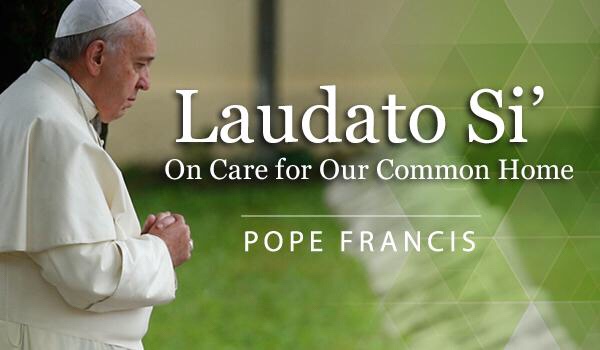
EUREKA: Discovering Catholic Treasury – through a Lenten lens! Day 13: “Laudato Si”

A. What is it?

>> “Laudato Si” is an Encycical by Pope Francis, released on June 18, 2015.

>> “Laudato Si” which means “Praise be to You” is the 2nd Encyclical of Pope Francis

>> The title is inspired from St Francis of Assisi’s 13th-century “Canticle of the Sun” (also called the Canticle of the Creatures), a poem and prayer.

B. What does it speak of?

>> “Laudato Si” is addressed to “every person living on this planet” with the hope of entering “into dialogue with all people about the Earth – our common home.”

>> 6 Chapters make up “Laudato Si”

(i) “What is happening to our Common Home”: Looks at the various symptoms of environmental degradation. The encyclical postulates that a truly ecological approach is also inherently social – an approach that simultaneously hears the cry of the earth and the cry of the poor.

(ii) “The Gospel of Creation”: Considers the world the way that God intended it. The chapter surveys the rich scriptural traditions to show that there is no Biblical justification for “a tyrannical anthropocentrism unconcerned for other creatures.” A person who is truly concerned about the trafficking of endangered species is automatically concerned with the trafficking of humans.

(iii) “The Human Roots of the Ecological Crisis”: Examines the twin notions of “technocratic paradigm” and a “modern anthropocentrism”.

>> These views see nature as devoid of any spiritual or transcendental value.

>> This has led to the misplaced ideas that the earth’s resources are infinite and that economic growth and technology alone can solve global hunger and poverty.

(iv) “Integral Ecology”: It charts a path to recapture awareness of the interconnectedness of creation. It is essential to appreciate the impact of environmental degradation on “cultural ecology”. The experience of indigenous peoples is specifically referred to in this regard.

(v) “Lines of Approach and Action”: This Chapter sets out various international collective actions needed.

(vi) “Ecological Education and Spirituality”: It shifts attention to the individual believer, families and communities, and invites them to make a difference in small but tangible ways.

>> Consumer choices, the cultivation of ecological virtues such as reducing wastefulness, and environmental education for the young are explained as practical steps leading to a deeper, spiritual “ecological conversion” through which the follower of Christ recognizes the true worth of all created entities.

C. Pointers for Reflections

1. “What kind of world do we want to leave to those who come after us, to children who are now growing up?”

>> This question is at the heart of“Laudato Si’

>> We have forgotten that “we ourselves are dust of the earth; our very bodies are made up of her elements, we breathe her air and we receive life and refreshment from her waters.”

>> The Encyclical encourages all to have an “ecological conversion”

2. Living our vocation to be protectors of God’s handiwork is essential to a life of virtue.

>> This “corrected lifestyle” it is not an optional or a secondary aspect of our Christian experience

D. What virtues/points can we pick up from the “Story of the Soul”” for this Season of Lent?

1. Cultivate greater sensitivity to nature

2. Deepen and thank God as the Creator

E. Tips to practice these virtues

1.  Make a list, and practise, a few but very practical steps to protect the nature

2. Raise a prayer of Thanks to the Lord, for all the things we see around

>> Let nature, become a time of meditation with the Lord

May this Lent and the familiarity with the Encyclical “Laudato Si” help us to grow in our acclamation: “Eureka – I have found the Lord”

(The Full Text of “Laudato Si” can be found at:

http://w2.vatican.va/content/francesco/en/encyclicals/documents/papa-francesco_20150524_enciclica-laudato-si.pdf)

God Bless! Live Jesus!