Feb 23 (Mt 5:20-26)

The phrase “(to) raise the bar,” or “raising the bar,” is an expression used to convey the idea of gradually setting the accepted minimum standards higher in order to achieve an objective or level of excellence.

This term came into common usage through the tracks and field sports event of high jumping and pole vaulting.

Ø In these events, the athletes run and jump, to propel themselves over the obstacles (the bar).

Ø In each subsequent round of competition, the bar is raised, making the target more challenging.

The athlete who displays the greatest stamina and successfully crosses the highest bar wins the event.

Jesus is an amazing “Athlete” who raises the bar of Christian living.

>> He invites all His followers to also follow Him in living a “higher” standard of life.

The Gospel, shows the manner in which Jesus “raises the bar” of certain areas of Christian living…

Today He deals with the important dimension of anger.

Killing is considered to be a serious evil in every society and every religion.

Killing in its basic form is usually considered only in the sense of the physical body.

But the Lord today “raises” the bar” in the understanding of killing…

“You have heard that it was said to the men of old, ‘You shall not kill’; and whoever kills shall be liable to judgment’.

>> But I say to you that everyone who is angry with his brother shall be liable to the judgment….” (Mt 5: 21)

The Lord expands the understanding of killing beyond the physical body…

A person engages in killing… if, by anger…

…the social standing of the other person is upset

…the emotional state of the other person is wounded

…the spiritual balance of the other person is disturbed

We could understand anger from various perspectives…

1. Anger as Quick temper

Prov 15:18 says, “An ill-tempered man stirs up strife…”

It is said that speak when one is angry, one makes the best speech that would be regretted much!

Quick temper sometimes…

…. forms part of our temperament

… comes even unknowingly

… is instigated by other’s actions

Yet, in all this, one ought to…

… rise quickly from remaining in the state of anger.

… become conscious of the occasions which can excite anger

… see that the temper is not fed or nurtured or intensified

2. Anger which leads to stubbornness

Eph 4:26: “…. do not let the sun to set on your anger”

Sometimes, the anger within is allowed to grow so much…

…that we get habituated to getting angry for even tiny and trivial matters

…that we lose our peace of mind, and sometimes even become indifferent

…that we choose not to budge from our position or viewpoint and remain adamant

Yet, we need to make efforts…

… to try to overcome our ego and seek to make amends with the person

… to lower oneself in humility (even if we are right) and ease the situation of annoyance

Anger needs to be sanctified…

… channelized in the proper way!

One may feel a ‘just’ anger at….

… the immense corruption in the world and even in religious circles

… the forces of evil that seem to root away even faint traces of hope

… the indifferent and unchanging attitudes and temperaments of people which is sickening.

Yet… even these ought to get channelized properly

…even these ought to be routed in the right manner

Yes… even our just anger needs to be sanctified and purified in the burning furnace of God’s Love.

Anger is indeed…

… a major tendency that is a cause of distress for many of us.

… a prime inclination that is a root of sin for many of us.

Let this season of Lent be a time of making genuine, practical and realistic efforts in the fight to sanctify and purify our anger.

Yes, the Lord is “raising the bar” higher… of holiness, of sanctity, of perfection.

Undoubtedly…

… it is painstaking

… it requires deeper attempts

… it requires committed determination!

But the Lord assures His grace to help us and His Love to encourage us!

God Bless! Live Jesus!
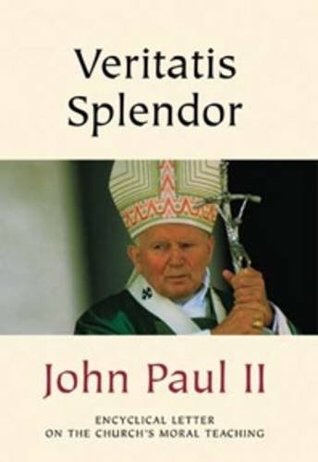
EUREKA: Discovering Catholic Treasury – through a Lenten lens! Day 08: “Veritatis Splendor”

A. What is it?

>> “Veritatis Splendor” is an Encyclical by Pope St John Paul II, promulgated on August 6, 1993

>> “Veritatis Splendor” is a Latin phrase which means “The Splendour of Truth”

>>

B. What does it speak of?

>> “Veritatis Splendor” responds to questions of Moral Theology that had been raised during the post-conciliar period of the Church (events after the Vatican II Council of 1962-65).

>> These questions revolve around human’s ability to discern good, the existence of evil, the role of human freedom and human conscience, mortal sin, and the Authority of the Magisterium of the Catholic Church in guiding people.

>> “Veritatis Splendor”, while acknowledging that everyone makes a fundamental choice for or against Christ, also reiterates that certain acts (i.e., mortal sins) represent a fundamental choice against Christ – and potentially forever, unless one repented.

>> “Veritatis Splendor” consists of three chapters:

(I) Teacher, What Good Must I Do

>> Christ and the answer to the question about morality

(II) Do Not Be Conformed to this World

>> The Church and the discernment of certain tendencies in present-day moral theology

(III) Lest the Cross of Christ be emptied of its Power

>> Moral good for the life of the Church and of the world

C. Pointers for Reflections

1. “Veritatis Splendor” speaks against the danger of moral relativism

>> Moral Relativism is the tendency to view reality as being “all relative” – “there are no absolute values”, “any judgment you make is your judgment from your point of view and there is no objective point of view”.

>> Pope Benedict XVI called this “moral relativism” as a poison

>> “Veritatis Splendor” begins by asserting that there are indeed absolute truths accessible to all persons.

2. “Veritatis Splendor” reminds us of the reality of intrinsically evil acts

>> This means that certain acts are always wrong, and that there are never circumstances in which they may be permitted if done knowingly and intentionally

>> It is never permissible to intend directly something which contradicts a moral order.

D. What virtues/points can we pick up from the “Veritatis Splendor” for this Season of Lent?

1. Become aware of the danger of “moral relativism” and how it is very much spread in the thought-philosophies of the world around us

2. Realize the gravity of mortal sin and how we must be defiant in staying away from it

E. Tips to practice these virtues

1. Study and reflect more on the Catholic Teachings, so that we don’t get strayed away by the “attractive modern” philosophies, which tend to neutralize truth

2. Make “Examination of Conscience” a part of one’s daily timetable

May this Lent and the familiarity with this Encyclical “Veritatis Splendor” help us to grow in our acclamation: “Eureka – I have found the Lord”

(The Full Text of the “Veritatis Splendor” can be found at:

>> http://w2.vatican.va/content/john-paul-ii/en/encyclicals/documents/hf_jp-ii_enc_06081993_veritatis-splendor.html)

God Bless! Live Jesus!

Feb 22 (Mt 16:13-19)

The famous incident of President Abraham Lincoln during the US civil war goes thus…

The President met a group of church leaders for a prayer-cum-breakfast.

At one point during the breakfast, one of the leaders remarked: “Mr President, let us pray, that in this time of the Civil War, God is on our side”

But Abraham Lincoln, replied with a much-greater insight…

… “No gentlemen. Let us pray that we are on God’s side!”

It was a reminder by the President that religion ought not to be a tool to get God to do what we want…

… but a way of life, to open our hearts to listen and do what God wants of us!

Are we on the side of God?

>> Or are we on the other side, and expecting God to bend Himself to our ways and styles of life?

The Gospel of the Day is a beautiful reminder of the Lord to examine our lives…

… and check, “if we are on the side of God!”

On reaching the villages of Caesarea Philippi, Jesus put forth the two-question examination to His disciples:

>> “Who do people say that I am?” (Mt 16:13)

>> “Who do you say that I am?” (Mk 16: 15)

After having given various answers to the first question, Peter, the leader, gives the answer:

“You are the Messiah, the Son of the Living God” (Mt 16:16)

Although, Peter had given the right answer, the following statements by Jesus on His Passion, Death and Resurrection, scandalized Peter!

>> Peter had a set and standard understanding of a Messiah- as did the Jews of his time…

… a leader who would wield power and control

… a liberator who would exercise supremacy and command.

So when Jesus spoke of a “Suffering-Servant-Leader” (Mk 8: 31)…

… One Who would suffer

… One Who would subjected to the mercy of the other

>> Peter could no longer stand himself!

He began to rebuke Jesus (Mt 16:22)

But Jesus had to set things right…

… and so He would rebuke Him back strongly: “Get behind me, Satan! You are an obstacle to me.

You are thinking not as God does, but as human beings do!” (Mt 16:23)

Though Peter had made a correct statement about Jesus…

… it was still only a partial sight!

>> He still needed a “second intervention”, in order to see fully.

In the Gospel of St Mark 8:22-25, we have an incident of the “healing of a blind man”

>> In that, the blind man initially could only see “people walking, like trees” (Mk 8: 24)

But after the “second touch” from Jesus, he was able to see fully.

Something similar happens here…

>> The “blurred sight” of Peter is healed, after a “second touch” by Jesus.

Jesus was reminding Peter, by the strong rebuke…

… that Christian Life is not about “we wanting our way; it is about we seeking and doing God’s Will in life!”

Yes, Christianity is a Way of Life, that constantly asks us: “Are we thinking as God thinks, or are we thinking only the way, humans do?

>> “Are we on the side of God?”

In our everyday life, we come across plenty of opportunities, when we need to make this discernment:

>> Either to be on the side of God…

… or to go against Him!

We need to examine seriously our prayer life…

>> “Do we seek God’s Will in prayer…

… or do we seek to impose our will on Him?”

>> “Do we place our worries and problems before our God (Who knows all!)…

… or do we also command Him, on how and when these problems ought to be solved?”

Sometimes, we do have tendencies, to pull God into our boundary…

… instead of we moving to God’s side!

Today, the Lord clearly reminds us, as He rebuked Peter…

… to constantly be on the “side of God”.

Like Peter…

… we may have our own justifications to think the way we do

… we may have our own fears in encountering a Suffering God

But the Lord, is clear and constant in His presentation of Christianity: “Seek to be on the side of God”

… “Think the way, God Thinks!”

Yes, let us allow the Lord to mellow our hearts…

>> So that we can understand that religion ought not to be a tool to get God to do what we want…

… but a way of life, to open our hearts to listen and do what God wants of us!

God Bless! Live Jesus!

Feb 21 (Lk 11:29-32)

The English word ‘sincere’ comes from two Latin words : ‘sin-e’ and ‘cere’.

‘Sin-e’ means: without

>> ‘Cere’ means: wax

So ‘sin’e’ + ‘cere’ means “without wax”

Sincere, therefore, literally means, being “without wax”

In ancient Greek, when art flourished, it was a common practice to repair with “invisible wax…

… any vase or statue that had, as a result of carelessness, been damaged.

Sometimes while chiseling the bust in marble, if the chisel slipped out the Sculptor’s hand, some edge of the statue would be chipped off.

Rather than taking the trouble of making a new bust, the sculptor would repair the features with “wax”…

… so that the flaw could not be detected, unless by very close scrutiny.

However, if the client happened to be a knowledgeable person, he would carry the finished statue into the open before paying for it, and examine it carefully in the sunlight!

If the statue was “sincere” i.e. “without wax” – it would remain firm…

… else some parts of it would drop down!

“Sincerity” of the statue was thus examined in the presence of sunlight!

Am I a “sincere” person… “without the wax” of deceit, malice, corruption or guile?

• I need to come into the presence of the Divine Sunlight – Jesus – to be examined!

The Gospel of the day presents Jesus presenting an “insincere” tendency of the modern generation…

… seeking for external signs to believing in God

The Gospel begins with the verse:

“ When the crowds began to increase, Jesus said to them: This generation is an evil generation. It seeks a sign…” (Lk 11: 29)

Through St Paul, we get to know that it was, probably, a characteristic of the Jews to ‘demand signs’.

“For Jews demand signs, and Greeks look for wisdom” (1 Cor 1: 22)

When we scan through the pages of the Bible, we actually see, God Himself giving many signs to His people…

>> God put a mark on Cain, after he had killed Abel, so that no one should kill him at sight (Gen 4: 15)

>> God gave the sign of the ‘rainbow’, as a sign of the covenant, so that the waters would never become a flood, to destroy all mortal beings (Gen 9: 13-15)

>> God empowered Moses with many signs, when Moses had to present himself before Pharaoh, in a bid to ask him “to let go” of the Israelites ( Ex 3: 12)

>> Two hundred and fifty men were consumed, by a fire from the Lord, after they had unworthily offered incense to God (Num 16: 35)

>> God gave a sign to Gideon, when he asked for it, humbly, as a confirmation in his entrusted task (Judg 6: 17)

>> God gave a sign at King Saul’s anointing (1 Sam 10: 1-13)

However, in today’s Gospel, Jesus opposes to “seeking an external sign”

What was the reason?

The demand of this “external sign” was “not in humility” or “to really cast off any doubt”

• Rather, this was a demand for a sign that exposed their obstinacy to remain in unbelief!

In fact, Jesus saw through their “insincerity”

He sees through the fact, that they were “with wax” – the wax of deceit, falsity and deception!

• And this their “wax” of trickery, began to melt in the presence of Jesus, the Powerful Light!

Therefore Jesus comes down heavily on them and says, “An evil and adulterous generation seeks a sign…” (Mt 12: 39)

Note the two strong words that Jesus uses…

>> Evil: pointing to a wicked heart that sought destruction and spoiling the lives of others

>> Adulterous: pointing to an unfaithful heart that reduced relations to a mere pragmatic nature, and was characterized by cheating and disloyalty.

Is my life also characterised by constantly wanting “only external” signs from God…

• I expect immediate answers to all my prayers, in the way I want

• I always want some miracles, as I choose, to keep the light of my faith burning

• I get depressed and feel totally lost when I do not get the signs that I expected in life

• I witness a lot of wondrous deeds around me, but still I remain obstinate in my unbelief

Is my Christian life only a sign-seeking one…

>> Or is my Christian life, rather, a Saviour-seeking one?

Do I be obsessed with wanting only miracles…

>> Or am I, rather, passionate and zealous about the Master?

Jesus invites us to be “sincere” – “without wax”.

• In His bright presence, all “wax” of duplicity and hypocrisy will melt

• In His glowing light, all “wax” of dishonesty and deception will dissolve

May we be closer to Jesus, the Great ‘Sun’ and live our Christian Lives, in “sincerity”…

… and in zealousness and with deeper passion for the ‘Son’ of God!

God Bless! Live Jesus!

EUREKA: Discovering Catholic Treasury – through a Lenten lens! Day 07: “Introduction to the Devout Life”

A. What is it?

>> “Introduction to the Devout Life” is a Spiritual Classic written by St Francis de Sales, published in 1609.

>> “The Introduction” is a compilation of letters and notes used in the Spiritual Direction of his cousin, Madame Marie de Charmoisy, the wife of an ambassador of the Duke of Savoy.

>> The writings of the book are addressed to the title, “Philothea” (= Lover of God)

>> Pope Pius XI at the declaration of St Francis de Sales as the Patron Saint of Catholic Writers and Journalists in 1923, wrote about the “Introduction to the Devout Life”:

… “Would that this book – the most perfect of its kind in the judgment of his contemporaries, as it was at one time in the hands of all – were now read by all, so that true piety might everywhere flourish again, and the Church of God might rejoice in seeing sanctity common among her sons.”

B. What does it speak of?

>> The “Introduction to the Devout Life” is a practical guide and exhortation to all people, to life a life of holiness.

>> It is also an excellent reference in Spiritual Direction.

>> The “Introduction to the Devout Life” consists of Five Parts:

1. Part I: Attaining a Firm Resolution to the Devout Life

>> It speaks of the nature of True Devotion and how all are called to it

>> The necessity of a Spiritual Guide for progress in the Devout Life is emphasized

>> “Purifying the soul” is the first step, and towards this, 10 mediations are provided

2. Part II: Prayer and the Sacraments

>> The necessity of Prayer and how it starts with “placing oneself in the Presence of God” is explained.

>>It also touches up the topics of Holy Communion, Invocation and Meditation with the Saints, Spiritual Bouquets, Retreats, Aridity in Prayer and the Word of God.

3. Part III: The Practice of Virtue

>> It explains how to practice individual virtues like Patience, Meekness, Humility, Obedience, Chastity, and Poverty.

>> It outlines 3 themes: (i) Discerning which virtues to work on (ii) Practising individual virtues in everyday life (iii) Remaining devout in dealings with society.

4. Part IV: Some Ordinary Temptations and how to overcome them

>> This is the “troubleshooting guide” or “snares of the enemy,” which explains what Philothea – the reader – can do when he/she encounters certain stumbling blocks.

5. Part V: Renewing and Confirming the Soul in Devotion

>> The last part speaks of an “annual review,” which St. Francis de Sales recommends undergoing every year around the time of the Feast of the Lord’s Baptism.

>> Philothea – the reader – is encouraged to examine oneself closely, to give thanks for all signs of progress – however tiny – and frankly acknowledge where one has slowed down the progress through willfulness or sloth.

C. Pointers for Reflections

1. A call for all people towards Holiness

>> St Francis de Sales says: “My purpose is to instruct those who live in town, within families, or at court, and are obliged to live an ordinary life as to outward appearances…

… It is an error, or rather a heresy, to wish to banish the devout life from the regiment of soldiers, the mechanic’s shop, the court of princes, or the home of married people… Wherever we may be, we can and should aspire to the perfect life.”

>> This passage from St. Francis de Sales was a major inspiration to the Fathers of the Second Vatican Council and stands behind one of the central exhortations of Vatican II – “The Universal Call to Holiness.”

2. The daily examples/articles/experiences of life are used remind/teach about the Presence of God

>> This was the “Jesus style” – using familiar experiences of the people to teach a religious truth, through a parable or metaphor.

>> The “Introduction to the Devout Life” has incidents taken from the Bible and the biographies of Saints. It also makes use of stories and natural science information (especially from the writings of Greek philosopher, Aristotle and the Roman author, Pliny the Elder)

D. What virtues/points can we pick up from the “Introduction to the Devout Life” for this Season of Lent?

1. Aspiring towards holiness

2. Growing in little virtues

E. Tips to practice these virtues

1. Thank God for the state of life that we are in, and realize that God is calling us to sanctify and make holy, each work that we do, specific to our vocation

>> Let every duty and responsibility that we do – little or big – be seen and done, as steps towards holiness and sanctity; hence, “do everything in love – Bloom where you are planted!”

2. Identify our “root vice” (= the negative tendency in us, which causes/leads to other sins)

>> Consciously practise the opposite “root virtue”

>> Daily make an Examination of Conscience to check the progress

>> If successful, in humility, thank God.

>> If not successful, never be discouraged – instead, seek to practise the same “root virtue”, the following day.

May this Lent and the familiarity with this Spiritual Classic by St Francis de Sales, “Introduction to the Devout Life” help us to grow in our acclamation: “Eureka – I have found the Lord”

(The Full Text of the “Introduction to the Devout Life” can be found at:

>> http://www.philothea.de/devout-english.html)

God Bless! Live Jesus!

Feb 20 (Mt 6:7-15)

Old Betty worked for several years as a maid, in different houses.

She was once asked the meaning of the Biblical verse “Pray without ceasing” and what it meant for her life.

“Well, it just means what it says,” said Betty.

“When I wash my face in the morning, I pray to God…

… that many sinners may be washed in the blood of Christ during the day.

When I put on my clothes, I pray to God…

… to clothe me with Christ and with His humility.

When I take up the broom to sweep, I think of the woman who swept the house for the lost piece of silver, and I pray God…

… to sweep the world and to save lost sinners.

When I clean the vessels and they begin to shine, I pray to the Lord…

… to brighten my soul.

When I wash clothes, I pray that God…

… may wash away the filth from human hearts and all may remain fresh in His grace

When I wipe the windows and scrape the rust from the front-gates, I pray that God…

… may cleanse the society of the dirt of inhumanness and take off the rust of indifference”

And thus Betty went on mentioning the things that gave her an opportunity of approaching God in prayer.

How beautiful and a practical life of prayer, isn’t it?

The Gospel of the Day is a beautiful exposition by Jesus on Prayer.

The Lord highlights the essential dimensions that constitute real prayer and goes on to give the blueprint of an Ideal Prayer by teaching the “Our Father”.

Jesus says, “And in praying, do not heap up empty phrases as the Gentiles do; for they think that they will be heard for their many words” (Mt 6:7)

In the context, when we look closely into this verse, we see that Jesus is pointing to the important principle in the pagan religions: the spoken word is most important for effectiveness of any prayer or sacrifice.

Prayer had assumed the nature of being a formula or a procedure that had to be strictly followed for its efficacy.

The pagan understanding was all about “pleasing the god” and “tapping the Divine power” by one’s words and verbal formulae.

>> Historically it is reported of an occasion when the presiding magistrate at a Roman pagan festival forgot to include the “Roman people” among the list of beneficiaries in his prayer; the festival had to be started all over again!

It is therefore the attitude towards prayer and perception of God that Jesus condemns.

And this is a strong and relevant message that the Lord seeks to drill in our minds: Prayer is not to be reduced to being a formulaic key to unlock the power of the Divine!

It’s not our many words that makes God to grant His grace

.. Rather, it is by His Will and His graciousness that we receive His blessings.

Then what is meant by prayer?

The blueprint of prayer – The Our Father – that Jesus teaches gives us the answer.

Prayer is…

• Acknowledging His greatness

(Our Father, who art in heaven)

• Ascribing glory and honour to Him

(Hallowed be Thy Name)

• Seeking His Kingdom to come

(Thy Kingdom come)

• Longing for His Will to be done in our lives

(Thy Will be done, on earth as it is in heaven)

• Putting forward our needs and offering our aspirations to His Providence

(Give us today our daily bread)

• Choosing to actively being reconciled to all people to receive His forgiveness

(and forgive us our sins, as we forgive those who sin against us)

• Imploring to keep away from sin and all evil inclinations and desires

(and lead us not into temptation, but deliver us from evil)

Our whole life ought to be translated to acts and deeds of prayer.

In this context, it also good to provide the Catholic understanding and logic of some of the prayers, which are perhaps considered as repetitive (eg: The Rosary, Novenas, Litanies.. etc)

Are all these standard prayers mere “heaping up of empty phrases…?”

>> No!

The Bible teaches us many examples of repetitive prayers…

>> The angels continually – day and night – sing “Holy, holy, holy, is the Lord God Almighty, who was and is and is to come!” (Rev 4:8)

>> Psalm 136 repeats the words “for his steadfast love endures forever” nearly 26 times in 26 verses!

>>Jesus in the Garden of Gethsemane prayed in the “same words” three times (Mk 14: 32-39)

>> Jesus, in fact, also commends the fact of continually praying, through the example of the widow and the unjust judge (Lk 18: 1-14)

Thus, it is seen that the Bible has many examples of repetitive prayer.

>> Therefore, the repetitive Catholic Prayers like the Rosary, the Divine Mercy Chaplet, Novenas, Litanies etc… are scripturally well-supported

>> When prayed with honesty and devotion, they become means to allow the heart…

… to praise God and understand His mighty works

… to grow in His love and come to a deeper awareness of His Providence

… and pray with Mother Mary and the Saints and intercede to them for our intentions

When we understand prayer as being a “relationship” and being in “His loving presence”, prayer becomes a joyful, a continual and a meaningful devotion.

May His grace help us to make every moment of our life, an act of prayer in order to grow in greater closeness and union with the One who loves us the most!

>> Let prayer become a joyful action..

>> Let prayer become a continual devotion

>> Let prayer become a powerful commitment.

Yes, in our day-to-day life, let us “pray without ceasing!”

God Bless! Live Jesus!

EUREKA: Discovering Catholic Treasury – through a Lenten lens! Day 06: “Gaudium et Spes”

A. What is it?

>> “Gaudium et Spes” is one of the four Major Constitutions of the Second Vatican Council.

>> It was promulgated by Pope Paul VI on Dec 7, 1965 – the day the Council ended.

>> The title “Gaudium et Spes” is a Latin phrase which means “The Joys and Hopes”

>> It is the longest of all the documents of Vatican II

B. What does it speak of?

>> The chief focus of “Gaudium et Spes” is on how the Church is to seek to provide meaningful answers to the questions people have about life.

The following are the major highlights of this important document of Vatican II

Introduction: The Situation of Men in the Modern World

>> Traditions and values are being lost. Moral conflicts are escalating as a result of a false way of living, and people’s moral conscience is playing less role. Oppression and neglect for the poor is escalating.

>> The world is capable of acts that uplift life and acts that destroy life. There is an addiction to material things. Yet, there are many who desire to know what the purpose of life is.

>> “Gaudium et Spes”, addressing all people of the world, confidently proclaims that Jesus Christ, true God and true Man, is the answer to all the perplexing questions that plague humankind today

Part I: The Church and Man’s Calling:

>> To be a human and Christian today is to read the signs of the times, seek common values and proclaim Jesus Christ.

I. The Dignity of the Human Person: The dignity of being human, stems from being created in God’s image. There is a law of love written in our hearts – an inner voice that calls us to love God and humanity. In following Jesus, we learn to love in such a way that our truest self is revealed.

II. The Community of Mankind: God creates humans to be together. Human community reflects Trinitarian community. We must learn to love and respect those who think differently than us. Each of us is responsible to fulfill the call to live justly, and to walk in love always.

III. Man’s Activity throughout the World: A person is truly valued by “who they are”, not by “what they do”. Whatever is done to promote justice and dignity is infinitely more valuable than what is technologically created. The hope of the world rests in love.

IV. The Role of the Church in the Modern World: The Church is the sign of the presence of God. The Church exists because of God’s love for us. The Church’s greatest responsibility and challenge is to promote and attain unity. We need to enter into honest discussion with mutual love and respect. Christ was, is, and always will be the Center of the Church. A concise Ecclesiology of the Church as “leaven” in the world is manifested.

Part II: Some Problems of Special Urgency

I. Fostering the Nobility of Marriage and the Family: Society is harmed by polygamy, divorce, free-love, excessive self-love, and improper use of birth control. Sacramental married life is a covenantal love of man and woman, created by God. Love in marriage is Divinely Ordained and is expressed through holy sex and lived out, in raising a family. All life comes from God and is therefore, Sacred.

II. The Proper Development of Culture: Growth in natural human and social science, as well as communications and technology, provide a means to change culture positively and negatively. The Church must remain faithful to its Traditions and be responsive to its universal mission.

III. Economic and Social Life: There is more than enough available to the world to provide for the needs of humanity. A just world seeks to provide opportunity for all to grow intellectually and morally. The concept of work also implies, how we can serve one another.

IV The Life of the Political Community: Authority must function as a moral force and not as a tyranny. The truest duty, politically, is to oppose injustice, oppression, and intolerance. The work of the Church is to preach the Faith and teach social doctrines. The Church has the right and responsibility to pass moral judgments on society when the salvation of souls is at stake.

V The Fostering of Peace and the Promotion of a Community of Nations: Peace is not the absence of war. Peace is directly relevant to people’s ability to love. Peace requires sincere respect for others and an effort to see that the basic human needs of others is met. Peace flows from Christ. Peace is not possible where these exist: injustice, economic inequality, thirst for power, or disregard for human life.

C. Pointers for Reflections

1. “Gaudium et Spes” appeals to all people to not be afraid of seeking to find the “true meaning of life”

>> We are often lost in the uncertainties, worries and cares of the world. The Document calls to “go deeper” and thus live a meaningful and purposeful life

>> This meaning is to find its fullness in a “Life in Christ” – Who is “the Key, the Censer and the End of all of human history” (GS, 10).

2. The Church is called to be a sign of unity

>> Today an honest and critical analysis of the Church can make us to confess that there a lot of factors of disunity: language, rite, social-status, caste, region etc

>> We are challenged to resolve these differences – despite the mighty challenge before us – so that we can truly witness ourselves as “The One Body of Christ!”

D. What virtues/points can we pick up from “Gaudium et Spes” for this Season of Lent?

1. Discovering Jesus as the “Greatest Meaning of our Life” and thus like the disciples have the “Eureka-shout” – “We have found the Messiah!” (Jn 2: 41)

2. Be a person who fosters unity and facilitates reconciliation

E. Tips to practice these virtues

1. Make an honest examination of life and draw a list of the priorities of our life; and thus check if God tops the list.

>> If not, what we need to do to have “First things First” – God as the Most Important Person and Goal of my life

2. Everyday make an “Examination of Conscience” and have the courage to forgive and be reconciled with those to whom we are not in good terms.

May this Lent and the familiarity with the Second Vatican Council Pastoral Constitution on the Church in the Modern World “Gaudium et Spes” help us to grow in our acclamation: “Eureka – I have found the Lord”

God Bless! Live Jesus!

Feb 19 (Mt 25:31-46)

Ancient Greeks had a great fascination for light.

In those ancient days of the Greek society, a relay race used to be held called as “Lampadedromia”. (LAMPA-DEDRO-MIA)

This race consisted of the runners holding a torch in their hand, and passing it on the next runner…

… until the final member of the team, crossed the finishing line.

The prize was not awarded to the team that just ran fastest…

>> It was awarded to the first team, that reached the finishing line…

… with the torch still lit!

There is a big message in this, for all of us Christians…

By our Baptism, we are all given the Torch of Christ…

… and run towards the finishing line!

However, many of us are, perhaps, only busy with the running

>> Many of us, perhaps, fail to even check, if the light is burning…!

The final Day of Judgment would be a time, when it would be checked…

… if we finish our races, with the lamp still burning!

Are we running with the Flame still burning…?

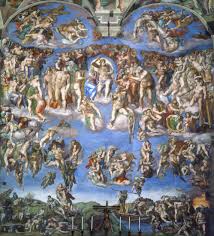
The Gospel of the Day presents the scene of the Last Judgment…

The passage presents the Son of Man seated in His Majestic and Awesome Glory and all the nations awaiting His judgment. (Mt 25: 31-32)

The sheep, placed on the right side, are the chosen ones to enjoy the bliss of the Kingdom.

>> The goats, placed on the left side, are the condemned ones to suffer the fire of punishment.

This Passage is one of the very strong and dramatic portions of the Bible…

… that also powerfully shows the Sovereignty and Singularity of Jesus as the One True God and the Only King of the World.

This passage should be a mighty reminder as well as a booster for us to proclaim and declare – without any compromise and wavering – that Jesus is the One and Only True God!

In a pluralistic and heterogeneous world…

In a world which can confuse and cloud our faith…

>> This Bible Passage comes as a strong reminder for us to say, without any hesitation: “Jesus is Lord!” (Rom 10:9)

Another important aspect to be observed in this passage of the scene of the Last Judgment is the manner in which the Lord looks at human actions…

The Bible says, “Humans look on the outward appearance but the Lord looks at the heart” (1 Sam 16:7)

One of the common question that both the groups, the sheep as well the goats, posed was: “When did we know…”

The sheep were taken by surprise, at the occasions which the Lord found them doing good…

>> They remained unaware of those situations, though they did the good in God’s sight.

>> They remained unaware of those occasions, though they did the needful in God’s sight.

The goats are taken by surprise, at the occasions, which the Lord found them missing to do good…

>> They remained unaware of those situations, where they failed to do the good in God’s sight.

>> They remained unaware of those occasions, where they missed to do the needful in God’s sight.

We may not realize the occasions of doing good…

We may not realize the occasions of having missed doing good…

>> We may externally engage in many good works, but it may fail to find approval in the Lord’s sight.

This calls for…

… cultivation of an inner disposition to do good.

… building of an inner character to be charitable.

Ø From the abundance of the heart, the mouth speaks…

Ø From the abundance of goodness within, good actions flow…

Ø From the abundance of love within, loving behaviours proceed…

Ø From the abundance of kindness within, kindhearted conduct emerges…

Let this season of Lent…

… be an occasion to grow in cultivating love deep within.

… be a time of forming a character of goodness and kindness.

The Day of Judgement is certainly to be a glorious one…

In this race here on earth – like the “Lampadedromia”….

… let us strive earnestly to finish our races, with the lamp still burning (2 Tim 4:7)!

Are we running with the Flame still burning…?

>> Or do we need to do something, in order to make sure, the Torch of Christ remains lit?

God Bless! Live Jesus!

EUREKA: Discovering Catholic Treasury – through a Lenten lens! Day 05: “Sacrosanctum Concilium”

A. What is it?

>> “Sacrosanctum Concilium” is one of the four Major Constitutions of the Second Vatican Council.

>> It was promulgated by Pope Paul VI on 4 December 1963.

>> The title “Sacrosanctum Concilium” is derived from the opening lines of the Document and means “This Sacred Council”

>> Liturgy was the first topic that was discussed at the Second Vatican Council

B. What does it speak of?

>> The purpose of “Sacrosanctum Concilium” is to achieve greater Lay Participation in the Church’s liturgy.

>> This Constitution on the Liturgy is divided into 7 chapters:

1. General Principles for the Restoration and Promotion of the Sacred Liturgy

>> Jesus Christ is the Source of the Sacred Liturgy, which is the public worship of the Church. The sacred liturgy allows us to experience the heavenly liturgy on earth

>> The faithful must come to the liturgy with the proper dispositions, by fully, actively, and consciously engaging in the liturgical celebration – participating both internally and externally. Both Clergy and Laity must be instructed in the nature and practice of the liturgy since It is a communal event.

Fractio Panis, first half of 2nd Century, Catacomb of Priscilla, Rome

2. The Most Sacred Mystery of the Eucharist

>> The Holy Eucharist perpetuates the sacrifice of the Cross.

>> At every Mass, the Lay Faithful join the Priest in offering the Divine Victim, and in doing so, they must offer themselves also that they might enter into a more perfect communion with God and each other.

>> The “Treasures of the Bible” must be lavishly poured out at every Mass. The Liturgy of the Word and the Liturgy of the Eucharist form a single, united act of worship.

3. The Other Sacraments and the Sacramentals

>> The purpose of the Sacraments is threefold: Give worship to God, Build up

the Body of Christ, and Sanctify humanity.

4. The Divine Office

>> The Divine Office, or Liturgy of the Hours, is the public prayer of the whole Church.

>> It offers Praise to God, intercedes for the entire world, and sanctifies each day and must be prayed with attention and devotion so as to nourish piety and personal prayer.

5. The Liturgical Year

>> The Church unfolds the entire Mystery of Christ throughout the liturgical year in order to allow the faithful to receive the Riches of Christ.

>> The Church honours the Blessed Virgin Mary and the Saints by celebrating their feast days and acknowledging their merits, examples, intercession, and love.

6. Sacred Music

>> Sacred music is a “treasure of inestimable value” that gives Glory to God and helps to sanctify the faithful. It also enhances prayer and contributes to the solemnity of the sacred liturgy.

>> Gregorian chant retains “pride of place” in the liturgy, but other kinds of sacred music are allowed and encouraged.

7. Sacred Art and Sacred Furnishings

>> Works of Sacred Art must be protected and cultivated so that they may be “worthy, becoming, and beautiful signs and symbols of things supernatural.”

C. Pointers for Reflections

1. The Document calls for a “full and active participation” by all in the Sacred Liturgy

>> In our local language/parlance, we sometimes say, “I am going to SEE Mass”. This statement/attitude is to undergo a revolutionary change, as we are all PARTICIPANTS at the Holy Mass.

>> The “passivity” during liturgy has to be transformed to an “active participation”, so as to derive the full fruits of the Sacred Mysteries.

2. “Sacrosanctum Concilium” speaks of retaining sound tradition whilst being open to legitimate progress

>> The Document provides a balance between two strong extreme trends seen today in the Church (a) Make Liturgy “relevant” by making it appealing or sometimes, sadly, even entertaining (b) Make Liturgy insular and almost museum-like, with a rigid fixation on mysterious details.

>> The history of the Liturgy, down through the centuries, shows organic development and the Document affirms and exhorts to understand the True Nature of Sacred Liturgy: It is the saving action of Jesus Christ in his Church.

D. What virtues/points can we pick up from “Sacrosanctum Concilium” for this Season of Lent?

1. Give the Holy Eucharist the greatest and the highest place in our life of Faith

2. Prepare well to participate in the Holy Mass

E. Tips to practice these virtues

1. Make sure to attend Mass on all Sundays and Days of Obligation, and to spend time with Jesus in the Blessed Sacrament, as often as possible (personally as well as a family/community)

>> Fall in love with Jesus in the Holy Eucharist, so as to derive strength and power from this “Source, Strength and Summit” of our Life!

2. Read the Scriptures (1st Reading/Psalm/2nd Reading/Gospel) before going for the Holy Mass

>> Look into how these Readings affect – personally and practically

>> Offer all the situations of one’s life, at the Holy Mass.

>> Receive Jesus – in the Word and Eucharist – with much devotion and love

>> Learn to Live (practise) the fruits of the Eucharist, in day-to-day life

May this Lent and the familiarity with the Second Vatican Council Constitution on the Sacred Liturgy “Sacrosanctum Concilium” help us to grow in our acclamation: “Eureka – I have found the Lord”

God Bless! Live Jesus!

Feb 18 (Mk 1:12-15)

Many hunters use their abilities with bow and arrows, guns and spears to kill monkeys.

But some native people have another simple yet effective style to trap them.

The hunter searches the jungles for a large-sized, wild gourd (= a fleshy, typically large fruit/vegetable with a hard skin).

After the gourd had dried for several weeks, the hunter would cut a two-inch hole in the side. >> The insides of the gourd would then be taken out, leaving an empty hard-shelled trap…

After finding the right place in the jungle, where there were plenty of monkeys, the hunter would hang the trap from a tree.

>> In the centre of the gourd-trap, several handfuls of peanuts would be placed…

In a short time, the curious monkeys would scamper over to see what the man had left behind.

>> A short glance and a long sniff would reveal to the monkeys that one of their favourite items was conveniently close by – and easy to get!

One monkey would venture first.

>> He would look the gourd over well.

The gourd was a common sight and would not rouse many questions, and inside he would discover wonderful, plump peanuts.

What more could a monkey ask for?

Into the gourd, went the monkey’s hand, grasping a few peanuts, and then slowly, he would ease out his hand.

Easy pickings!

>> He got a handful and they were so good!

In would go again his little hand, and not wanting to miss out on this free offer!

But his hand , with many peanuts, was now too big, to get back out of the hole.

When he tried to pull back his hand, it would not come out through the gourd’s hole.

>> He would pull and pull but to no avail.

>> He was caught!

It would never dawn on him to let go of the peanuts!

There he would be captured until the hunter would return and easily kill the monkey.

His own selfishness had bound him to the trap.

Temptations in our life, is also, so often similar…

>> We get trapped in our own selfishness!

>> We get ensnared in our own greediness!

The Gospel of the Day, on this first Sunday of Lent, is an account, from the Gospel of St Mark, of how Jesus resisted temptations…

… and emerged victorious by the power of the Spirit, to proclaim the Gospel of God!

“At once, the Spirit drove Him out into the desert, and He remained in the desert for forty days, tempted by Satan” (Mk 1:12)

• In Jesus, we encounter a God who has a very human face – sharing in sufferings, partaking in miseries and participating in hardships.

• In Jesus, we have a God who understands us in our weak moments, consoles us in our painful situations and who empathizes with us in our trials and temptations.

Jesus knows what it is like to struggle with temptations and enticements…

Because He Himself was tempted!

Jesus knows what it is like to ward off the beasts of our vices and evil tendencies…

Because He Himself was among wild beasts!

Yet, in all His trials, He emerged victorious and triumphant!

Ø He did not succumb to the allurements of Satan…

Ø He did not fall for the traps of the Evil One…

Ø He did not yield to the inducements of the Devil…

The reason?

>> He had a tremendous infilling of the Holy Spirit!

>> He had a unshaken determination to be focused on doing God’s Will!

>> He had an indomitable resolve of being faithful and true to His mission and commitment!

And these reasons of Jesus are also the techniques for us to overcome the power of temptations….

>> Can we grow continually in the infilling of the Holy Spirit?

>> Can we learn to, despite any hardships, constantly seek and do only God’s Will?

v Can I cultivate the steadfastness to be singly focussed on the mission of His Kingdom?

We live in a world which is often, like a wilderness…

.. dry in spiritual fervour… heated up with material desires…arid in religious enthusiasm

We live in a world where there are often, many wild beasts…

…ferociously corrupt and unhealthy practices…menacingly abusive evil lifestyles

We need to resist the temptations arising from such situations and stand firm in our focus and commitment to the Lord and His Kingdom.

Let us not get caught up in the snares of temptation…instead be victorious and triumphant in the Grace and Power of Jesus, our Saviour, Model and Master!

Selfish desires can trap us….but being selfless in the Spirit will help us!

Greedy longings can confine us….but Godly leanings can strengthen us!

God Bless! Live Jesus!